
Stadler Launches Custom Regional Trains to Improve Visitor Access to Mount Vesuvius in 2026
Swiss manufacturer Stadler has deployed a custom fleet of regional trains in Campania to streamline tourist access to Mount Vesuvius, Pompeii, and Herculaneum.

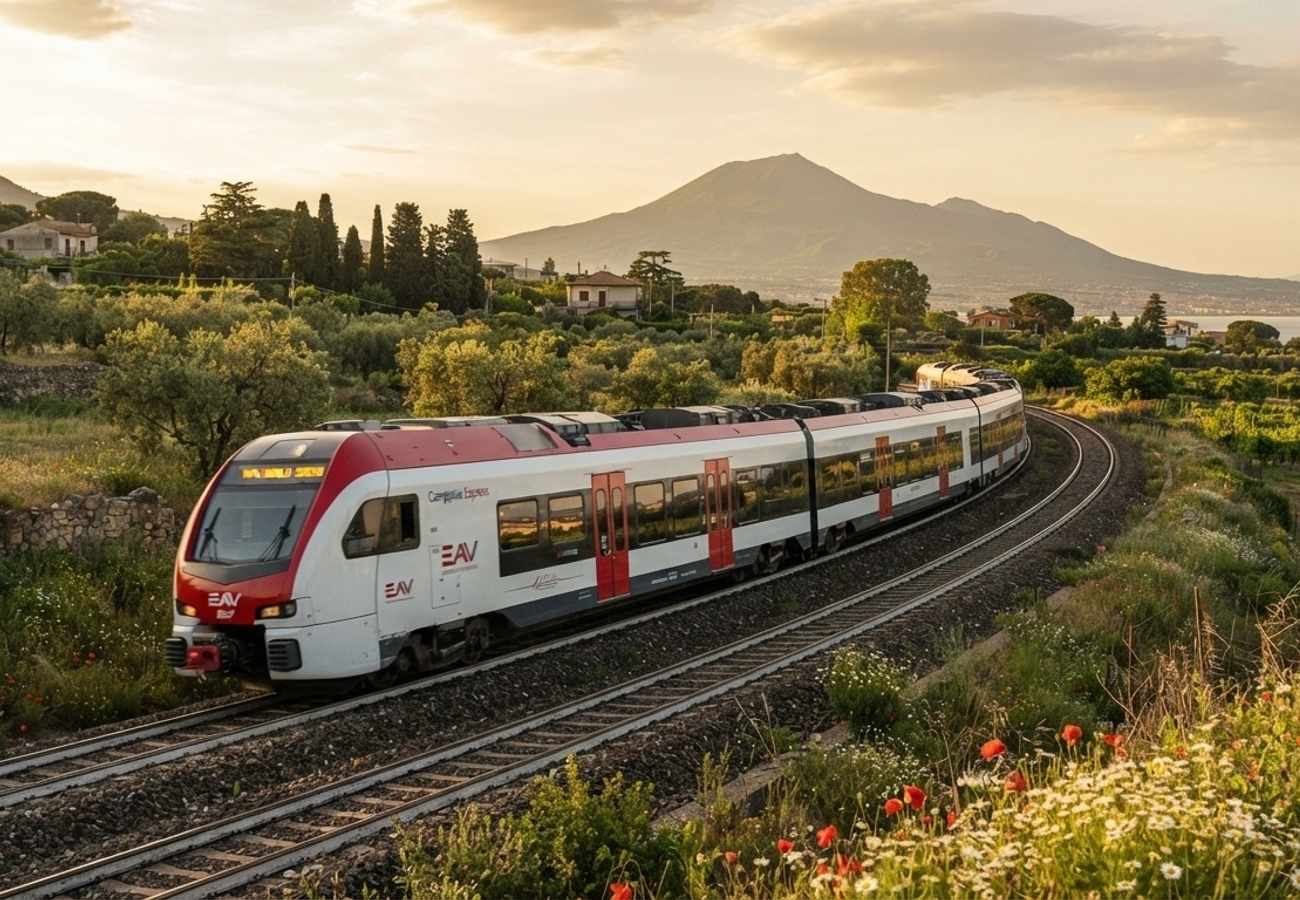
Image generated by AI
New Stadler rolling stock has entered operational service in the Campania region, providing a modern transport alternative for the hundreds of thousands of visitors traveling to Mount Vesuvius and surrounding archaeological sites.
The deployment of these custom-designed trains targets the chronic congestion facing the volcanic and post-volcanic regions of Italy. By strengthening the rail links between Naples and key cultural landmarks, the initiative aims to shift tourist traffic away from private vehicles and toward a more sustainable, high-capacity infrastructure.
Operational Scope and Regional Impact
The new fleet, developed by Swiss manufacturer Stadler, is specifically engineered for the unique geographical and operational requirements of the Vesuvius area. These trains facilitate direct and more efficient access to several of Italy's most visited destinations:
- Mount Vesuvius: Direct access to one of Europe's most famous active volcanoes.
- Pompeii Archaeological Park: Enhanced flow to the UNESCO World Heritage site.
- Herculaneum: Improved connectivity to the Roman ruins associated with the AD 79 eruption.
- Naples Urban Center: Better integration between the city's historic districts and the regional periphery.
Technical and Passenger Specifications
Stadler tailored this fleet to address the specific passenger patterns of the Campania region. The focus was placed on high-turnover efficiency and accessibility to accommodate a diverse range of international and domestic travelers.
Key Design Enhancements:
- Optimized Interiors: Modern cabins focused on passenger comfort during peak tourist surges.
- Universal Accessibility: Integrated features to support travelers with varying mobility needs.
- Operational Tech: Updated onboard systems to increase reliability and scheduling precision.
- Regional Adaptation: Chassis and configurations designed specifically for the local rail network's requirements.
Regional Connectivity Framework
The integration of these trains is part of a broader strategy to modernize mobility within Campania. For visitors, this means a reduction in "transfer friction"—the time and complexity involved in moving between transport hubs and final attractions.
| Feature | Impact on Visitor Experience |
|---|---|
| Custom Stadler Design | Higher reliability and comfort on regional routes |
| Increased Capacity | Reduced crowding during summer peak seasons |
| Direct Site Access | Easier transit to Pompeii and Herculaneum |
| Sustainable Fleet | Lower carbon footprint per passenger compared to cars |
Why This Matters: Industry Analysis
From a logistical perspective, the introduction of the Stadler fleet is a response to the "last-mile" failure often seen in high-density tourism zones. In Campania, the reliance on private cars and tour buses has historically led to severe bottlenecks on roads leading to the Vesuvius slopes and Pompeii.
Our analysis of the route map suggests that by upgrading the rolling stock, the regional authority is attempting to implement a "hub-and-spoke" efficiency model. For the traveler, the real impact is the ability to execute a multi-site itinerary (e.g., Naples $\rightarrow$ Pompeii $\rightarrow$ Vesuvius) without the unpredictability of regional traffic.
Furthermore, this move signals a shift toward "responsible tourism." By reducing the number of private vehicles entering sensitive archaeological and natural zones, Italy is protecting the physical integrity of these sites while simultaneously improving the visitor's psychological experience of the trip.
Forward Outlook
The success of this rollout will likely serve as a blueprint for other high-traffic cultural regions in Italy. Expect further integration of digital ticketing and real-time scheduling to complement the new hardware. Travelers should monitor official Campania rail updates, as schedules remain subject to seasonal adjustments and maintenance windows.
The transition to high-efficiency rail is no longer an amenity, but a necessity for the survival of Italy's over-burdened tourism hubs.
Related Travel Guides
Disclaimer
This article is for informational and educational purposes only. It does not constitute legal, financial, or professional advice. While we strive to provide accurate and up-to-date information, travel policies, regulations, and conditions change rapidly. Always verify information with official sources before making travel decisions. Nomad Lawyer makes no representations about the accuracy, reliability, completeness, or suitability of the information provided. Readers should consult qualified professionals for advice specific to their circumstances. The views expressed in this article are those of the author and do not necessarily reflect the views of Nomad Lawyer.
Raushan Kumar
Founder & Lead Developer
Full-stack developer with 11+ years of experience and a passionate traveller. Raushan built Nomad Lawyer from the ground up with a vision to create the best travel and law experience on the web.
Learn more about our team →