
SriLankan Airlines Restores Middle East Network: Resumption of Kuwait Flights Reconnects Colombo Transit Routes
SriLankan Airlines restores its Middle East network with 6 weekly Kuwait flights, connecting to South India with transit times under 90 minutes.

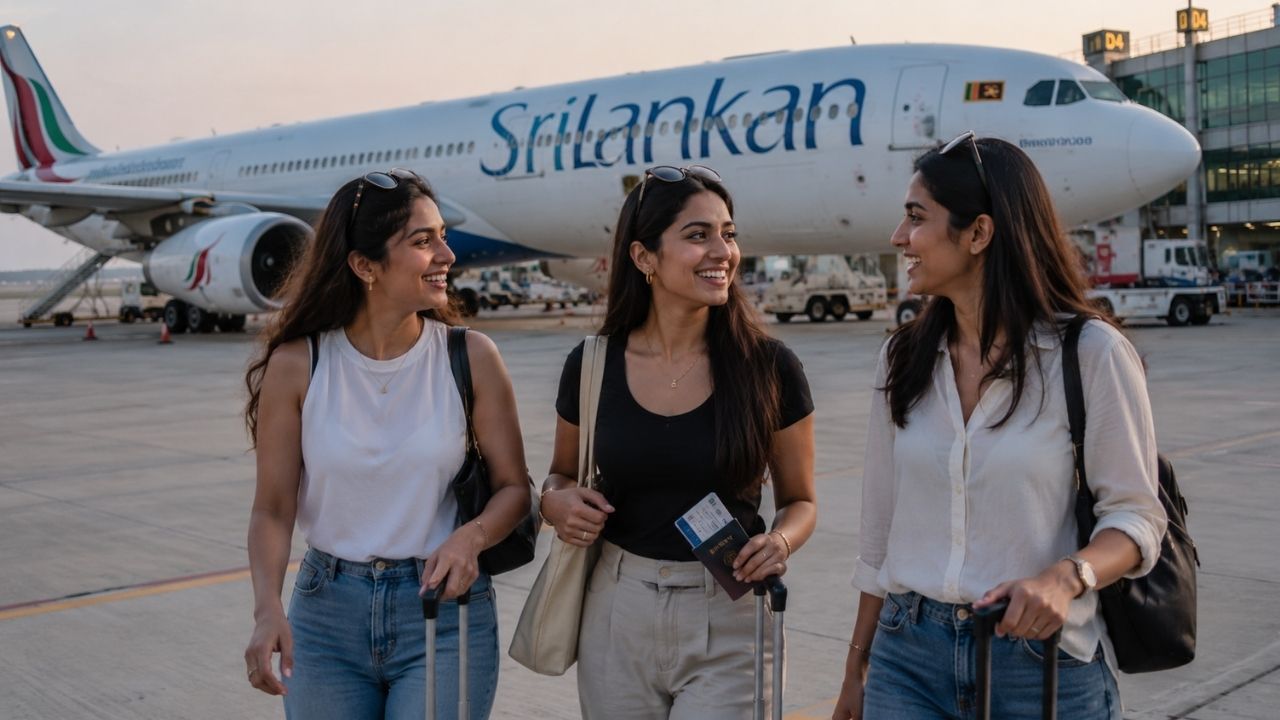
Image generated by AI
With the resumption of flights to Kuwait, SriLankan Airlines has completed the full restoration of its flight network across the Middle East.
The aviation sector in South Asia and the Middle East has entered a phase of renewed connectivity. Aviation records confirm that the flag carrier of Sri Lanka resumed scheduled services to Kuwait on August 8, 2026, offering six weekly flights. The resumption completes the carrier's international network across the Middle East corridor, connecting regional hubs with the airline's primary hub in Colombo. This development supports trade, tourism, and family visits, linking the Gulf region with key destinations in South India.
Resuming Kuwait Services: Completing the Middle East Corridor
For over forty years, the airline has connected travelers across different regions. The re-established network now spans major Middle East commercial hubs, including Riyadh, Dammam, Dubai, Doha, and Kuwait. These operations are designed around coordinated flight arrivals at Bandaranaike International Airport in Colombo, allowing for rapid transit times.
Resuming the Kuwait route resolves recent scheduling issues that arose from operational constraints. During those periods, the carrier redirected resources to maintain financial stability, prioritizing alternative routes. The resumption of six weekly flights to Kuwait removes these limitations, restoring the airline's total operational capacity in the Middle East.
Synchronized Connections: Colombo Transit to South India
A key advantage of the restored network is the connection between the Middle East and South India. The schedules are timed to connect arriving flights from Riyadh, Dubai, or Kuwait with departures to Chennai, Tiruchirappalli, Thiruvananthapuram, Madurai, and Cochin. These transit connections are maintained under 90 minutes, minimizing layover times.
India remains the carrier's largest international market, supported by 90 weekly flights connecting Colombo with major cities, including Chennai, Mumbai, Delhi, Hyderabad, Bengaluru, Kochi, Thiruvananthapuram, Madurai, and Tiruchirappalli. The quick transit times at Bandaranaike International Airport help business travelers and families travel between the Gulf and South India efficiently.
Passenger Services: Baggage Rules and Inflight Dining
To support travelers on these routes, the airline offers comfort features and regional services. Inflight meals feature vegetarian and non-vegetarian options alongside South Asian specialties. The personal entertainment system provides a selection of Tamil, Malayalam, Telugu, and Hindi movies to cater to diverse traveler preferences.
Economy Class passengers are permitted to carry 7 kilograms of cabin baggage and 30 kilograms of checked luggage. For passengers needing extra weight capacity, prepaid baggage options can be purchased in advance through the airline's website. These services are designed to accommodate the needs of workers and families moving between the two regions.
Corporate Expansion: Dimuthu Tennakoon on Strategic Growth
The airline's commercial division has focused on building market share in South Asia and the Middle East. Dimuthu Tennakoon, Head of Commercial at SriLankan Airlines, highlighted the carrier's forty-year commitment to passengers in the Middle East and South India. The restoration of Kuwait flights supports this long-term strategy, strengthening the airline's presence in competitive markets.
Fawzan Fareid, Regional Manager for India, Bangladesh, and Nepal, acknowledged that operational challenges required the airline to prioritize alternative markets. Upholding service standards during these periods helped retain customer loyalty. The renewed momentum is expected to support ongoing commercial expansion and regional integration in South Asia.
Sustainable Fleet Management and Eco-Focus
The airline utilizes an all-Airbus fleet to optimize operations and support fuel-efficiency goals. The fleet comprises modern A330-200, A330-300, A320, and A321 aircraft models, which help reduce fuel consumption and carbon emissions. These models are deployed across both short-haul regional flights and long-haul connections to Europe and Australia.
By coordinating flight schedules, the carrier aims to increase passenger load factors and minimize fuel burn per seat. These efficiency measures support environmental conservation efforts led by the Civil Aviation Authority of Sri Lanka. Travelers can also support the local economy by purchasing authentic Ceylon tea and spices from local cooperatives at Bandaranaike International Airport.
Practical Travel Advice and Local Insider Tips
Travelers planning an itinerary with SriLankan Airlines can optimize their journey with these recommendations:
- Book Layovers During Off-Peak Hours: Choose connections that transit Bandaranaike International Airport in Colombo between 9:00 PM and 11:30 PM. Passenger volumes are lower, making transit security checkpoints faster.
- Try Onboard Egg Hoppers: Sample traditional Sri Lankan egg hoppers—crispy rice flour crepes with a soft-cooked egg—served with spicy seeni sambol during your flight.
- Observe Temple Etiquette in Sri Lanka: If taking an extended layover to visit temples in Colombo, dress modestly with shoulders and knees covered, and remove shoes and hats before entering.
- Utilize Airport Transit Lounges: For connections under 90 minutes, stay close to your departure gate and use the transit seating areas in the main terminal, which offer charging ports and local snacks.
- Purchase Prepaid Baggage Online: If you exceed the 30-kilogram checked baggage limit, purchase extra baggage allowance online before your flight to save on airport fees.
SriLankan Airlines Network and Fleet Matrix
| Route Hub / Destination | Connection / Flight Frequency | Key Baggage Allowances | Primary Airbus Aircraft Models |
|---|---|---|---|
| Middle East Corridor | Riyadh, Dammam, Dubai, Doha, Kuwait | 30 kg Checked, 7 kg Cabin | Airbus A330-200, A330-300 |
| Kuwait Route | 6 weekly flights (resumed Aug 8) | 30 kg Checked, 7 kg Cabin | Airbus A320, A321 |
| India Services | 90 weekly flights from Colombo | 30 kg Checked, 7 kg Cabin | Airbus A330-300, A321 |
| Colombo Transit | Under 90 minutes connect time | Automated bag transfer | Integrated transit terminal gates |
| Global Network | 33 direct, 130 codeshare routes | Varies by ticket tier | Full fleet integration (63 countries) |
Frequently Asked Questions
When did SriLankan Airlines resume its Kuwait flights?
SriLankan Airlines resumed scheduled services to Kuwait on August 8, 2026, offering six weekly flights and completing its Middle East network.
What is the connection time for passengers transiting to South India?
Connections through Bandaranaike International Airport in Colombo to South Indian cities are timed to stay under 90 minutes.
What are the baggage allowances for Economy Class passengers?
Economy Class passengers are permitted to carry 7 kilograms of cabin baggage and 30 kilograms of checked luggage on these routes.
Which aircraft models make up the SriLankan Airlines fleet?
The airline's all-Airbus fleet comprises state-of-the-art A330-200, A330-300, A320, and A321 aircraft models, optimizing fuel efficiency.
The Long-Term Direction of South Asian Aviation
The complete restoration of SriLankan Airlines' Middle East network shows the recovery of regional aviation. By connecting flight networks across 63 countries and offering 33 direct destinations, the carrier is strengthening its role as a key gateway in South Asia. Coordinated scheduling, fuel-efficient Airbus fleets, and passenger amenities help maintain competitiveness on busy routes. As travel demand grows, cooperation between airlines, airport managers, and tourism boards will remain essential for supporting regional development.
By choosing fuel-efficient carriers and supporting local travel guidelines, passengers help build a more sustainable and connected global aviation network.
Related Travel Guides
Disclaimer
This article is for informational and educational purposes only. It does not constitute legal, financial, or professional advice. While we strive to provide accurate and up-to-date information, travel policies, regulations, and conditions change rapidly. Always verify information with official sources before making travel decisions. Nomad Lawyer makes no representations about the accuracy, reliability, completeness, or suitability of the information provided. Readers should consult qualified professionals for advice specific to their circumstances. The views expressed in this article are those of the author and do not necessarily reflect the views of Nomad Lawyer.
Raushan Kumar
Founder & Lead Developer
Full-stack developer with 11+ years of experience and a passionate traveller. Raushan built Nomad Lawyer from the ground up with a vision to create the best travel and law experience on the web.
Learn more about our team →