
SriLankan Airlines Cancels Colombo-Jakarta Flights Over Anak Krakatoa Volcanic Ash

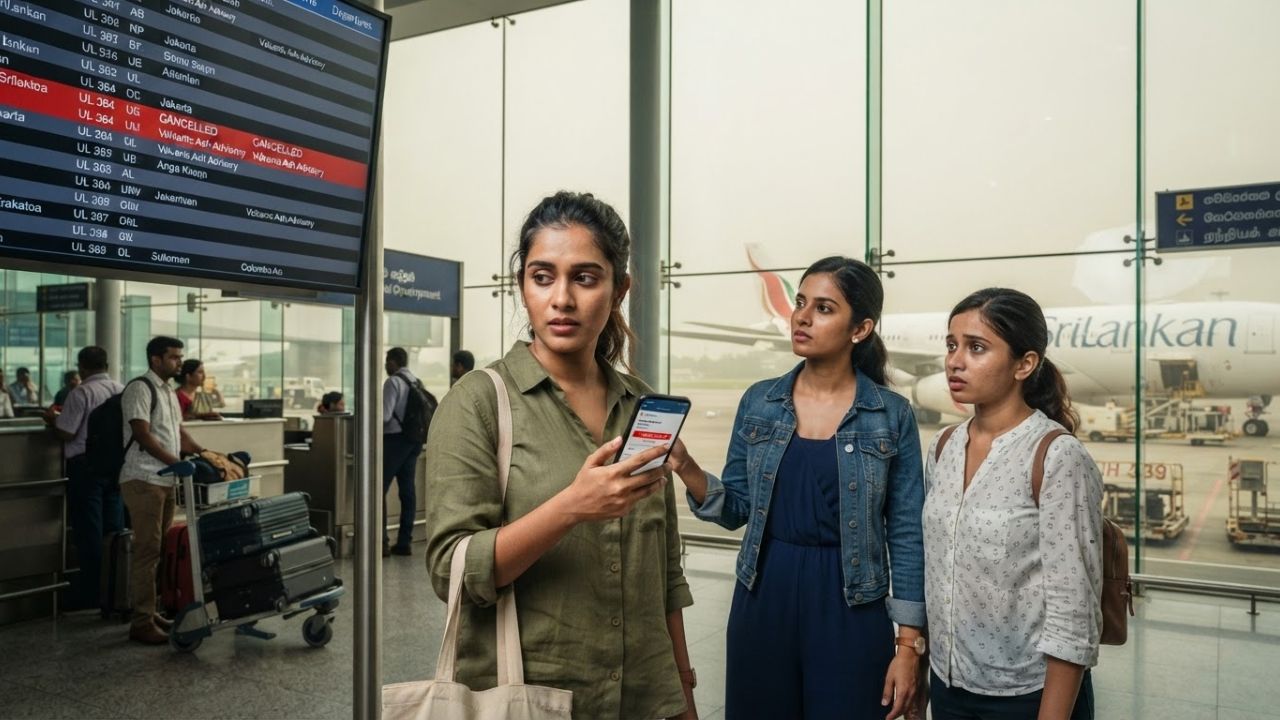
SriLankan Airlines suspended scheduled flights between Colombo and Jakarta on September 7, 2026, cancelling services UL 364 and UL 365 after airborne volcanic ash from Indonesia's Mount Anak Krakatoa spread across regional flight corridors. The disruption follows previous-night flight diversions on long-haul services from Sydney and Melbourne as aviation authorities imposed temporary operational restrictions around Jakarta's Soekarno-Hatta International Airport.
The precautionary grounding underscores the severe aeronautical hazards posed by volcanic plumes in the Sunda Strait, where microscopic silicate particles can cripple jet engines and compromise flight instrumentation. With air traffic controllers and the Darwin Volcanic Ash Advisory Centre (VAAC) tracking ash dispersion across the Indian Ocean basin, commercial carriers connecting South Asia, Southeast Asia, and Australia are adjusting flight paths to maintain passenger safety.
Canceled Flights and Australian Diversion Timeline
SriLankan Airlines enacted emergency flight suspensions following updated volcanic ash advisories affecting the Java Sea corridor:
- Flight UL 364 (Outbound): Scheduled non-stop service from Colombo Bandaranaike International Airport (CMB) to Jakarta Soekarno-Hatta International Airport (CGK)—cancelled on September 7, 2026.
- Flight UL 365 (Inbound): Scheduled return service from Jakarta (CGK) to Colombo (CMB)—cancelled on September 7, 2026.
- Preceding Australian Reroutes: On the night of September 6, long-haul SriLankan Airlines flights departing Sydney and Melbourne to Colombo were diverted onto extended southerly routing to circumvent dense atmospheric ash clouds drifting south of Sumatra and western Java.
Indonesian civil aviation authorities implemented tactical airspace controls around Jakarta (CGK) and neighboring regional airfields after monitoring stations identified elevated concentrations of abrasive airborne dust and silica particulates along standard arrival corridors.
Aeronautical Hazards of Volcanic Ash Plumes
Volcanic ash represents an invisible hazard for commercial aviation because ash clouds contain no moisture, rendering them undetectable on standard airborne weather radar systems:
- Engine Core Melting: Modern high-bypass turbofan engines operate at combustion temperatures exceeding 1,400°C. Silicate ash particles melt inside the combustion chamber and flash-cool onto turbine blades as hard, glassy deposits, causing compressor stalls and potential engine failure.
- Sensor and Avionics Abrasion: Fine particulates act as industrial sandblasters against cockpit windshields, eroding optical clarity and obstructing exterior pitot-static probes that deliver airspeed and altitude readings.
- Cabin Air Quality: Sulfur dioxide and acidic gases can enter aircraft environmental control systems, posing respiratory risks to passengers and crew.
Eco-Monitoring and Regional Environmental Coordination
The eruption of Mount Anak Krakatoa in the Sunda Strait has mobilized regional disaster risk monitoring networks across the Indian Ocean:
- Volcanic Advisory Coordination: The Darwin VAAC, working alongside Indonesia's Center for Volcanology and Geological Hazard Mitigation (PVMBG) and the Meteorology, Climatology, and Geophysical Agency (BMKG), provides hourly plume trajectory models to help airlines chart safe navigational deviations.
- Protecting Coastal Ecosystems: Volcanic eruptions deposit nutrient-rich ash that supports long-term marine biodiversity, but heavy immediate ashfall stresses regional fisheries and coral reefs along the Banten and Lampung coastlines.
- Airline Rerouting Efficiency: While flying circuitous paths around ash plumes increases fuel burn on trans-oceanic routes, automated airspace management systems minimize unnecessary flight extensions to curb excessive carbon emissions.
Local Insider Tips for Disrupted Travelers in Colombo and Jakarta
Travelers caught by cancellations or extended layovers between Sri Lanka and Indonesia can navigate disruptions with practical strategies:
- Bandaranaike Airport Transit Strategy: If stranded during a layover at Colombo Bandaranaike International Airport (CMB), request access to the Serendib Lounge or Silk Route lounge, or book a room at the airside transit hotel within the main departure terminal.
- Fast-Track into Colombo City: Avoid congested surface roads via Negombo. Take the Katunayake Expressway (E03), which links CMB to Colombo Fort in just 30 to 40 minutes via licensed airport expressway taxis or expressway buses (Route 187-E).
- Sample Authentic Colombo Dining: If spending an unexpected overnight in Colombo, visit the historic Dutch Hospital Precinct to dine on regional lagoon crab at Ministry of Crab, or head to Galle Face Green at dusk for fresh kottu roti and spicy isso wade (prawn cakes) from street carts.
- Jakarta Airport Rail Link (KA Bandara): Travelers waiting out delays at Jakarta Soekarno-Hatta (CGK) Terminal 3 should utilize the electrified Airport Rail Link to reach central stations (BNI City / Manggarai) in 45 minutes, completely avoiding Jakarta's notorious toll-road gridlock.
- Rebooking Policies and Fare Protections: Under Civil Aviation Authority of Sri Lanka (CAASL) passenger protection frameworks, travelers affected by natural disaster cancellations are entitled to complimentary rebooking on the next available flight or a full refund without administrative penalty fees. Reconfirm tickets directly through SriLankan Airlines' mobile app before proceeding to the airport.
Outlook for South and Southeast Asian Air Corridors
SriLankan Airlines and regional aviation regulators continue evaluating airspace conditions across the Sunda Strait. Full resumption of scheduled services between Colombo and Jakarta will depend on updated satellite scans confirming that ash plumes have dispersed below dangerous flight altitudes. As geologically active regions experience recurring volcanic shifts, airline network flexibility and rapid airspace monitoring remain vital to safeguarding international travel.
Related Travel Guides
Disclaimer
This article is for informational and educational purposes only. It does not constitute legal, financial, or professional advice. While we strive to provide accurate and up-to-date information, travel policies, regulations, and conditions change rapidly. Always verify information with official sources before making travel decisions. Nomad Lawyer makes no representations about the accuracy, reliability, completeness, or suitability of the information provided. Readers should consult qualified professionals for advice specific to their circumstances. The views expressed in this article are those of the author and do not necessarily reflect the views of Nomad Lawyer.
Raushan Kumar
Founder & Lead Developer
Full-stack developer with 11+ years of experience and a passionate traveller. Raushan built Nomad Lawyer from the ground up with a vision to create the best travel and law experience on the web.
Learn more about our team →