
Sri Lanka Tourism Faces European Visitor Slowdown as Gulf Flight Disruptions Affect Travel Connections: All You Need to Know
Sri Lanka Tourism Faces European Visitor Slowdown as Gulf Flight Disruptions Affect Travel Connections: All You Need to Know

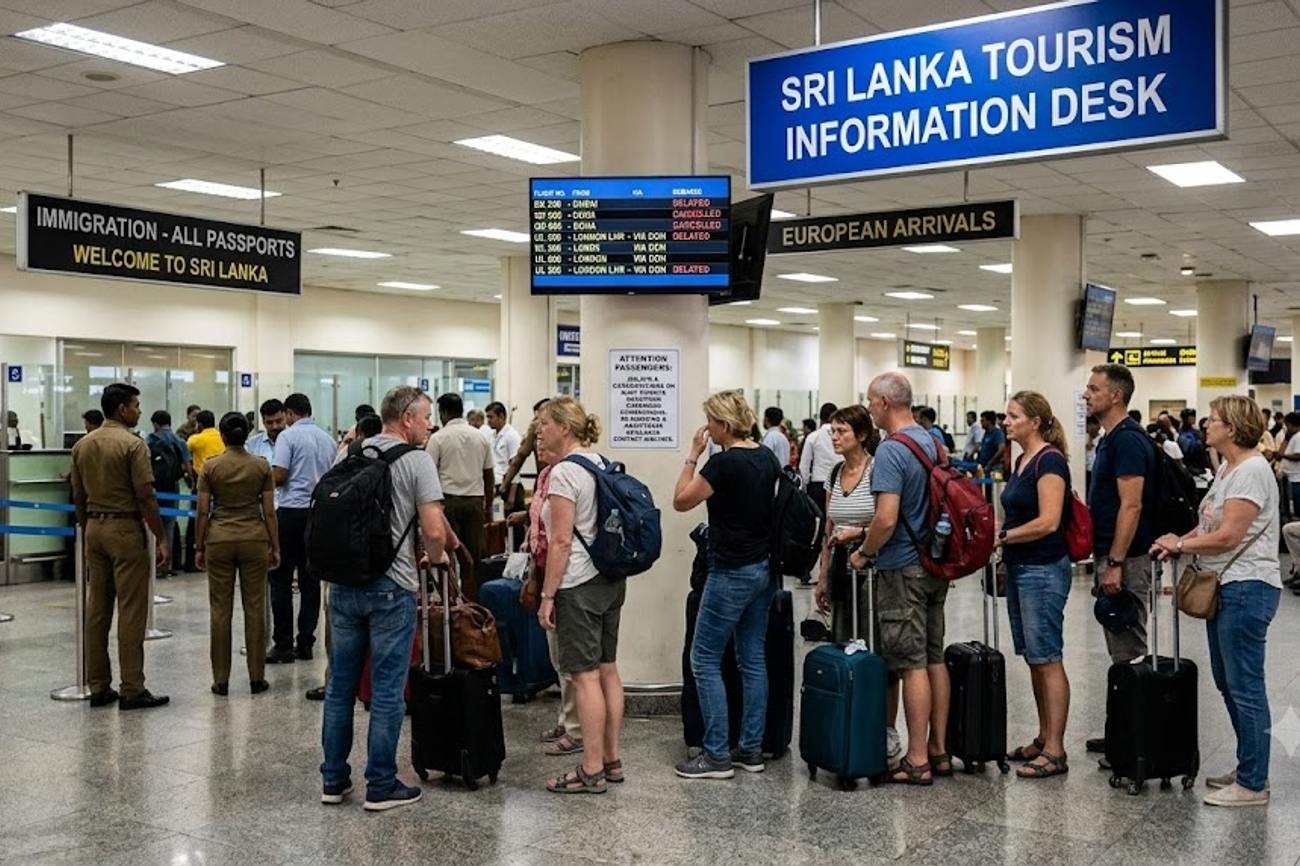
Image generated by AI
The dependence of Sri Lanka’s tourism recovery on a handful of Middle Eastern transit hubs has created a systemic vulnerability, where disruptions in Gulf aviation corridors directly translate into a slowdown of high-spending European visitor arrivals. For an island nation with no land-border alternatives, the stability of these air bridges is not merely a convenience but the primary engine of its economic resurgence.
The Geopolitics of the Gulf Transit Corridor
Sri Lanka's current tourism struggle is a case study in "connectivity fragility." The nation relies on a specific aviation architecture where European travelers—historically the most lucrative segment due to longer average stays and higher per-capita spending—do not fly direct but instead funnel through a narrow set of Middle Eastern gateways. This reliance creates a precarious chain: any volatility in the Gulf region, whether regulatory, geopolitical, or operational, immediately throttles the flow of tourists into Bandaranaike International Airport in Colombo.
The Sri Lanka Tourism Development Authority has identified that the primary conduits for these travelers are concentrated in the United Arab Emirates and Qatar. Specifically, the flow depends on four critical nodes: Dubai International Airport, Hamad International Airport in Doha, Abu Dhabi International Airport, and Sharjah International Airport. When these hubs experience schedule instability or flight uncertainty, the result is not just a delayed flight, but a measurable increase in "booking hesitation" among European demographics.
Connectivity Mapping and Market Vulnerability
The impact of these disruptions is not uniform across all visitor types. The data indicates a specific friction point for travelers from the United Kingdom, Germany, France, Italy, and the Netherlands. These markets prioritize heritage, wellness, and nature—experiences that typically require longer itineraries and higher budgets for local accommodation and activities.
The following table delineates the specific failure points currently impacting the European-Sri Lankan travel pipeline:
| Affected Travel Link | Direct Impact on Tourism | Resulting Traveler Behavior |
|---|---|---|
| Europe–Middle East–Sri Lanka | Reduced visitor velocity | Shift toward shorter-haul destinations |
| Gulf Hub Connections | Schedule volatility | Increased demand for flexible bookings |
| Long-haul Planning | Logistics uncertainty | Deferred trip dates |
| European Holiday Demand | Temporary volume drop | Lowered occupancy in luxury resorts |
To mitigate this, Sri Lanka is attempting to pivot its marketing toward a broader array of source markets. Current promotion efforts are targeting Australia, China, Russia, and India, as well as the traditional European strongholds. By diversifying the origin of its visitors, the government aims to ensure that a crisis in one aviation corridor does not paralyze the entire national tourism industry.
Expert Analysis: The "Single-Point-of-Failure" Risk in Island Aviation
For travelers booking routes to South Asia, the direct consequence of this situation is a heightened risk of itinerary collapse. When an island destination relies on third-party hubs for the majority of its long-haul traffic, it cedes control of its tourism growth to the operational stability of foreign entities.
The pricing pressure created by this volatility is significant. When flight uncertainty increases at hubs like Dubai or Doha, the remaining stable seats often command a premium, potentially pricing out the "slow travel" demographic that Sri Lanka seeks to attract. For the luxury wellness and Ayurveda segments, which require a stress-free arrival experience, the friction of Gulf transit disruptions is a major deterrent.
From a regulatory and business perspective, this highlights a desperate need for more direct long-haul connectivity. The current model—relying on the International Air Transport Association (IATA) standards and the operational whims of Gulf carriers—means Sri Lanka is a passenger in its own recovery. Until the nation can attract more direct flights from Europe or strengthen its links with diverse Asian hubs, it remains susceptible to "transit contagion," where a problem in the Middle East becomes a financial problem in Colombo.
Key Takeaways
- Hub Dependency: Sri Lanka’s tourism flow is critically dependent on four Gulf airports: Dubai, Doha, Abu Dhabi, and Sharjah.
- High-Value Loss: The slowdown primarily affects European markets (UK, Germany, France, Italy, Netherlands), which are the most profitable due to longer stays.
- Diversification Strategy: To counter this, the government is aggressively targeting new markets in India, China, Russia, and Australia.
- Product Pivot: The nation is moving beyond "beach tourism" to promote high-margin niches like Ayurveda wellness, biodiversity wildlife tours, and ancient heritage sites.
- Logistical Risk: Travelers are advised to prioritize flexible booking options and comprehensive travel insurance to hedge against Gulf transit volatility.
FAQ: Sri Lanka Travel 2024-2025
Why are flights from Europe to Sri Lanka currently unstable? The instability is not within Sri Lanka itself but occurs at the transit hubs in the Middle East. Disruptions at major airports in the UAE and Qatar have led to schedule changes and flight uncertainty for those connecting to Colombo.
Which airlines are most affected by these transit issues? While specific flight numbers vary, the disruption centers on carriers operating through Dubai, Doha, Abu Dhabi, and Sharjah. Travelers should check current schedules via FlightAware for real-time tracking.
Is it still safe to travel to Sri Lanka despite aviation disruptions? Yes. The disruptions are logistical and aviation-based, not related to the safety or stability of Sri Lanka. The destination's attractions—beaches, wildlife, and heritage sites—remain fully operational and open to tourists.
How can I avoid transit delays when flying to Colombo? Travelers should monitor airline updates closely, ensure they have flexible tickets, and consider alternative routing options that avoid the most congested Gulf hubs if schedules appear volatile.
The fragility of the Gulf bridge proves that for island nations, the journey is just as critical as the destination.
Tags: Sri Lanka Tourism, Gulf Aviation Hubs, Colombo Air Connectivity, European Travel Trends 2024, Middle East Transit Disruptions
Related Travel Guides
- Jaisalmer and More India’s Stunning Dark Sky Destinations Turning Nights Into Extraordinary Adventures
- Saudi Arabia Joins Israel and More Nations Becoming Target for Houthi Conflict Escalation Resulting New Travel Alert
- US-Canada Border Transit Guide 2026: Navigating Business Travel Amid Tariff Tensions
Disclaimer
This article is for informational and educational purposes only. It does not constitute legal, financial, or professional advice. While we strive to provide accurate and up-to-date information, travel policies, regulations, and conditions change rapidly. Always verify information with official sources before making travel decisions. Nomad Lawyer makes no representations about the accuracy, reliability, completeness, or suitability of the information provided. Readers should consult qualified professionals for advice specific to their circumstances. The views expressed in this article are those of the author and do not necessarily reflect the views of Nomad Lawyer.
Preeti Gunjan
Contributor & Community Manager
A passionate traveller and community builder. Preeti helps grow the Nomad Lawyer community, fostering engagement and bringing the reader experience to life.
Learn more about our team →