
Spirit Airlines Ceases Operations: Major US Airport Hubs Face Significant Disruption
Breaking airline news and aviation industry updates for 2026.

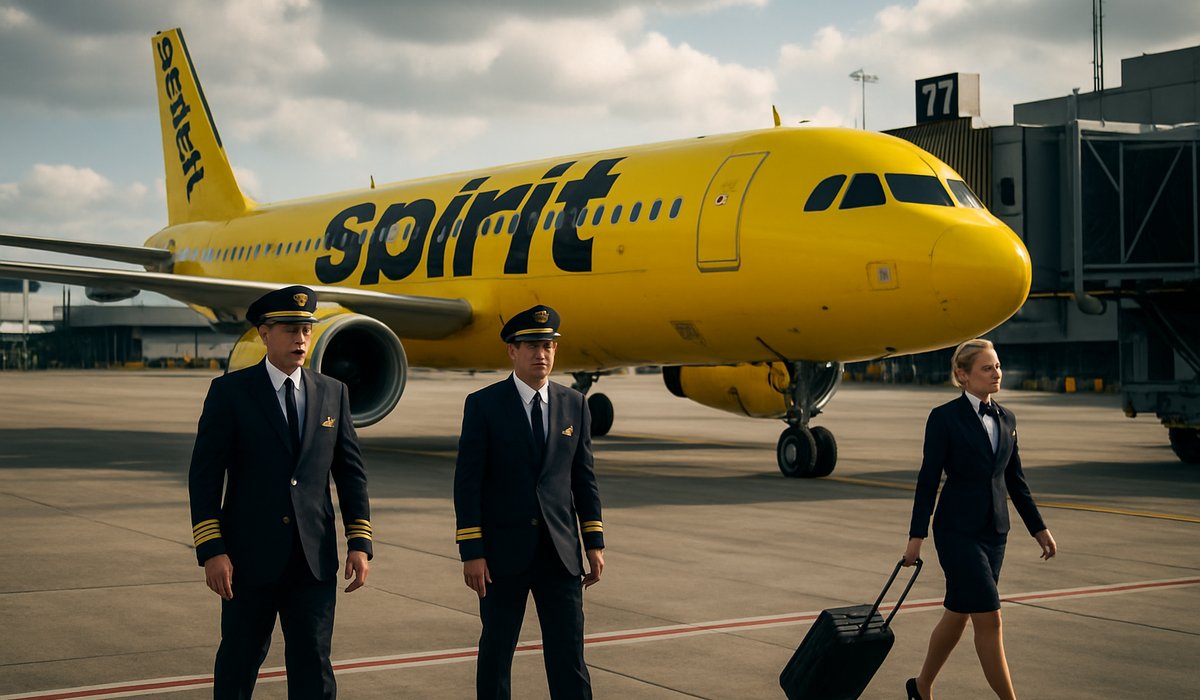
Image generated by AI
Spirit Airlines Ceases Operations: Major US Airport Hubs Face Significant Disruption
The ultra-low-cost carrier's sudden shutdown leaves thousands of stranded passengers and reshapes the competitive landscape at ten key aviation hubs
Abrupt Collapse Leaves Aviation Industry Reeling
Spirit Airlines halted all flight operations at 3:00 AM Eastern Standard Time, marking a dramatic exit from the U.S. aviation market and triggering widespread passenger disruptions across its primary operating bases. The budget carrier's sudden suspension has created immediate chaos at airports where the airline maintained its heaviest concentration of routes and aircraft deployments.
The shutdown represents a significant contraction in the ultra-low-cost carrier (ULCC) segment, which has fundamentally reshaped air travel economics over the past two decades through aggressive baggage fee structures and bare-bones service models.
Ten Airports Grapple With Operational Vacuum
Spirit's dissolution disproportionately impacts ten major U.S. airport hubs that served as crucial connectivity points for the carrier's network. These facilities are now confronting cascading challenges: stranded aircraft requiring repositioning, thousands of abandoned bookings, and displaced crews requiring reassignment or unemployment processing.
The airports most severely affected face immediate pressure to absorb Spirit's scheduled departures and accommodate affected travelers through alternative carriers—a logistical feat complicated by already-strained airport capacity and competing flight schedules.
Broader Industry Implications Emerge
Spirit's collapse underscores mounting pressures within the ultra-low-cost carrier segment, historically dependent on minimalist operations and maximum ancillary revenue generation through baggage charges, seat selection fees, and carry-on restrictions. Rising jet fuel prices, labor cost pressures, and intensifying competition from legacy carriers offering competitive economy fares have eroded the ULCC business model's viability.
The carrier's exit eliminates a significant competitor that had consistently undercut pricing across regional markets, potentially triggering fare increases on routes where Spirit previously dominated low-cost competition.
Passenger Recovery Efforts Underway
Stranded passengers face an uncertain recovery process, with limited airline seat availability and competing claims for remaining capacity. Affected travelers must navigate rebooking procedures while contending with potential accommodation costs and travel delays extending several days.
Industry observers note that Spirit's operational suspension may signal broader consolidation within the ultra-low-cost sector, where margin compression and rising operational costs have diminished profitability across the competitive landscape.
FAQ: Spirit Airlines Closure and Travel Impact
What happens to existing Spirit Airlines tickets and bookings? Passengers holding Spirit tickets must contact their credit card companies or the Department of Transportation for potential reimbursement, as the airline's insolvency limits direct refund capabilities.
Which airports experience the most significant disruption from Spirit's shutdown? Spirit's ten primary operating hubs face the greatest operational strain, requiring immediate schedule adjustments and alternative carrier deployments.
How will airline baggage fees and pricing change following Spirit's exit? Competitive pressure may ease, potentially allowing carriers to increase ancillary fees as low-cost alternatives disappear from the market.
What does Spirit's collapse mean for the ultra-low-cost carrier sector? The shutdown signals consolidation pressure within the ULCC industry, where rising jet fuel costs and labor expenses have compressed margins significantly.
Are other budget airlines at financial risk following Spirit's bankruptcy? Industry analysts indicate that ULCC carriers face sustained pressure from fuel price volatility and legacy carrier pricing competition, though major carriers possess stronger capital reserves than Spirit maintained.
Related Travel Guides
Flight Delay Compensation Guide 2026
Understanding Airline Route Changes
Airport Security Process Updated (2026)
External Resources
Disclaimer
This article is for informational and educational purposes only. It does not constitute legal, financial, or professional advice. While we strive to provide accurate and up-to-date information, travel policies, regulations, and conditions change rapidly. Always verify information with official sources before making travel decisions. Nomad Lawyer makes no representations about the accuracy, reliability, completeness, or suitability of the information provided. Readers should consult qualified professionals for advice specific to their circumstances. The views expressed in this article are those of the author and do not necessarily reflect the views of Nomad Lawyer.
Raushan Kumar
Founder & Lead Developer
Full-stack developer with 11+ years of experience and a passionate traveller. Raushan built Nomad Lawyer from the ground up with a vision to create the best travel and law experience on the web.
Learn more about our team →