
Spain's Laguna Rosa Draws Summer Crowds to Costa Blanca Amid Strict 2026 Access Rules
Laguna Rosa in Torrevieja is transforming Costa Blanca's tourism profile in 2026, blending hypersaline natural wonders with industrial salt heritage and rigorous environmental protections.

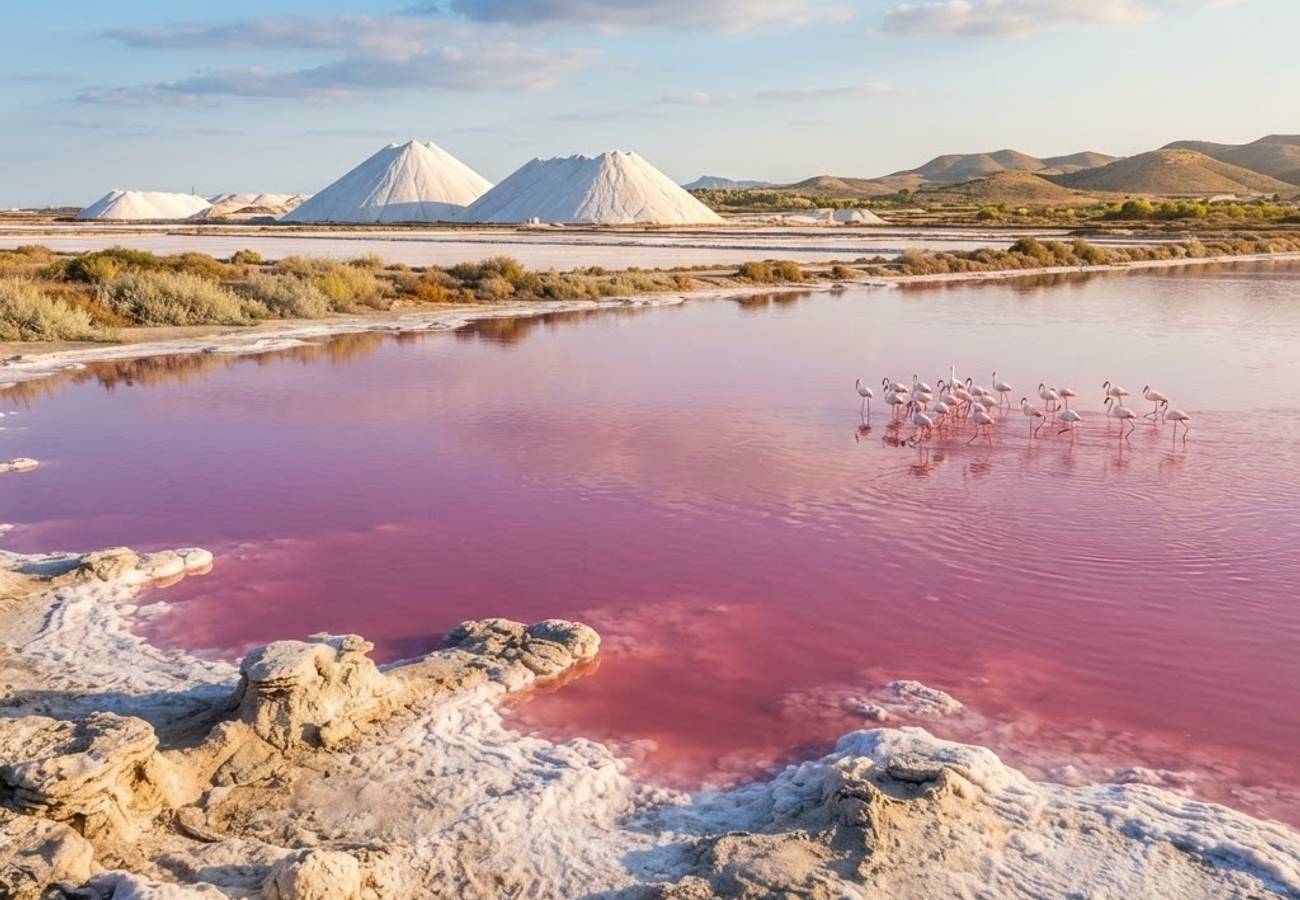
Image generated by AI
Laguna Rosa near Torrevieja is emerging as a primary summer destination on Spain’s Costa Blanca, shifting the region's appeal from traditional beaches to surreal, hypersaline landscapes.
The vivid pink waters of Laguna Rosa, located on the outskirts of Torrevieja in Alicante province, are seeing a surge in summer visitors in 2026. This attraction is part of the protected Lagunas de La Mata y Torrevieja wetland system, a complex that has functioned as an industrial salt extraction site for centuries. The lagoon's distinct rose hue is caused by high salinity and halophilic microorganisms, creating a stark visual contrast against the region's white salt mountains and Mediterranean scrub.
Regional tourism planning for Alicante province now explicitly pushes for nature-based and inland attractions to diversify the Costa Blanca's offering. While Benidorm has historically dominated the region's tourism, 2026 reports indicate robust demand for lesser-known viewpoints and nature reserves, with Laguna Rosa serving as a key promotional image to differentiate the southern coastline from other Mediterranean hubs.
Access Restrictions and Visitor Regulations
Despite its popularity on social media, physical access to Laguna Rosa is strictly controlled. The lagoon is situated within a natural park where regional planning prioritizes habitat conservation and active salt production.
Current regulations include:
- Prohibited Zones: New construction and activities that disturb birdlife or interfere with industrial salt operations are banned.
- Designated Access: Visitors are restricted to official viewpoints, roadside lay-bys, and organized excursions.
- Movement Limits: Walking and cycling routes are positioned near, but not directly along, the most sensitive shorelines to protect fragile salt crusts.
- Enforcement: Local authorities have reported an increase in fines and complaints regarding off-trail trespassing on private industrial land.
The La Química Redevelopment Project
In January 2026, the municipal government of Torrevieja and the Salins salt company announced a major project to rehabilitate the former La Química industrial complex. This initiative aims to formalize public interaction with the lagoon's waters.
Project Objectives:
- Public Use: Conversion of a disused salt factory into interpretive spaces.
- Controlled Bathing: Creation of a designated thalassotherapy zone utilizing the lagoon's hypersaline waters and muds.
- Investment: The proposal is valued in the tens of millions of euros.
Until environmental clearances and final agreements between the city, state property authorities, and the salt operator are finalized, bathing in most parts of Laguna Rosa remains unofficial or prohibited.
Ecological Pressures and Management
The Lagunas de La Mata y Torrevieja system is designated as both a natural park and a wetland of international importance for migratory birds. Management plans strictly regulate water levels to maintain the balance between industrial salt production and ecological health.
Market trends and scientific assessments highlight two primary pressures:
- Climate Stress: Drought trends and rising temperatures in Spain pose a significant threat to water-dependent destinations during peak summer.
- Hydrological Balance: Any change in salinity or discharge routes requires rigorous evaluation to prevent habitat loss. Recent regulatory notices have focused on improving the management of surplus waters flowing into the sea.
Diversification of the Costa Blanca Market
With hotel occupancy forecasts remaining high for 2026, travel analysts observe a shift in visitor behavior. Travelers are increasingly seeking "niche" experiences to avoid saturated beaches.
Local initiatives are now pairing Laguna Rosa visits with:
- Birdwatching excursions.
- Regional cycling itineraries.
- Visits to nearby vineyards and coastal boardwalks.
This strategy aims to distribute tourist spending across multiple municipalities rather than concentrating it in a single high-volume resort.
The balance between global visibility and environmental preservation remains the defining challenge for Torrevieja's pink shores.
Related Travel Guides
Disclaimer
This article is for informational and educational purposes only. It does not constitute legal, financial, or professional advice. While we strive to provide accurate and up-to-date information, travel policies, regulations, and conditions change rapidly. Always verify information with official sources before making travel decisions. Nomad Lawyer makes no representations about the accuracy, reliability, completeness, or suitability of the information provided. Readers should consult qualified professionals for advice specific to their circumstances. The views expressed in this article are those of the author and do not necessarily reflect the views of Nomad Lawyer.
Preeti Gunjan
Contributor & Community Manager
A passionate traveller and community builder. Preeti helps grow the Nomad Lawyer community, fostering engagement and bringing the reader experience to life.
Learn more about our team →