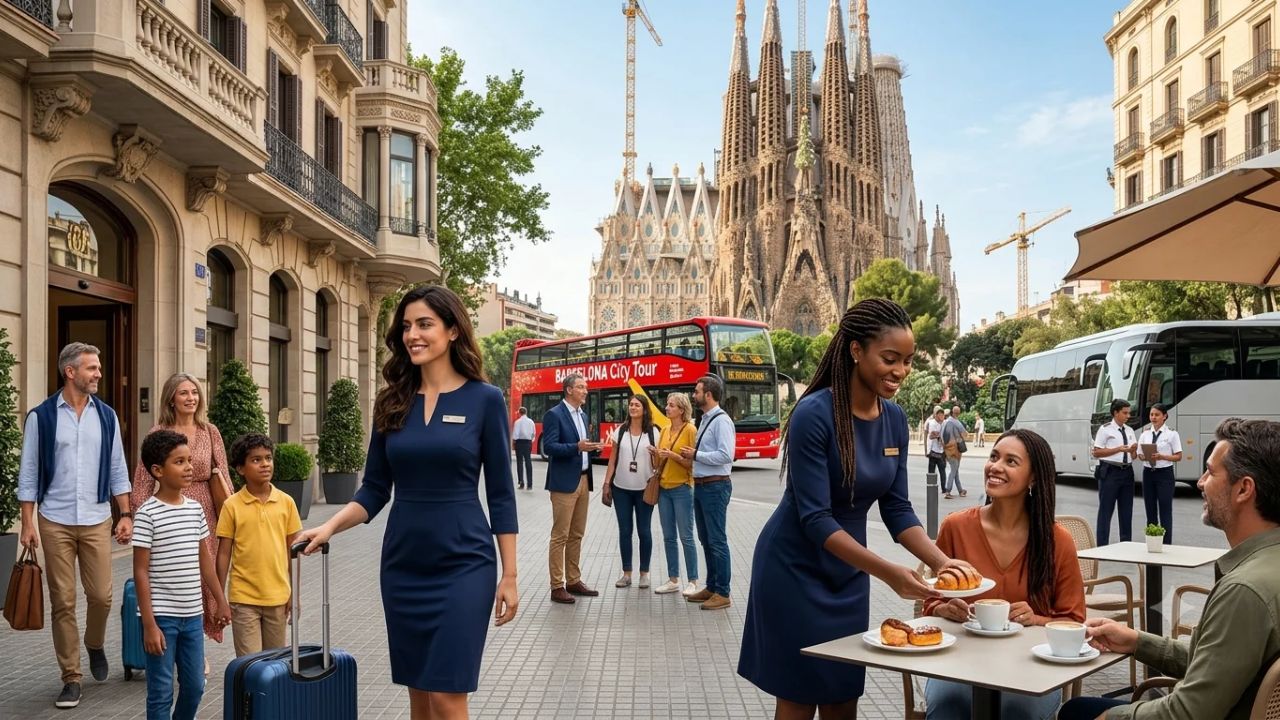
Spain Allocates €42 Million to Rural and Experiential Tourism as Inbound Arrivals from Switzerland, Poland, and Belgium Expand

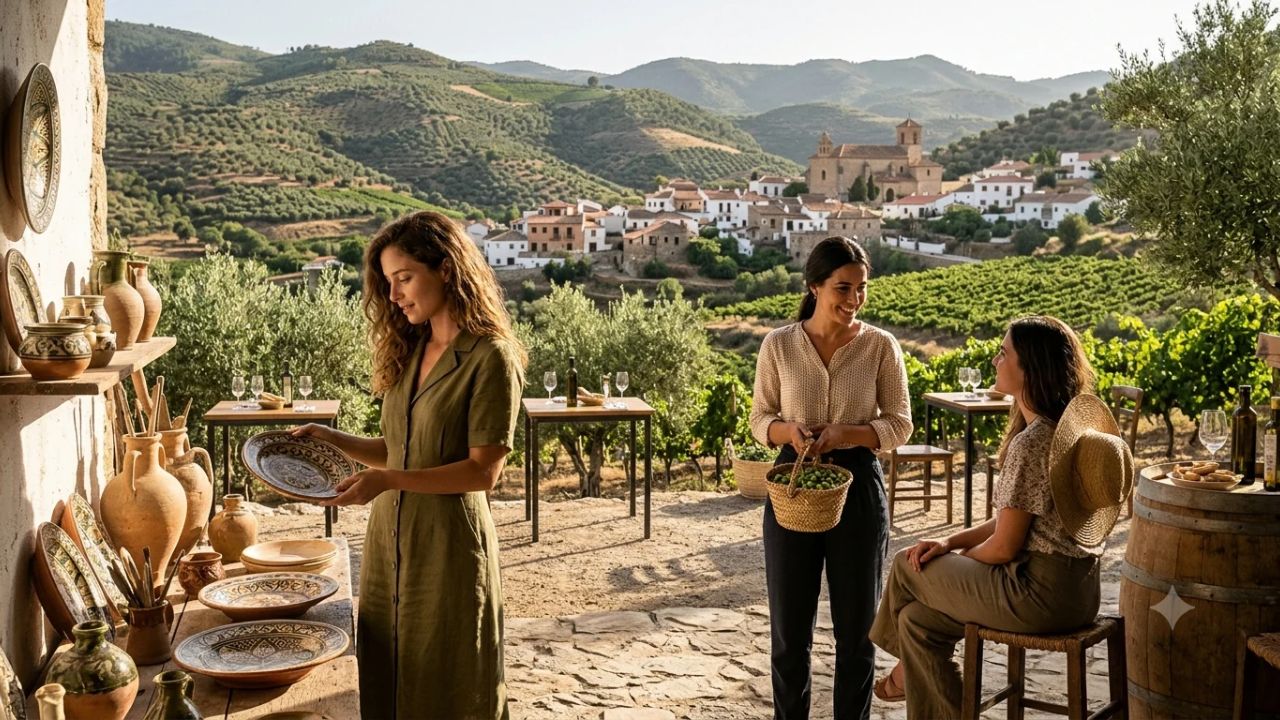
Spain's Ministry of Industry and Tourism has deployed more than €42 million in targeted funding across 71 experiential tourism initiatives involving 430 partner organizations, launching an aggressive nationwide effort to distribute international visitor spending into rural municipalities, inland agricultural regions, and heritage craft centers. Backed by the European Union’s NextGenerationEU recovery instrument and aligned with the Spain Tourism Strategy 2030, the public investment seeks to transform the world’s second most visited nation from a seasonal sun-and-beach powerhouse into a year-round destination anchored by regional gastronomy, dark-sky astrotourism, viticulture, and artisanal traditions. This structural realignment comes as national statistics record unprecedented momentum, with Spain registering 80,502,143 international arrivals and €114.38 billion in foreign tourist expenditure through the first nine months of 2026. Notably, established and emerging European outbound markets are driving this transition: inbound arrivals from Switzerland expanded 9.9% to reach 1,900,517 visitors between January and September, Poland posted exceptional baseline growth rates exceeding 23% in volume and 28% in spending, and Belgium contributed over 2.53 million visitors, prompting destination managers to diversify product offerings beyond saturated coastal strips.
The large-scale financial deployment reflects a deliberate strategic pivot by Spanish tourism authorities to tackle long-standing structural challenges: seasonal peaks concentrated in midsummer, geographic overcrowding restricted to coastal strips and major metropolitan centers, and economic leakages that leave depopulated rural interiors detached from the country's multi-billion-euro visitor economy. By channeling capital into cooperative regional networks rather than standalone infrastructure projects, Spain is actively building specialized visitor circuits that appeal directly to discerning European travelers seeking authentic cultural immersion, nature-based exploration, and culinary origin stories.
The Strategic Pivot: NextGenerationEU and the €42 Million Experiential Framework
The Experiencias Turismo España programme represents one of the flagship pillars of Spain’s post-pandemic modernization agenda. Financed through the Recovery, Transformation and Resilience Plan (Plan de Recuperación, Transformación y Resiliencia) using European Union NextGenerationEU funds, the initiative explicitly prioritizes projects that foster multi-regional collaboration, digital integration, and environmental sustainability.
Rather than funding isolated municipal improvements, the Ministry of Industry and Tourism awarded grants to 71 coordinated projects that unite 430 separate beneficiary organizations. These entities span agricultural cooperatives, artisanal guilds, regional tourism boards, specialized tour operators, and technological service providers. This cooperative framework ensures that small producers in sparsely populated interior provinces gain direct access to national and international distribution channels.
| Programme Component | Confirmed Information | Tourism Relevance |
|---|---|---|
| Government Allocation | More than €42 million | Funds development of high-value experiential tourism products |
| Financed Projects | 71 coordinated nationwide initiatives | Broadens the scope and geographic diversity of visitor experiences |
| Beneficiary Organisations | 430 participating public and private entities | Encourages business collaboration and institutional cooperation |
| Funding Mechanism | NextGenerationEU via Spain's Recovery Plan | Accelerates modernization without burdening regional municipal budgets |
| Strategic Direction | Spain Tourism Strategy 2030 | Promotes sustainable, deseasonalized, and regionally balanced growth |
The primary directive of this allocation is to stimulate sustainable economic activity in inland regions that historically captured less than 10% of international tourism expenditure. Through rigorous project selection criteria, the central government mandated that funded initiatives demonstrate tangible contributions to rural retention, cultural preservation, and environmental restoration. The strategy also establishes direct commercial links between traditional primary-sector industries—such as olive oil farming, viticulture, and pottery—and high-yield cultural tourism.
Spain's Record 2026 Macro Tourism Trajectory: FRONTUR and INE Inbound Data
The introduction of specialized rural and cultural experiences coincides with record-setting performance across Spain's national tourism sector. Official data compiled by the National Statistics Institute (INE) through its FRONTUR (Foreign Tourist Movements) and EGATUR (Tourist Expenditure) tracking surveys reveal that inbound travel demand reached historic highs during the first three quarters of 2026.
Between January and September 2026, Spain welcomed 80,502,143 international arrivals, representing a 5.2% increase compared with the equivalent period in 2025. International visitor expenditure grew at an even faster pace, climbing 8.0% year on year to €114.38 billion. This spending premium underscores an ongoing structural shift: total revenue growth continues to outpace arrival volume, reflecting higher average expenditure per trip across primary source markets.
| Spain Tourism Indicator | Latest Verified Figure | Reporting Period |
|---|---|---|
| International Tourist Arrivals | 80,502,143 | January–September 2026 |
| Arrival Growth Rate | +5.2% | January–September 2026 (YoY) |
| International Visitor Expenditure | €114.38 billion | January–September 2026 |
| Expenditure Growth Rate | +8.0% | January–September 2026 (YoY) |
| September International Arrivals | 10,139,650 | Single Month: September 2026 |
| September Average Daily Expenditure | €212 per tourist | September 2026 |
September performance alone highlighted the sustained momentum extending well beyond the traditional July-August holiday window. Spain received 10,139,650 foreign visitors during September, with average daily expenditure reaching €212 per tourist. This expenditure density proves that international travelers are increasingly willing to pay premium rates for specialized accommodations, fine dining, and guided cultural activities during shoulder months.
However, while national macro indicators demonstrate unprecedented volume, they also expose the urgent necessity of geographic distribution. The vast majority of these 80.5 million arrivals entered Spain through primary international hubs—principally Madrid-Barajas, Barcelona-El Prat, Palma de Mallorca, Málaga-Costa del Sol, and Alicante-Elche. Experiencias Turismo España is designed precisely to draw travelers from these transit gateways into secondary and tertiary provincial destinations.
Switzerland Market Dynamics: High-Spending Alpine Visitors Venture Inland
Switzerland represents one of Spain's most valuable European outbound markets on a per-capita spending basis. Swiss travelers consistently record higher daily outlays and longer average lengths of stay than the European average, making them an ideal demographic target for specialized rural, gastronomic, and cultural itineraries.
FRONTUR tracking records reveal that Spain received 1,900,517 tourists from Switzerland between January and September 2026. This performance marks a substantial 9.9% increase compared with the first nine months of 2025, significantly outpacing the broader European growth average. Monthly performance remained robust into the autumn shoulder season, with September capturing 255,512 Swiss arrivals, a 3.6% gain over September 2025.
| Switzerland–Spain Tourism Indicator | Verified Data or Potential Opportunity |
|---|---|
| Arrivals, January–September 2026 | 1,900,517 visitors |
| Year-on-Year Growth (Jan–Sep) | +9.9% compared to equivalent 2025 period |
| September 2026 Arrivals | 255,512 visitors |
| September Annual Growth | +3.6% year-on-year expansion |
| Relevant Experience Segments | Wine tourism, rural heritage retreats, artisanal crafts, and nature trails |
| Traveller Impact | Greater variety of cultural, low-density, and inland holiday options |
Swiss consumer preferences align strongly with Spain’s newly funded experiential products. With strong domestic familiarity with alpine hiking and high-end agritourism, Swiss travelers frequently seek authentic agricultural landscapes, boutique winery accommodations, and cycling routes through natural parks. The availability of high-speed rail connections from Madrid and Barcelona into inland regions such as Aragon, Castile and León, and Extremadura enables Swiss visitors to easily combine city breaks with multi-day rural excursions.
While official data confirms the 9.9% influx surge, destination planners emphasize that ongoing marketing coordination by Turespaña will determine whether these visitors convert into repeat visitors for specialized inland corridors rather than returning exclusively to traditional coastal resorts.
Poland Market Expansion: Central Europe's Rapidly Emerging Outbound Powerhouse
Poland has rapidly ascended as one of the fastest-growing source markets for the Iberian travel trade, driven by strong domestic economic growth, rising disposable household incomes, and expanding direct low-cost air connectivity between Polish regional airports and Spanish gateways.
Official Turespaña market reports published in early 2026 document that Polish tourist arrivals to Spain surged by 23.6% during the 2025 calendar year, while overall expenditure by Polish visitors leaped by 28.3%. This remarkable trajectory solidified Poland’s status as a top-tier growth vector in Central Europe, prompting national tourism planners to integrate Poland into Turespaña’s 2026–2028 Priority Market Operational Framework.
| Poland–Spain Tourism Indicator | Official Evidence and Implications |
|---|---|
| Latest Confirmed Annual Arrival Growth | +23.6% in 2025 baseline reporting |
| Latest Confirmed Annual Expenditure Growth | +28.3% in 2025 baseline reporting |
| 2026 Market Monitoring | Active monitoring in Turespaña reports (including August 2026 updates) |
| Priority Market Status | Formally incorporated in Turespaña’s 2026–2028 Strategic Framework |
| Potential Travel Products | Rural homestays, cultural pilgrimage routes, olive oil heritage, artisanal crafts |
| Reporting Limitation | No independently verified Jan–Sep 2026 Polish arrival total used in this release |
The Polish market is experiencing a notable qualitative evolution. While initial travel patterns favored budget-conscious summer beach holidays along the Costa Brava and Costa Blanca, outbound Polish travelers are showing surging interest in historical pilgrimage trails (notably the Camino de Santiago network), cultural city circuits, and active outdoor vacations.
The Experiencias Turismo España investments provide structured travel products that travel agencies in Warsaw, Kraków, and Wrocław can package as specialized cultural itineraries. By offering certified culinary and rural activities—such as guided olive harvest tours and village craft workshops—Spanish operators are successfully capturing Polish independent travelers seeking experiences beyond packaged coastal resorts.
Belgium's Established Outbound Flow: Sustained Volume and Market Realignment
Belgium has long served as a dependable, mature pillar of Spain's inbound visitor economy. Belgian travelers demonstrate deep familiarity with Spanish geography, high rates of property ownership along the Mediterranean coast, and a marked preference for independent, gastronomy-oriented travel.
During the first nine months of 2026, Spain welcomed 2,532,298 visitors from Belgium, registering a 3.4% increase over the same period in 2025. This cumulative expansion confirms the enduring strength of the Belgian market. However, monthly data reveals notable fluctuations: September 2026 recorded 300,172 arrivals from Belgium, representing a 10.9% year-on-year dip for that single month.
| Belgium–Spain Tourism Indicator | Verified Information or Relevance |
|---|---|
| Arrivals, January–September 2026 | 2,532,298 visitors |
| Year-on-Year Arrival Growth (Jan–Sep) | +3.4% cumulative expansion |
| September 2026 Arrivals | 300,172 visitors |
| September Annual Change | −10.9% single-month decline |
| Priority Market Classification | Categorized under Turespaña 2026–2028 Operational Framework |
| Potential Experiential Segments | Regional gastronomy, historic architectural heritage, crafts, rural stays |
The September contraction illustrates the sensitivity of mature European outbound markets to calendar variations, economic adjustments, and late-summer pricing shifts. At the same time, it reinforces why Spanish tourism officials are prioritizing product diversification. Belgian visitors possess high average purchasing power and a strong cultural affinity for authentic food and wine traditions.
By formalizing initiatives centered on rural architectural heritage, protected designations of origin (DOP) for cheeses and meats, and eco-certified country lodges, Spain is presenting Belgian holidaymakers with compelling reasons to visit during winter and spring shoulder months. Turespaña’s 2026–2028 operational plan specifically targets these affluent segments across Brussels, Flanders, and Wallonia to stabilize monthly travel flows and eliminate seasonal dips.
Flagship Programmes: Olive Oil, Wine, Ceramics, and Astrotourism Networks
The €42 million funding round distributes capital across five core experiential categories: agro-gastronomy, viticulture, traditional craftsmanship, scientific nature observation, and industrial heritage. Each initiative brings together independent producers and regional authorities to build structured tourist routes supported by professional interpretation, digital booking tools, and unified quality standards.
EXPERIENCIAS TURISMO ESPAÑA (€42M ALLOCATION)
| Column 1 | Column 2 | Column 3 | Column 4 | Column 5 | Column 6 | Column 7 |
|---|---|---|---|---|---|---|
| Agro-Gastronomy | Wine Heritage | Traditional Arts | Dark-Sky | |||
| Oleoturismo | Spain Through | CeramiTUR | Starlight | |||
| España | Wineries | Craft Routes | Reserves |
| Supported Initiative | Main Tourism Segment | Potential Visitor Experience |
|---|---|---|
| Oleoturismo España | Agricultural and gastronomic tourism | Discovering ancient olive groves, harvesting techniques, and artisanal mill production |
| Spain Through its Wineries | Viticulture and cultural landscape tourism | Exploring historic winery architecture, vineyard ecosystems, and community heritage |
| CeramiTUR | Craft and artisanal heritage tourism | Hands-on workshops, pottery trail circuits, and master artisan studio tours |
| Sea Starlight | Coastal and island astrotourism | Night-sky maritime observation, astronomical navigation, and nocturnal marine tours |
| Starlight Foundation Initiatives | Nature conservation and astronomical tourism | Guided dark-sky stargazing across designated rural reserves and high-altitude parks |
| Spain Brand Experiences | Industrial, commercial, and design tourism | Touring manufacturing facilities, heritage design ateliers, and historic production plants |
Oleoturismo España: Transforming Olive Heritage into Living Culture
Centering on Andalusia, Extremadura, Castile-La Mancha, and Catalonia, Oleoturismo España develops experiential routes around the world's largest olive oil production landscape. Visitors participate in guided sensory tastings, visit centuries-old mills (almazaras), walk through certified monumental olive groves, and learn how sustainable extraction techniques protect regional biodiversity. This initiative directly links family-owned agricultural estates with international travelers seeking deep culinary education.
Spain Through its Wineries: Community-Anchored Viticulture
Operating under the banner España a Través de sus Bodegas, this initiative broadens traditional wine tasting into immersive community journeys. Participating wineries in regions such as Ribera del Duero, Rioja, Priorat, Rías Baixas, and Jerez collaborate with local historians and hospitality providers to showcase how viticulture has shaped regional architecture, landscape terraces, and village folklore across centuries.
CeramiTUR: Revitalizing Ancient Craft Guilds
CeramiTUR addresses the vulnerability of traditional craftsmanship by integrating artisanal ceramics into experiential travel circuits. Centered in renowned pottery hubs like Talavera de la Reina, Manises, and La Bisbal d'Empordà, the project provides funding for studio modernization, interactive masterclasses with master potters, and curated routes highlighting historic architectural tilework. The project ensures that centuries of decorative art traditions generate sustainable income from cultural travelers.
Dark-Sky Reserves: Starlight Foundation and Sea Starlight
Spain possesses some of Europe’s lowest light-pollution zones in areas like the Canary Islands, Extremadura’s Monfragüe National Park, and the Sierra de Gredos. The Starlight Foundation initiatives, along with the innovative Sea Starlight program, develop certified observation platforms, train specialized astronomical guides, and organize night-sky navigation tours. This non-invasive segment draws eco-conscious travelers during clear autumn and winter nights, generating occupancy during low tourist seasons.
Spain Brand Experiences: Opening Industrial Heritage
Spain Brand Experiences connects visitors with the country's manufacturing legacy, allowing travelers to tour active footwear factories, leatherworking workshops, textile mills, and food production plants. By demystifying production methods and celebrating local design mastery, industrial tourism builds brand equity while providing educational day-trip itineraries for foreign visitors.
Spain's 2030 Sustainable Tourism Strategy: Rebalancing the Visitor Economy
The Experiencias Turismo España investments directly execute the mandate established in the national Spain Tourism Strategy 2030 (Estrategia de Turismo Sostenible de España 2030). For decades, Spain’s tourism model prioritized aggregate passenger volume, resulting in seasonal saturation, escalating housing pressures in urban centers, and strains on municipal water and waste infrastructure in coastal resort towns.
The 2030 framework represents a structural shift toward value creation, social cohesion, and territorial equity. By deploying public capital to develop distinctive rural experiences, the government aims to encourage longer stays, boost off-peak travel, and generate direct revenue for small businesses operating outside established tourist centers.
| Strategic Objective | Intended Outcome | Potential Tourism Impact |
|---|---|---|
| Deseasonalisation | Encourage international travel throughout all twelve months | Broader seasonal holiday choices and reduced peak-period infrastructure strain |
| Geographical Dispersal | Increase visitor activity outside saturated coastal and city centers | Expansion of regional itineraries into inland provinces and rural communities |
| Economic Diversification | Connect traditional agricultural, craft, and industrial sectors with tourism | Emergence of new commercial revenue streams for primary and secondary producers |
| Heritage Preservation | Maintain traditional artisanal techniques, agricultural skills, and monuments | Stronger, authentic cultural tourism offerings anchored in living traditions |
| Sustainable Development | Balance economic performance with social cohesion and environmental limits | Environmentally sensitive, locally managed tourism with high community acceptance |
A critical dimension of this strategy is addressing the depopulation of the Spanish interior, frequently referred to as la España Vaciada (Emptied Spain). Hundreds of rural villages possess rich architectural, culinary, and natural assets but lack the marketing reach and digital tools required to capture international attention. By linking 430 diverse organizations into national networks, the program empowers small-scale entrepreneurs to market their offerings directly to foreign tour operators and independent travelers.
In addition, these initiatives introduce clear sustainability criteria. Projects funded under the NextGenerationEU scheme must adhere to the European Union's "Do No Significant Harm" (DNSH) environmental principles, ensuring that increased visitor flows do not degrade fragile rural ecosystems, deplete regional water tables, or disrupt village life.
Cross-Sector Impacts: Aviation Networks, Rail Links, and Tour Operators
The structural expansion of Spain’s experiential tourism sector generates wide-ranging commercial ripple effects across transportation networks, hospitality sub-sectors, and wholesale travel distribution. However, maximizing the economic impact of these 71 projects requires deep operational coordination across private and public stakeholders.
While the central government’s €42 million commitment finances product development and digital marketing platforms, it does not subsidize new commercial air routes or regional transportation services. The success of inland tourism corridors depends heavily on the existing transit network, specifically Spain's world-class high-speed rail (Alta Velocidad Española - AVE) and regional rail services operated by Renfe, Iryo, and Ouigo.
| Tourism Segment | Potential Impact | Important Qualification |
|---|---|---|
| International Leisure Travel | Broadens destination options and holiday diversity | Realization depends on market awareness and product availability |
| Airline Networks | Generates potential secondary demand across existing route networks | No new airline routes or seat guarantees announced in public funding |
| Wholesale Tour Operators | Creates opportunities for themed multi-destination regional packages | Requires commercial investment in contracting, curation, and foreign sales |
| Rural Accommodations | Stimulates visitor bookings across boutique hotels, inns, and farm stays | Net occupancy impacts require long-term monitoring and regional tracking |
| Cultural Tourism Providers | Expands professionalized guided tours and master artisan workshops | Dependent on consistent execution, linguistic training, and service quality |
| Sustainable Travel Trade | Achieves balanced geographical distribution across interior provinces | Long-term success requires ongoing private-sector viability post-grant |
International airlines serving Spain from Switzerland (such as Swiss International Air Lines and easyJet), Poland (LOT Polish Airlines, Wizz Air, and Ryanair), and Belgium (Brussels Airlines and TUI fly Belgium) stand to benefit from more consistent year-round seat demand. Rather than suffering sharp revenue drops at the close of summer, carriers can maintain route frequencies by marketing autumn harvest tours, winter cultural city breaks, and early spring hiking journeys.
For wholesale tour operators and online travel agencies, the packaged experiences eliminate a long-standing barrier to rural Spain: fragmentation. Historically, international travel agents struggled to book artisanal workshops, private olive mill tours, or stargazing excursions because small operators lacked unified reservation systems or English-language support. By establishing unified standards across 430 participating organizations, the program allows international distributors to incorporate regional excursions into standard European holiday itineraries.
Why This Matters: The Structural Shift from Volume to Value
The strategic evolution underway across Spain delivers critical lessons for the global travel and tourism sector. For decades, destinations measured success almost exclusively by top-line arrival tallies. However, escalating public pushback against overtourism, local housing shortages, and climate vulnerabilities have made volume-only tourism models unsustainable across Southern Europe.
Spain's €42 million Experiencias Turismo España initiative demonstrates how central governments can use targeted public capital to steer the visitor economy toward higher-yield, lower-impact segments. Rather than attempting to suppress traveler demand through punitive measures alone, the Spanish model pairs supply-side diversification with targeted promotion in affluent, culturally engaged source markets.
By cultivating high-value visitor flows from Switzerland, Poland, and Belgium, Spain is systematically developing a multi-tiered visitor economy:
- Capital Retention in Rural Communities: Tourism revenues flow directly to olive growers, winemakers, ceramicists, and local nature guides, keeping capital inside local economies.
- Mitigation of Coastal Saturation: Diverting international travelers inland relieves peak-season pressures on Mediterranean water resources, coastal transport, and residential neighborhoods.
- Resilience Against Seasonal Economic Volatility: Year-round cultural activities—such as autumn grape and olive harvests, winter dark-sky observation, and spring craft workshops—provide steady employment for hospitality workers.
- Cultural Heritage Preservation: Economic viability gives younger generations tangible incentives to preserve ancient crafts, farming methods, and architectural traditions that might otherwise disappear.
The long-term success of this initiative will ultimately depend on rigorous execution, sustained private-sector profitability after grant funds expire, and continued alignment with international transport corridors. Nonetheless, Spain’s proactive realignment provides a blueprint for mature destinations worldwide seeking to reconcile economic growth with environmental limits and community well-being.
Frequently Asked Questions
What is the Experiencias Turismo España programme and how is it funded?
The Experiencias Turismo España programme is a national tourism modernization initiative administered by Spain's Ministry of Industry and Tourism. Funded with more than €42 million from the European Union's NextGenerationEU recovery facility through Spain's Recovery, Transformation and Resilience Plan, the initiative finances 71 collaborative tourism projects involving 430 partner organizations. Its purpose is to develop, structure, and promote innovative visitor experiences centered on rural heritage, agro-gastronomy, traditional craftsmanship, and nature conservation.
Why are Switzerland, Poland, and Belgium prioritized for Spain's regional travel expansion?
Switzerland, Poland, and Belgium represent vital European source markets with distinct strategic value for Spain's diversification agenda. Switzerland provides high-spending visitors whose arrivals expanded 9.9% in the first nine months of 2026. Poland is one of Europe's fastest-growing outbound markets, recording arrival growth of 23.6% and spending growth of 28.3% in baseline reporting. Belgium is an established, dependable market contributing over 2.53 million visitors through September 2026, with travelers displaying strong affinity for cultural heritage, regional gastronomy, and independent exploration.
What specific types of travel experiences are funded under the €42 million initiative?
The initiative finances specialized projects across several primary niches:
- Oleoturismo España: Educational tours and tastings focused on olive farming and olive oil production.
- Spain Through its Wineries: Immersion in historic viticulture landscapes, traditional winery architecture, and local communities.
- CeramiTUR: Hands-on workshops and heritage trails celebrating regional ceramics and pottery traditions.
- Sea Starlight and Starlight Reserves: Certified night-sky observation, astrotourism excursions, and nocturnal nature routes in low-light-pollution zones.
- Spain Brand Experiences: Industrial tourism circuits opening historic manufacturing plants and artisan design workshops to the public.
How does this initiative support the Spain Tourism Strategy 2030?
The program directly advances the core goals of the Spain Tourism Strategy 2030 by promoting deseasonalisation (encouraging travel throughout all twelve months), geographical dispersal (distributing tourists away from saturated coastlines into depopulated rural interiors), economic diversification (linking agriculture and crafts with tourism), and environmental sustainability. By shifting the industry focus from pure arrival volume to visitor spending yield and heritage preservation, the framework fosters a balanced, resilient visitor economy.
Related Travel Guides
This article is for informational purposes. Flight routes, passenger regulations, visa rules, and transit advisories are subject to change by airlines and aviation authorities. Readers are advised to verify schedules and travel documentation with relevant carriers and border agencies before departure.
Related Stories
Jordan Tourism Receipts Climb to Record $6.35 Billion as UAE and Asian Inbound Markets Drive 2026 Economic Modernisation Vision