
Southwest Airlines Boeing 737 MAX 8 Flight From Orlando to Nashville Diverts to Knoxville Following Arrival Airspace Flow Management Controls
Southwest Airlines flight SWA2606, operated by a Boeing 737 MAX 8 from Orlando to Nashville, diverted to Knoxville due to arrival sequencing constraints.

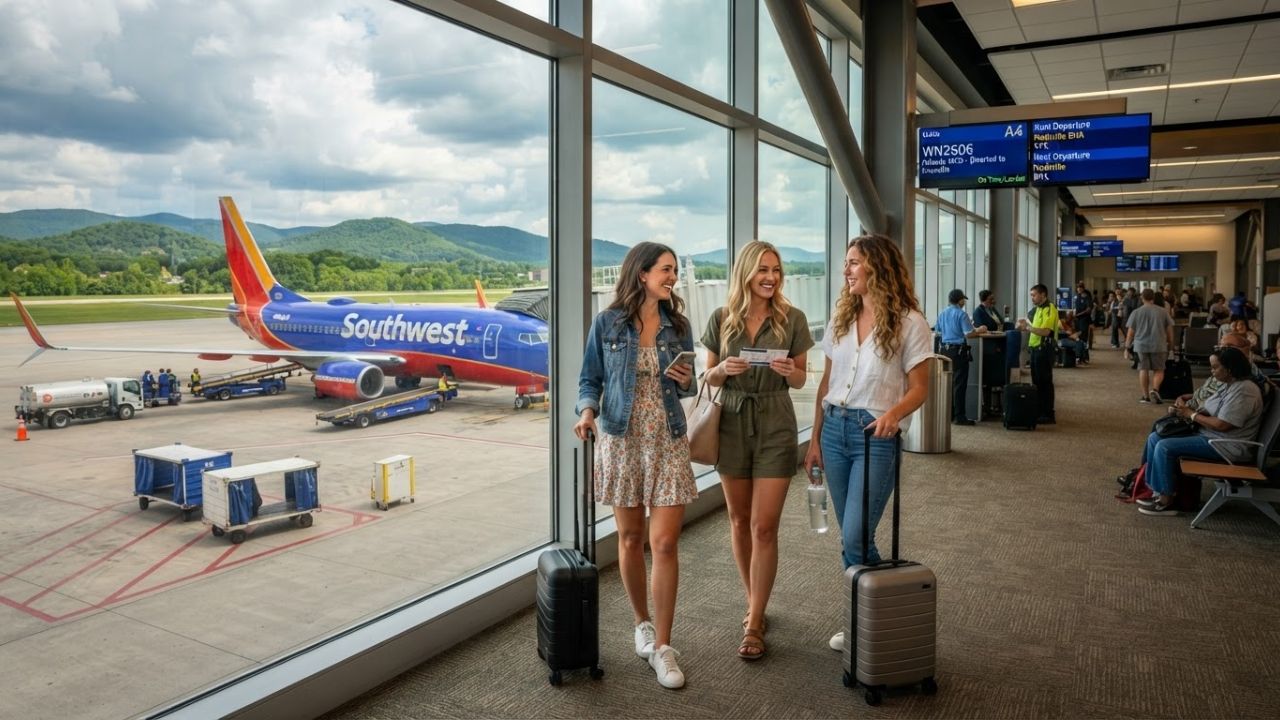
Image generated by AI
Domestic air travel in the Tennessee corridor experienced a tactical rerouting due to arrival capacity constraints. Southwest Airlines flight SWA2606, flying from Orlando to Nashville, diverted to McGhee Tyson Regional Airport in Knoxville.
Nashville International Airport Faces Arrival Sequencing Limits
According to reports, the unscheduled landing occurred on July 3, 2026, during a peak holiday weekend travel period.
Official flight tracking data published by Southwest Airlines confirm that the aircraft, registration N8954Q, departed Orlando International Airport after a brief gate delay.
The flight proceeded normally through the southeastern U.S. air corridor before entering Tennessee airspace.
As the aircraft approached the Nashville metropolitan area, high arrival demand led to sequencing delays.
To manage airspace volume, air traffic control directed the flight crew to divert to their designated alternate airport.
The tables below display the flight parameters and the regional airport capacity options.
Southwest Flight SWA2606 Operational Parameters
| Flight Segment Phase | Scheduled Departure Point | Scheduled Arrival Gateway | Actual Landing Field | Operating Aircraft Fleet |
|---|---|---|---|---|
| En Route Rotation | Orlando International (MCO) | Nashville International (BNA) | McGhee Tyson Airport (TYS) | Boeing 737 MAX 8 (Reg: N8954Q) |
Regional Airport Capacities in Tennessee Corridor
| Airport Gateway | Distance to Nashville Area | Runway Infrastructure | Airspace Demand Level | Strategic Role |
|---|---|---|---|---|
| Nashville (BNA) | Destination center | Multiple active runways | High peak congestion | Primary destination hub |
| Knoxville (TYS) | ~180 kilometers east | Dual runway system | Low congestion | Designated regional alternate |
Weather Patterns Influence Regional Air Traffic Flow Controls
Summer afternoon weather in the Tennessee Valley can change quickly, bringing storm cells that disrupt flight schedules.
Wind shifts and convective weather patterns frequently force air traffic controllers to adjust approach paths to Nashville.
By rerouting flights to Knoxville, controllers ensure that aircraft land in a stable environment rather than entering extended holding loops.
These diversion decisions are preventive measures designed to protect passenger safety and manage fuel reserves.
McGhee Tyson Airport Serves as Key Alternate for Tennessee Traffic
Operations schedules at McGhee Tyson Airport (TYS) indicate that the facility is equipped to handle commercial passenger jets.
Its close proximity and lower traffic volume make it an optimal backup when Nashville's terminal area experiences delays.
Knoxville has the ground crews and gates required to process arriving passengers from diverted narrow-body aircraft.
Using Knoxville helps keep aircraft and flight crews within a short flight of their scheduled destinations.
Tactical Flight Rerouting Maintains Air Traffic System Stability
The diversion of flight SWA2606 was completed without any onboard emergencies or passenger medical issues.
The aircraft remained under positive radar control throughout its descent and arrival in Knoxville.
Airlines use these tactical reroutes to balance the flow of aircraft into high-density airport terminals.
This system-wide management helps prevent departure delays from cascading to other airports in the carrier's network.
Ground crews in Knoxville worked to coordinate onward travel options for the affected passengers.
Why This Matters
Our analysis of the flight data indicates that holiday weekend travel peaks place heavy strain on regional airport terminals. When arrival volumes exceed runway slot capacity, air traffic control must use alternate gateways to maintain safety margins.
Diverting to Knoxville allows Southwest Airlines to manage its fleet rotations without trapping aircraft in holding patterns.
Additionally, this event demonstrates the critical role that regional airports play in supporting the national airspace infrastructure.
For passengers, while a diversion causes a temporary delay, it represents a standard safety procedure during peak traffic periods.
Ultimately, this operational flexibility is necessary to handle the complexity of U.S. domestic air travel during high-demand summer seasons.
Industry Outlook
Market trends suggest that U.S. carriers will continue to deploy high-capacity narrow-body aircraft on busy Southeast-to-Midwest routes. Airlines will prioritize fuel efficiency and digital route planning to manage air traffic controls.
Expect dispatch teams to maintain standard diversion plans as passenger traffic at Nashville International Airport grows. The Tennessee aviation corridor is projected to operate with high stability.
Key Takeaways
- Rerouted Flight: Southwest Airlines flight SWA2606 diverted to Knoxville while en route to Nashville.
- Aircraft Model: The flight was operated using a Boeing 737 MAX 8 narrow-body passenger aircraft.
- Safe Landing: The aircraft, registration N8954Q, completed a normal landing at McGhee Tyson Airport.
- Congestion Cause: The diversion was triggered by air traffic flow management in Nashville airspace.
- Regional Support: Knoxville served as a key alternate to relieve airspace congestion on July 3, 2026.
FAQ
Why did Southwest flight SWA2606 divert to Knoxville?
The flight diverted due to air traffic control sequencing and arrival congestion in the airspace around Nashville.
Did the flight crew declare an emergency?
No, the landing was a standard, non-emergency diversion, and the aircraft remained within normal safety limits.
What is the distance between Knoxville and Nashville?
McGhee Tyson Airport in Knoxville is located approximately 180 kilometers east of Nashville International Airport.
What type of plane operated this flight?
The route was operated using a Boeing 737 MAX 8 passenger jet, registration N8954Q.
Disclaimer
This article is for informational and educational purposes only. It does not constitute legal, financial, or professional advice. While we strive to provide accurate and up-to-date information, travel policies, regulations, and conditions change rapidly. Always verify information with official sources before making travel decisions. Nomad Lawyer makes no representations about the accuracy, reliability, completeness, or suitability of the information provided. Readers should consult qualified professionals for advice specific to their circumstances. The views expressed in this article are those of the author and do not necessarily reflect the views of Nomad Lawyer.
Kunal K Choudhary
Co-Founder & Contributor
A passionate traveller and tech enthusiast. Kunal contributes to the vision and growth of Nomad Lawyer, bringing fresh perspectives and driving the community forward.
Learn more about our team →