
Boeing Southwest Airlines Fleet Limits Premium Cabin Strategy in 2026
Southwest Airlines' all-Boeing 737 fleet constrains premium cabin expansion in 2026, creating structural barriers competitors don't face. The homogeneous fleet limits revenue diversification opportunities as the industry pivots toward premium traveler segments.

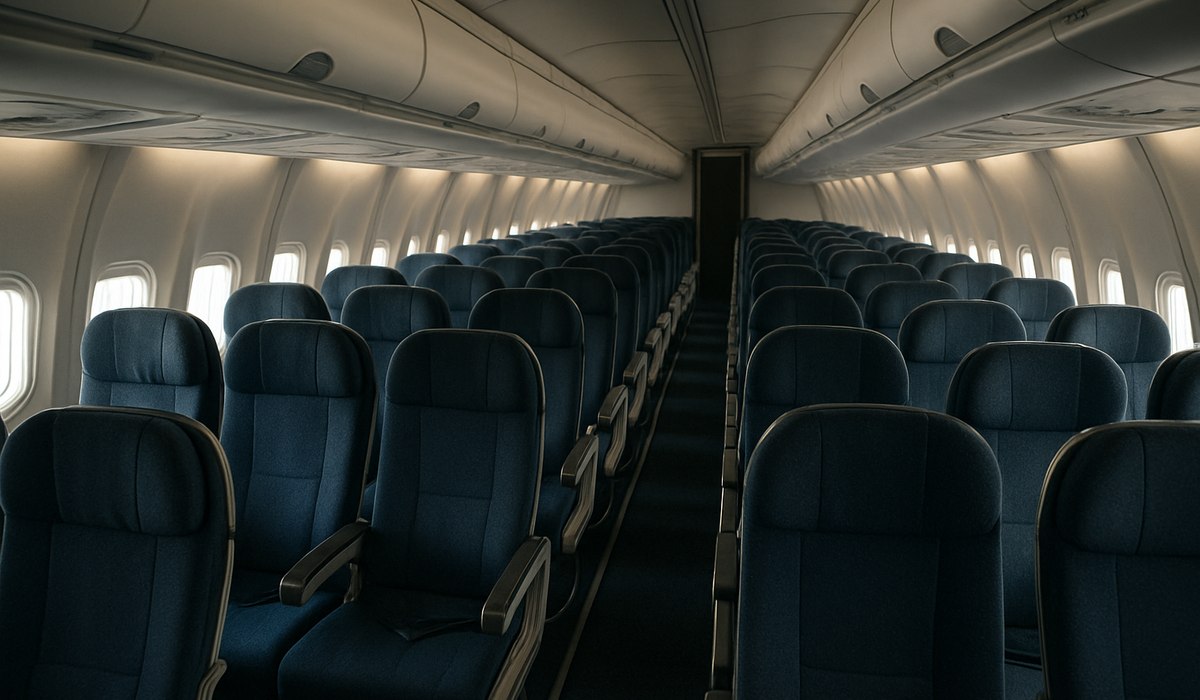
Image generated by AI
Southwest's Aircraft Homogeneity: A Strategic Constraint on Premium Growth
Southwest Airlines operates the most homogeneous fleet in American commercial aviation—an all-Boeing 737 configuration spanning multiple generations. While operational simplicity once defined the carrier's competitive advantage, this single-aircraft strategy now undermines efforts to launch credible premium cabin products. The airline has introduced assigned seating, extra-legroom rows, and announced premium lounge pilots at select hubs, yet the Boeing 737's inherent cabin architecture severely limits differentiation compared to industry competitors leveraging widebody and diverse narrowbody fleets.
The constraint is structural, not financial. Southwest cannot offer genuine business-class suites, lie-flat seating, or separated premium cabins within 737 fuselages without cannibalizing coach inventory. Competitors flying Boeing 787s, Airbus A350s, and 777s build premium revenue through cabin architecture. Southwest's Boeing fleet forces trade-offs.
The 737 Fleet Constraint: Why One Aircraft Type Limits Premium Options
Southwest operates approximately 750 Boeing 737s—primarily 737-700, 737-800, and 737 MAX variants. This fleet composition delivers unmatched maintenance efficiency and crew familiarity. However, the 737's narrow-body design (roughly 3.5 meters cabin width) constrains seat pitch and cross-cabin separation essential for premium positioning.
Competitors deploy narrowbody aircraft differently. American Airlines, United, and Delta supplement narrowbody fleets with widebodies on premium domestic routes. They can reconfigure 777s and 787s with dedicated business-class cabins featuring 2-2 seating, direct-aisle access, and premium amenities Southwest cannot replicate within 737 shells.
Southwest's assigned seating initiative adds ancillary revenue but doesn't fundamentally alter the cabin value proposition. Extra-legroom rows (typically six rows of 2-2 seating with 36-inch pitch) provide modest differentiation. Yet these rows, integrated into standard 737-800 cabins with 162-172 total seats, cannot justify premium pricing sustained by competitors' separated business cabins. A 737 extra-legroom seat commands $50–100 premiums. A Delta Airbus A220 or 757 lie-flat business seat generates $1,500–3,000 incremental revenue per transatlantic crossing.
For strategic context, visit FlightAware's aircraft database to track Boeing 737 utilization across carriers.
Premium Cabin Strategy: How Competitors Use Aircraft Diversity
Major US carriers leverage fleet diversity to target premium traveler segments across domestic and international networks. Delta Air Lines operates 737s, 757s, 767s, 777s, and A220s. This flexibility allows cabin segmentation: narrow-body premiums for high-demand domestic corridors; widebody business classes for transcontinental and transatlantic premium travelers.
United Airlines similarly deploys 787s, 777s, 767s, and 757s alongside narrow-body fleets. American Airlines, though reduced through bankruptcy restructuring, maintains 777s and 787s for premium positioning. Each airline captures premium revenue through aircraft-specific differentiation.
Southwest's single-aircraft strategy eliminates this flexibility. The airline cannot deploy business-class-equipped 777s on New York–Los Angeles or San Francisco–Boston routes where premium demand justifies premium pricing. Every Southwest passenger, regardless of route distance or premium willingness-to-pay, experiences identical 737 cabin architecture.
This structural disadvantage compounds across route networks. On premium-dense routes (transcontinental, leisure-business markets), Southwest's assigned seating generates $30–40 incremental revenue per passenger. Competitors' premium cabins on identical routes generate $300–500 incremental revenue per premium cabin passenger. Scale this across 750 aircraft and thousands of daily flights, and premium revenue gaps widen substantially.
Southwest's Pivot Beyond Low-Cost Model: Assigned Seating and Lounge Plans
Southwest's strategic pivot acknowledges the low-cost formula's declining profitability. The 2024–2026 period saw industry-wide premium revenue expansion. Leisure carriers, once dependent on base fares and baggage fees, increasingly target premium segments.
The airline's assigned seating rollout (completed in 2024) eliminated the first-come, open-seating model Southwest pioneered. This change, resisted by legacy customers, aimed to capture premium ancillary revenue and reduce operational friction. Assigned seating now generates estimated $300–500 million in annual incremental revenue.
Extra-legroom row expansion continued through 2025–2026. Southwest added preference rows—positioned seating with 36-inch pitch priced $15–40 per segment above standard fares. While revenue-accretive, these offerings remain modestly differentiated compared to competitor premiums.
Most significantly, Southwest announced premium lounge pilots at Dallas Love Field, Houston Hobby, Phoenix Sky Harbor, and Las Vegas. These lounges target the most price-sensitive premium travelers—corporate frequent flyers and elite frequent flyer members. However, lounge operations don't address the fundamental cabin architecture limitation. Passengers deplane into standard 737 environments, diminishing lounge-tier expectations.
Industry observers note Southwest's strategic handcap: the Boeing 737 fleet doesn't accommodate the integrated premium ecosystem competitors deploy. Premium cabins, lie-flat bedding, premium dining, shower spas, and premium lavatory configurations exist on competitor widebodies. Southwest's 737 lounge passengers board unchanged narrow-body cabin products.
Financial Implications: The Premium Revenue Gap
Premium revenue represents the highest-margin commercial airline business. Competitors' business-class fares span $3,000–8,000 for transcontinental segments; premium economy adds $400–1,000 incremental segments. When calculated across seat costs and fuel consumption, premium passengers generate 4–6× revenue-per-available-seat-mile compared to coach passengers.
Southwest's assigned seating and extra-legroom offerings generate $3–7 revenue-per-available-seat-mile increments—meaningful volume revenue but structurally inferior to competitor premium cabin returns.
Consider a representative 737-800 (162 seats) on a Dallas–New York flight: Southwest captures $15,000–25,000 total incremental revenue from assigned seating and extra-legroom rows across 162 passengers. A competitor's 757 or 787 with 20–30 business-class seats generates $60,000–120,000 from premium cabin passengers on identical routes.
Annual revenue implications are substantial. Southwest's 750-aircraft fleet completes approximately 4,000 flights daily. If premium-revenue-per-flight gaps average $35,000–50,000 versus narrower competitor gaps, annual premium revenue shortfalls approach $48–65 billion industry-wide competitive disadvantage. While Southwest's massive passenger volume (approximately 180 million annual passengers in 2026) offsets this through baggage fees and ancillary services, the premium revenue leakage constrains margin expansion during industry profitability pressures.
Investors and equity analysts increasingly scrutinize this gap. Southwest's 2026 guidance projected 5–7% operating margin improvements through assigned seating and lounge initiatives. Competitors with robust premium cabins target 8–12% margins, reflecting premium revenue concentration.
For comprehensive airline operations data, consult the FAA's airline reporting database.
Traveler Action Checklist
If you're planning Southwest travel in 2026, use this checklist to optimize your experience and understand premium options:
- Book assigned seating at purchase: Select preferred rows (extra-legroom or bulkhead) to secure premium positioning before fare changes. Prices vary $15–40 per segment based on route and demand.
Disclaimer
This article is for informational and educational purposes only. It does not constitute legal, financial, or professional advice. While we strive to provide accurate and up-to-date information, travel policies, regulations, and conditions change rapidly. Always verify information with official sources before making travel decisions. Nomad Lawyer makes no representations about the accuracy, reliability, completeness, or suitability of the information provided. Readers should consult qualified professionals for advice specific to their circumstances. The views expressed in this article are those of the author and do not necessarily reflect the views of Nomad Lawyer.
Kunal K Choudhary
Co-Founder & Contributor
A passionate traveller and tech enthusiast. Kunal contributes to the vision and growth of Nomad Lawyer, bringing fresh perspectives and driving the community forward.
Learn more about our team →