
Southwest Airlines Flight WN1209 Boeing 737 Diverts from Cincinnati to Louisville in 2026
Southwest Flight WN1209 experienced an unexpected route change on August 4, 2026, diverting a Boeing 737 from Cincinnati to Louisville Muhammad Ali International Airport.

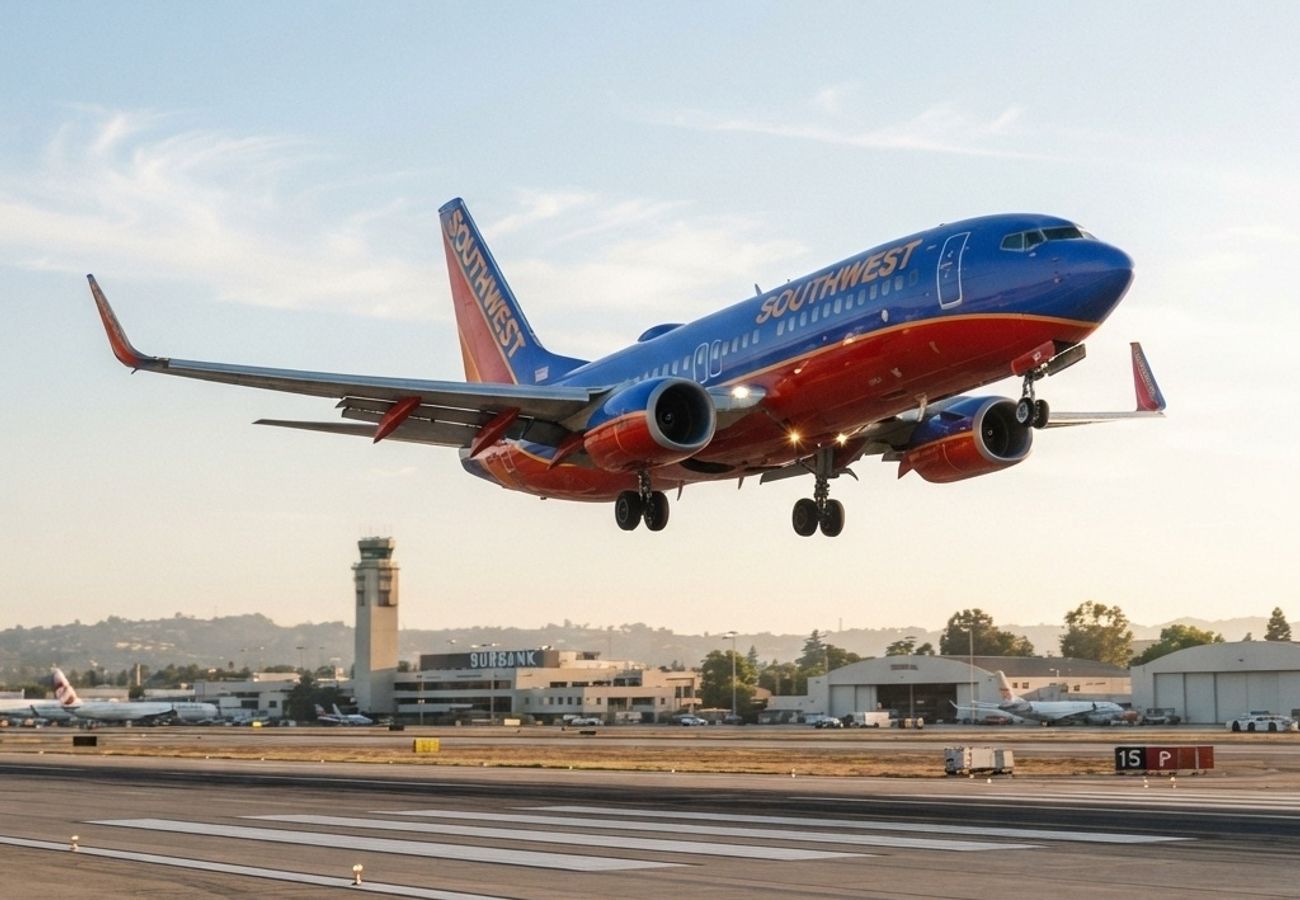
Image generated by AI
A Boeing 737 operating Southwest Flight WN1209 landed 46 minutes behind schedule on August 4, 2026, after an unexpected diversion to Louisville instead of its planned Nashville destination.
The Operational Shift in the Midwest Skies
On Tuesday, August 4, 2026, a routine short-haul jump between two regional hubs took an unexpected turn. Southwest Airlines Flight WN1209 (also tracked as SWA1209), operated by a Boeing 737 registered as N268WN, departed from Gate A5 at Cincinnati/Northern Kentucky International Airport (CVG) in Hebron, Kentucky.
The flight was originally scheduled for a quick transit, departing at 7:00 AM EDT with an expected arrival in Nashville International Airport (BNA) by 7:10 AM EDT. However, the aircraft deviated from its flight path, eventually touching down at Louisville Muhammad Ali International Airport (SDF) at 8:26 AM EDT.
While the diversion resulted in a timing gap of approximately 46 minutes relative to the original Nashville arrival time, the landing was executed safely. No official reason for the route change was immediately released, but such maneuvers are standard protocol when flight crews or operations centers identify a need for flexibility—ranging from technical precautions and medical needs to shifting weather patterns or airport restrictions.
Cultural & Environmental Value: The Impact of Regional Hubs
For the traveler, a diversion is often viewed as a mere inconvenience. However, from a regional tourism and infrastructure perspective, this event highlights the critical role of "alternate" airports like Louisville Muhammad Ali International (SDF).
The ability to seamlessly pivot a commercial jet from a Nashville-bound trajectory to a Louisville landing demonstrates the high level of coordination between the Federal Aviation Administration (FAA) and regional airport authorities. For the visitor, the real impact is the sudden, unplanned exposure to a different city's infrastructure. Louisville's capacity to handle diverted traffic without compromising safety ensures that the regional aviation network remains resilient, supporting the broader economy of the Ohio Valley.
From a sustainability lens, diversions do increase the carbon footprint of a single leg due to extra fuel burn and potential ground transportation needs. However, the prioritization of safety over schedule is the foundational pillar of aviation heritage. By utilizing the closest suitable airport, crews minimize risk and ensure the aircraft is positioned for the safest possible recovery.
Visitor Insider Tips: Navigating Unexpected Diversions
When a flight diverts to an unplanned city, the experience can be stressful. Here is how to handle these situations like a seasoned nomad:
- The "Golden Hour" Window: If you are diverted to a city like Louisville, use the time while the airline coordinates buses or a new flight to explore the immediate airport vicinity. Louisville is famous for its proximity to the Bourbon Trail; if you have a long layover, a quick ride-share to a local distillery can turn a delay into a highlight.
- Digital Documentation: Always take a screenshot of your original itinerary and the diversion notice. In 2026, most airlines use app-based updates, but having a hard copy or screenshot is vital if cellular networks at the alternate airport are congested.
- Local Etiquette: When diverted, you may be placed in temporary airport lounges or hotels. Be mindful that ground staff at the diversion airport are often not employed by your airline; they are local airport employees doing their best to manage an unplanned influx of passengers.
- Off-Peak Advantage: If you find yourself stranded in a diversion city, check for "hidden gem" dining options away from the terminal. In Louisville, seek out local "Hot Brown" sandwiches—a regional specialty—to make the most of the detour.
Tourism Outlook: The Future of Regional Connectivity
The incident involving Flight WN1209 underscores the necessity of maintaining robust, multi-functional regional airports. As air travel continues to evolve in 2026, the reliance on a network of safe, well-equipped alternate airports is more important than ever.
The long-term impact for destinations like Louisville and Cincinnati is a reinforced reputation for operational reliability. When airlines can trust that regional hubs can absorb diverted traffic safely, it encourages more frequent short-haul connectivity, which ultimately benefits local tourism and business travel.
A safe landing is the only successful landing, regardless of the coordinates on the map.
Related Travel Guides
Disclaimer
This article is for informational and educational purposes only. It does not constitute legal, financial, or professional advice. While we strive to provide accurate and up-to-date information, travel policies, regulations, and conditions change rapidly. Always verify information with official sources before making travel decisions. Nomad Lawyer makes no representations about the accuracy, reliability, completeness, or suitability of the information provided. Readers should consult qualified professionals for advice specific to their circumstances. The views expressed in this article are those of the author and do not necessarily reflect the views of Nomad Lawyer.
Raushan Kumar
Founder & Lead Developer
Full-stack developer with 11+ years of experience and a passionate traveller. Raushan built Nomad Lawyer from the ground up with a vision to create the best travel and law experience on the web.
Learn more about our team →