
The Southern Lights Are Just as Magical as the Northern Lights—and Now's the Best Time to Catch Them (2026)

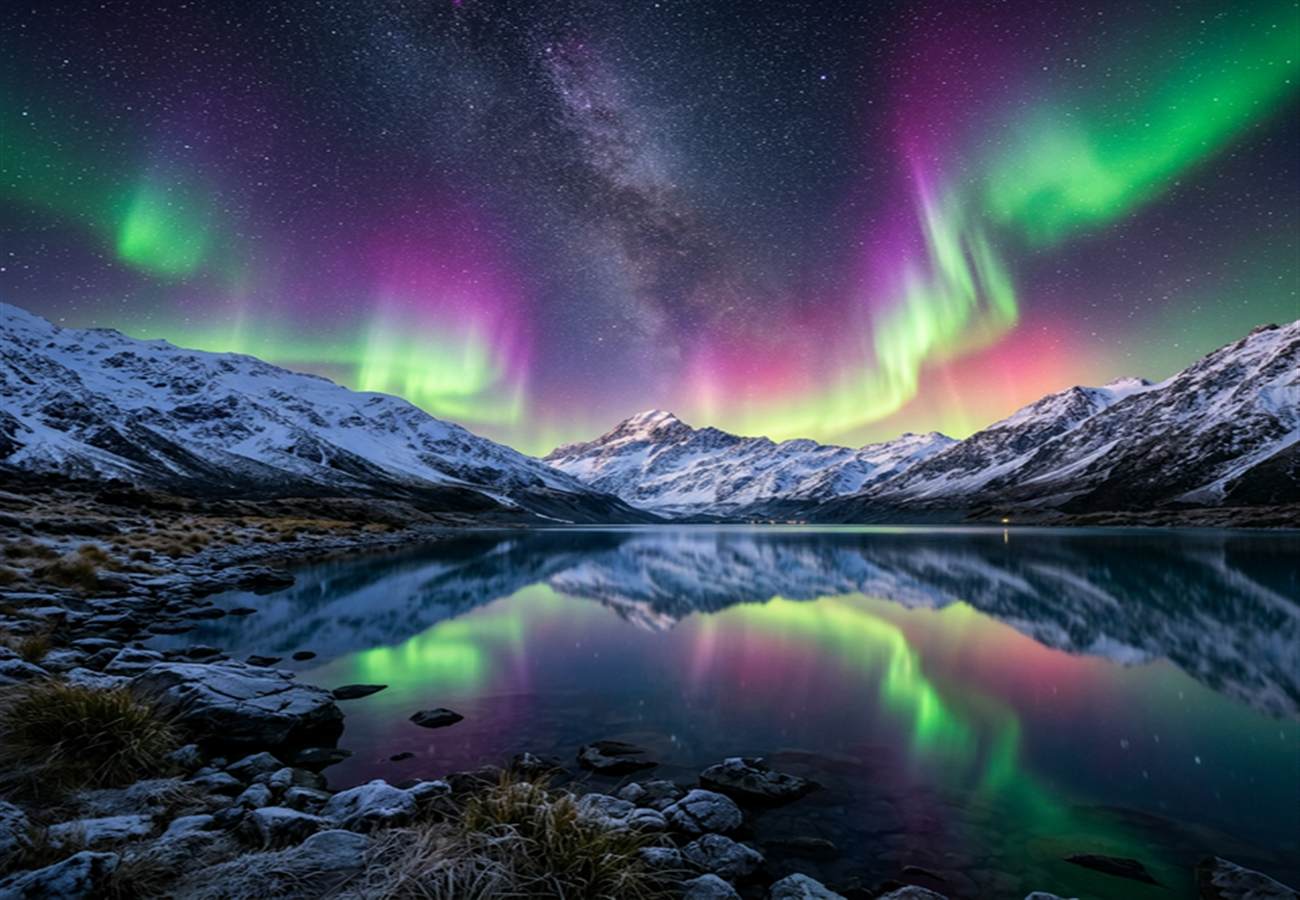
Image generated with AI
For decades, the Northern Lights (Aurora Borealis) have dominated travel bucket lists. But there is a southern sister to this phenomenon that is just as breathtaking and—in 2026—experiencing a once-in-a-decade surge in activity.
The Aurora Australis, or Southern Lights, is the Southern Hemisphere’s celestial light show. While hard to catch due to the vast Southern Ocean, 2026 is officially the year of the "Southern Glow." Thanks to the Solar Maximum, the Southern Lights are appearing further north and with more intensity than we've seen since the early 2010s.
We’ve synthesized the latest strategies from r/Tasmania, r/NewZealand, and Pinterest to help you witness this rare spectacle. Here is your definitive guide to the Southern Lights in 2026.
1. Why 2026 is the "Magic Year" (Solar Maximum)
The secret to the 2026 surge lies 93 million miles away on the surface of the sun. We are currently in the midst of Solar Cycle 25, and NASA and NOAA have confirmed that the "Solar Maximum"—the period of greatest solar activity—is peaking throughout 2025 and 2026.
What this means for you: More solar flares and coronal mass ejections (CMEs) mean more charged particles hitting Earth’s magnetic field. During this peak, the "Auroral Oval" expands. While you usually have to be in Antarctica to see the Southern Lights, in 2026, they are regularly visible from the southern mainland of Australia, the entire South Island of New Zealand, and even parts of Argentina and Chile.
Reddit Insight: "I've lived in Hobart for 20 years, and I've never seen aurora alerts this frequent. We’re getting 'naked eye' displays (where you don't even need a camera to see the color) almost every other month right now."
2. Aurora Australis vs. Borealis: What’s the Difference?
While the science is identical, the experience differs. The Aurora Borealis is famous for bright greens. The Aurora Australis, however, often features deep purples, pinks, and crimsons.
Because the Southern Lights are often viewed from a greater distance from the pole, you are frequently looking at the tops of the light curtains, where nitrogen and high-altitude oxygen create those rare red and violet hues. It’s an ethereal palette that Pinterest enthusiasts describe as "celestial velvet."
3. Top Spots to Catch the Glow in 2026
If you want the best chance of a sighting, you need to head south—specifically to places with zero light pollution and a clear view of the southern horizon.
Tasmania, Australia (The VIP Seat): Tasmania is the most reliable place in the world to see the Southern Lights without boarding a ship to Antarctica.
- South Arm Peninsula: Just 40 minutes from Hobart, spots like Goat’s Bluff offer an unobstructed view across the ocean toward the South Pole.
- Cradle Mountain: For the ultimate Pinterest shot, head to Dove Lake. Seeing the aurora reflected in the still waters with Cradle Mountain in the background is a religious experience.
New Zealand (The Dark Sky Queen): New Zealand’s South Island is home to some of the world’s largest Dark Sky Reserves.
- Lake Tekapo: Part of the Aoraki Mackenzie Dark Sky Reserve. The Church of the Good Shepherd is the iconic (if crowded) spot, but local r/NZ users suggest heading to the Mt. John Observatory for 360-degree views.
- Stewart Island (Rakiura): Its Maori name actually means "The Land of Glowing Skies." This is as far south as you can get in New Zealand, and the light pollution is non-existent.
Ushuaia, Argentina: The "City at the End of the World." While the weather can be fickle, when the skies clear in Ushuaia, the aurora appears over the jagged peaks of the Andes.
4. The "Equinox Hack" and Best Timing
You can’t just show up and expect a show. Timing is everything.
The Best Months: While winter (June to August) offers the longest nights, the Equinoxes (March and September) are statistically the best times for aurora activity. This is due to the "Russell-McPherron effect," where the Earth’s magnetic field aligns more perfectly with the solar wind, making it easier for charged particles to create a display.
The Moon Phase: Check your lunar calendar. A full moon will wash out all but the most intense auroras. Aim for the New Moon window (or 3 days before/after).
Quora Tip: "Don't just check the weather; check the 'Kp-Index'. You want a Kp of 4 or higher for a good show in Tasmania, and Kp 5+ if you're trying to see it from the Australian mainland or Victoria."
5. Photography Hacks (Pinterest and Reddit Wisdom)
Modern smartphone technology has changed the game for aurora chasing in 2026. You no longer need a $3,000 DSLR to get a great shot.
Smartphone Settings (The "Night Mode" Secret): If you have an iPhone 13 or newer (or a flagship Samsung/Google Pixel), use Night Mode.
- The Hack: Use a tripod. Even a cheap $10 phone tripod will allow your phone to extend its exposure to 30 seconds. This is how you get those vibrant greens and purples that the human eye sometimes misses.
DSLR/Mirrorless Professional Tips:
- Aperture: f/2.8 or wider.
- ISO: 1600 to 3200 (don't go too high, or the "noise" will ruin the texture).
- Shutter Speed: 5 to 15 seconds. If the lights are moving fast (dancing), use a shorter speed (2–3 seconds) to capture the "railing" or structure of the curtains.
6. Local Secrets: Escaping the "Instagram Crowds"
In 2026, popular spots like Lake Tekapo can get crowded. To have an intimate experience with the universe, try these lesser-known locations:
- The Catlins, NZ: The absolute southeastern tip of New Zealand. It’s rugged, remote, and has some of the darkest skies on the planet.
- Bruny Island, TAS: Take the ferry from Kettering. Head to "The Neck"—a thin strip of land with water on both sides and a steep staircase that gives you an elevated view of the southern horizon.
- Werribee South, VIC: Believe it or not, during a strong solar storm (Kp 6 or 7), you can see the aurora from the southern outskirts of Melbourne. Reddit users often post "it's hitting now!" alerts for this spot.
7. The Ultimate Aurora Chaser’s Checklist
- Aurora Apps: Download Aurora Forecast, My Aurora Forecast, or join the "Aurora Australis Tasmania" Facebook group. These are the "early warning systems" of the community.
- Red Light Torch: Use a headlamp with a red-light setting. White light ruins your night vision (and the vision of everyone else around you).
- Layers: It is the Southern Hemisphere winter. It will be near freezing. Bring thermals, a down jacket, and a thermos of hot cocoa.
- Patience: The aurora is a fickle beast. It can "sub-storm" for 15 minutes of intensity and then go quiet for two hours. Plan to be out from 9:00 PM to 2:00 AM.
8. Summary: The 2026 Southern Lights Cheat Sheet
- Peak Year: 2026 (Solar Maximum).
- Best Months: March and September (Equinoxes).
- Primary Locations: Tasmania (South Arm) and NZ (Lake Tekapo/Stewart Island).
- Best Tool: A tripod and an Aurora alert app.
- The Vibe: Deep purples and reds—unlike anything in the north.
The Southern Lights are no longer the "forgotten" aurora. In 2026, as the sun reaches its peak of beauty, the Southern Hemisphere is putting on a show that rivals anything the Arctic offers. If you’ve been waiting for the "perfect" time to fly south, this is it.
Turn off the lights, head to the coast, and look south. The universe is waiting.
Related Travel Guides
When to Visit Zion National Park for an Unforgettable Adventure, According To Reddit
The Best and Worst Times to Visit Seattle, According To Reddit
Stargazing 101: The Best Dark Sky Reserves in the Southern Hemisphere
Disclaimer
This article is for informational and educational purposes only. It does not constitute legal, financial, or professional advice. While we strive to provide accurate and up-to-date information, travel policies, regulations, and conditions change rapidly. Always verify information with official sources before making travel decisions. Nomad Lawyer makes no representations about the accuracy, reliability, completeness, or suitability of the information provided. Readers should consult qualified professionals for advice specific to their circumstances. The views expressed in this article are those of the author and do not necessarily reflect the views of Nomad Lawyer.
Preeti Gunjan
Contributor & Community Manager
A passionate traveller and community builder. Preeti helps grow the Nomad Lawyer community, fostering engagement and bringing the reader experience to life.
Learn more about our team →