
Southeast Asia's Aviation Revolution: Singapore Airlines, Malaysia Airlines, Vietnam Airlines Lead S$1.1 Billion Cabin Upgrade Blitz Across ASEAN in 2026
Singapore Airlines, Malaysia Airlines, Vietnam Airlines, Thai Airways, and Scoot launch unprecedented S$1.1B fleet modernization and cabin upgrades rolling out June-December 2026 across Southeast Asia.

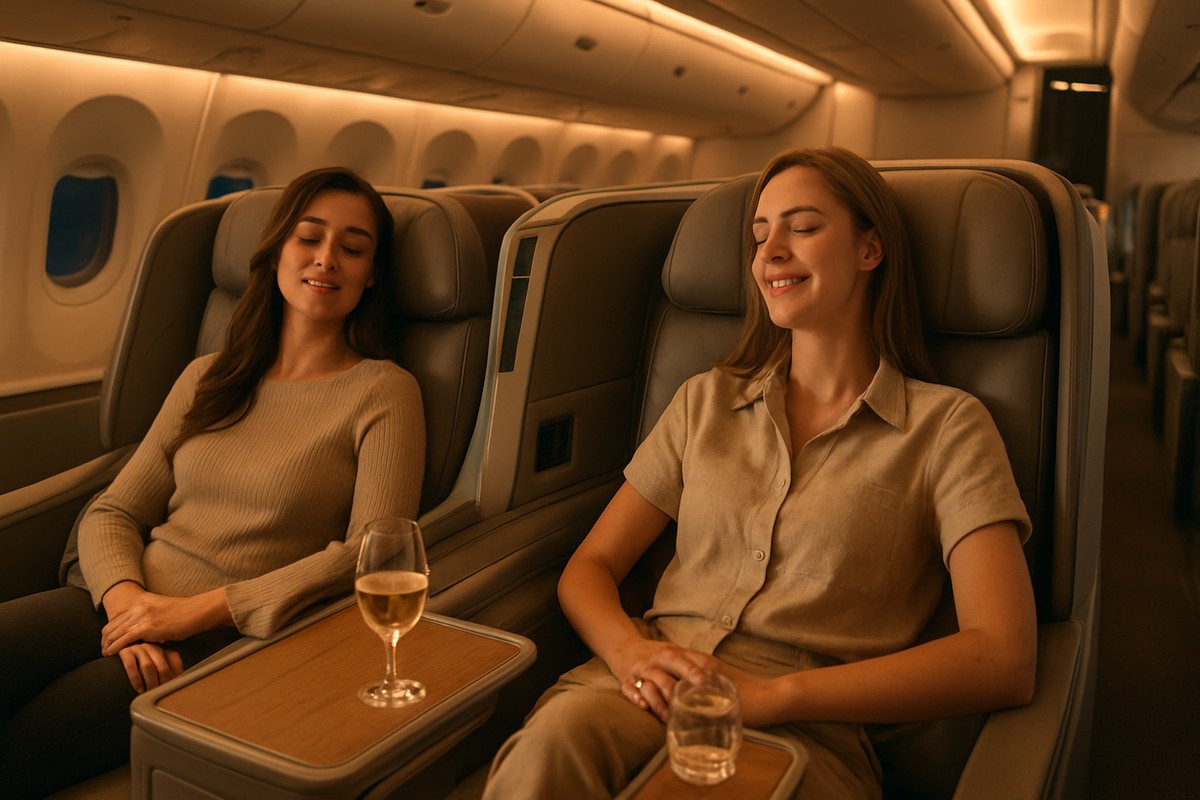
Image generated by AI
Southeast Asia's Aviation Revolution: Singapore Airlines, Malaysia Airlines, Vietnam Airlines Lead S$1.1 Billion Cabin Upgrade Blitz Across ASEAN in 2026
Regional carriers launch unprecedented fleet modernization and in-flight amenities overhaul from June through December 2026
Southeast Asia is experiencing a dramatic transformation of its commercial aviation landscape as five major regional carriers—Singapore Airlines, Malaysia Airlines, Vietnam Airlines, Thai Airways, and Scoot—simultaneously roll out unprecedented cabin upgrades and network expansions. A staggering S$1.1 billion capital investment is fueling this golden-age renaissance, with the first modernized aircraft entering service in Q2 2026. The sweeping initiative redrafts passenger expectations across all travel classes, from economy to first-class, while simultaneously expanding critical international connectivity and deploying cutting-edge biometric technology that will reshape airport experiences across the region.
The Scale of Transformation: A S$1.1 Billion Reimagining of Regional Aviation
The magnitude of capital deployment underscores how seriously Southeast Asian carriers are treating competitive positioning in an increasingly crowded global aviation market. This is not incremental modernization—it is a wholesale reinvention of the regional passenger experience, driven by recognition that modern travelers demand luxury, connectivity, and seamless journeys across every segment of the market.
Industry analysts widely characterize this coordinated upgrade cycle as the most significant regional aviation investment in a decade. The initiatives span aircraft retrofitting, amenity redesign, network optimization, and next-generation airport infrastructure. What distinguishes this wave from previous cycles is its comprehensive scope: every major airline across the region is simultaneously investing, suggesting a shared strategic understanding that ASEAN aviation must compete globally or risk passenger defection to Middle Eastern and Asian hubs.
The competitive pressure is palpable. As long-haul international travel increasingly concentrates around Gulf carriers and established Asian powerhouses (Singapore, Hong Kong, Bangkok), Southeast Asian airlines are fighting aggressively to retain premium long-haul traffic and capture growing leisure and business segments. The 2026 upgrade cycle represents their definitive counteroffensive.
Singapore Airlines: The Flagship S$1.1 Billion A350 Revolution
Singapore Airlines is spearheading the region's transformation with the industry's most ambitious cabin retrofit program. The carrier is investing S$1.1 billion to comprehensively redesign 41 Airbus A350 aircraft across all travel classes. The first modernized A350-900 is scheduled to enter commercial service in Q2 2026, with full fleet retrofitting continuing through the remainder of the year.
The A350 Modernization Scope
The retrofit is comprehensive, touching every aspect of the passenger journey:
- First Class, Business Class, Premium Economy, and Economy cabins all receive complete redesigns
- State-of-the-art sliding privacy doors in Business Class create completely secluded rest sanctuaries—a feature previously unavailable on aircraft of this size
- Next-generation KrisWorld IFE (in-flight entertainment) system installed across every single seat, delivering on-demand HD content with personalized control
- Updated soft furnishings throughout the cabin elevate visual and tactile ambiance
- Modernized galley and lavatory facilities improve crew workflow and passenger comfort
The KrisWorld system represents a particular competitive advantage. Rather than relying on traditional seatback screens, the system streams high-definition content directly to personal devices (tablets, smartphones), allowing passengers complete control over their entertainment consumption while reducing aircraft weight and maintenance complexity.
The privacy doors in Business Class address a long-standing passenger pain point: on regional and short-haul flights, premium passengers have historically lacked true isolation. Singapore Airlines' sliding door solution transforms the A350 into a sanctuary for rest and recovery—critical on ultra-long-haul European routes.
Timeline: First aircraft delivery Q2 2026 | Full fleet modernization completion: end of Q4 2026
Malaysia Airlines: Narrow-Body Luxury Redefined with Boeing 737 MAX 10
Malaysia Airlines is pursuing a markedly different but equally ambitious strategy: bringing lie-flat Business Class seating to narrow-body aircraft for the first time at significant scale. The carrier is deploying brand-new lie-flat Business Class seats across its fleet of Boeing 737 MAX 10 aircraft, fundamentally redefining regional and medium-haul travel.
The Narrow-Body Breakthrough
Historically, lie-flat Business Class seating has been restricted to wide-body aircraft (Boeing 787, Airbus A350, Airbus A380) due to fuselage width constraints. Malaysia Airlines' decision to retrofit the 737 MAX 10 represents a technological and operational breakthrough:
- Fully lie-flat Business Class seats on regional and medium-haul routes—previously a wide-body-only experience
- Significant ergonomic improvement for regional business travelers on routes like Kuala Lumpur to Bangkok, Hong Kong, and Taipei
- Competitive differentiation against regional competitors still operating traditional upright Business Class
- Enhanced crew comfort through improved galley and lavatory ergonomics
The 737 MAX 10, with its marginally wider fuselage compared to earlier 737 variants, allows Malaysia Airlines to maximize premium capacity while maintaining reliable short-haul performance. This is a calculated bet that regional business travelers—particularly in the booming Malaysia-Singapore-Thailand-Indonesia corridor—will pay premium fares for lie-flat comfort on 2-4 hour flights.
Operational Impact: Significant capacity increases on high-frequency regional trunk routes beginning mid-2026
Vietnam Airlines: Strategic Wide-Body Expansion to Europe and Russia
Vietnam Airlines is adopting an expansion-focused strategy, deploying larger wide-body aircraft (Airbus A350 and Boeing 787) on critical high-volume international routes while simultaneously launching breakthrough new services to Europe and Russia.
New Route Launches and Frequency Increases
Amsterdam Direct Service (June 16, 2026):
- First-ever nonstop Hanoi-Amsterdam route
- Critical new gateway to Western Europe
- Positions Hanoi as a Southeast Asian hub for European connections
Moscow Frequency Increase (July 1, 2026):
- Significant frequency boost on Hanoi-Moscow service
- Capitalizes on strong Russian leisure travel demand to Southeast Asia
- Strengthens Eurasian connectivity
Mumbai-Hanoi-Singapore Triangle:
- Increased A350 and B787 deployment
- Enhanced frequency on high-volume business and leisure segments
- Improved aircraft utilization on critical regional trunk routes
The strategic logic is clear: by deploying larger, more comfortable wide-body aircraft and launching new European connections, Vietnam Airlines positions itself as a viable long-haul option for Southeast Asian passengers traditionally routed through Middle Eastern carriers (Emirates, Qatar Airways, Etihad). The new Amsterdam service is particularly significant—it provides a direct European alternative to the traditional Gulf hub model.
Impact: Enhanced passenger capacity, improved comfort, competitive pressure on Gulf carriers
Thai Airways: Luxury Amenities and Culinary Innovation
Thai Airways is pursuing a differentiated strategy focused on soft-product innovation and cultural authenticity rather than fleet-wide retrofitting. The carrier is launching the 2026 In-Flight Collection, a comprehensive amenity redesign developed in exclusive partnership with the legendary design house Jim Thompson.
The 2026 In-Flight Collection: Cultural Luxury Redefined
Royal Silk Class Amenity Kits:
- 14 entirely new aesthetic designs
- Culturally inspired motifs: "Elephant Legacy," "Orchids Bunch," and additional thematic designs
- Hand-curated partnership with Jim Thompson (Thai textile/design icon)
- Collectible presentation—premium passengers will actively seek these items
Long-Sleeve Loungewear (European Ultra-Long-Haul Routes):
- Temperature-controlled bespoke comfort wear
- Specifically designed for 12+ hour European flights
- Reduces jet lag fatigue through thermal management
- Premium positioning on Bangkok-London, Bangkok-Paris routes
Culinary Innovation - Michelin-Quality Street Food:
- Partnerships with celebrated Thai restaurants: Jay Fai and After You
- Authentic street food and desserts served in economy cabins
- Democratization of luxury dining across all travel classes
- Authentic Thai culinary experience at altitude
The strategy is psychologically sophisticated: rather than expensive hard-product upgrades, Thai Airways is investing in cultural storytelling and authentic experiences. Passengers receive collectible design objects and genuine Thai culinary experiences—items that generate social media engagement and brand loyalty far exceeding their material cost.
The inclusion of premium amenities in economy cabins is particularly clever—it generates positive brand sentiment among the largest passenger segment while maintaining premium positioning in upper classes.
Timeline: Rollout beginning June 2026 | Full implementation: Q3-Q4 2026
Scoot: Aggressive Low-Cost Expansion Across Indonesian Archipelago
Scoot, the long-haul low-cost subsidiary of Singapore Airlines, is pursuing aggressive capacity expansion focused on the Indonesian archipelago—the region's highest-growth leisure market.
Scoot's Frequency Offensive (Effective June 2026)
| Route | Current Frequency | New Frequency | Weekly Increase |
|---|---|---|---|
| Jakarta | Multiple daily | Up to 35/week | Significant |
| Bali | Multiple daily | Up to 35/week | Significant |
| Lombok | Existing | 10x/week | New emphasis |
| Manado | Periodic | Daily | Dedicated daily service |
The strategic focus is clear: Scoot is betting aggressively on the Indonesian leisure boom. Lombok and Manado additions particularly suggest growing demand from Australian and regional tourists seeking alternative beach destinations to overcrowded Bali.
The 35 weekly flights to Jakarta and Bali represent near-saturation capacity deployment. Scoot is essentially betting that low-cost point-to-point leisure travel across the Indonesian archipelago is underserved—and it's committing significant capital to capture that market before competitors respond.
Impact: Significant capacity addition to Indonesia, competitive pressure on Garuda Indonesia and other legacy carriers on regional routes
Flydubai: Strategic Southeast Asian Beachhead with Bangkok Daily Service
International expansion is being driven from outside the region as well. Flydubai (Dubai's low-cost international carrier) is launching a brand-new daily service to Bangkok's Don Mueang Airport, effective July 1, 2026.
Strategic Significance
- New direct Dubai-Bangkok link fills gap between Thai Airways/Bangkok Airways limited Gulf service
- Competitive pressure on Middle Eastern carriers (Emirates, Qatar Airways, Etihad)
- Gateway play: Dubai hub connection to Southeast Asia for European/Indian passengers
- Tourist facilitation: Significant boost to Thai tourism from GCC and South Asian markets
The Flydubai entry suggests that Middle Eastern carriers are beginning to view Southeast Asian markets as sufficiently attractive to warrant low-cost point-to-point competition rather than relying purely on hub connections.
Implications: Increased competitive intensity on Gulf-Southeast Asia routes, potential downward pressure on premium fares
Technological Infrastructure: Biometric Transformation and Seamless Travel
Beyond aircraft cabins and routes, the 2026 upgrade cycle includes transformative airport infrastructure designed to eliminate friction from the international travel experience.
Seamless Corridor Initiative
Major Southeast Asian airports (particularly Jakarta and Surabaya) are implementing Seamless Corridors—fully biometric, borderless transit facilities scheduled for completion by end of 2026.
Seamless Corridor Features:
- Facial recognition-based border control — no paper passports or printed boarding passes required
- On-the-move biometric scanning — passengers move continuously through security and immigration
- Integrated digital identity verification — real-time cross-database checks
- Dramatically reduced dwell time — security/immigration processing time cut by 40-60%
- Stress reduction — elimination of traditional queue-based airport anxiety
The biometric initiative represents infrastructure-level commitment to passenger experience that matches aircraft-level investment. The vision is seamless: arrive at terminal → facial recognition → proceed to gate → board aircraft with zero document presentation.
This technological leap has profound implications for passenger preference formation. A traveler experiencing frictionless biometric screening at Jakarta or Surabaya will prefer routing through those hubs over competitors with traditional passport/boarding pass systems.
In-Flight Connectivity Revolution
Thai Airways' THAI Vision Connection Network:
- Wireless streaming system for high-definition content directly to personal devices
- Elimination of heavy seatback screens — cost reduction, weight savings, maintenance simplification
- Personalized, hygienic viewing experience — passengers use personal devices rather than shared cabin hardware
- Seamless integration with mobile ecosystem expectations
The THAI Vision Connection represents a fundamental rethinking of IFE architecture. Rather than expensive individual seatback screens requiring constant maintenance and repair, passengers use personal devices they've already sanitized. This is both operationally more efficient and psychologically more appealing to modern passengers accustomed to device-centric media consumption.
Industry Analysis: Why Now? The Competitive Imperative
The Gulf Carrier Challenge
The 2026 upgrade cycle is primarily a defensive response to extraordinary competitive pressure from Middle Eastern carriers. Emirates, Qatar Airways, and Etihad have dominated long-haul premium travel through Southeast Asia for the past decade, leveraging superior hub infrastructure, newer aircraft, and aggressive pricing.
Southeast Asian carriers are fighting back by:
- **Upgrading to
Disclaimer
This article is for informational and educational purposes only. It does not constitute legal, financial, or professional advice. While we strive to provide accurate and up-to-date information, travel policies, regulations, and conditions change rapidly. Always verify information with official sources before making travel decisions. Nomad Lawyer makes no representations about the accuracy, reliability, completeness, or suitability of the information provided. Readers should consult qualified professionals for advice specific to their circumstances. The views expressed in this article are those of the author and do not necessarily reflect the views of Nomad Lawyer.
Kunal K Choudhary
Co-Founder & Contributor
A passionate traveller and tech enthusiast. Kunal contributes to the vision and growth of Nomad Lawyer, bringing fresh perspectives and driving the community forward.
Learn more about our team →