
South Korea Tourism Sparks Record 12 Trillion Won Retail Spending Surge
South Korea welcomed 10.71 million foreign visitors in H1 2026, driving credit card spending to 12.08 trillion won across retail markets.
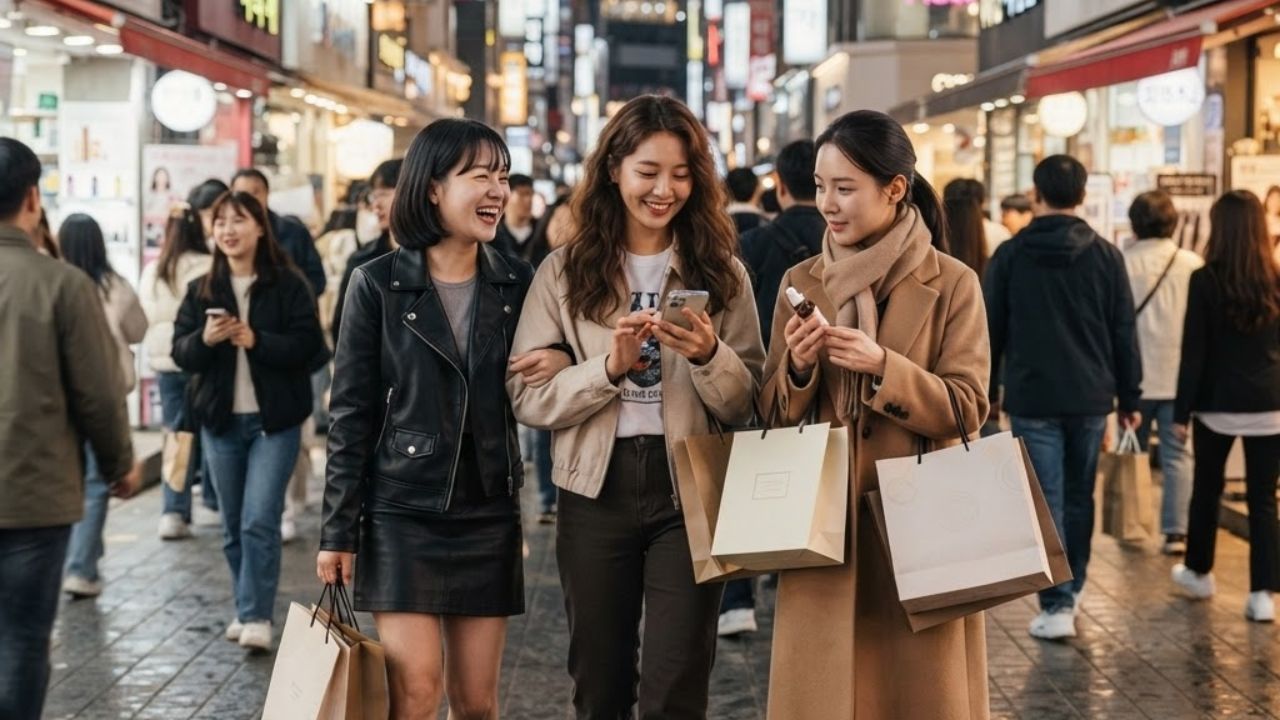
Image generated by AI
Welcoming 10.71 million international visitors in the first half of 2026, South Korea recorded 12.08 trillion won in foreign credit card transactions, driving a retail boom.
The Core Transit Update
Urban transit networks, international flight routes, and shuttle connections to shopping districts across South Korea are adapting to high visitor counts. During the first six months of 2026, South Korea recorded a 21 per cent year-on-year increase in foreign tourist arrivals, reaching 10.71 million.
Between January and July 2026, these visitors spent 12.08 trillion won via international credit cards, representing a 48.2 per cent increase from the 8.15 trillion won recorded during the same period in 2025. Key drivers include holiday spikes like Japan's Golden Week and China's Labor Day. The spending surge boosted luxury department store sales—including Shinsegae (foreign sales up 120 per cent to 580 billion won), Hyundai (The Hyundai Seoul foreign sales up 134 per cent), and Lotte (department store revenue up 9.2 per cent to 891.2 billion won)—as well as convenience stores like GS25 (foreign sales up 67.2 per cent) and BGF Retail's CU.
Retail Spending & Corporate Earnings Indicators
Planning a shopping holiday in South Korea requires comparing regional department store results and tracking convenience retail margins. The following tables outline South Korea's retail spending indicators and detail the corporate financial results.
| Retail Chain / Group | Stated Metric Parameter | H1 / Q2 2026 Measured Value | Year-on-Year Growth Rate |
|---|---|---|---|
| National Spend (Jan–July) | Credit card transaction volume | 12.08 trillion won | +48.2% (from 8.15T won) |
| Shinsegae (H1) | Foreign customer sales revenue | 580 billion won | +120.0% increase |
| The Hyundai Seoul (H1) | Foreign customer sales revenue | Not specified | +134.0% increase |
| Hyundai Gangnam (H1) | Foreign customer sales revenue | Not specified | +131.0% increase |
| GS25 Convenience (Q2) | Foreign customer payment count | Not specified | +67.2% increase |
South Korea retail and tourism credit card spending indicators.
| Corporate Department / Brand | Q2 2026 Stated Revenue | Q2 2026 Operating Profit | Year-on-Year Profit Increase |
|---|---|---|---|
| Shinsegae Dept. Store | 2.02 trillion won (gross) | 108.8 billion won | +53.5% profit rise |
| Hyundai Dept. Store (H1) | 1.28 trillion won (net) | 246.0 billion won | +47.7% profit rise |
| Lotte Dept. Store | 891.2 billion won | 119.7 billion won | +84.0% profit rise |
| GS25 Convenience | 2.38 trillion won | 71.4 billion won | +21.0% profit rise |
| BGF Retail (CU) | 2.43 trillion won | 84.9 billion won | +22.3% profit rise |
South Korea hospitality and retail corporate performance.
Traveler Logistics Guide
From a ground-level perspective, the best way to navigate this is to bring your physical passport to major department stores in Myeongdong and Gangnam, as this allows you to complete immediate tax refund procedures at the point of sale, bypassing the longer customs queues at Incheon International Airport. Checking refund guidelines is recommended.
To plan your shopping trip:
- Allow Safe Connecting Windows: If transiting through Incheon International Airport (ICN) with extensive duty-free luggage to pick up, allow at least four hours before your international flight to manage airport terminal gates and security queues.
- Observe K-ETA Requirements: Before booking your flights, check whether your nationality requires a validated Korea Electronic Travel Authorization (K-ETA). Apply at least 72 hours before departure.
- Leverage Convenience Services: Convenience store chains like GS25 and CU offer tourist-specific SIM cards, transport passes (T-money), and international currency exchange services at terminal locations.
- Navigate via Subway: Seoul’s subway system is the fastest way to travel between major shopping malls in Yeouido and historic markets. Avoid taking road taxis during rush hour.
Infrastructure Impact Assessment
The coordination of high-frequency commuter metro lines and the promotion of tax-refund digital integration protect Seoul’s central business districts from heavy tourist coach traffic and reduce plastic checkout bag waste.
By directing traveler spending to local boutique labels, traditional food courts, and neighborhood convenience stores (GS25 and CU), the shopping wave supports municipal retail employment, funds public transit improvements, and ensures that urban cultural hubs remain vibrant and accessible.
Related Travel Guides
Kazakhstan Rolls Out QazETA Digital Entry for Visa-Exempt Travelers
Shravani Mela 2026 Deoghar Travel Tips and Logistics Guide
10 Best Travel Tips for Shopping in Seoul, Getting Instant Tax Refunds at Shinsegae, and Navigating Yeouido Subway Transit, According to Reddit
Disclaimer
This article is for informational and educational purposes only. It does not constitute legal, financial, or professional advice. While we strive to provide accurate and up-to-date information, travel policies, regulations, and conditions change rapidly. Always verify information with official sources before making travel decisions. Nomad Lawyer makes no representations about the accuracy, reliability, completeness, or suitability of the information provided. Readers should consult qualified professionals for advice specific to their circumstances. The views expressed in this article are those of the author and do not necessarily reflect the views of Nomad Lawyer.