
South America's Tier-2 Cities Emerge as Primary International Aviation Gateways in 2026
Medellín, Cartagena, Mendoza, and Salta are bypassing traditional capital city hubs to establish direct international air links, transforming South American tourism and business travel patterns.

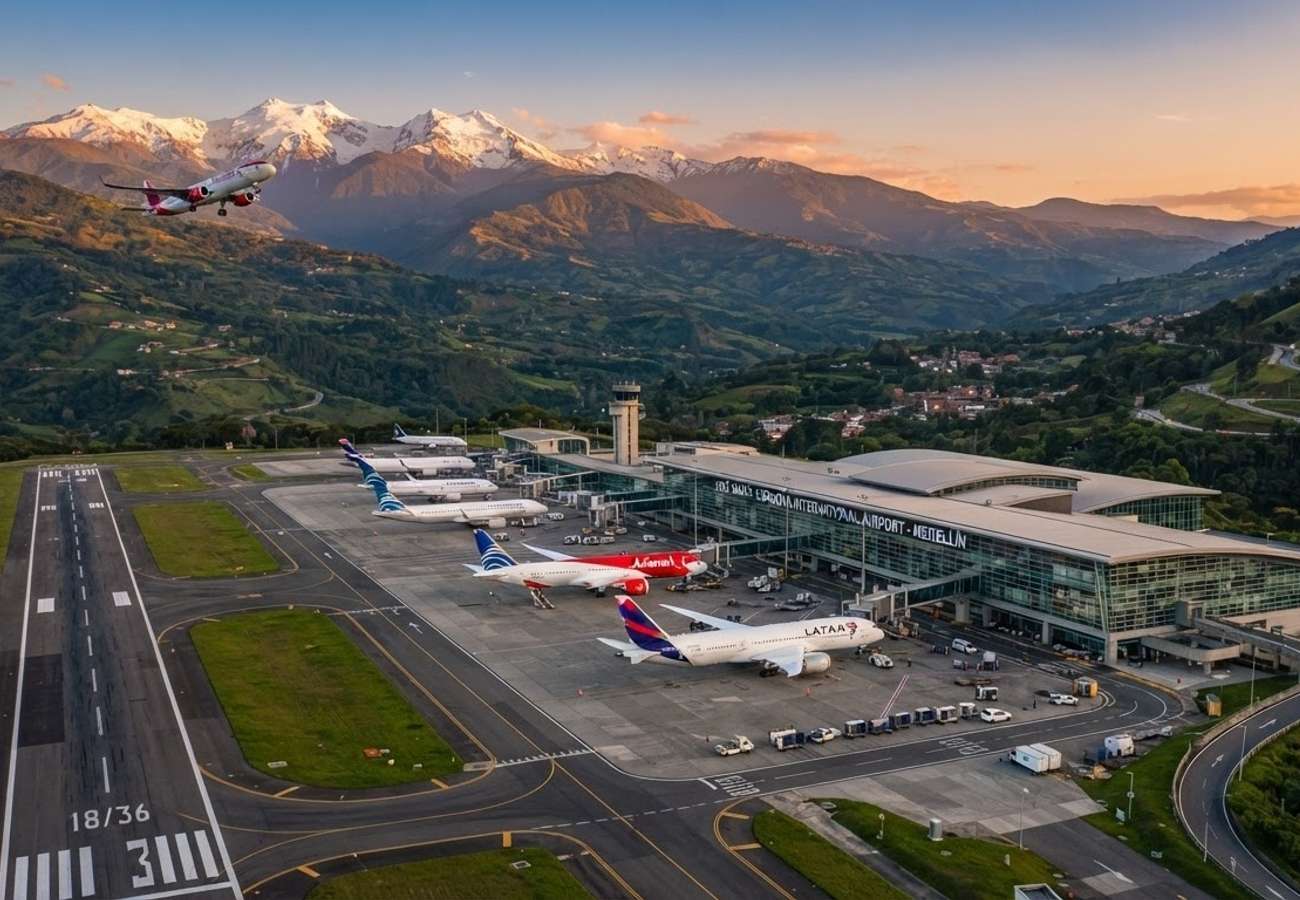
Image generated by AI
The era of the "capital city bottleneck" is ending as regional hubs across South America secure direct international flight paths. By bypassing traditional gateways like Bogotá and Buenos Aires, cities such as Medellín, Mendoza, and Salta are drastically reducing transit times for global travelers.
For decades, the South American travel model forced international arrivals through a handful of massive hubs—São Paulo, Rio de Janeiro, Lima, or Buenos Aires—before connecting to regional destinations. This legacy system is being dismantled by a strategic shift toward "Tier-2" cities: large regional centers with robust local economies and high cultural appeal.
The data confirms this migration. In June 2026, over 168,000 passengers utilized provincial airports in Argentina for direct international travel, completely bypassing the Buenos Aires hub. This trend signals a broader appetite for direct-to-destination travel, driven by a desire to avoid congested capital airports and lengthy transfers.
Medellín: Scaling for Global Demand
Medellín has transitioned from a secondary Colombian destination to a primary global entry point. The city's growth is anchored by the José María Córdova International Airport in Rionegro, which is currently undergoing a massive capacity overhaul.
To keep pace with unexpected passenger surges, Colombia’s National Infrastructure Agency is expanding the airport's annual capacity from 11 million to 17 million passengers. Crucially, the facility is increasing its aircraft movement capability from 24 to 38 flights per hour. This infrastructure upgrade is the catalyst allowing airlines to commit to more frequent international schedules, positioning Medellín as the primary gateway for the Antioquia region’s coffee and adventure tourism.
Caribbean Connectivity in Cartagena
While Medellín focuses on volume and business, Cartagena is leveraging its luxury and beach appeal to attract North American markets. The Rafael Núñez International Airport hit a significant milestone in 2025, handling over 7.7 million passengers.
The city is now aggressively pursuing direct US connectivity. United Airlines has introduced nonstop services from Washington, DC, and Houston, allowing travelers to land directly on the Caribbean coast. By removing the need to transit through Bogotá, Cartagena is positioning itself to compete directly with established Caribbean island destinations.
Mendoza and Salta: Argentina's Regional Revolution
Argentina is seeing a dual-pronged expansion in its wine and northern heritage regions. Mendoza has successfully branded itself as a standalone international destination, focusing on its Malbec vineyards and Andean landscapes.
The growth in Mendoza is quantifiable: international flight frequencies rose from 35 per week in December 2023 to 48 per week by May 2026. With new links to Punta Cana and a Santiago–Mendoza–Rio de Janeiro corridor, the city is even attracting interest from Air Europa for potential direct flights to Madrid.
Further north, Salta is redefining access to the Andes and indigenous cultural routes. In August 2026, the city launched a new terminal that increases operating capacity by 65%. This expansion supports new strategic routes, such as the Paranair service linking Asunción, Salta, and Iquique twice weekly, creating a cross-border corridor that ignores the traditional Buenos Aires center.
Emerging Hubs: Natal and Cali
The shift toward regionalism extends into Brazil and the Pacific coast of Colombia:
- Natal (Brazil): Utilizing its strong beach-holiday product, Natal has established international links to Lisbon, Montevideo, and Buenos Aires, appealing to European and South American sun-seekers.
- Cali (Colombia): Known for its salsa and cultural heritage, Cali is strengthening its transatlantic and North American ties. Avianca continues its Cali–Madrid route, and JetBlue is scheduled to launch daily flights from Fort Lauderdale starting in October 2026.
Regional Aviation Growth Metrics (2023–2026)
The following data highlights the specific capacity and frequency increases across these emerging gateways.
| City/Airport | Key Metric | Previous Status | Current/Projected Status (2026) |
|---|---|---|---|
| Medellín (JMC) | Annual Passenger Capacity | 11 Million | 17 Million |
| Medellín (JMC) | Aircraft Movements per Hour | 24 | 38 |
| Cartagena (RFN) | Annual Passengers (2025) | N/A | 7.7 Million+ |
| Mendoza | Weekly Int'l Frequencies | 35 (Dec 2023) | 48 (May 2026) |
| Salta | Airport Operating Capacity | Baseline | +65% Increase (Aug 2026) |
| Argentina (Provincial) | Direct Int'l Passengers | N/A | 168,000+ (June 2026) |
Strategic Implications for the Travel Industry
The rise of these gateways suggests that "Information Gain" for the traveler now comes from avoiding the hub. However, flights are only one part of the equation. For these cities to sustain this growth, the surrounding infrastructure—luxury hotel stock, bilingual tourism staffing, and streamlined ground transportation—must evolve at the same pace as the runways.
The decentralization of South American aviation is creating a more resilient tourism network. By spreading arrival points across the continent, the region reduces the risk of systemic delays at major hubs and opens up economic opportunities for regional provinces.
South America is no longer a continent of a few great cities, but a network of accessible regional powerhouses.
Related Travel Guides
Disclaimer
This article is for informational and educational purposes only. It does not constitute legal, financial, or professional advice. While we strive to provide accurate and up-to-date information, travel policies, regulations, and conditions change rapidly. Always verify information with official sources before making travel decisions. Nomad Lawyer makes no representations about the accuracy, reliability, completeness, or suitability of the information provided. Readers should consult qualified professionals for advice specific to their circumstances. The views expressed in this article are those of the author and do not necessarily reflect the views of Nomad Lawyer.
Naina Thakur
Contributor & Travel Specialist
Travel enthusiast and legal writer covering visa regulations, responsible tourism, and cultural journeys across global destinations.
Learn more about our team →