
Full-Foot vs Open-Heel Snorkel Fins: Expert Guide to Choosing Gear for Travel in 2026
Discover the critical differences between full-foot, open-heel, and travel snorkel fins to optimize comfort, prevent blisters, and maximize propulsion during your next tropical adventure.

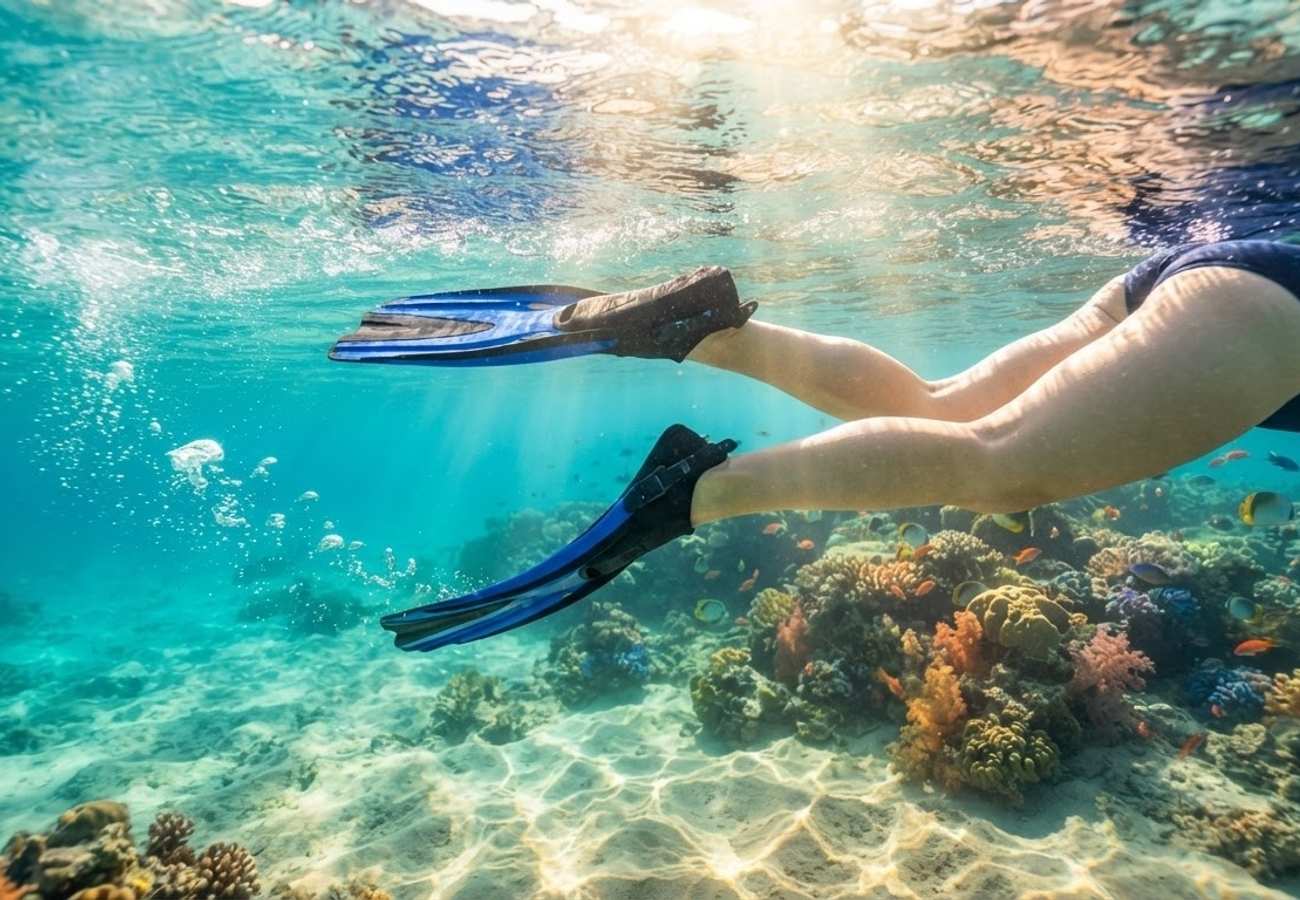
Image generated by AI
Renting gear in the tropics is often a gamble involving worn-out straps and stiff blades that lead to calf cramps. Owning a personal pair of high-quality fins is the most effective way to transition from basic shoreline splashing to confident reef exploration.
While masks and snorkels are easily rented, fins are highly personal. A poor fit doesn't just hinder performance; it creates friction that can ruin a vacation. Selecting the right equipment depends on three primary variables: your destination's terrain, the water temperature, and the strength of local currents.
Decoding Fin Architectures: Full-Foot vs Open-Heel
Most snorkeling equipment falls into two structural categories. Each serves a specific environment and user preference.
Full-Foot Fins
These designs function like a slipper with an integrated blade. The foot slides into a closed pocket with no heel strap. They are the gold standard for warm-water destinations due to their lightweight nature and affordability. Popular models from brands like Mares, Scubapro, and Cressi are staples in beach-town dive shops.
Open-Heel Fins
These feature a larger foot pocket secured by an adjustable strap. They are designed to be worn with neoprene booties. While more common among scuba divers, they are essential for snorkelers visiting areas with hazardous entries. If your destination involves walking over lava rock in Hawaii's Big Island or broken coral in the Canary Islands, the boot-and-strap combination provides necessary sole protection and security.
Comfort, Temperature, and Blister Prevention
The choice between these two styles often comes down to the trade-off between streamlined simplicity and customizable comfort.
For straightforward tropical trips to Bora Bora, Belize, or the Maldives, full-foot fins are the most efficient choice. When properly fitted—such as the Mares Avanti Tre or Cressi Agua—they feel nearly weightless. However, the margin for error in sizing is slim. A loose full-foot fin allows the heel to slide, creating "hot spots" that evolve into blisters. This is a frequent issue with rental gear in Mexico’s Riviera Maya. To mitigate this, travelers should test fins at the end of the day when feet are slightly swollen and utilize 2 mm neoprene socks for cushioning.
Open-heel fins, such as the Tusa Travel Right or Scubapro Go Travel, offer a more forgiving fit. The adjustable strap and the addition of a 3 mm boot make them ideal for travelers with high arches or wide feet. This setup is particularly beneficial for multi-day excursions, such as Red Sea liveaboards, where daily use would otherwise cause rubbing.
Furthermore, temperature plays a role. In the Galapagos or during the Mediterranean shoulder season, open-heel fins paired with thick neoprene boots provide critical warmth that bare full-foot fins cannot offer.
Balancing Propulsion: Short Travel Fins vs Long Blades
Blade length determines the balance between packability and power.
- Short Travel Fins: These blades extend only a few centimeters beyond the toes. They are agile and easy to pack diagonally in a carry-on. They are perfect for sheltered fringing reefs, such as Napili Bay or Kapalua Bay in Maui, where currents are negligible and shallow kicks help avoid damaging coral heads.
- Long Fins: These provide significantly more surface area and thrust. They are essential for drift snorkeling in high-current areas like French Polynesia's passes or Indonesia's Komodo National Park. While freediving-style long fins are difficult to pack, medium-long options like the Mares Avanti Quattro full-foot models offer a professional compromise for checked luggage.
Professional Sizing and Packing Strategies
Fin sizing rarely aligns perfectly with standard shoe sizes. Many brands use ranges (e.g., EU 41–42), and pocket shapes vary.
Fitting Full-Foot Fins: Ensure toes are not crushed against the front, but the heel should not lift more than a few millimeters. Always test the fit with the socks you intend to wear on the trip.
Fitting Open-Heel Fins: Select a boot thickness based on the environment: 2 mm for the Caribbean and 3 mm to 5 mm for cooler waters. The strap should sit low on the heel without pressing into the Achilles tendon. If you have to over-tighten the strap to keep the fin secure, the pocket is too large, which will lead to tendon soreness.
Snorkel Fin Comparison Matrix
| Feature | Full-Foot Fins | Open-Heel Fins | Travel/Short Fins |
|---|---|---|---|
| Best For | Warm, calm water | Rocky entries / Cold water | Carry-on travel / Casual use |
| Footwear | Barefoot or thin socks | Neoprene booties | Barefoot or thin socks |
| Packability | High (if short blade) | Moderate | Very High |
| Propulsion | Moderate | High | Low to Moderate |
| Fit Adjustment | Fixed size | Highly adjustable | Fixed size |
| Key Risk | Heel blisters if loose | Bulkier packing | Limited power in currents |
Key Takeaways
- Prioritize Fit: Full-foot fins require a precise fit to avoid blisters; open-heel fins offer more flexibility for varying foot shapes.
- Match Gear to Terrain: Use open-heel fins and booties for volcanic or rocky shores; use full-foot fins for sandy beach entries.
- Assess the Current: Choose longer blades for drift snorkeling in Indonesia or the Maldives, and short travel fins for calm resort reefs.
- Temperature Control: Use neoprene boots with open-heel fins for cooler destinations like the Galapagos.
FAQ
Can I wear socks with full-foot fins? Yes, 2 mm neoprene socks are highly recommended to prevent blisters and fill small gaps in the fit.
Are short fins powerful enough for most snorkeling? For most resort-based snorkeling and calm bays, short travel fins provide ample propulsion and are much easier to pack.
Why are rental fins often uncomfortable? Rental gear is typically sized in broad ranges and suffers from wear and tear, leading to loose fits that cause friction and cramping.
Invest in the right fit now to ensure your only focus underwater is the marine life, not your feet.
Related Travel Guides
Disclaimer
This article is for informational and educational purposes only. It does not constitute legal, financial, or professional advice. While we strive to provide accurate and up-to-date information, travel policies, regulations, and conditions change rapidly. Always verify information with official sources before making travel decisions. Nomad Lawyer makes no representations about the accuracy, reliability, completeness, or suitability of the information provided. Readers should consult qualified professionals for advice specific to their circumstances. The views expressed in this article are those of the author and do not necessarily reflect the views of Nomad Lawyer.
Preeti Gunjan
Contributor & Community Manager
A passionate traveller and community builder. Preeti helps grow the Nomad Lawyer community, fostering engagement and bringing the reader experience to life.
Learn more about our team →