
SkyWest Operated United Flight UA5441 Diverts Back to Los Angeles LAX Following Inflight Malfunction 2026
United Express flight UA5441, operated by SkyWest, was forced to return to Los Angeles International Airport on August 5, 2026, due to an operational malfunction.

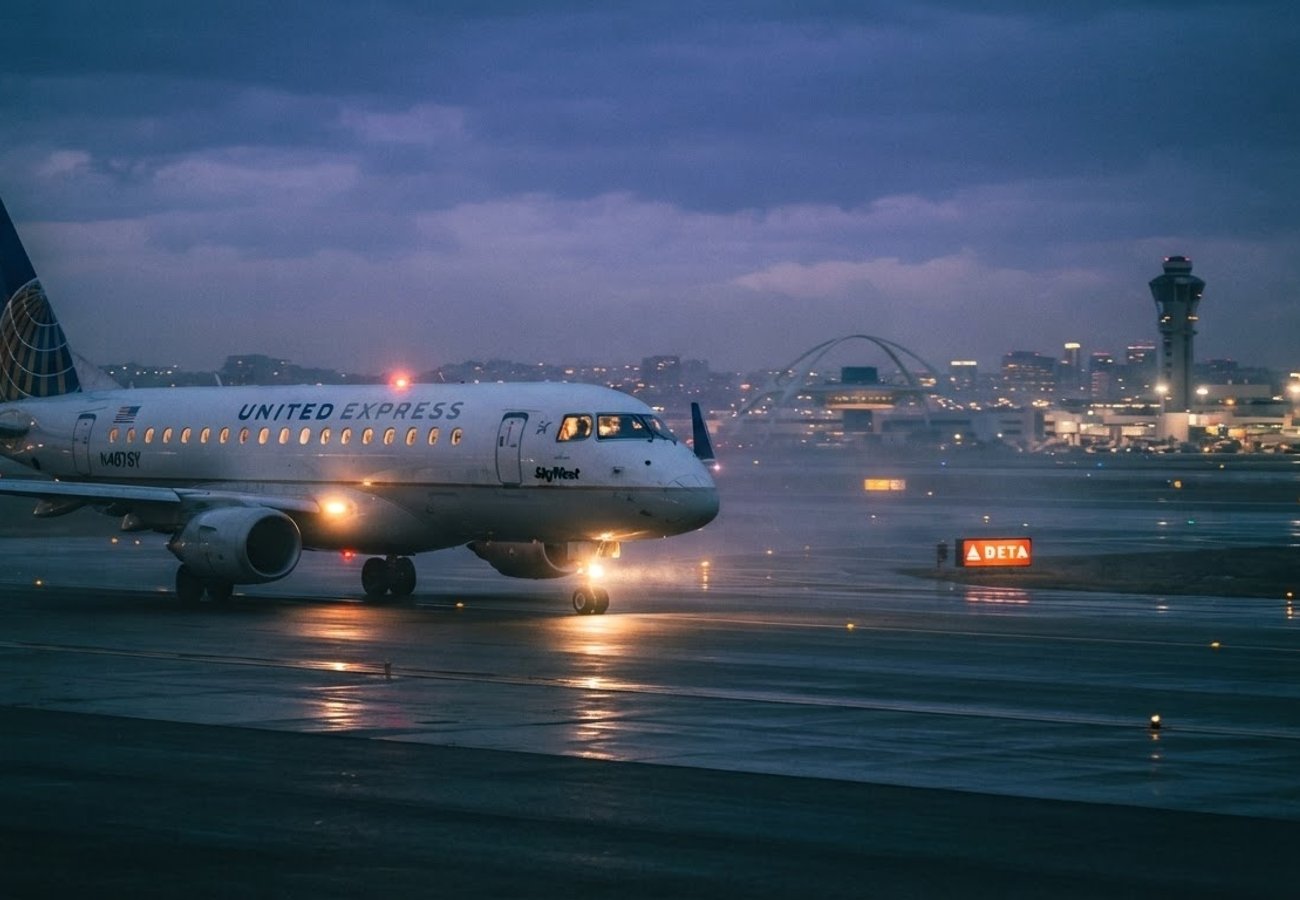
Image generated by AI
Passengers aboard a regional flight from Los Angeles to Northern California experienced an unexpected detour on August 5, 2026, when United Express flight UA5441 was forced to return to its origin. The aircraft, operated by SkyWest Airlines, touched down safely at Los Angeles International Airport (LAX) after an inflight operational malfunction prompted the crew to abort the trip.
The incident occurred during a routine evening service intended to connect Southern California with the coastal region of Arcata and Eureka. While the flight was marketed under the United Express brand, the physical operation was handled by regional partner SkyWest Airlines. The aircraft utilized for the journey was an Embraer E175 regional jet, identified by tail number N85376.
Flight Timeline for United Express UA5441
The scheduled domestic service departed from Los Angeles International Airport (LAX) at 20:32 local time on August 5, 2026. The flight was heading northbound toward the Arcata/Eureka Airport (ACV). However, shortly after takeoff, the flight crew identified an operational issue that necessitated a change in plans.
Rather than continuing toward the destination, the pilots executed a turn-back maneuver. The aircraft returned to Southern California and landed safely at LAX at 22:18. No injuries or further incidents were reported during the landing or the subsequent disembarkation of passengers.
Aviation Protocols for Air Turn-Backs
An air turn-back is a calculated safety decision made by the flight crew when continuing to the intended destination is deemed an unacceptable risk. These decisions are governed by strict international aviation safety protocols to ensure the wellbeing of passengers and crew.
Common triggers for such a decision include:
- Mechanical Alerts: Minor technical warnings that require immediate inspection.
- Sensor Discrepancies: Conflicting data from aircraft system sensors.
- Pressurization Shifts: Unexpected changes in cabin pressure.
- Weather Updates: Rapidly deteriorating conditions at the arrival airport.
By returning to a major hub like LAX, airlines can leverage immediate access to comprehensive maintenance facilities, specialized engineering teams, and a larger fleet of replacement aircraft to minimize passenger displacement.
Regional Challenges at Arcata/Eureka Airport
The destination, Arcata/Eureka Airport (ACV), is known among aviation professionals for its challenging environmental conditions. Located on the rugged Northern California coast, the airport frequently contends with dense maritime fog and volatile visibility.
When cloud ceilings drop below regulatory minimums, pilots are unable to perform the necessary visual or instrument approaches required for a safe landing. Because ACV is a smaller regional facility with limited runway alternatives and ground support infrastructure, prolonged fog often forces aircraft into holding patterns. If fuel reserves approach mandatory minimum thresholds while waiting for a weather window, the commanding officer must divert the flight to a more suitable alternate hub.
Post-Diversion Operational Procedures
Once a diverted aircraft lands, a coordinated effort begins between the cockpit, cabin crew, and ground personnel. The immediate priority is the safe disembarkation of passengers and the recovery of checked luggage.
Simultaneously, flight operations teams conduct a technical evaluation. This process determines if the original aircraft requires extensive repairs or if a replacement jet can be deployed to complete the route. For the passengers, this phase involves:
- Rebooking: Coordinating new flight times to the original destination.
- Passenger Care: Provision of meal vouchers or hotel accommodations for significant delays.
- Compliance: Ensuring the flight crew does not exceed legal flight-time limitations.
Safety Analysis of the UA5441 Incident
The return of flight UA5441 was specifically triggered by an inflight operational malfunction. Reports indicate that the decision to return to LAX, rather than diverting to another nearby airport, was based on safety and logistical efficiency.
LAX provided the highest level of security and the most robust supply of maintenance personnel and spare parts. This choice ensured that the aircraft could be serviced quickly and that passengers had the best chance of being re-routed on alternative flights. From a logistical standpoint, diverting to a smaller airport could have left passengers stranded without adequate hotel or transit options, whereas a return to a primary hub ensures a higher standard of passenger support.
Why This Matters for the Modern Traveler
For the passenger, a flight diversion can be a stressful experience, but it is the most visible application of the "safety-first" culture in aviation. When a crew decides to turn back, they are prioritizing risk mitigation over schedule adherence.
From a legal and logistical perspective, this incident highlights the importance of the "operated by" distinction in aviation. While passengers booked through United, the operational responsibility lay with SkyWest. Understanding this distinction is helpful for travelers when seeking specific information regarding aircraft maintenance or crew performance.
Furthermore, this event underscores the vulnerability of regional routes to both technical malfunctions and environmental factors. Travelers flying into coastal hubs like Arcata/Eureka should always account for potential weather-related delays, as the lack of redundant infrastructure at smaller airports makes diversions more likely than at major international gateways.
Flight safety remains the absolute priority in every cockpit, turning a potential crisis into a managed operational event.
Related Travel Guides
Disclaimer
This article is for informational and educational purposes only. It does not constitute legal, financial, or professional advice. While we strive to provide accurate and up-to-date information, travel policies, regulations, and conditions change rapidly. Always verify information with official sources before making travel decisions. Nomad Lawyer makes no representations about the accuracy, reliability, completeness, or suitability of the information provided. Readers should consult qualified professionals for advice specific to their circumstances. The views expressed in this article are those of the author and do not necessarily reflect the views of Nomad Lawyer.
Kunal K Choudhary
Co-Founder & Contributor
A passionate traveller and tech enthusiast. Kunal contributes to the vision and growth of Nomad Lawyer, bringing fresh perspectives and driving the community forward.
Learn more about our team →