
SkyWest Airlines Flight SKW5057 from Roswell to Denver Diverts to Pueblo Due to Thunderstorms and Front Range Wildfire Smoke
SkyWest flight SKW5057, operated by a Mitsubishi CRJ-200LR from Roswell to Denver, diverted to Pueblo due to storms and Front Range wildfire smoke.

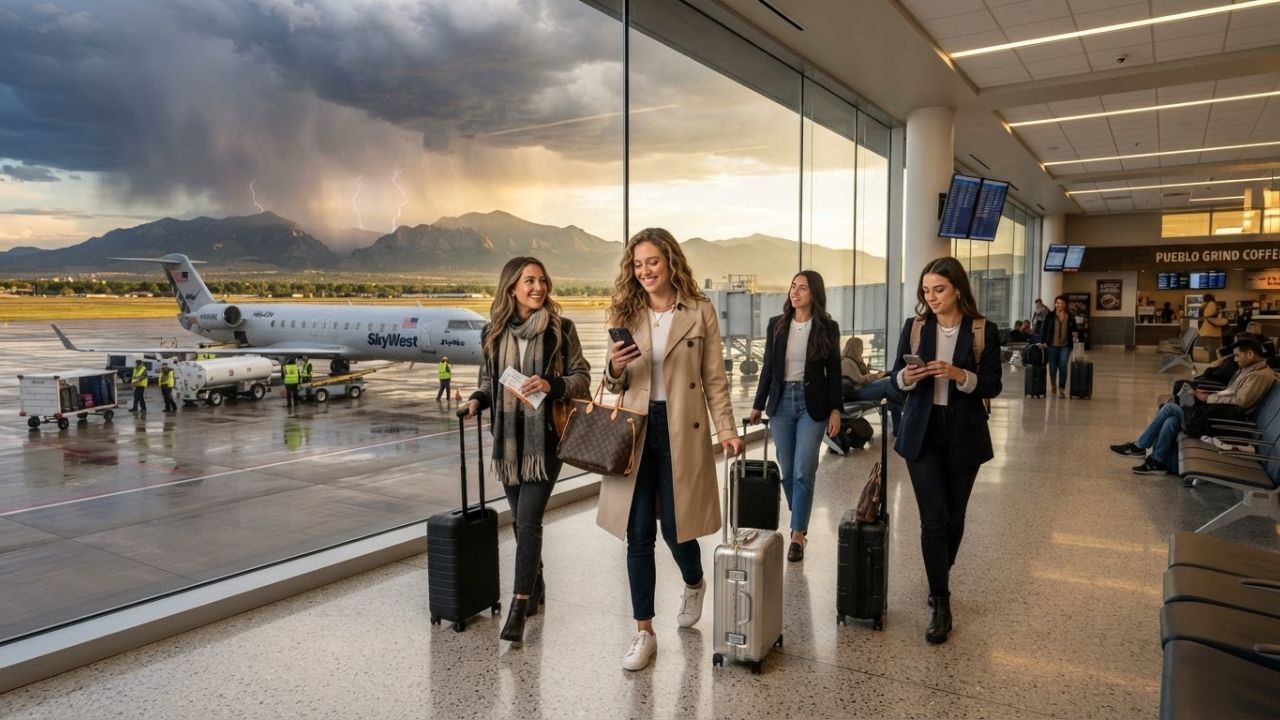
Image generated by AI
SkyWest Airlines Flight SKW5057 from Roswell to Denver Diverts to Pueblo Due to Thunderstorms and Front Range Wildfire Smoke
SEO Title: SkyWest Flight SKW5057 Roswell Denver Pueblo Diversion Meta Description: SkyWest flight SKW5057, operated by a Mitsubishi CRJ-200LR from Roswell to Denver, diverted to Pueblo due to storms and Front Range wildfire smoke. Slug: /skywest-airlines-flight-5057-roswell-denver-diversion-pueblo-2026 Standfirst: SkyWest Airlines Flight SKW5057, operating from Roswell to Denver, diverted to Pueblo Memorial Airport on July 8, 2026. Convective storms and dense wildfire smoke along the Front Range forced the Mitsubishi CRJ-200LR to abort its descent.
Article
[Pueblo, July 9, 2026] — A domestic flight routing through the Western United States diverted yesterday due to severe weather and wildfire conditions. SkyWest Airlines Flight SKW5057 was en route from Roswell to Denver when convective activity blocked the destination airspace.
Meteorological reports indicate that summer storm cells brought wind shear and lightning to Denver's southern arrival corridor. Simultaneously, active wildfires burning along the Front Range released dense smoke columns into the lower atmosphere.
The wildfire smoke reduced slant-range visibility, restricting landing clearances at Denver International Airport. To maintain safety margins, air traffic control instructed several inbound flights to hold or divert to nearby airfields.
Front Range Weather Disruptions and Wildfire Visibility Obstacles
Minutes before the diversion, the flight crew of Flight SKW5057 observed weather radar alerts indicating worsening storms over arrival fixes. The pilots received automated terminal information service reports confirming severe wind shear warnings.
The crew evaluated Denver's rolling arrival delays against the regional jet's remaining fuel reserves. Circling in holding patterns near the storm cores would have exhausted required safety margins.
The pilots coordinated with Denver air traffic controllers to modify their flight path. The crew initiated a controlled descent and steered the twin-engine jet toward Pueblo Memorial Airport.
Inflight Cockpit Telemetry and Pueblo Rerouting Decision
The flight was operated using a Mitsubishi CRJ-200LR, a regional aircraft with specific fuel capacity limits. Mainline aircraft carry larger fuel loads, enabling them to wait out weather delays in extended holding patterns.
Regional jets operate on tighter fuel budgets, which deplete rapidly when subjected to low-altitude holding patterns. The captain elected to preserve the aircraft's mandatory reserve fuel rather than risk an extended hold.
By choosing to divert early, the crew maintained complete operational control over the aircraft. This fuel conservation protocol represents standard safety practices during summer convective weather seasons.
Fuel Performance Limits of the Mitsubishi CRJ 200LR
At the time of the diversion, Denver's airspace was under severe logistical strain. Multiple large mainline aircraft were simultaneously rerouting around active thunderstorm cells.
This traffic volume overwhelmed standard arrival points, forcing air traffic controllers to implement holding patterns for regional flights. Priority was given to international arrivals and heavy jets with limited alternate options.
The regional congestion threatened to extend delays across the Front Range air traffic sector. Recognizing the developing gridlock, the SkyWest crew chose to exit the traffic flow and land at their designated alternate.
Denver Hub Congestion and Air Traffic Gridlock
The aircraft landed safely at Pueblo Memorial Airport, located approximately one hundred miles south of Denver. Ground agents met the passengers and initiated irregular operations protocols.
To complete the journey, the carrier arranged motor coaches to transport the travelers to Denver. Baggage transfer systems were coordinated to ensure luggage was loaded onto the buses.
Passengers reached their final destination by road later that evening. The airline dispatched a ferry flight to return the regional jet to its scheduled rotation once the weather cleared.
Data Table
SkyWest Airlines Flight SKW5057 Diversion Profile
| Flight Parameter | Detailed Flight Value | Alternate Airport Capability |
|---|---|---|
| Flight Number | SKW5057 (United Express) | Pueblo Memorial Airport (PUB) |
| Operating Carrier | SkyWest Airlines | Alternative regional runway |
| Aircraft Model | Mitsubishi CRJ-200LR | Safe landing infrastructure |
| Origin Airport | Roswell Air Center (ROW) | New Mexico regional facility |
| Scheduled Destination | Denver International (DEN) | Impacted by storm and smoke |
| Actual Landing Site | Pueblo Memorial (PUB) | Safe tactical diversion |
| Onward Transport | Ground motor coaches | 100-mile transit to Denver |
Environmental and Air Traffic Factors
| Environmental Variable | Observed Impact on Flight | Operational Action |
|---|---|---|
| Convective Storm Cells | Wind shear and lightning risks | Aborted standard Denver descent |
| Front Range Wildfires | Slant-range visibility reduction | Rerouted away from Denver hub |
| Denver Airspace Gridlock | Extended holding pattern alerts | Exited traffic flow for Pueblo alternate |
| Regional Jet Fuel limits | Rapid fuel consumption at low altitude | Preempted fuel reserve depletion |
Why This Matters
This flight diversion highlights the compounding operational challenges that US airlines face when wildfire smoke and severe summer weather collide. Denver International Airport is the primary aviation hub for the Rocky Mountain region. When convective storms reduce airport capacity, the presence of wildfire smoke further restricts landing opportunities by reducing visibility. This dual hazard forces air traffic control to increase separation between aircraft, causing immediate delays that affect regional flights first.
Our analysis of regional aviation indicates that regional jets like the Mitsubishi CRJ-200LR are highly vulnerable to these compounding delays. Due to their smaller size and limited fuel capacity, these aircraft cannot easily hold while mainline jets are prioritized for landing. The decision by the SkyWest captain to divert to Pueblo demonstrates the critical role of alternate airports in managing regional fleet safety during multi-hazard environmental events.
Additionally, using motor coaches to complete the final 100 miles of the journey illustrates the logistics network required to support irregular operations. When a major hub is closed or severely restricted, regional carriers must coordinate with local ground transit providers to prevent passengers from being stranded at secondary airfields with limited hotel capacity.
Industry Outlook
Market trends suggest that regional airlines will increasingly utilize real-time smoke dispersion modeling alongside standard weather forecasts to plan flight routes. Incorporating air quality and visibility forecasts into flight dispatch systems will help carriers anticipate delays and plan alternates before departure.
Apart from scheduling improvements, regional airports in the Front Range are upgrading their passenger facilities to better handle diverted traffic. Expanding ground transport coordination systems will help minimize traveler delays during seasonal weather and wildfire disruptions.
Related Aviation News Guides
- Saudi Arabia Aviation Expansion Drives Massive Fleet Growth for Riyadh Air, flyadeal, and flynas
- Emirates to Deploy Second Daily Airbus A350 to Colombo Doubling Premium Economy Seat Capacity on Key South Asian Route in August 2026
- Thai Airways to Introduce Second Daily Paris to Bangkok Service Deploying Boeing 787-9 Dreamliner Starting December 2026
Disclaimer
This article is for informational and educational purposes only. It does not constitute legal, financial, or professional advice. While we strive to provide accurate and up-to-date information, travel policies, regulations, and conditions change rapidly. Always verify information with official sources before making travel decisions. Nomad Lawyer makes no representations about the accuracy, reliability, completeness, or suitability of the information provided. Readers should consult qualified professionals for advice specific to their circumstances. The views expressed in this article are those of the author and do not necessarily reflect the views of Nomad Lawyer.
Preeti Gunjan
Contributor & Community Manager
A passionate traveller and community builder. Preeti helps grow the Nomad Lawyer community, fostering engagement and bringing the reader experience to life.
Learn more about our team →