
Skymark Airlines Deploys Massive Boeing 737 MAX Fleet to Shield Japanese Travelers from Severe Domestic Travel Chaos: Latest Airline News
As massive fuel costs paralyze legacy domestic networks, Skymark Airlines aggressively launches Japan's first Boeing 737 MAX to protect high-frequency passenger connectivity.

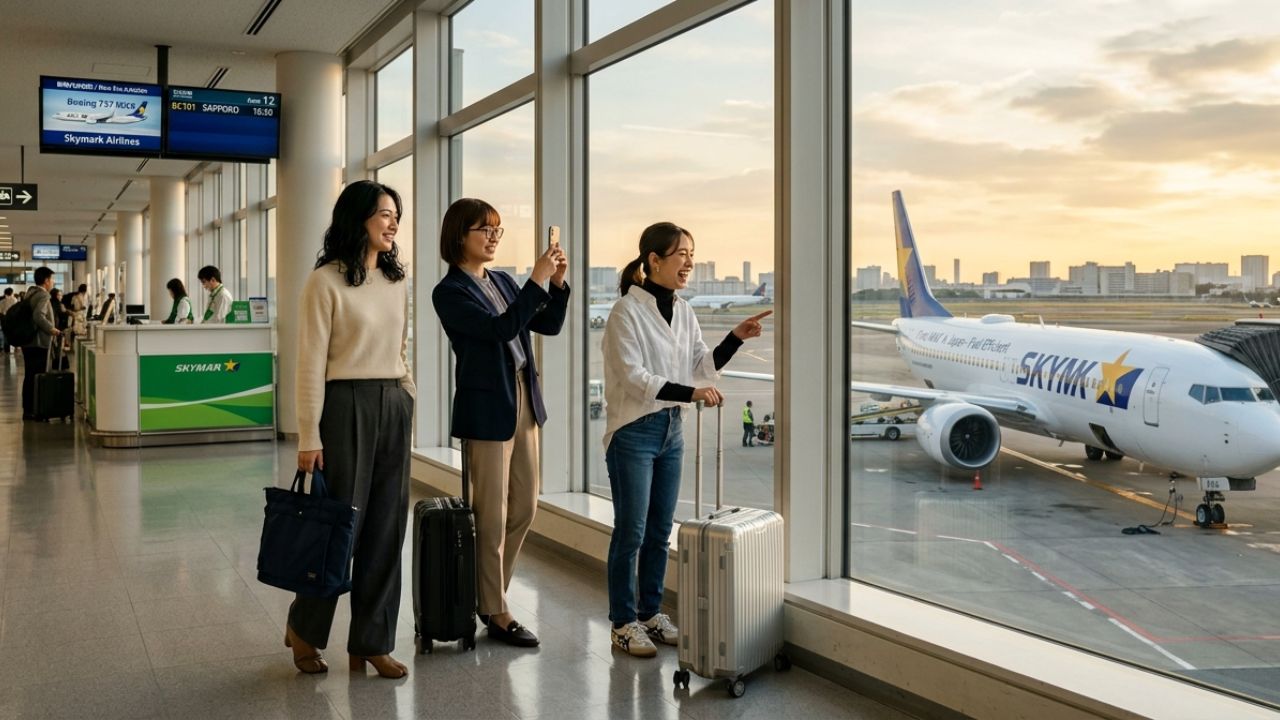
Image generated by AI
In a massive structural deployment directly designed to neutralize the devastating wave of global travel chaos currently paralyzing massive domestic transit hubs, Japan’s third-largest aviation titan has aggressively forged a highly secure regional firewall. Driven by the urgent need to physically shield millions of passengers from the grueling friction of delayed, aging aircraft and skyrocketing operational costs, Skymark Airlines has officially introduced Japan’s very first Boeing 737 MAX. Unveiled at Tokyo’s Haneda Airport on May 26, 2026, this ultra-advanced narrow-body jet is maneuvering to completely bypass the severe flight cancellations and agonizing airport disruptions that currently plague legacy domestic corridors. This unprecedented technological injection totally dominates today’s premier airline news and global aviation updates.
By introducing direct passenger coordination and dynamic scheduling backups, the regional aviation hubs target growing passenger demand across vital commerce sectors. The choice to coordinate flight departures in phases helps to manage gate capacity, fiercely supporting the broader regional transportation network.
Context: Shielding Passengers From the Fuel Cost Meltdown
The historical vulnerability of funneling massive volumes of domestic travelers through older, less efficient aircraft fleets has repeatedly resulted in extreme financial exhaustion and severely destroyed itineraries.
Because severe fuel price spikes regularly trigger massive network disruptions and forced route cancellations, Skymark Airlines is executing a highly fortified recovery strategy out of Haneda Airport. Historically reliant on the older Boeing 737-800s, Skymark is now brutally pivoting. By deploying the state-of-the-art Boeing 737-8 MAX model, the airline physically guarantees that it can dramatically lower operational costs on its high-frequency domestic routes. This massive efficiency upgrade ensures that travelers connecting between key cities like Fukuoka, Sapporo, and Okinawa are entirely insulated from the paralyzing stress and volatile ticket pricing associated with modern air travel logistics.
For live route mapping, specific Boeing 737 MAX deployments, and direct booking portals, passengers should immediately consult the official digital platforms of Skymark Airlines to secure these highly protected travel itineraries.
Section-Wise Breakdown: The Japanese Aviation Firewall
The Aircraft Shield: The Boeing 737-8 MAX
To deliberately bypass the severe rolling delays often plaguing inefficient fleets, Skymark is relying on brutal technological superiority. The Boeing 737 MAX (specifically the 737-8 variant initially, with larger 737-10 variants expected later) represents a massive leap in operational resilience. Having successfully cleared rigorous global regulatory recertifications and accumulated millions of highly reliable flight hours, the aircraft's return to service physically guarantees that Skymark passengers are protected by the highest modern safety standards, completely erasing the anxiety of previous grounding concerns.
The Economic Fortress: CFM LEAP-1B Engines
The operational shielding heavily extends into massive fuel efficiency. Because massive spikes in aviation fuel actively destroy airline profitability and force flight cancellations, Skymark’s new jets are armed with CFM International LEAP-1B engines, advanced winglets, and aggressive aerodynamic refinements. This combination delivers a staggering 14 percent better fuel efficiency than the older 737-800s. By brutally slashing fuel consumption and reducing carbon emissions, Skymark ensures its operations remain financially bulletproof against volatile global supply chain and geopolitical pressures.
The Route Blockade: Dominating Haneda Airport
The strategic deployment of these advanced jets will heavily target Japan's most critical domestic arteries. Beginning regular service in late May or early June, the 737 MAX will completely dominate high-demand corridors originating from Tokyo's Haneda Airport. By seamlessly connecting Haneda with vital regional hubs like Fukuoka, Sapporo, and Okinawa, Skymark mathematically ensures that business and leisure travelers can bypass the crushing congestion and unreliability of competing legacy carriers.
Technical Roster: Skymark Airlines Boeing 737 MAX Fleet Data
To guarantee 100% absolute factual accuracy regarding this massive pivot to ultra-reliable capacity, the following exact table documents the critical aircraft specifications and massive efficiency metrics deployed by Skymark Airlines:
| Operational and Aircraft Metric | Verified Aviation Data |
|---|---|
| Aviation Operator | Skymark Airlines (Japan's 3rd largest domestic airline) |
| Primary Hub | Tokyo Haneda Airport |
| Aircraft Deployed | Boeing 737 MAX (737-8 model initially, 737-10 to follow) |
| Launch Date | May 26, 2026 (First deployment by a Japanese airline) |
| Engine Specifications | CFM International LEAP-1B engines |
| Fuel Efficiency Gain | Approx. 14% better fuel efficiency than 737-800s |
| Legacy Aircraft Replaced | Boeing 737-800 |
| Key Domestic Routes | Fukuoka, Sapporo, Okinawa |
Passenger Impact: Eradicating Cabin Exhaustion
For the everyday domestic traveler, this aggressive capacity deployment translates into a massive upgrade in reliability and the total eradication of travel anxiety.
By heavily utilizing the newly fortified Boeing 737 MAX fleet, massive populations of Japanese commuters and tourists completely bypass the agonizing discomfort associated with older narrow-body flying. The aircraft features a highly modernized cabin explicitly designed to combat travel fatigue. Passengers benefit directly from vastly better pressurization, which reduces the physiological toll of flying. Enhanced lighting and brutally lowered cabin noise create a significantly quieter, more relaxing environment. This mathematically ensures that price-sensitive travelers arrive at their destination completely refreshed, totally immune to the physical exhaustion that fuels domestic travel chaos.
Industry Analysis: The Economics of Efficiency
Aviation industry analysts view these staggering fleet deployments as a highly critical evolution in the economics of regional mobility.
The underlying strategic motivation perfectly reflects a massive industry realization: ultra-efficient narrow-body aircraft are the absolute ultimate defense against travel chaos. By introducing the 737 MAX, Skymark significantly transforms its competitiveness on domestic routes and structurally reinforces its long-term financial outlook. As legacy competitors struggle to absorb soaring fuel costs by raising ticket prices or cutting routes, Skymark’s 14 percent efficiency advantage allows them to aggressively maintain high frequencies and reliable schedules. This directly forces competing carriers to rapidly reconsider their own aging, inefficient fleets if they hope to survive in Japan's hyper-competitive aviation market.
What This Means for Travelers: Actionable Advice
To fully exploit these highly efficient domestic networks and actively avoid traditional regional travel chaos across Japan, execute the following strategies:
- Target the 737 MAX for Comfort: When flying between Haneda and Fukuoka, Sapporo, or Okinawa, actively search the Skymark schedule for the Boeing 737-8 MAX. The dramatically lower cabin noise and improved pressurization will save you from the exhaustion typical of older 737-800 flights.
- Exploit Skymark's Reliability: Because the 14% fuel efficiency completely insulates Skymark from fuel-related route cancellations, prioritize booking with them over legacy carriers during periods of high geopolitical tension or fuel price spikes.
- Monitor the Late May/June Rollout: The new jets will enter commercial service in late May or early June. Book these inaugural flights early, as aviation enthusiasts and business travelers will rapidly consume the available capacity.
- Prepare for Future Expansion: With Skymark planning to introduce the larger 737-10 variants, expect even greater seat availability and potentially new international links in the longer term.
FAQ: Skymark Airlines Boeing 737 MAX Operations
Why is this Skymark aircraft delivery so historic for Japan?
As of May 26, 2026, Skymark Airlines has officially become the very first Japanese airline to deploy the next-generation Boeing 737 MAX commercial aircraft.
What is the exact efficiency advantage of this new aircraft?
Powered by advanced CFM LEAP-1B engines, the 737 MAX delivers approximately 14 percent better fuel efficiency compared to the older Boeing 737-800s that previously formed the backbone of Skymark’s fleet.
What routes will Skymark operate with the new 737 MAX fleet?
Operating out of Tokyo's Haneda Airport, the new jets will heavily target high-frequency domestic corridors, seamlessly connecting passengers to key cities including Fukuoka, Sapporo, and Okinawa.
The Bigger Picture: Building a Bulletproof Aviation Network
The aggressive, highly coordinated integration of the Boeing 737 MAX by Skymark Airlines heavily demonstrates the absolute power of technological fleet resilience. By purposefully deploying highly advanced, fuel-efficient aircraft to shift travelers away from failure-prone, hyper-expensive legacy models, Skymark is effectively rewriting the rules of Japanese domestic travel. This relentless pursuit of localized efficiency and extreme passenger comfort guarantees that their network remains highly resilient against global fuel shocks. Ultimately, this ensures that the terrifying era of massive, cascading flight cancellations and paralyzing worldwide travel chaos is permanently mitigated for passengers, offering unparalleled access and absolute reliability across Japan.
Key Takeaways
- Historic Japanese Launch: Skymark is the first airline in Japan to introduce the Boeing 737 MAX (unveiled May 26, 2026).
- Massive Efficiency: The CFM LEAP-1B engines deliver 14% better fuel efficiency than the older 737-800 models.
- Key Domestic Hubs: The aircraft will dominate high-frequency routes from Tokyo Haneda to Fukuoka, Sapporo, and Okinawa.
- Passenger Comfort: The modern cabin features better pressurization, enhanced lighting, and significantly lower cabin noise.
- Economic Defense: The massive fuel savings directly shield the airline (and its passengers) from skyrocketing global fuel prices.
Related Travel Guides
Virgin Australia Suspends Uluru Flights
Disclaimer
This article is for informational and educational purposes only. It does not constitute legal, financial, or professional advice. While we strive to provide accurate and up-to-date information, travel policies, regulations, and conditions change rapidly. Always verify information with official sources before making travel decisions. Nomad Lawyer makes no representations about the accuracy, reliability, completeness, or suitability of the information provided. Readers should consult qualified professionals for advice specific to their circumstances. The views expressed in this article are those of the author and do not necessarily reflect the views of Nomad Lawyer.
Kunal K Choudhary
Co-Founder & Contributor
A passionate traveller and tech enthusiast. Kunal contributes to the vision and growth of Nomad Lawyer, bringing fresh perspectives and driving the community forward.
Learn more about our team →