
Singapore Leads Asia's Family Travel Revolution With Malaysia, Thailand, UAE, Indonesia as Regional Tourism Shifts Toward Immersive Tech Experiences in 2026
Singapore is spearheading a major transformation in family tourism across Asia, partnering with Malaysia, Thailand, UAE, and Indonesia to create immersive, tech-driven multi-destination holiday experiences that redefine modern leisure travel.

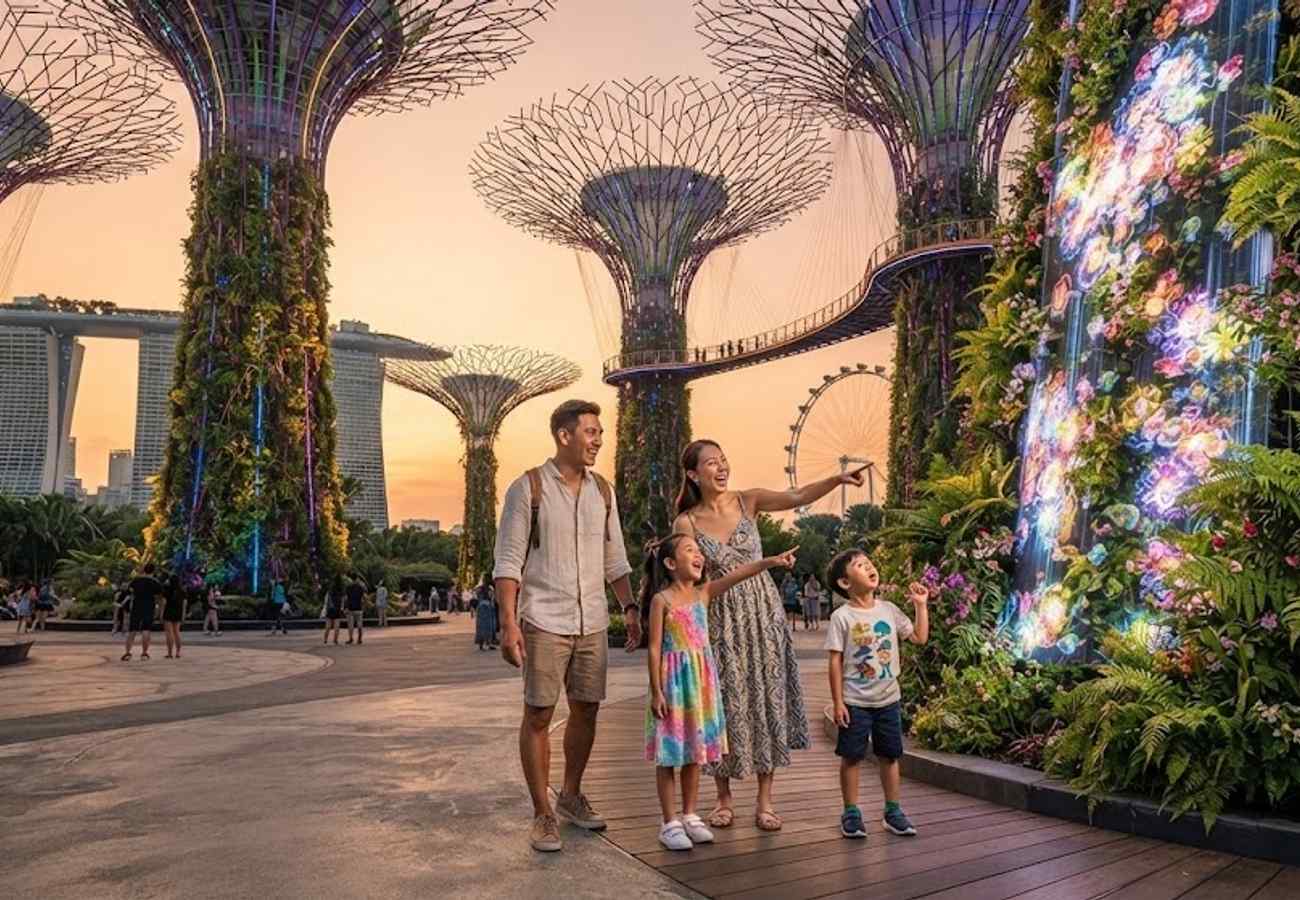
Image generated by AI
Singapore's Seismic Shift: From Stopover to Full-Scale Family Destination
Something fundamental is happening across Asia's tourism landscape, and it's centered squarely on Singapore. The city-state is no longer positioning itself as a convenient transit point or weekend getaway. It's become the anchor of a massive regional shift where families demand immersive experiences, cutting-edge technology integration, and seamless connectivity across multiple destinations—all within a single, integrated journey.
I've watched this evolution unfold over the past 18 months. The data is striking: family travellers are abandoning rigid sightseeing itineraries in favour of interactive, emotionally resonant experiences that blend learning, entertainment, and cultural immersion. Singapore is leading this charge, and it's pulling Malaysia, Thailand, the UAE, and Indonesia into a coordinated tourism ecosystem.
Reddit: "Singapore used to be a quick city break for me. Now I'm planning a full week there with side trips to Langkawi and Phuket. The integration is seamless." — r/travel
Gardens by the Bay: Where Nature Meets Digital Tomorrow
The transformation begins at Gardens by the Bay—the iconic attraction that's undergone a quiet but profound evolution. What was once primarily a photogenic botanical spectacle has morphed into a multi-sensory narrative engine.
The Supertree Grove and Cloud Forest now feature large-scale immersive digital exhibitions that blur the line between nature and imagination. Families walk through themed storytelling environments where technology amplifies rather than dominates the natural setting. Children experience ecosystems through interactive displays; adults find depth in the architectural storytelling.
This isn't novelty for novelty's sake. It's a deliberate strategy: make every attraction function as a layered experience rather than a simple checkpoint on a tourist's list.
Sentosa Island: From Resort Destination to Entertainment Powerhouse
Sentosa Island has undergone an even more radical transformation. The island has repositioned itself as a high-energy entertainment district explicitly designed for modern family dynamics—where parents and children need simultaneous engagement without compromise.
The innovation here is architectural and psychological. Technology-driven themed zones feature digital illusions and sensory installations, but critically, they're designed for multi-generational participation. A parent isn't supervising from the sidelines; they're actively engaged in the same experience.
Marine-themed environments now recreate underwater ecosystems through immersive storytelling. Children learn about biodiversity; adults appreciate the artistry. High-altitude adventure towers and slide experiences layer in adrenaline for those seeking thrill-based bonding.
The result? Sentosa functions less as a destination and more as a full ecosystem where every activity serves a family's collective and individual needs.
Mandai Wildlife Reserve: Conservation Meets Immersive Storytelling
Singapore's Mandai Wildlife Reserve represents the gold standard of modern wildlife tourism. Traditional zoo visits have been replaced by fully immersive ecological experiences that marry education, conservation, and genuine adventure.
Visitors move through distinct ecological zones—bird sanctuaries, nocturnal habitats, rainforest environments—each structured as a learning narrative rather than an animal display. Guided interactions and themed dining within natural habitats add layers of engagement. The reserve even offers overnight experiences, allowing families to encounter wildlife in nocturnal contexts under controlled, safe conditions.
This model has become a template across the region. Bali's cultural reserves and Thailand's wildlife sanctuaries are adopting similar immersive frameworks, each adapting to local ecosystems and cultural narratives.
Maritime Entertainment: Singapore's Expansion Beyond Land
Singapore's tourism reach now extends beyond city boundaries into maritime experiences. Large-scale themed cruise operations departing from Singapore combine entertainment, live theatre, character-driven storytelling, and fine dining at sea.
For families, this creates an elegant extension of their Singapore experience. Urban attractions (day one through three) transition seamlessly into floating entertainment resorts (day four onward). This integrated approach strengthens Singapore's role as a regional tourism orchestrator, not merely a destination.
These voyages connect to ports across Malaysia, Thailand, and beyond, creating the multi-destination experience modern families crave.
Asia's Competing Ecosystems: Distinct but Complementary
Singapore doesn't monopolize family travel across Asia. Rather, it operates within a carefully calibrated competitive ecosystem where each destination serves distinct travel personalities.
Bali, Indonesia offers cultural depth and coastal relaxation. Families seeking slower rhythms, traditional villages, and scenic immersion gravitate here. The experience is contemplative rather than stimulation-driven.
Dubai, United Arab Emirates delivers something different: hyper-modernism married to desert adventure. Families transition from climate-controlled indoor theme parks to desert safaris within hours. It's diversity at an accelerated pace.
Kuala Lumpur and Langkawi, Malaysia provide a dual experience—urban exploration and island escape within proximity. Skyscraper views yield to pristine beaches and nature reserves. Malaysia's tourism board reports a 34% year-over-year increase in multi-destination bookings, driven largely by this dual-experience model.
Phuket, Thailand specializes in high-energy marine experiences. Water sports, boat excursions, and island-hopping adventures appeal to families with outdoor adventure DNA.
The brilliance of this ecosystem? No single destination dominates. Instead, they form a constellation of experiences. A family might spend five days in Singapore's immersive technology-driven attractions, then transition to Malaysia's nature reserves, or Thailand's beach adventures, or Bali's cultural immersion.
The Regional Coordination Strategy
What's particularly notable is the coordination occurring between these destinations. Tourism boards across the region are actively promoting multi-destination holiday packages that position Singapore as the connectivity hub and each destination as a specialized experience module.
Flight routes, visa frameworks, and integrated booking platforms have been streamlined. A family can book a comprehensive Singapore-to-Malaysia-to-Thailand itinerary with single-click simplicity.
The Broader Shift: From Passive Tourism to Participatory Experience
Underlying all of this is a fundamental philosophical shift in how families approach travel. The 2026 family holiday is no longer about accumulating sights or building a social media highlight reel. It's about collective bonding through shared, meaningful experiences.
This shift favours destinations offering:
- Immersive engagement over passive sightseeing
- Educational narrative embedded in entertainment
- Multi-generational simultaneous engagement (no bored teenagers)
- Technological integration that enhances rather than replaces human experience
- Seamless regional connectivity enabling multi-destination holidays without logistical friction
Singapore has positioned itself as the nexus of these demands. Its partner destinations each excel in specific categories. Together, they form the most complete family travel ecosystem globally.
What This Means for Nomadic Professionals and Digital Nomads
For professionals seeking longer-term family relocations or extended "workations," this ecosystem is transformative. A digital nomad parent can establish a base in Singapore for two months, then rotate through Malaysia, Thailand, and Indonesia while maintaining work commitments.
The infrastructure—high-speed internet, co-working spaces, family-friendly accommodation, reliable transportation—exists across the entire network. What didn't exist 18 months ago was the coordinated experience design that makes this lifestyle feel integrated rather than fragmented.
That's the real story here: Asia's tourism industry has moved from competing destinations to a coordinated experience ecosystem. Singapore leads, but success depends on all participants delivering on their specialized strengths.
Asia's family travel revolution isn't about one destination winning—it's about an entire region learning to move as one.
Related Travel Guides
Disclaimer
This article is for informational and educational purposes only. It does not constitute legal, financial, or professional advice. While we strive to provide accurate and up-to-date information, travel policies, regulations, and conditions change rapidly. Always verify information with official sources before making travel decisions. Nomad Lawyer makes no representations about the accuracy, reliability, completeness, or suitability of the information provided. Readers should consult qualified professionals for advice specific to their circumstances. The views expressed in this article are those of the author and do not necessarily reflect the views of Nomad Lawyer.
Kunal K Choudhary
Co-Founder & Contributor
A passionate traveller and tech enthusiast. Kunal contributes to the vision and growth of Nomad Lawyer, bringing fresh perspectives and driving the community forward.
Learn more about our team →