
Singapore Airlines Resists Ticket Price Spikes Amid Surging Fuel Costs: SIA Expands Europe Capacity by 13% to Counter Regional Travel Chaos and Global Airport Disruptions
Singapore Airlines is resisting full fuel cost pass-through to maintain competitive airfares, even as it expands its European network to capture displaced traffic.

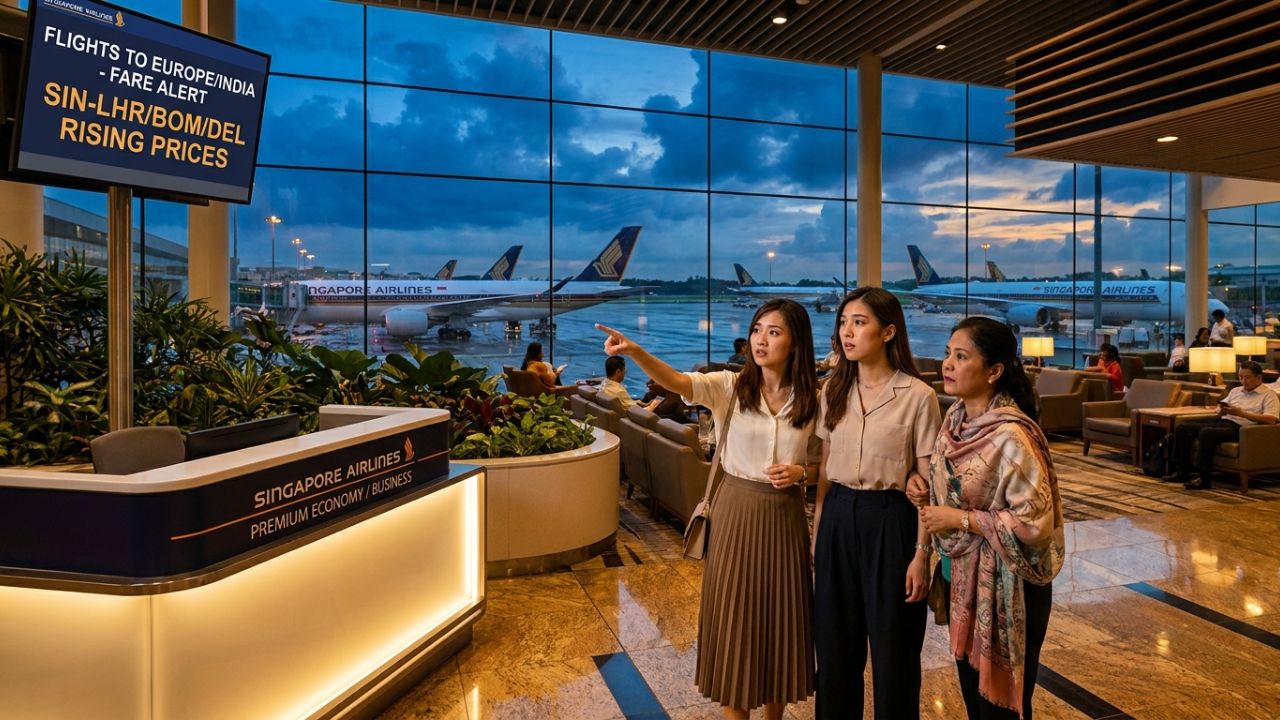
Image generated by AI
In a bold move that has captured the attention of the global airline news sector, Singapore Airlines (SIA) has officially signaled its resistance to passing the full weight of surging jet fuel costs onto its passengers. Despite a sharp rise in operational expenditures, the carrier is prioritizing market share and consumer demand, opting for a "measured" airfare environment rather than aggressive price hikes. This strategic pivot comes at a critical time as the aviation industry grapples with travel chaos in the Middle East and localized airport disruptions across Europe. By maintaining competitive pricing, SIA aims to position itself as the primary stabilizer for Singapore’s inbound and outbound tourism sectors, even as fuel remains the group’s single largest financial burden.
Breaking: SIA Prioritizes Demand Over Full Fuel Cost Recovery
The latest aviation updates from Changi suggest that while airfares have seen modest increases across the SIA network, the adjustments do not yet mirror the dramatic spike in global jet fuel prices. Management has emphasized that ticket pricing must stay "attractive" to protect passenger volumes, a move that provides a significant buffer for Singapore’s tourism engine. By choosing not to fully transfer the fuel price shock, SIA is essentially absorbing a portion of the inflation to prevent a weakening of long-haul demand.
Furthermore, the carrier has noted that fuel bills are typically recognized with a lag, meaning the true impact of current price levels will be felt more acutely in the next financial year. For the international traveler, this translates into a window of relative fare stability before the broader industry adjusts. SIA's stance is being viewed as a calculated gamble to capture premium traffic from travelers who are currently avoiding traditional hubs in the Middle East due to regional instability.
Expanded Overview: Aggressive 13% Capacity Boost Toward Europe
Rather than retreating in the face of rising costs, Singapore Airlines is launching an aggressive network expansion. The group is set to increase its capacity to Europe by 13%, a direct challenge to competing carriers who have recently begun cutting flights. This expansion is designed to turn Singapore into a "safe harbor" for passengers displaced by travel chaos elsewhere.
The strategic play includes new and expanded services to Madrid, Munich, and London Gatwick, alongside its flagship operations at London Heathrow. By reinforcing these premium corridors, SIA is ensuring that Singapore remains the most connected hub in Southeast Asia, capable of absorbing transfer traffic that would otherwise flow through disrupted Middle Eastern or European gateways.
Section-Wise Breakdown: Strategic Pillars of SIA’s 2026 Outlook
Capturing Displaced Middle East Traffic
SIA management has confirmed that it has already operated ad hoc services to London and Frankfurt to accommodate passengers rerouted from unstable regional hubs. Even as some Gulf carriers restore their schedules, SIA expects a "continued spillover demand" from premium travelers looking for alternative, reliable stopover points. This reliability is a key selling point during periods of global airport disruptions.
The Air India Multi-Hub Vision
A significant component of SIA’s long-term growth is its partnership with Tata Sons in the transformation of Air India. While the modernization of the Indian carrier is a "work in progress," SIA views it as a strategic multi-hub model that will eventually deepen the city-state’s role as a regional tourism hub. Stronger India-Singapore links are expected to drive business and leisure demand across both markets as India continues its rapid airport expansion.
Stable Supply Chains and Operational Integrity
Crucially, SIA has reported that jet fuel supply remains stable across its global network, with no signs of the rationing seen at other international airports. This stability reduces the risk of sudden flight cancellations and schedule slippage, a factor that influences traveler confidence and booking decisions as much as fare levels.
AI Integration and Product Refresh
SIA is also doubling down on technology to offset cost pressures. The expansion of generative AI through tools like Jarvis (staff support) and Kris (customer self-service) is intended to streamline operations and reduce overhead. Simultaneously, the airline is preparing to unveil new long-haul seats and a refreshed KrisWorld entertainment experience in 2026, ensuring that the "value proposition" remains high even if fares eventually rise.
Flight Details and Network Expansion Matrix
The following table outlines the key expansion metrics for Singapore Airlines as it maneuvers through the current operational landscape.
SIA Capacity and Network Expansion Matrix: 2026
| Region/Route | Expansion Metric | Operational Status |
|---|---|---|
| Europe Network | 13% Overall Capacity Increase | In Progress |
| Madrid | New Direct Services | Planned Launch |
| Munich | Frequency Expansion | Active / Planned |
| London Gatwick | Additional Services | Ongoing Growth |
| London Heathrow | Full Capacity Operations | Stabilized |
| Frankfurt / London | Ad Hoc Support Flights | Operational as Needed |
Passenger Impact: Premium Service vs. Fare Pressure
For the global traveler, SIA's current strategy offers a mix of stability and value.
- Softer Fare Shocks: By resisting a full pass-through of fuel costs, SIA is preventing the "sticker shock" that has recently characterized other long-haul markets.
- Enhanced Connectivity: The 13% boost in European capacity means more seats and more flexible departure times for those traveling between the EU and ASEAN.
- Onboard Upgrades: The 2026 product refresh—including new seats and entertainment systems—is designed to ensure that travelers feel they are receiving "more for their money," even in an inflationary environment.
- Reliability: With a stable fuel supply and no rationing, the risk of passengers being stranded due to localized airport disruptions is significantly lower compared to carriers operating in more volatile regions.
Industry Analysis: The Strategy of "Absorbing the Shock"
Aviation analysts suggest that SIA’s refusal to fully pass on fuel costs is a classic "defensive-aggressive" move. By maintaining attractive fares, they protect the "Singapore Tourism Engine" while their competitors are forced to raise prices or cut routes.
- Market Share Capture: SIA is effectively using its strong balance sheet to "wait out" the fuel price spike while capturing travelers who are currently spooked by travel chaos in competing transit zones.
- Technological Efficiency: The use of generative AI (Jarvis/Kris) is not just a gimmick; it is a serious attempt to lower the cost-per-passenger, allowing the airline to tolerate lower margins on ticket sales.
- Network Reliability: In the current travel market, dependability is often more valuable than a low price. SIA’s "stable fuel supply" claim is a direct jab at airports facing rationing or logistics failures.
Conclusion: A Measured Outlook for Singapore Tourism
The broader effect on Singapore's tourism sector is likely to be "mixed but manageable." While higher airfares are an inevitable reality of 2026, Singapore Airlines’ careful pricing strategy should prevent a total collapse in demand. By expanding its capacity and investing in the passenger experience, SIA is ensuring that Singapore remains a premier long-haul destination. The carrier’s strategy looks less like a retreat and more like a sophisticated effort to keep the global travel engine moving while others are forced into defensive maneuvers.
Key Takeaways
- Fare Strategy: SIA is resisting a full pass-through of surging fuel costs to keep airfares competitive.
- European Expansion: Capacity to Europe will grow by 13%, with focus on Madrid, Munich, and London.
- Safe Harbor: SIA is successfully capturing premium traffic displaced by Middle East travel chaos.
- Multi-Hub Model: Continued support for the Air India transformation remains a strategic long-term pillar.
- AI Innovation: Generative AI tools (Jarvis and Kris) are being utilized to drive operational efficiency.
- 2026 Refresh: New long-haul seats and cabin products are set to debut to maintain premium value.
Related Travel Guides
Disclaimer
This article is for informational and educational purposes only. It does not constitute legal, financial, or professional advice. While we strive to provide accurate and up-to-date information, travel policies, regulations, and conditions change rapidly. Always verify information with official sources before making travel decisions. Nomad Lawyer makes no representations about the accuracy, reliability, completeness, or suitability of the information provided. Readers should consult qualified professionals for advice specific to their circumstances. The views expressed in this article are those of the author and do not necessarily reflect the views of Nomad Lawyer.
Kunal K Choudhary
Co-Founder & Contributor
A passionate traveller and tech enthusiast. Kunal contributes to the vision and growth of Nomad Lawyer, bringing fresh perspectives and driving the community forward.
Learn more about our team →