
SFO Flight Delays: FAA Ends Side-by-Side Visual Approaches
FAA safety mandates and runway construction at San Francisco International Airport (SFO) increase inbound flight delay r

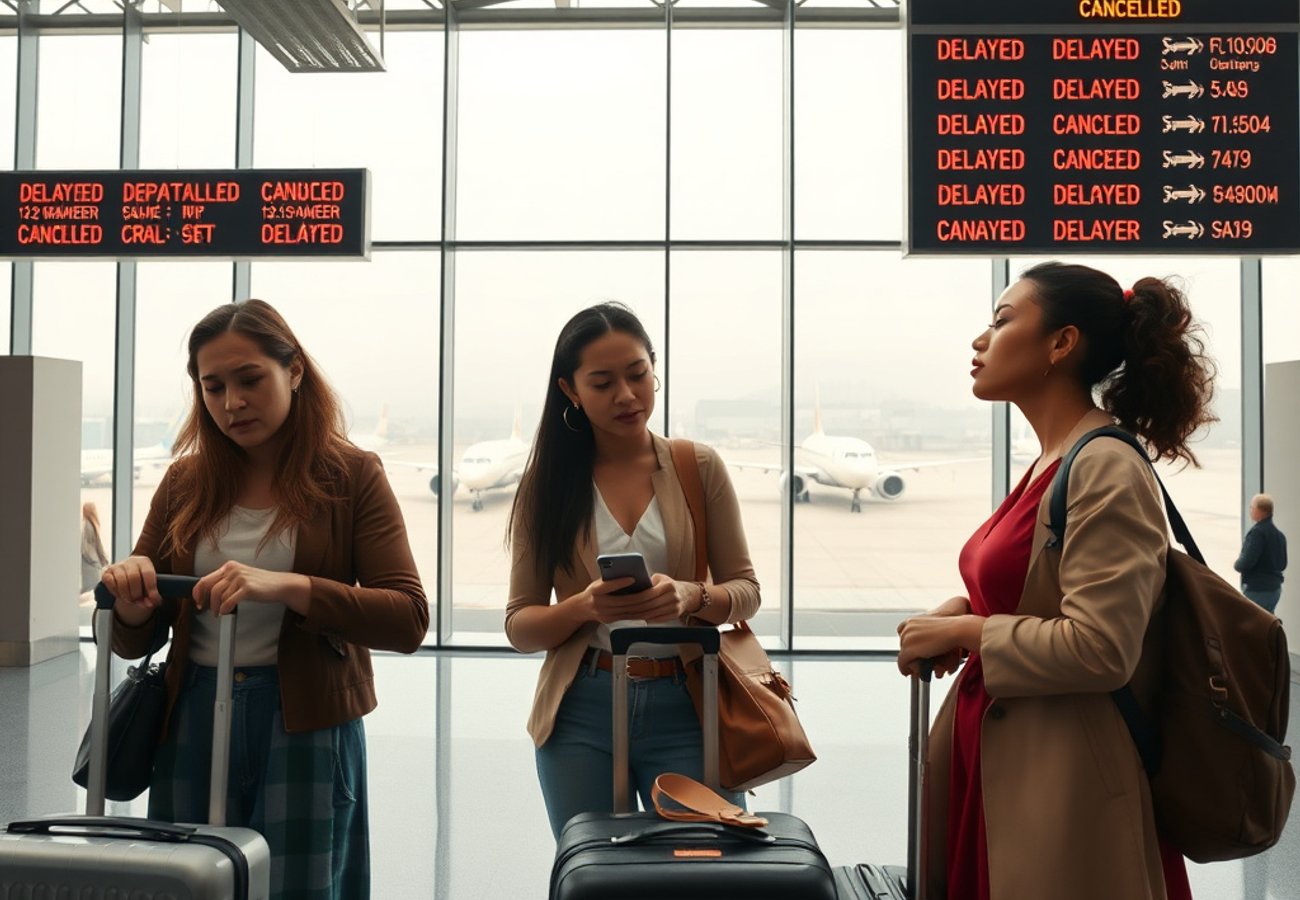
Image generated by AI
The Core Development
The Federal Aviation Administration (FAA) has terminated the approval for side-by-side visual approaches to SFO’s closely spaced east-west parallel runways (28L and 28R) during clear weather. Aircraft must now utilize a staggered arrival pattern, increasing the longitudinal separation between aircraft on adjacent runways.
This operational shift occurs during a critical infrastructure window. Runway 1R/19L is closed for a $180 million repaving project, forcing all arrivals and departures onto the 28L and 28R pair. The combination of reduced runway availability and the new staggered approach requirement has sharply increased the projected delay exposure for incoming flights.
Key Facts Breakdown
- The Technical Constraint: Runways 28L and 28R have a centerline spacing of only 750 feet, which is significantly narrower than standard independent parallel approach thresholds.
- Throughput Drop: Fair-weather arrival capacity has fallen from approximately 45 aircraft per hour to roughly 36 per hour during single-file operations.
- Construction Timeline: Runway 1R/19L is closed from March 30, 2026, through October 2, 2026.
- Increased Delay Risk: Expected delay exposure for incoming flights has risen from under 10% (construction only) to approximately 25% following the FAA mandate.
- High-Traffic Peaks: Risk is most acute around 9:00 AM and between 8:00 PM and 9:00 PM.
Operational Data
| Operational Factor | Verified Detail | Travel Trade Implication |
|---|---|---|
| Runway Pair | 28L and 28R | Core east-west arrival runways |
| Runway Spacing | 750 feet | Limits simultaneous approach flexibility |
| Normal Arrival Rate | ~45 per hour | Higher schedule resilience |
| Staggered Arrival Rate | ~36 per hour | Reduced throughput during peaks |
| Construction Window | March 30 – Oct 2, 2026 | Long summer operating window affected |
| Delay Exposure | ~25% of incoming flights | Essential need for itinerary buffers |
Why This Matters (Analysis)
Industry observers note that SFO is currently facing a "capacity crunch" where physical infrastructure limits meet rigid safety mandates. While the airport handles over 54 million passengers annually, its airfield geometry is a fixed constraint that cannot be mitigated by terminal upgrades or digital tools.
The 20% reduction in hourly arrival capacity (from 45 to 36 flights) creates a compounding effect during peak banks. For the travel trade, this is no longer a technical aviation nuance but a commercial risk. Long-haul arrivals from key markets—including Taipei, London, and Seoul—are particularly vulnerable. A 30-minute delay in a staggered sequence can trigger a cascade of missed domestic connections and disrupted ground logistics.
For the MICE (Meetings, Incentives, Conferences, and Exhibitions) sector, the timing is critical. With 38 Moscone Center events projected for 2026, the lack of arrival flexibility threatens the precision required for group coach dispatches and corporate registration windows.
Industry Outlook
Until the reopening of Runway 1R/19L on October 2, 2026, aviation stakeholders should expect continued volatility in SFO’s punctuality profile. Market trends suggest that travel sellers and DMCs must move away from "arrival day" scheduling for time-sensitive activities.
The long-term takeaway is a shift in risk pricing for Bay Area itineraries: "protected" through-ticket itineraries will be essential, and a minimum 24-hour buffer for cruise or rail onward movements is now the recommended operational standard.
Related Travel Guides
Disclaimer
This article is for informational and educational purposes only. It does not constitute legal, financial, or professional advice. While we strive to provide accurate and up-to-date information, travel policies, regulations, and conditions change rapidly. Always verify information with official sources before making travel decisions. Nomad Lawyer makes no representations about the accuracy, reliability, completeness, or suitability of the information provided. Readers should consult qualified professionals for advice specific to their circumstances. The views expressed in this article are those of the author and do not necessarily reflect the views of Nomad Lawyer.
Kunal K Choudhary
Co-Founder & Contributor
A passionate traveller and tech enthusiast. Kunal contributes to the vision and growth of Nomad Lawyer, bringing fresh perspectives and driving the community forward.
Learn more about our team →