
Breaking Airline News: Seattle-Tacoma as Alaska Airlines and Delta Trigger Massive Flight Disruptions
Breaking airline news: Amidst catastrophic operational fragility, Seattle-Tacoma International Airport suffered massive flight cancellations and delays, plunging thousands of domestic and international passengers into severe travel chaos.

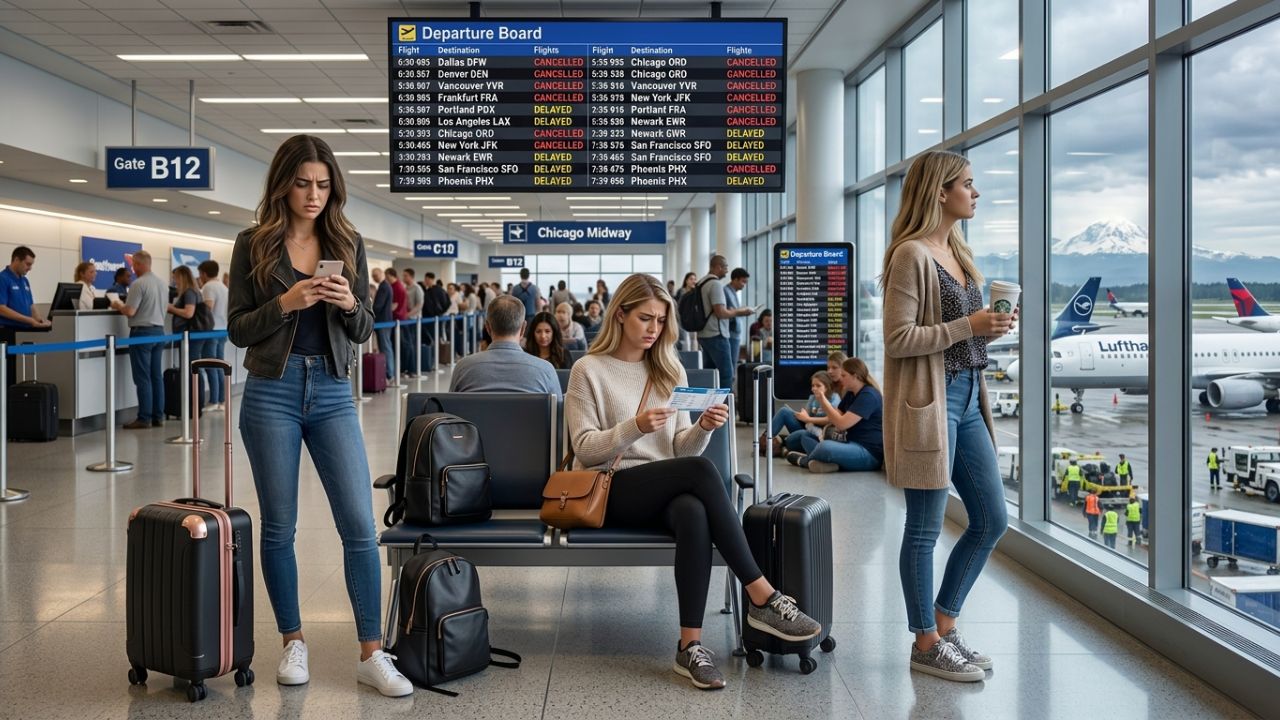
Image representing the intense infrastructural collapse at Seattle-Tacoma International Airport, where sudden flight disruptions driven heavily by Alaska Airlines have completely shattered domestic transit schedules, trapping thousands of passengers in a terrifying surge of travel chaos.
Breaking Airline News: Severe Travel Chaos Hits Seattle-Tacoma as Alaska Airlines and Delta Trigger Massive Flight Disruptions
As paralyzing terminal bottlenecks, severe airspace congestion, and catastrophic operational fragility violently transform global transit into a grueling endurance test, a massive operational failure has just crippled a vital Pacific Northwest aviation gateway. Today, Seattle-Tacoma International Airport suffered an absolute infrastructural meltdown, plunging thousands of unsuspecting domestic and international passengers into a terrifying wave of travel chaos. Driven heavily by severe, cascading scheduling failures within Alaska Airlines, American Airlines, and Delta Air Lines, the airport recorded 8 hard flight cancellations alongside dozens of massive flight delays. This localized logistical collapse has violently severed critical routes connecting Seattle to massive global destinations including Dallas, Denver, Vancouver, and Frankfurt, transforming terminal concourses into overcrowded holding zones and leaving desperate travelers stranded without immediate recourse.
In a brutal demonstration of how highly vulnerable the interconnected aviation network remains to sudden operational shocks, this localized crisis instantly radiated outward, severely fracturing short-haul regional flights and long-haul international corridors. Seattle-Tacoma, uniquely positioned as a massive hub for both transpacific and transcontinental travel, was completely overwhelmed by the concentrated severity of these disruptions. Passengers attempting to navigate the resulting gridlock faced violently extended wait times at check-in counters and boarding gates, while exhausted airline personnel struggled frantically to manage the massive influx of desperate rescheduling requests. This terrifying incident underscores the absolute necessity for aggressive contingency planning, proving that escaping global travel chaos now requires intense operational discipline from every single passenger navigating the domestic and international transit grid.
Expanded Overview: The Anatomy of a High-Density Hub Collapse
The terrifying reality of overwhelming passenger stress currently testing Seattle-Tacoma brutally exposes the extreme consequences of fragile airline schedules. Because modern domestic and international air networks are deeply interconnected, the sudden loss of capacity at a massive West Coast gateway forces the broader infrastructure to instantly absorb the shock, creating massive ripple effects that destroy itineraries across the globe.
Section-Wise Breakdown: Decoding the Seattle Gridlock
To fully comprehend the massive logistical challenges facing the aviation industry, corporate travel planners and stranded passengers must rigorously review exactly how this explosive disruption tore through the network.
Seattle-Tacoma: The Systemic Bottleneck To understand the absolute severity of this demand shock, one must look at the exact operational telemetry at the airport. Seattle bore the full, violent brunt of these localized disruptions. Because the airport utilizes tightly scheduled aircraft rotations for Alaska Airlines and serves as a major international launching pad for Delta, any upstream delay creates an immediate ripple effect across the entire hub, reducing network efficiency and severely crippling the airport's ability to recover.
The Severed Routes: From Vancouver to Frankfurt The 8 absolute cancellations and widespread massive delays ruthlessly targeted critical global corridors. The sheer breadth of the disruption pattern is staggering. The cancellations and delays violently severed highly trafficked domestic routes, heavily impacting Dallas, Denver, Atlanta, Austin, Nashville, Boise, Boston, Burbank, Charlotte, Detroit, Newark, Spokane, Houston, New York City, Las Vegas, Los Angeles, Orlando, Milwaukee, Oklahoma City, Ontario, Chicago, Portland, Philadelphia, Phoenix, Reno, San Diego, San Francisco, San Jose, Salt Lake City, Sacramento, St. Louis, Tampa, Tucson, Juneau, Ketchikan, Cincinnati, Washington, Miami, Minneapolis–Saint Paul, Redmond, Fairbanks, Anchorage, and Kona.
Crucially, the gridlock did not stop at the US border. International corridors were violently impacted, destroying itineraries heading to Vancouver and Calgary in Canada, European strongholds like Frankfurt, Dublin, Paris, and Rome, and massive hubs in the Middle East and Asia, including Doha, Tokyo, and Incheon. The fact that delays spread across key business, leisure, and connecting markets proves that the operational failure in Seattle created massive scheduling difficulties on a global scale.
Operational Failure Matrix: Airline Disruption Data
To guarantee that travelers can aggressively track the specific carriers triggering this massive operational meltdown, the following matrix details the exact, verified disruption data recorded across the airport on June 13, 2026.
| Airline | Cancelled Flights | Delayed Flights |
|---|---|---|
| Alaska Airlines | 4 | 52 |
| American Airlines | 3 | 16 |
| Delta Air Lines | 1 | 21 |
Data reflects the monumental logistical collapse severely impacting Seattle-Tacoma International Airport.
Passenger Impact and Industry Analysis
The widespread impact across the terminal created an incredibly complex, chaotic operational scenario heavily skewed toward the airport's largest operators. Alaska Airlines, utilizing Seattle as its primary stronghold, bore the absolute overwhelming majority of the disruption. The carrier recorded 4 outright cancellations and 52 delayed flights, highlighting the massive vulnerability of its hub operations.
American Airlines followed closely behind in terms of outright network failure, grounding 3 flights alongside 16 delays. Delta Air Lines, which operates Seattle as a major Pacific gateway, recorded 1 cancellation and 21 massive delays.
While 8 total cancellations may appear statistically limited, their timing creates disproportionate, violent disruption. Cancellations typically occur when tightly optimized aircraft rotations cannot be recovered within strict operational duty limits. These cancellations disrupted passenger itineraries, drastically increased the likelihood of missed connections, and placed unbearable pressure on airport operations. For the passengers trapped within the Seattle terminals, the effect was devastating, resulting in ruined business trips, missed international holidays, and massive uncertainty.
Conclusion: Surviving the Chaos
As the extremely critical domestic transit network braces for further instability, the collapse at Seattle-Tacoma represents a massive warning. Travelers affected by flight cancellations must immediately execute aggressive survival strategies:
- Stay Updated: Monitor your email, phone, and the official airline app for immediate rebooking confirmation or further announcements.
- Stay Calm and Check for Updates: As soon as you learn your flight is canceled, stay calm. Visit the airline’s website for real-time updates on the situation.
- Bypass the Queue: If your flight is canceled, bypass the physical service desk. Immediately call the airline or use their online chat system to secure a seat on the next available flight.
- Know Your Rights: Familiarize yourself with the airline’s specific policies regarding rebooking and compensation. In certain international jurisdictions like the EU, passengers are entitled to strict compensation.
- Secure Alternatives: If the airline cannot rapidly rebook you, aggressively seek alternative flights on competing carriers or secure ground transport immediately before options vanish.
This intelligence proves that surviving the modern era of commercial aviation relies entirely on absolute operational readiness, proving that anticipating travel chaos is the only defense against a failing transit grid.
Key Takeaways
- Massive Network Failure: Seattle-Tacoma International Airport suffered 8 absolute flight cancellations and numerous massive delays.
- Carrier Meltdown: Alaska Airlines triggered almost half the cancellations (4) alongside 52 delays due to its massive network dominance at the hub.
- Legacy Carrier Impact: American Airlines (3 cancellations) and Delta Air Lines (1 cancellation, 21 delays) severely impacted both domestic and international connectivity.
- Global Severed Routes: Flights heavily connecting Seattle to Dallas, Denver, Frankfurt, Vancouver, Tokyo, and Paris were violently disrupted.
- Passenger Survival: Stranded travelers must utilize digital rebooking tools immediately and aggressively demand alternative routing to bypass the massive terminal gridlock and standby list overloads.
Related Travel Guides
- Emirates Winter 2026 Boom Begins As New Aircraft, Rising Bookings And Global Network Expansion Transform Travel
- Air Canada Takes Delivery of First Airbus A321XLR: A Strategic Shift in Long-Range Narrowbody Operations
- Delta Air Lines and Amazon LEO Partner to Revolutionize High-Speed In-Flight Wi-Fi Across 500 Aircraft, Directly Challenging Starlink on Major Routes from Atlanta to Los Angeles: Latest Airline News
Disclaimer
This article is for informational and educational purposes only. It does not constitute legal, financial, or professional advice. While we strive to provide accurate and up-to-date information, travel policies, regulations, and conditions change rapidly. Always verify information with official sources before making travel decisions. Nomad Lawyer makes no representations about the accuracy, reliability, completeness, or suitability of the information provided. Readers should consult qualified professionals for advice specific to their circumstances. The views expressed in this article are those of the author and do not necessarily reflect the views of Nomad Lawyer.
Kunal K Choudhary
Co-Founder & Contributor
A passionate traveller and tech enthusiast. Kunal contributes to the vision and growth of Nomad Lawyer, bringing fresh perspectives and driving the community forward.
Learn more about our team →