
Middle East Aviation Crisis: Saudia, Air Arabia, and Royal Jordanian Ground 21 Flights as Regional Weather Turmoil and Geopolitical Uncertainty Disrupt Key Routes Between Saudi Arabia, UAE, and Jordan
A wave of 21 flight cancellations across Saudia, Air Arabia, and Royal Jordanian has triggered mass travel chaos in the Middle East, compounded by ongoing regional tensions.

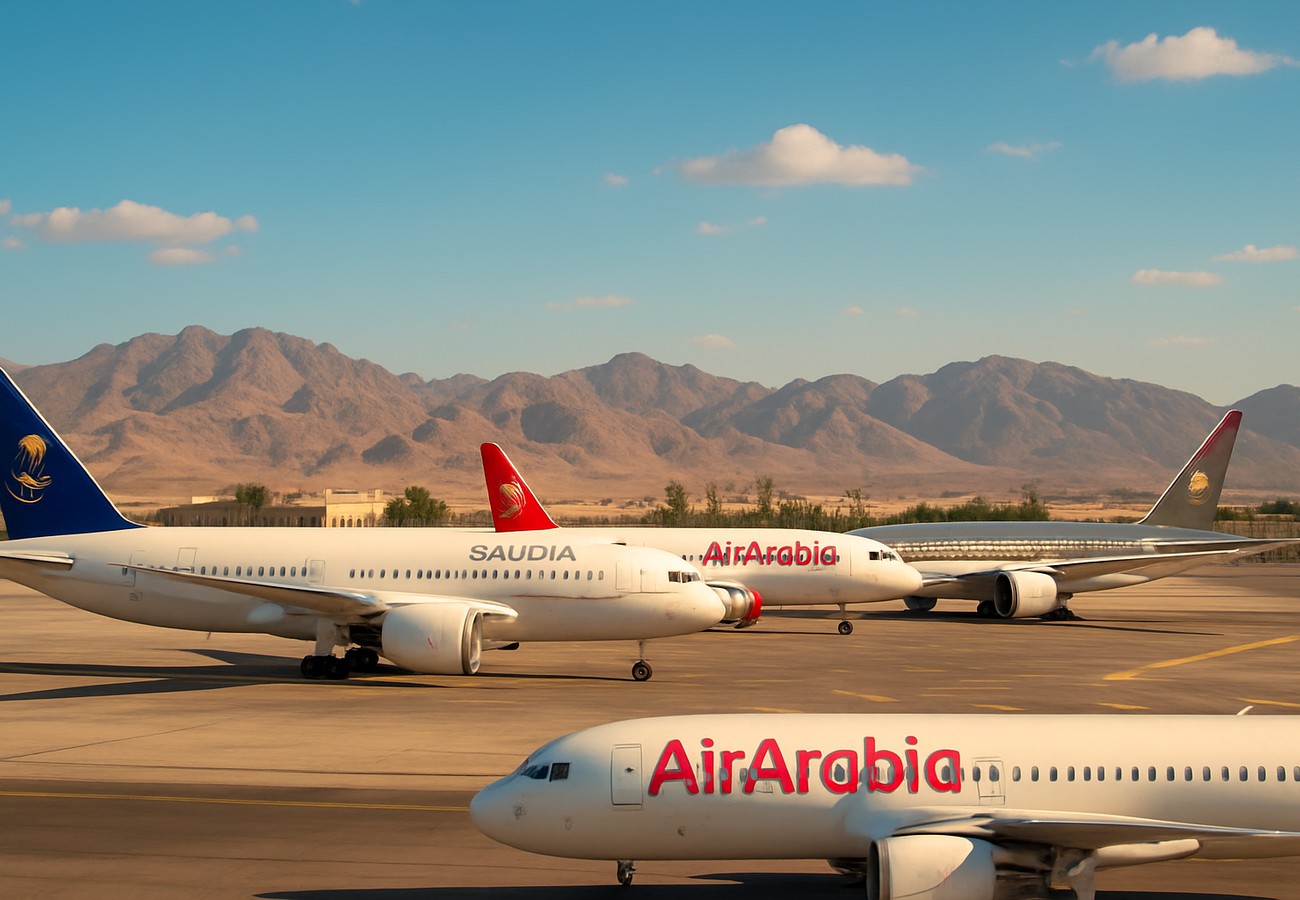
Image generated by AI
Middle East Aviation Crisis: Saudia, Air Arabia, and Royal Jordanian Ground 21 Flights as Regional Weather Turmoil and Geopolitical Uncertainty Disrupt Key Routes Between Saudi Arabia, UAE, and Jordan
Sudden Wave of 21 Cancellations Across Riyadh, Sharjah, and Amman Triggers Strategic Supply Chain Concerns Amidst Heightened Gulf Tensions and Strait of Hormuz Instability
RIYADH, Saudi Arabia — A sprawling wave of aviation instability has engulfed the Middle East’s primary travel corridors today, April 20, 2026, as the region’s three dominant carriers—Saudia, Air Arabia, and Royal Jordanian—were forced to ground 21 flights due to a combination of severe weather patterns and operational friction. The disruptions, which centered on the strategic hubs of Riyadh, Sharjah, and Amman, represent a significant stress test for regional connectivity at a time when the broader geopolitics of the Strait of Hormuz and US-Iran conflict have already placed the Gulf’s logistical network under extreme scrutiny.
EXPANDED OVERVIEW: The Scale of a Multi-Carrier Meltdown
The travel chaos began early this week as a sudden shift in atmospheric pressure across the Arabian Peninsula triggered severe storms, rendering several key regional flight paths unsafe. The impact was felt most acutely by travelers moving between the Kingdom of Saudi Arabia (KSA), the United Arab Emirates (UAE), and Jordan, with a total of 21 flights officially removed from the boards.
For Saudia, Air Arabia, and Royal Jordanian, the cancellations are more than just a logistical headache; they are a direct hit to the "Just-in-Time" travel culture that sustains the Middle East's burgeoning tourism and hospitality sectors. While international travelers observed the chaos from afar, domestic and regional passengers found themselves stranded at King Khalid International Airport (RUH) and Sharjah International (SHJ), highlighting the fragile nature of the region's air bridges amidst both natural and man-made volatility.
GEOPOLITICAL CONTEXT: Aviation in the Shadow of the Strait of Hormuz
The current airport disruptions cannot be analyzed in a vacuum. As the Strait of Hormuz remains a focal point of global tension, the reliance on high-frequency air routes between Riyadh, Dubai/Sharjah, and Amman has never been higher. When 21 flights are grounded, the alternative—land or sea transit—is often non-viable due to the ongoing Gulf tensions and the US-Iran conflict.
Strategic analysts suggest that weather-driven disruptions of this scale serve as a "proxy stress test" for how regional infrastructure handles sudden capacity drops. With Qatar, Bahrain, and Kuwait also monitoring the situation closely, the grounding of Saudia and Air Arabia fleets creates a ripple effect that touches on the very core of regional security and economic coordination.
GLOBAL ENERGY IMPACT: The Cost of a Grounded Fleet
Beyond the passenger gates, the global energy crisis looms over every operational decision. Air Traffic Control strikes in Europe and the shipping disruptions in the Gulf have already driven jet fuel prices to record highs.
- Fuel Burn Inefficiency: For the 12 flights that remained delayed but not grounded, "holding patterns" over Amman and Riyadh resulted in thousands of tons of wasted fuel, further tightening the region's energy margins.
- Supply Chain Risk: The air freight typically carried in the bellies of Royal Jordanian and Air Arabia A320s—connecting the UAE to Baghdad and Damascus—faces critical delays, impacting the regional flow of medical supplies and perishables.
- Operational Surcharge: Airlines are bracing for a spike in insurance premiums as the "unpredictability" of Middle Eastern weather patterns combines with the "high-risk" status of the regional airspace.
SECTION-WISE BREAKDOWN: THE IMPACTED CARRIERS
1. Saudia: The Domestic and Regional Struggle
The Kingdom’s national carrier faced significant hurdles in its central and eastern networks. The primary disruptions originated from King Khalid International Airport (RUH), where flights to regional industrial hubs like Qaisumah were grounded.
Saudia Cancelled Flights (Detailed Table):
| Ident | Type | Origin | Destination | Scheduled Departure |
|---|---|---|---|---|
| SVA1487 | A321 | King Khalid Int’l (RUH) | Qaisumah Domestic (AQI) | Mon 03:40 PM |
| SVA1486 | A321 | Qaisumah Domestic (AQI) | King Khalid Int’l (RUH) | Mon 05:30 PM |
2. Air Arabia: The Hub Impact at Sharjah
As the iconic low-cost carrier of the UAE, Air Arabia was the hardest hit in terms of volume. Sharjah International Airport (SHJ) saw its board turn red as routes to Iraq, Syria, and Bahrain were severed.
Air Arabia Cancelled Flights (Detailed Table):
| Ident | Type | Origin | Destination | Scheduled Departure |
|---|---|---|---|---|
| ABY548 | A320 | Sharjah Int’l (SHJ) | Jinnah Int’l (KHI) | Sun 10:05 PM |
| ABY567 | A320 | Sharjah Int’l (SHJ) | Quetta Int’l (UET) | Mon 06:35 AM |
| ABY568 | A320 | Quetta Int’l (UET) | Sharjah Int’l (SHJ) | Mon 10:40 AM |
| ABY368 | A321 | Sharjah Int’l (SHJ) | Baghdad Int’l (BGW) | Mon 10:15 AM |
| ABY375 | A320 | Sharjah Int’l (SHJ) | Damascus Int’l (DAM) | Mon 10:25 AM |
| ABY164 | A320 | King Fahd Int’l (DMM) | Sharjah Int’l (SHJ) | Mon 11:00 AM |
| ABY195 | A320 | Sharjah Int’l (SHJ) | Abha Regional (AHB) | Mon 12:15 PM |
| ABY221 | A320 | Sharjah Int’l (SHJ) | al-Jouf Domestic (AJF) | Mon 01:45 PM |
| ABY515 | A320 | Shahjalal Int’l (DAC) | Sharjah Int’l (SHJ) | Mon 04:55 PM |
| ABY181 | A320 | Sharjah Int’l (SHJ) | Prince Nayef Regional (ELQ) | Mon 03:00 PM |
| ABY510 | A321 | Sharjah Int’l (SHJ) | Shahjalal Int’l (DAC) | Mon 03:05 PM |
| ABY103 | A320 | Sharjah Int’l (SHJ) | Bahrain Int’l (BAH) | Mon 03:55 PM |
| ABY196 | A320 | Abha Regional (AHB) | Sharjah Int’l (SHJ) | Mon 03:25 PM |
| ABY521 | A320 | Shah Amanat Int’l (CGP) | Sharjah Int’l (SHJ) | Mon 08:45 PM |
| ABY511 | A321 | Shahjalal Int’l (DAC) | Sharjah Int’l (SHJ) | Mon 10:50 PM |
3. Royal Jordanian: The Levant Connector
Operating out of Queen Alia International Airport (AMM), Royal Jordanian faced critical disruptions on its African and domestic routes, particularly impacting the vital AMM-Cairo corridor.
Royal Jordanian Cancelled Flights (Detailed Table):
| Ident | Type | Origin | Destination | Scheduled Departure |
|---|---|---|---|---|
| RJA61 | A321 | Queen Alia Int’l (AMM) | Mitiga Int’l (MJI) | Tue 10:00 AM |
| RJA61 | A321 | Mitiga Int’l (MJI) | Cairo Int’l (CAI) | Tue 02:40 PM |
| RJA306 | A20N | Queen Alia Int’l (AMM) | Aqaba Int’l (AQJ) | Tue 08:10 PM |
| RJA62 | A321 | Cairo Int’l (CAI) | Queen Alia Int’l (AMM) | Tue 07:10 PM |
| RJA307 | A20N | Aqaba Int’l (AQJ) | Queen Alia Int’l (AMM) | Tue 10:09 PM |
SHIPPING & TRADE IMPACT: Connectivity Breaks Down
The shipping disruption at the ports of Jebel Ali and Aqaba is often the headline, but the air-bridge failure is equally damaging to "just-in-time" trade. The grounding of 21 flights by Saudia, Air Arabia, and Royal Jordanian has severed several high-value supply lines.
- Vessel Rerouting vs. Flight Cancellation: While energy flows through the Strait of Hormuz can be rerouted at great cost, a cancelled flight between Sharjah and Baghdad (ABY368) has no immediate high-speed substitute, stranding business talent and regional technicians.
- Insurance and Risk: Logistics insurance for the 2026 season is being recalculated. The "Weather-Geopolitics nexus" is now a standard line item in risk assessments for companies operating in Saudi Arabia, UAE, and Jordan.
INDUSTRY ANALYSIS: The Resilience of the Gulf Model
Why does this matter globally? Because the Middle East is the world’s "Aviation Fueling Station." If these hubs fail, even temporarily, the global travel gears begin to grind. "These 21 cancellations are a microscopic view of a massive potential risk," says one energy analyst. "We are seeing how weather can act as a force multiplier for geopolitical instability."
The reliance on Saudia, Air Arabia, and Royal Jordanian to maintain regional calm through connectivity is absolute. Any disruption here is followed closely by markets in London and New York.
WHAT HAPPENS NEXT: DIPLOMATIC AND WEATHER OUTLOOK
- Diplomatic Scenario: As Gulf tensions simmer, there is a push for a "Regional Aviation Safety Corridor" that would allow for more flexible rerouting during storms, though US-Iran conflict rhetoric remains a barrier.
- Climate Scenario: The Spring 2026 storm cluster is predicted to dissipate by Thursday, but the operational backlog for these 21 flights will likely take until the weekend to clear.
CONCLUSION: REINFORCING REGIONAL RISK
The grounding of 21 flights across the Middle East is a stark reminder that even in the age of advanced aviation technology, Mother Nature holds a strategic veto. Coupled with the permanent uncertainty surrounding the Strait of Hormuz and US-Iran conflict, travelers and industry leaders alike must prepare for a season defined by travel chaos and the need for extreme operational flexibility.
KEY TAKEAWAYS
- Total Disruption: 21 flights grounded across Saudia, Air Arabia, and Royal Jordanian.
- Main Hubs Hit: Riyadh (RUH), Sharjah (SHJ), and Amman (AMM).
- Geopolitical Factor: Disruption coincides with ongoing Strait of Hormuz tensions and Gulf instability.
- Energy Impact: Significant aviation fuel waste due to holding patterns and delays.
- Actionable Advice: Passengers are urged to check real-time updates via FlightAware and airline apps; flexibility is mandatory.
Related Travel Guides
Disclaimer
This article is for informational and educational purposes only. It does not constitute legal, financial, or professional advice. While we strive to provide accurate and up-to-date information, travel policies, regulations, and conditions change rapidly. Always verify information with official sources before making travel decisions. Nomad Lawyer makes no representations about the accuracy, reliability, completeness, or suitability of the information provided. Readers should consult qualified professionals for advice specific to their circumstances. The views expressed in this article are those of the author and do not necessarily reflect the views of Nomad Lawyer.
Raushan Kumar
Founder & Lead Developer
Full-stack developer with 11+ years of experience and a passionate traveller. Raushan built Nomad Lawyer from the ground up with a vision to create the best travel and law experience on the web.
Learn more about our team →