
Over 500 Flight Delays and 240 Cancellations Disrupt Saudi Arabian Aviation
FlightAware logs 575 delays and 248 cancellations across Saudi airports. Saudia accounts for 74% of cancellations amid regional airspace security warnings.

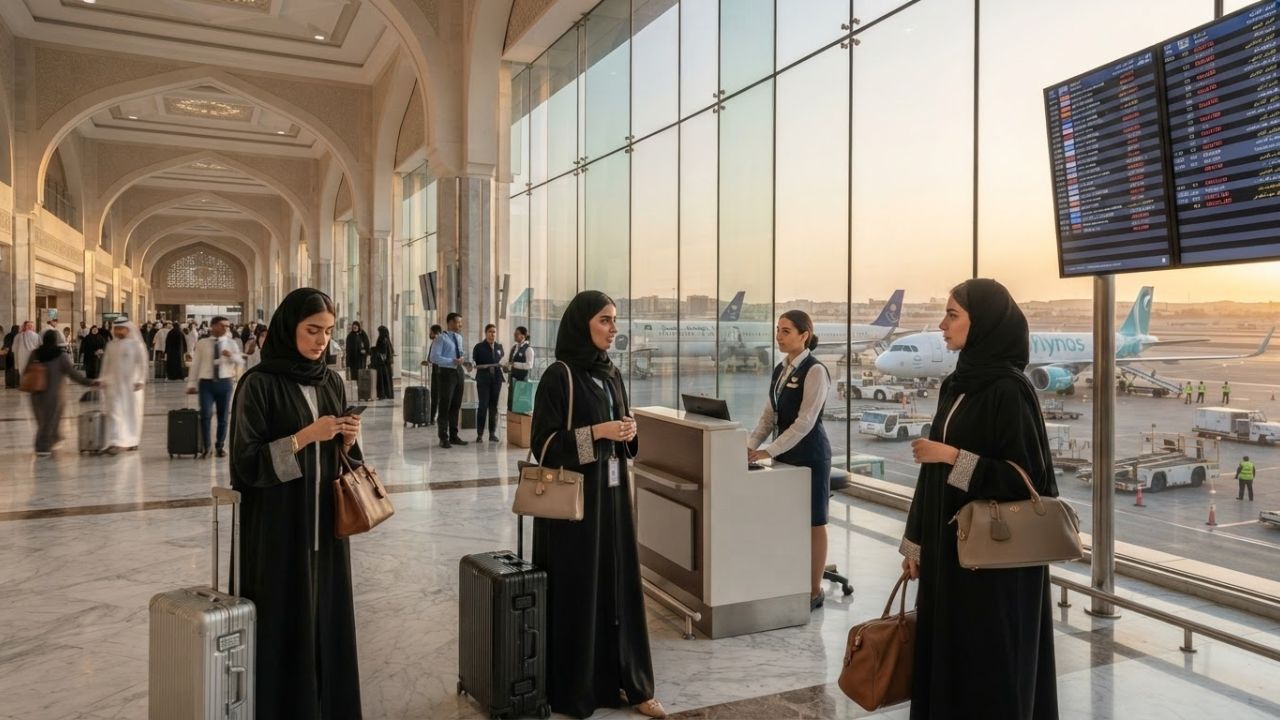
Image generated by AI
Baggage tracking databases and flight monitoring logs confirm that Saudi Arabia flight delays and cancellations have surged across regional corridors, affecting thousands of domestic and transit passengers. Recent data logs verified 575 flight delays and 248 cancellations across the country, driven by strategic scheduling adjustments and airspace security warnings.
Aviation status reports from July 26 at 4:38 AM IST show that carriers, including Saudia, Flynas, and flyadeal, adjusted flight paths. While major international hubs managed delayed traffic, regional networks faced schedule reductions that closed domestic routes.
Operational Strategy at Major Saudi Aviation Hubs
Major hubs in Jeddah and Riyadh handled the highest delay volumes:
- King Abdulaziz International (Jeddah): Recorded 359 delays and 68 cancellations. Flag carrier Saudia, alongside flyadeal and Flynas, managed heavy traffic flows through the terminal.
- King Khalid International (Riyadh): Registered 211 delays and 58 cancellations, representing the capital's primary disruption gateway.
Airlines prioritized keeping these hubs operating, allowing departures to slide behind schedule to maintain network connectivity.
Schedule Reductions at Regional Saudi Gateways
In contrast to the major hubs, regional airports recorded low delay counts but high cancellation rates:
- Abha Regional: Registered 2 delays and 51 cancellations.
- Gizan Regional: Recorded 0 delays and 37 cancellations, suspending flight schedules.
- Ta’if Regional: Logged 3 delays and 17 cancellations.
- Najran Domestic: Reported 0 delays and 17 cancellations.
Airlines adjusted schedules directly by canceling regional flights rather than letting planes queue on the ground, protecting the core network from compounding delays.
Security Airspace Rerouting and Conflict-Zone Planning
Geopolitical conditions in the Middle East have increased flight planning complexity. Yemen’s Houthi forces launched drone and missile operations targeting Saudi facilities following airstrikes on Hodeida, while Bab el-Mandeb shipping lanes and Sanaa Airport remain under threat.
Airlines adjust routing, scheduling, and fuel buffers to navigate these security conditions. geostrategic tensions involving Iran and the United States also require carriers to maintain route flexibility, which limits their ability to recover schedules after operational disruptions.
Carrier Scheduling Pressures and National Fleet Cuts
Saudia, Flynas, and flyadeal bore the greatest operational burden:
- Saudia: Registered 207 delays and 184 cancellations, accounting for approximately 74.2% of all cancellations nationwide.
- Flynas: Managed 122 delays and 16 cancellations, mostly concentrated at the Jeddah and Riyadh gateways.
- flyadeal: Logged 96 delays and 28 cancellations across its domestic and regional networks.
Other carriers, including FlyDubai and EgyptAir, also modified schedules to align with the revised airspace routings.
GACA Regulations and Passenger Compensation Rules
For passengers affected by delays and cancellations in Saudi Arabia:
- Saudi GACA Guidelines: If a cancellation occurs due to airline-controllable factors (such as technical maintenance or staffing) with less than 14 days' notice, passengers are entitled to compensation ranging from SAR 300 to SAR 2,000 depending on route length.
- Meals and Lodging: Airlines must provide free food and drinks after a three-hour delay, and hotel lodging if the delay extends overnight.
- Uncontrollable Delays: If delays are caused by military airspace closures or security threats, carriers are exempt from paying cash compensation, though they must assist with free rebookings.
- Luggage Controls: Passengers should verify real-time baggage transfers via airline apps during hub layovers.
Table 1: Saudi Airport Flight Disruption Metrics (July 25, 2026)
| Airport Name | IATA Code | Delays Recorded | Cancellations Recorded | Performance Status |
|---|---|---|---|---|
| King Abdulaziz (Jeddah) | JED | 359 | 68 | Highest disruptions recorded |
| King Khalid (Riyadh) | RUH | 211 | 58 | Second-largest disruption center |
| Abha Regional | AHB | 2 | 51 | Cancellation-heavy schedule cuts |
| Gizan Regional | GIZ | 0 | 37 | Flight operations suspended |
| Ta’if Regional | TIF | 3 | 17 | Selective flight cancellations |
| Najran Domestic | EAM | 0 | 17 | Regional fleet cuts |
Table 2: Airline Scheduling Adjustments Across Saudi Arabia
| Airline Name | Delays Recorded | Cancellations Recorded | Cancellation Share |
|---|---|---|---|
| Saudia | 207 | 184 | Approximately 74.2% of national total |
| Flynas | 122 | 16 | Domestic regional carrier |
| flyadeal | 96 | 28 | Budget regional fleet |
Why This Matters
For the traveler, this means that domestic flights between regional hubs and major cities require booking morning departures to avoid late-afternoon schedule trims. From a logistical standpoint, the concentration of cancellations within Saudia's network reflects the carrier's dominant domestic footprint, meaning passengers should check code-share ticket terms. Travelers should keep physical copies of GACA claim receipts if lodging desks are busy.
Industry Outlook
Airlines are adopting real-time route optimization software to calculate flight paths during airspace adjustments. As airports expand regional taxiways, delays caused by runway saturation will decrease. Over the next year, expect Saudi airports to implement automated passenger rebooking services at domestic transfer gates. This operational strategy will improve traveler mobility across the kingdom.
Related Travel Guides
Disclaimer
This article is for informational and educational purposes only. It does not constitute legal, financial, or professional advice. While we strive to provide accurate and up-to-date information, travel policies, regulations, and conditions change rapidly. Always verify information with official sources before making travel decisions. Nomad Lawyer makes no representations about the accuracy, reliability, completeness, or suitability of the information provided. Readers should consult qualified professionals for advice specific to their circumstances. The views expressed in this article are those of the author and do not necessarily reflect the views of Nomad Lawyer.
Kunal K Choudhary
Co-Founder & Contributor
A passionate traveller and tech enthusiast. Kunal contributes to the vision and growth of Nomad Lawyer, bringing fresh perspectives and driving the community forward.
Learn more about our team →