
Santorini Industrial Heritage Exhibition Showcases Life Before Tourism
A new cultural exhibition in Santorini explores the island's industrial past, featuring agricultural processing and community life before global tourism.

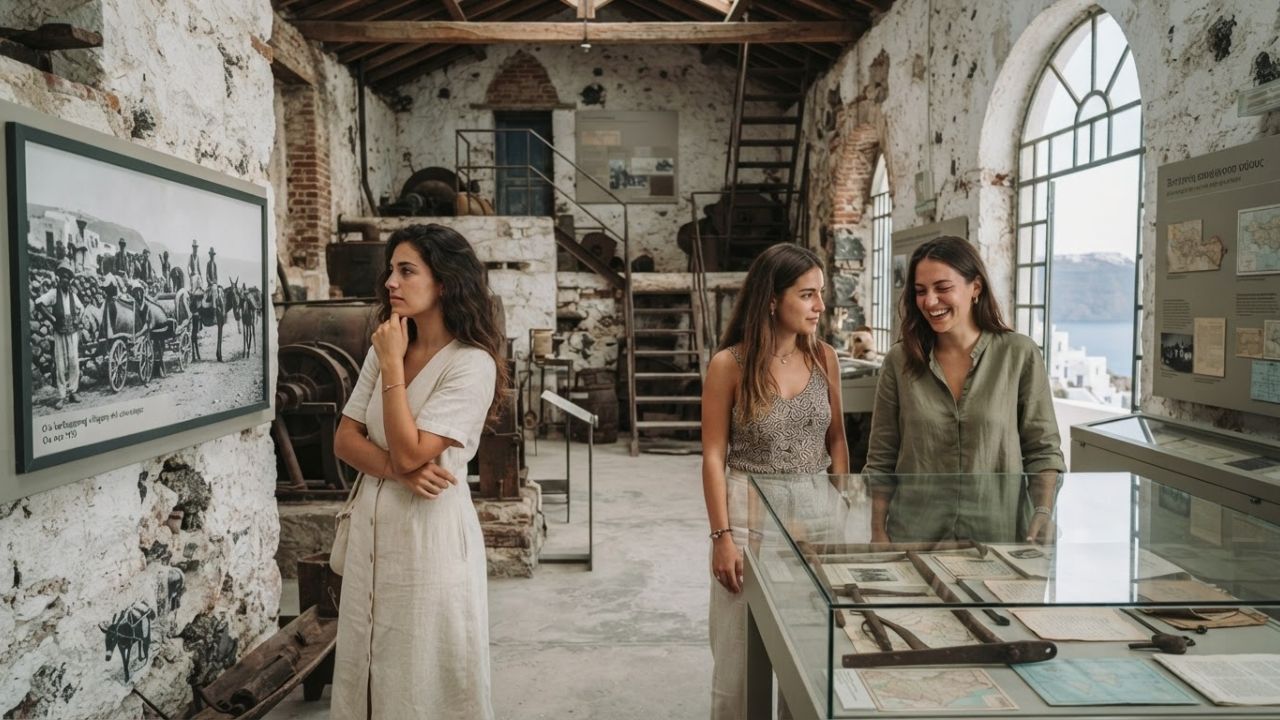
Image generated by AI
A powerful cultural exhibition in Santorini is bringing the island's pre-tourism history into the spotlight, showcasing a bygone era of agriculture, local industries, and hard-working communities. Hosted in a preserved volcanic stone industrial venue, the exhibition uses historic machinery, archives, and personal records to tell the human stories behind the island's economic foundation.
Volcanic Landscapes and the Pre-Tourism Economic Engine
The travel sector in Greece is experiencing a transition as destinations develop programs around local heritage and history. In 2026, Santorini is highlighting its past before the rise of international tourism, showing visitors the island's working roots.
By establishing these seasonal travel corridors, the airline's management aims to support both business and leisure travel flows. Corporate travelers and travel agencies, which maintain strong relationships with global destination management organizations, benefit from direct seat capacity. This economic integration supports the travel sector, providing service providers with a reliable channel for high-value bookings.
By establishing these seasonal travel corridors, the airline's management aims to support both business and leisure travel flows. Canadian corporate travelers and travel agencies, which maintain strong relationships with European and Asian destination management organizations, would benefit from direct seat capacity. This economic integration supports the travel sector, providing service providers with a reliable channel for high-value bookings.
By establishing these seasonal travel corridors, the airline's management aims to support both business and leisure travel flows. Canadian corporate travelers and travel agencies, which maintain strong relationships with European and Asian destination management organizations, would benefit from direct seat capacity. This economic integration supports the travel sector, providing service providers with a reliable channel for high-value bookings.
By establishing these seasonal travel corridors, the airline's management aims to support both business and leisure travel flows. Canadian corporate travelers and travel agencies, which maintain strong relationships with European and Asian destination management organizations, would benefit from direct seat capacity. This economic integration supports the travel sector, providing service providers with a reliable channel for high-value bookings.
By establishing these seasonal travel corridors, the airline's management aims to support both business and leisure travel flows. Canadian corporate travelers and travel agencies, which maintain strong relationships with European and Asian destination management organizations, would benefit from direct seat capacity. This economic integration supports the travel sector, providing service providers with a reliable channel for high-value bookings.
Before becoming a popular destination for luxury travel, the island relied on small-scale manufacturing, shipping, and agriculture.
Volcanic soil and dry climate conditions shaped local farming patterns. Residents cultivated cherry tomatoes, fava beans, and grapes, developing agricultural systems that adapted to scarce water resources.
Preserving Industrial Heritage at the Tomato Factory Museum
The exhibition is hosted at the Tomato Industrial Museum (D. Nomikos) in Vlychada, located in southern Santorini.
This localized disruption also offers a unique opportunity for duty-free retailers and terminal operators to design services suited for stranded passengers. By monitoring passenger comfort levels during long delays, airport customer teams can provide complimentary amenities to ensure guest satisfaction. This proactive approach helps build traveler confidence, ensuring that regional transit routes remain competitive with global hub standards.
This localized disruption also offers a unique opportunity for duty-free retailers and terminal operators to design services suited for stranded passengers. By monitoring passenger comfort levels during long delays, airport customer teams can provide complimentary amenities to ensure guest satisfaction. This proactive approach helps build traveler confidence, ensuring that regional transit routes remain competitive with global hub standards.
The venue is a preserved volcanic stone factory that once processed cherry tomatoes into tomato paste, serving as a key production hub.
Displayed materials include historic photographs, handwritten factory ledgers, archival documents, and original canning machinery. The preservation of this industrial space allows visitors to explore the Cyclades' working past in a physical setting.
The Human Stories of Volcanic Agriculture and Canning
The exhibition focuses on the personal stories of the laborers, farmers, and factory staff who supported the island's trade networks.
This environmental focus is supported by regional climatologists and conservationists who monitor ecosystem health. By tracking tourist footprint signals, managers can ensure that natural areas remain protected. The integration of carrying-capacity policies with wilderness trails demonstrates how tourism planning can protect biodiversity while offering high-quality educational hikes.
This localized culinary focus also offers a unique opportunity for restaurant associations and culinary schools to design programs suited for premium travelers. By monitoring traveler culinary preferences during long stays, local chefs can provide customized dishes to ensure guest satisfaction. This proactive approach helps build traveler confidence, ensuring that Goan coastal dining remains competitive with global culinary standards.
This localized culinary focus also offers a unique opportunity for restaurant associations and culinary schools to design programs suited for premium travelers. By monitoring traveler culinary preferences during long stays, local chefs can provide customized dishes to ensure guest satisfaction. This proactive approach helps build traveler confidence, ensuring that Goan coastal dining remains competitive with global culinary standards.
During the harvest months of July and August, farmers transported cherry tomatoes on donkeys from volcanic fields to Vlychada, while local workers managed processing and canning machinery.
For the visitor, the real impact is discovering a history built around determination and everyday labor rather than resort packages, providing a deeper understanding of Santorini's identity.
Community Support and Sustainable Cultural Tourism
Directing traveler attention to southern Santorini supports local economies outside the main tourist centers.
By visiting the Vlychada area, hiring local cultural guides, and purchasing authentic local products, travelers help preserve the island's heritage.
Sustainable practices include buying PDO (Protected Designation of Origin) split peas (Fava Santorinis), supporting local wineries cultivating traditional Assyrtiko grapes, and minimizing waste in sensitive coastal environments.
Visitor Guide: Local Specialties, Transit Options, and Museum Hours
Exploring Santorini's industrial heritage involves coordinating public transit, planning museum visits, and trying traditional local specialties.
Sample traditional culinary specialties during your stay. Try Fava Santorinis, a velvety split pea puree topped with olive oil, chopped onions, and capers. Sample Tomatokeftedes, crispy tomato fritters made with local cherry tomatoes. Sip a glass of volcanic Assyrtiko white wine at traditional tavernas.
Coordinate your local transport. From the central bus station in Fira, take the KTEL public bus toward Vlychada. The journey takes approximately 25 minutes, and the fare is 2.50 EUR, payable in cash only on board the bus. If driving, follow the southern coastal road toward the Vlychada marina.
Verify museum hours and ticketing rules. The Tomato Industrial Museum is open from Tuesday to Sunday, 10:00 to 18:00 (closed on Mondays), typically operating from April to November. Admission is 12 EUR for general entry, and 10 EUR for students, seniors, and children aged 8 to 18. Children under 8 enter for free.
Future Outlook: Rebuilding a Resilient Cycladic Cultural Identity
The long-term success of Santorini's tourism sector depends on balancing coastal visitor traffic with cultural heritage preservation. The municipality and local cultural organizations are collaborating to support historic preservation projects.
Sustainable initiatives include restoring old industrial buildings, promoting heritage walking trails, and organizing local food festivals. By combining historical education with community-led tourism development, Santorini aims to preserve its true identity, securing a resilient and connected future for Cycladic culture.
Related Travel Guides
Disclaimer
This article is for informational and educational purposes only. It does not constitute legal, financial, or professional advice. While we strive to provide accurate and up-to-date information, travel policies, regulations, and conditions change rapidly. Always verify information with official sources before making travel decisions. Nomad Lawyer makes no representations about the accuracy, reliability, completeness, or suitability of the information provided. Readers should consult qualified professionals for advice specific to their circumstances. The views expressed in this article are those of the author and do not necessarily reflect the views of Nomad Lawyer.
Raushan Kumar
Founder & Lead Developer
Full-stack developer with 11+ years of experience and a passionate traveller. Raushan built Nomad Lawyer from the ground up with a vision to create the best travel and law experience on the web.
Learn more about our team →