
Santa Monica Airport Closure Marks End of Aviation Era, Start of Green Park
Santa Monica Airport closes in 2026 after 97 years, transforming 227 acres of urban airspace into California's largest city-center ecological park.

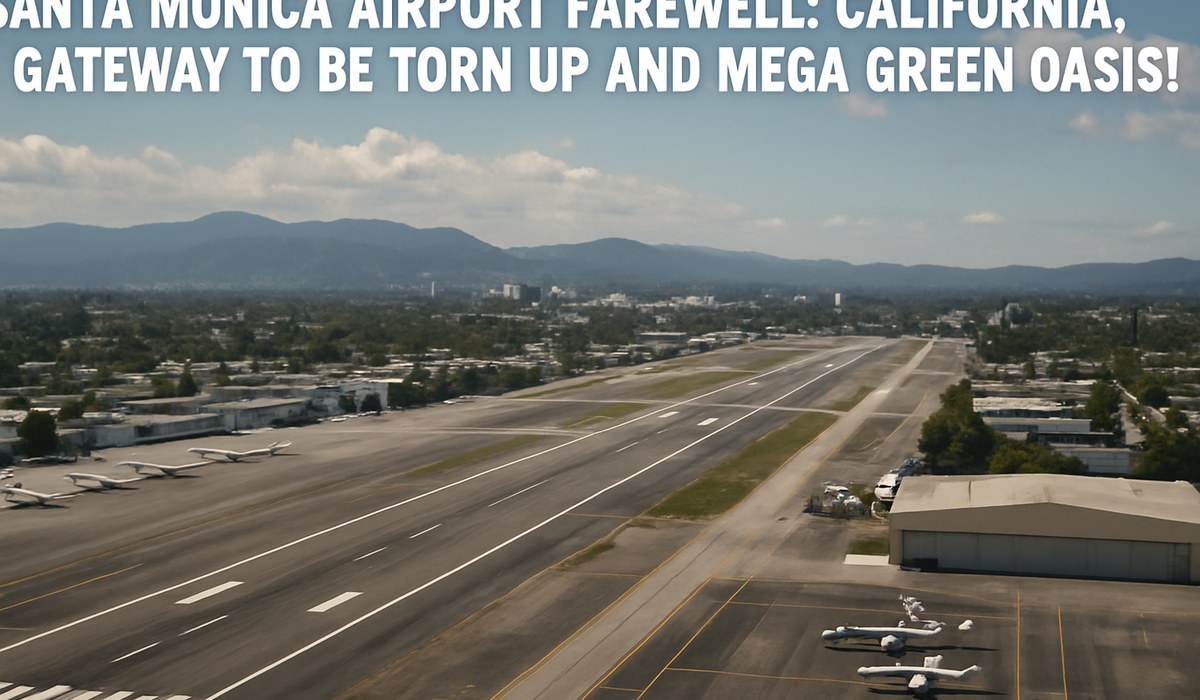
Image generated by AI
The roar of propeller engines will soon give way to the rustle of native grasses as Santa Monica Airport—a 97-year-old aviation landmark that once hosted Douglas Aircraft Company and countless Hollywood flights—prepares for its final approach and permanent closure. The facility, which has served Southern California general aviation since 1929, will shut its runways permanently on December 31, 2028, according to municipal authorities. This marks the end of an era for one of California's most historic urban airfields.
Quick Summary
- Santa Monica Airport will cease all aviation operations by December 31, 2028, ending 97 years of continuous service
- The 227-acre site will transform into California's largest urban ecological park with native landscaping and recreational spaces
- Legal battles with the Federal Aviation Administration delayed closure plans by more than a decade
- Private aviation operators and flight schools must relocate to alternative Southern California facilities by late 2028
The Final Countdown: Santa Monica Airport's Closure Timeline
City officials announced the definitive closure schedule following years of protracted negotiations with federal regulators. The airport will remain operational through December 2028, providing existing tenants and aviation businesses a 33-month transition window to relocate operations.
Current data shows the airport handles approximately 42,000 annual flight operations, primarily serving general aviation aircraft, private jets, and flight training schools. According to real-time flight tracking data compiled throughout 2025, daily movements averaged 115 aircraft during peak operating months.
The closure resolution stems from a landmark 2014 settlement between Santa Monica municipal authorities and the Federal Aviation Administration, which concluded decades of legal disputes over the city's rights to close the federally regulated facility. Under the agreement, Santa Monica committed to maintaining aviation operations until the end of 2028 before exercising its right to decommission the airport property.
The city council voted 6-1 in March 2026 to proceed with final closure preparations, approving $8.2 million in decommissioning costs and environmental remediation work scheduled to begin January 2029.
From Runway to Greenway: What's Planned for the 227-Acre Site
Municipal planners unveiled comprehensive redevelopment blueprints transforming the airport footprint into what officials describe as an "urban ecological sanctuary." The 227-acre site will feature California native plant gardens, wetland restoration areas, and multi-use recreational pathways.
Lead landscape architect Maria Hendricks described the vision as "reclaiming urban aviation infrastructure for community wellness and environmental restoration." The master plan allocates 140 acres to preserved open space with indigenous vegetation, 35 acres to active recreation including sports fields, and 28 acres to educational facilities focused on environmental science.
Construction timelines project a five-year phased development beginning in early 2029. Phase one prioritizes soil remediation and removal of aviation-related infrastructure including fuel storage systems, runway surfaces, and hangar structures. Environmental assessments identified petroleum contamination requiring specialized cleanup protocols before landscaping can commence.
Funding sources include $156 million in municipal bonds approved by voters in November 2025, plus anticipated state environmental restoration grants totaling $42 million. The project represents California's most ambitious urban airport-to-parkland conversion since the closure of El Toro Marine Corps Air Station in Orange County.
Sustainability features incorporate rainwater harvesting systems, solar-powered irrigation, and drought-resistant native species selected to reduce water consumption by an estimated 80% compared to conventional landscaping. Wildlife corridors will connect the new park to existing coastal ecological zones located 1.8 miles west.
Aviation History: Nearly a Century of Flight Operations
Santa Monica Airport opened in 1929 as Clover Field, quickly establishing itself as a crucial hub for Southern California's burgeoning aviation industry. Douglas Aircraft Company—later McDonnell Douglas—manufactured thousands of military and commercial aircraft at adjacent facilities from 1922 through 1975, including the legendary DC-3 that revolutionized commercial air travel.
The airfield served strategic military functions during World War II, supporting aircraft manufacturing and modification operations that employed more than 44,000 workers at peak production. Post-war decades saw the facility transition to general aviation, accommodating private aircraft, charter operations, and flight training schools.
Hollywood's aviation elite frequently utilized the airport given its proximity to entertainment industry headquarters and Beverly Hills residential areas. The facility's three runways handled everything from single-engine Cessnas to midsize corporate jets, though commercial airline service never established permanent operations at the site.
By the 1980s, surrounding residential development increasingly clashed with airport operations. Noise complaints and safety concerns from nearby neighborhoods sparked the first organized closure campaigns. Advocacy groups argued that the valuable urban land should serve broader community needs rather than a small population of aircraft owners.
Aviation supporters countered that the airport provided critical economic benefits, supporting approximately 1,500 jobs and generating $250 million in annual economic activity through related businesses including maintenance shops, aviation fuel sales, and aerospace companies.
Impact on Southern California Aviation and Private Flyers
The permanent closure creates significant operational challenges for general aviation users throughout the Los Angeles metropolitan area. Approximately 350 aircraft currently based at Santa Monica must relocate to alternative facilities, straining capacity at already-busy regional airports.
Van Nuys Airport, located 15 miles northeast, represents the primary alternative for displaced operations. The facility already ranks as the world's busiest general aviation airport, logging more than 230,000 annual operations. Airport director Diane Margolin acknowledged capacity constraints, stating "we're evaluating infrastructure expansion to accommodate increased demand."
Other relocation options include Hawthorne Municipal Airport, Long Beach Airport's general aviation facilities, and Camarillo Airport in Ventura County. Each alternative requires pilots to adjust flight patterns and increases travel time for users accessing coastal destinations.
Flight schools operating at Santa Monica face particularly acute challenges. Five training operations currently conducting approximately 12,000 annual instruction flights must secure new base locations and potentially restructure student programs. Similar disruptions to flight cancellations and route disruptions affecting international travelers highlight how infrastructure changes ripple through aviation networks.
Private jet charter companies utilizing Santa Monica for Hollywood clientele express concerns about reduced service convenience. The airport's closure forces executive aviation operators to shift operations to Burbank or Van Nuys, adding 20-30 minutes to ground transportation times for Westside clients.
Industry analysts project redistribution of flight operations across six Southern California airports, though total general aviation activity levels will likely decline 8-12% as some users exit aviation entirely due to increased travel distances and facility constraints. These shifting travel routes mirror broader transportation network adjustments across California's aviation infrastructure.
FAQ: Santa Monica Airport Closure and Green Space Conversion
When exactly does Santa Monica Airport close? The airport will cease all aviation operations on December 31, 2028. Current operations continue normally through that date, with businesses and aircraft owners having until the deadline to relocate.
What happens to the planes currently based there? Approximately 350 aircraft must relocate to alternative Southern California airports including Van Nuys, Hawthorne Municipal, and Long Beach facilities. Owners have until December 2028 to complete transitions.
Can the public access the new park? Yes, the planned 227-acre ecological park will be fully open to the public once construction completes, projected for 2034. Phased openings may provide earlier access to completed sections starting in 2031.
Will any aviation history be preserved? The master plan includes a heritage aviation exhibit area showcasing the site's 97-year aviation legacy, including historical markers documenting Douglas Aircraft Company's contributions and wartime manufacturing significance.
How much will the park project cost? Total development costs are estimated at $198 million, funded through $156 million in municipal bonds and $42 million in state environmental restoration grants. Annual maintenance costs project at $4.2 million once fully operational.
Related Articles:
Disclaimer
This article is for informational and educational purposes only. It does not constitute legal, financial, or professional advice. While we strive to provide accurate and up-to-date information, travel policies, regulations, and conditions change rapidly. Always verify information with official sources before making travel decisions. Nomad Lawyer makes no representations about the accuracy, reliability, completeness, or suitability of the information provided. Readers should consult qualified professionals for advice specific to their circumstances. The views expressed in this article are those of the author and do not necessarily reflect the views of Nomad Lawyer.
Preeti Gunjan
Contributor & Community Manager
A passionate traveller and community builder. Preeti helps grow the Nomad Lawyer community, fostering engagement and bringing the reader experience to life.
Learn more about our team →