
Sanskrit Toponymy Drives Cultural Tourism Growth in Jakarta, Angkor Wat, and Lopburi 2026
Southeast Asian nations are leveraging Sanskrit and Pali linguistic roots to develop cultural tourism masterplans, impacting travel infrastructure in Indonesia, Thailand, and Cambodia.

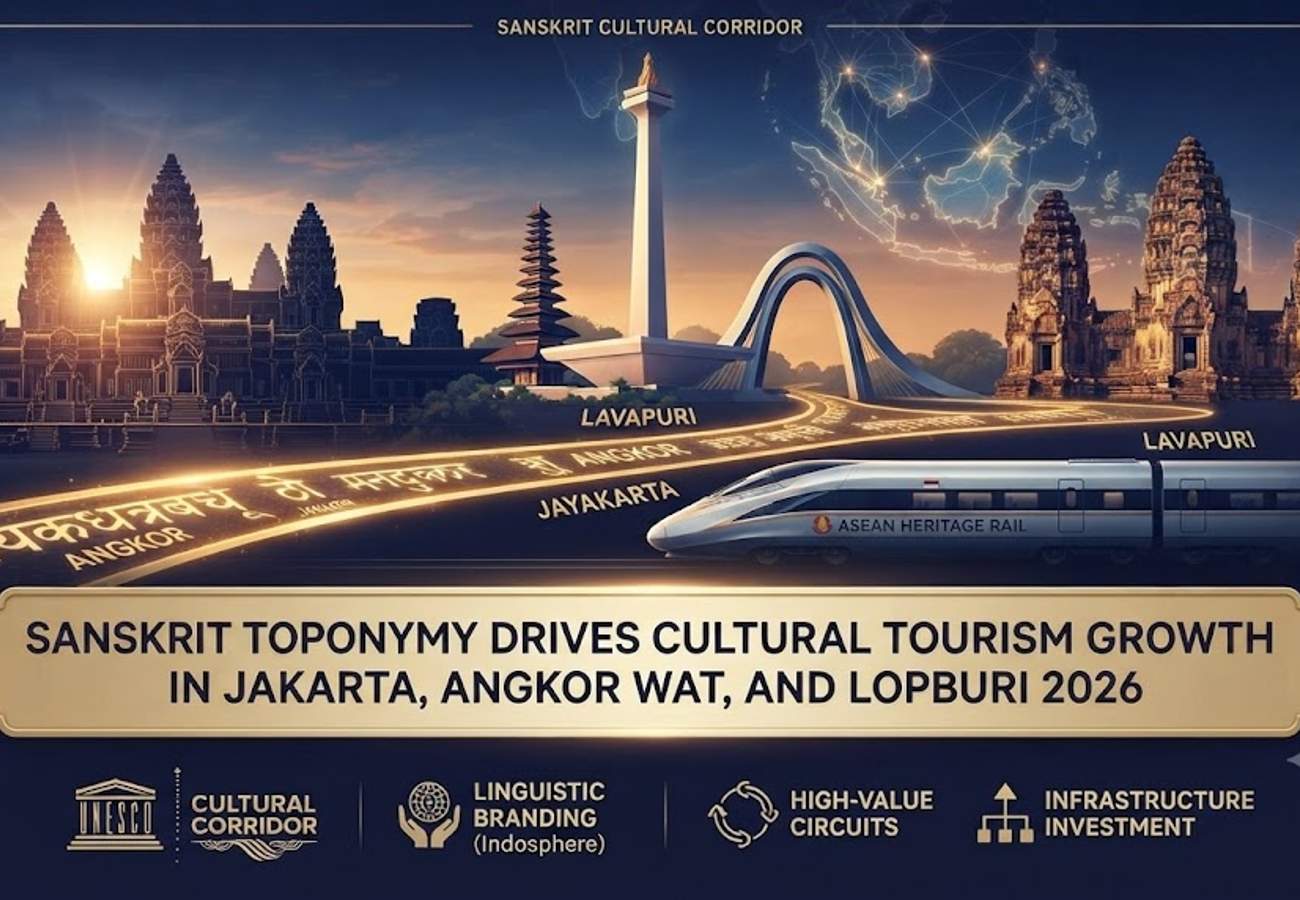
Image generated by AI
Southeast Asian governments are integrating classical Sanskrit and Pali linguistic frameworks into national tourism masterplans to revitalize economies and establish cross-border heritage corridors.
Data from state statistical offices, UNESCO, and UN Tourism indicate a strategic shift toward "Indosphere" branding. By leveraging historical toponymy—the study of place names—nations are moving beyond beach-centric tourism to create high-value cultural circuits. This linguistic alignment is now influencing state access, site preservation, and transportation infrastructure across the ASEAN region.
Indonesia: Linguistic Branding as an Economic Asset
Indonesia is utilizing Sanskrit nomenclature to define political administrative boundaries and municipal branding. A joint memorandum between the Ministry of Tourism and the Ministry of Culture has officially packaged the archipelago’s classical heritage as a core economic asset.
According to the Central Bureau of Statistics (BPS) and UN Tourism, sustainable heritage corridors are now central to national growth. The naming conventions of major urban centers provide a direct link to these ancient roots:
- Jakarta: Derived from Jayakarta (Jaya "victory" + Karta "achieved"), meaning "Victorious City."
- Yogyakarta: A combination of Yogya ("fit, worthy") and Karta ("prosperous").
- Surakarta: Combines Sura ("hero, deity") and Karta, signifying the "City of the Hero."
- Amlapura (Bali): Rooted in Amṛta ("nectar of immortality") and Pura ("city").
- Jayapura (Papua): Utilizes Jaya and Pura to mean "City of Victory."
- Kalimantan: Rooted in Kalamanthan, combining Kāla ("season/time") and Manthana ("burning/churning").
Indonesian Heritage Access and Logistics
| Indonesian City | Sanskrit Etymology | Etymological Meaning | Primary Transport Access (Official) |
|---|---|---|---|
| Jakarta | Jayakarta (Jaya+Karta) | Victorious City | Soekarno-Hatta International (CGK) |
| Yogyakarta | Yogya + Karta | Prosperous / Accomplished City | Yogyakarta International Airport (YIA) |
| Surakarta (Solo) | Sura + Karta | City of the Hero / Heroic City | High-Speed Rail Connection from YIA |
| Amlapura (Bali) | Amṛta + Pura | City of Nectar / Immortality | 2-hour road transport from DPS Airport |
| Jayapura (Papua) | Jaya + Pura | City of Victory | Sentani International Airport (DJJ) |
Thailand: State-Level Integration and Arrival Mandates
The Thai Ministry of Interior has systematically aligned municipal designations with Sanskrit and Pali. The suffix -buri (derived from pura) is a primary marker across provincial borders, such as in Kanchanaburi.
Key historical sites driving regional traffic include:
- Ayutthaya: Named after Ayodhyā, the capital from the Ramayana.
- Lopburi: Originating from Lavapuri ("City of Lava").
- Nakhon Si Thammarat: Sourced from Nagara Śrī Dharmarāja ("City of the Glorious King of Dharma").
Tourism Authority of Thailand (TAT) statistics show 32.97 million international arrivals in 2025. Heritage circuits in Ayutthaya and Lopburi are driving significant rail demand. Ayutthaya is accessed via a 1.5-hour rail link from Bangkok’s Bang Sue Grand Station, while Lopburi’s Phra Prang Sam Yot temple is located on the Northern Railway line.
Entry Requirements: The Ministry of Tourism and Sports now mandates the Thailand Digital Arrival Card (TDAC) and a ฿300 tourism infrastructure fee for all foreign arrivals.
Cambodia: Regulatory Frameworks at Angkor Wat
In Cambodia, the term Angkor is the Khmer evolution of the Sanskrit Nagara ("city"), combined with Wat ("temple"). Spanning 162.6 hectares, Angkor Wat remains the world's largest religious monument per UNESCO data.
The APSARA National Authority enforces strict operational mandates:
- Ticketing: Official Angkor Passes must be purchased via the Angkor Enterprise portal or the Road 60 terminal in Siem Reap.
- Health and Conduct: The site is a designated smoke-free zone (WHO partnership).
- Dress Code: Shoulders and knees must be covered.
- Hours: Visiting hours are strictly 05:00 to 17:30.
Malaysia, Brunei, and Myanmar: Planned Capitals
The trend extends to modern administrative centers. Malaysia's Putrajaya combines Jaya ("victory") and Putra ("prince"). Transit data confirms the city is linked to Kuala Lumpur International Airport via the KLIA Transit Line and MRT Putrajaya Line. Similarly, Myanmar’s Naypyidaw utilizes the Pali suffix -thiri.
The alignment of ancient linguistics with modern transit infrastructure is redefining the ASEAN travel experience.
Why This Matters
From a logistical perspective, this is not merely a linguistic exercise; it is a strategic rebranding of the region's "Information Architecture." By linking city names to a shared Sanskrit/Pali heritage, ASEAN countries are creating a "Cultural Corridor" that encourages multi-destination travel.
For travelers and investors, this means that infrastructure spending—such as the high-speed rail connecting Yogyakarta to Surakarta or the digital arrival systems in Thailand—is being specifically routed to support these heritage nodes. We are seeing a shift where "cultural capital" is being converted into literal economic capital through targeted transportation improvements.
Industry Outlook
Market trends suggest a move toward "Linguistic Tourism" packages where itineraries are mapped by etymological themes. Expect an increase in cross-border visa facilitations specifically for these heritage circuits. As Thailand and Indonesia further digitize their entry processes (TDAC and similar), the integration of cultural storytelling into the digital arrival journey will likely become the new standard for high-value tourism in Southeast Asia.
Related Travel Guides
Disclaimer
This article is for informational and educational purposes only. It does not constitute legal, financial, or professional advice. While we strive to provide accurate and up-to-date information, travel policies, regulations, and conditions change rapidly. Always verify information with official sources before making travel decisions. Nomad Lawyer makes no representations about the accuracy, reliability, completeness, or suitability of the information provided. Readers should consult qualified professionals for advice specific to their circumstances. The views expressed in this article are those of the author and do not necessarily reflect the views of Nomad Lawyer.
Kunal K Choudhary
Co-Founder & Contributor
A passionate traveller and tech enthusiast. Kunal contributes to the vision and growth of Nomad Lawyer, bringing fresh perspectives and driving the community forward.
Learn more about our team →