
San Francisco Travel Guide: Navigating Golden Gate Park, Alcatraz, and Historic Neighborhoods Beyond the Postcard

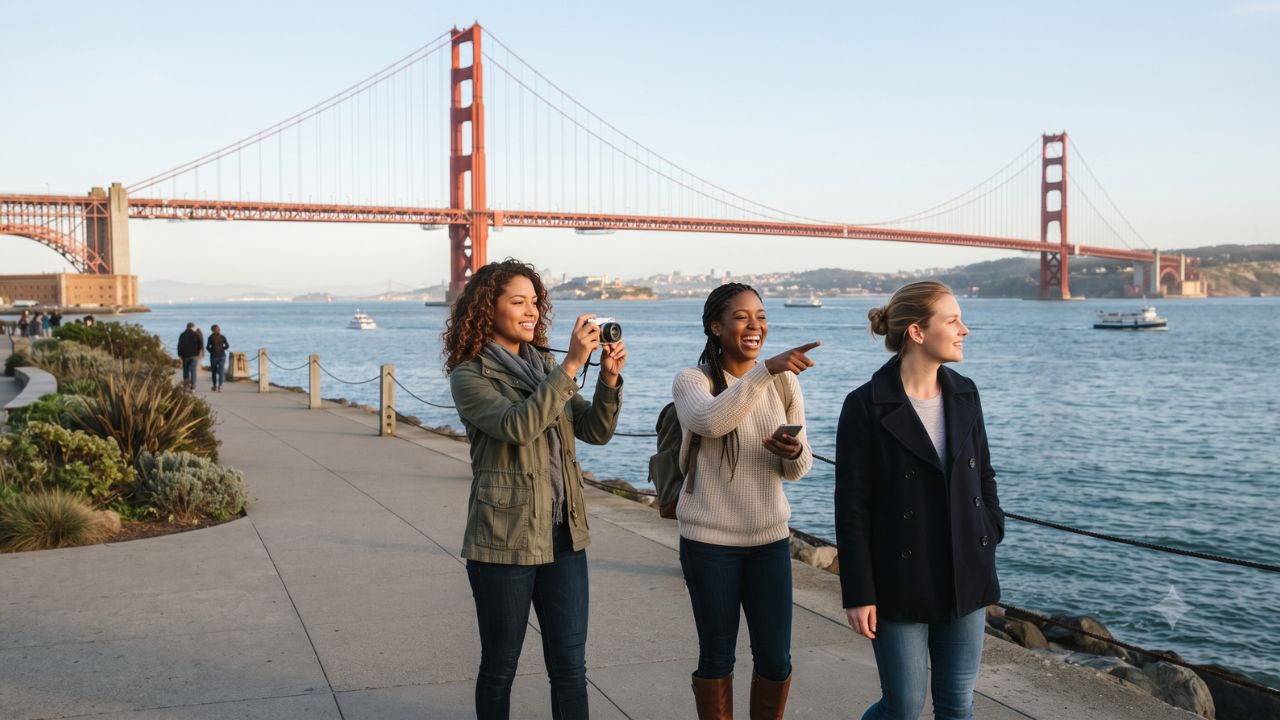
While first-time visitors often fixate on photographing the orange towers of the Golden Gate Bridge, the city's 1,017-acre Golden Gate Park welcomes more than 24 million visitors annually—surpassing most global theme parks in attendance while housing a four-story living tropical rainforest, world-class modern art, and centuries-old botanical collections. San Francisco packs monumental civil engineering, pristine national parkland, and distinct culinary quarters into a compact seven-by-seven-mile peninsula.
Official visitor benchmarks compiled by the San Francisco Travel Association reveal that modern travelers are prioritizing connected neighborhood experiences that merge maritime history with innovative open spaces. Whether walking the 1898 halls of the Ferry Building marketplace, taking in the 360-degree vistas from the 150-foot SkyStar Wheel, or riding historic streetcars along the Embarcadero, exploring San Francisco effectively requires understanding its microclimates, hills, and distinct neighborhood identities.
Iconic Landmarks: Engineering, History, and Island Sanctuaries
San Francisco's architectural identity is anchored by world-renowned historical sites:
- The Golden Gate Bridge: Completed in 1937 following four years of complex coastal construction, this 1.7-mile suspension span connects the northern tip of the city to the Marin Headlands. Pedestrian and cycling pathways provide sweeping views across San Francisco Bay toward the open Pacific.
- Alcatraz Island: Situated roughly 1.5 miles off Fisherman's Wharf, the island served as a 19th-century military citadel and lighthouse before operating as America's most famous federal maximum-security penitentiary from 1934 to 1963. Managed today by the National Park Service as part of the Golden Gate National Recreation Area, the cellhouse audio tour offers a chilling, authentic look into prison history.
- The Presidio and Tunnel Tops: A former military post transformed into a premier national park sanctuary, the Presidio features miles of forested hiking trails, the Walt Disney Family Museum, and the 14-acre Presidio Tunnel Tops park, which opened in 2022 with the interactive OUTPOST nature play space for families.
- Lombard Street and Coit Tower: The world-famous "crookedest street" features eight landscaped switchbacks on Russian Hill. Across North Beach on Telegraph Hill, the 1933 Coit Tower houses historic New Deal frescoes honoring local firefighters while providing bird's-eye views of the Bay Bridge and downtown.
San Francisco Top Attractions and Experience Matrix
To help travelers plan their routes efficiently, the table below categorizes major sites by district, history, and key visitor highlights:
| Attraction / Landmark | District / Setting | Historical & Architectural Origin | Key Visitor Experience & Scope |
|---|---|---|---|
| Golden Gate Bridge | Presidio / Marin Strait | Opened 1937; 1.7 miles in length | Pedestrian & bike walks, panoramic bay vistas |
| Golden Gate Park | Western San Francisco | Established 1870; 24M+ annual visits | Cal Academy, de Young Museum, Japanese Tea Garden |
| Alcatraz Island | San Francisco Bay | Federal Prison (1934–1963) | Cellhouse audio tour, nesting seabirds, gardens |
| PIER 39 & Wharf | Northern Waterfront | 1978 entertainment pier & docks | California sea lion colony, Aquarium of the Bay |
| Ferry Building | The Embarcadero | Opened 1898; Beaux-Arts clock tower | Artisanal food hall, tri-weekly farmers markets |
| Ghirardelli Square | Aquatic Park Waterfront | Founded 1852 by Domenico Ghirardelli | Historic chocolate factory, craft shops, dining |
| Presidio Tunnel Tops | Presidio National Park | Opened 2022 over highway tunnels | OUTPOST play area, scenic Golden Gate views |
| SFMOMA | SoMa Arts District | Expanded modern museum complex | Over 32,000 works & premier photography |
| Exploratorium | Pier 15 / Embarcadero | Hands-on science museum | Over 600 interactive sensory & physics exhibits |
| Legion of Honor | Lincoln Park / Lands End | Neoclassical 1924 memorial palace | Over 4,000 years of ancient and European art |
| City Hall | Civic Center | Rebuilt 1915; Beaux-Arts dome | Grand rotunda, architectural heritage tours |
| Salesforce Park | Transbay / Downtown | Elevated 5.4-acre rooftop transit park | Botanical gardens, walking loops, outdoor public art |
| San Francisco Zoo | Ocean Beach Waterfront | 100-acre coastal zoological garden | ~1,000 animals across 250 rescued/rare species |
What Makes San Francisco's Neighborhoods and Culture Unique
San Francisco is a collection of cultural enclaves, each defined by distinct geography and architecture. In North Beach, historic Italian espresso cafes and City Lights bookstore echo the literary heritage of the Beat Generation. In the Mission District, sunny avenues host historic Mexican taquerias and colorful community murals along Clarion Alley.
The city's cultural depth is reflected across world-class institutions. Inside Golden Gate Park, the de Young Museum showcases international textiles, American art, and 360-degree panoramas from the Hamon Observation Tower, while the California Academy of Sciences unites an aquarium, planetarium, natural history museum, and living four-story rainforest under a 2.5-acre living green roof. Downtown, the Museum of the African Diaspora (MoAD) and SFMOMA showcase contemporary perspectives, while Yerba Buena Gardens offers public lawns, bowling, and a historic carousel.
Visitor Insider Tips
To navigate San Francisco efficiently without exhaustion, apply these practical local tips:
- Group Sightseeing Geographically: Avoid crossing the city repeatedly. Dedicate one day to the Waterfront (Ferry Building, Exploratorium, PIER 39, and Alcatraz), a second to Golden Gate Park and the Presidio, and a third to Downtown, SFMOMA, and the Mission.
- Rely on Muni and Historic Streetcars: Utilize the San Francisco Municipal Transportation Agency (SFMTA) Muni Mobile app for all-day transit passes. Ride the vintage F Line streetcars running along Market Street and the Embarcadero for a moving history tour, and download the Clipper Card on your smartphone for seamless cable car and subway boarding.
- Book Alcatraz Day Tours Weeks in Advance: Official National Park Service ferry tickets via Alcatraz City Cruises sell out weeks in advance during summer and autumn. Book official morning departures to avoid afternoon winds and peak visitor crowds.
- Dress for Multi-Layered Microclimates: San Francisco's summer and early autumn weather changes dramatically within single neighborhoods due to ocean fog (Karl the Fog). Always carry a windbreaker and fleece layer, especially when crossing the Golden Gate Bridge or taking evening bay cruises.
Cultural and Environmental Context
San Francisco has long been an international pioneer in municipal environmental conservation. From the green living roof of the California Academy of Sciences to extensive urban recycling initiatives and vehicle-free promenade days along JFK Drive in Golden Gate Park, sustainable urban living is central to the city's identity.
Visitors directly contribute to heritage conservation when purchasing tickets for national park sites like Alcatraz and the Presidio, where revenues fund coastal habitat restoration for endangered species and historical preservation of 19th-century military brickwork. By supporting independent neighborhood merchants in Chinatown, Japantown, and the Mission, travelers ensure that San Francisco's authentic community character remains resilient.
FAQ: Visiting San Francisco in 2026
How do I get to Alcatraz Island? Alcatraz is accessible exclusively via authorized National Park Service passenger ferries departing from Pier 33 Alcatraz Landing along the Embarcadero.
What is the best way to cross the Golden Gate Bridge? Walking or renting a bicycle from Fisherman's Wharf or the Marina allows you to cross the 1.7-mile bridge span at your own pace, returning via public ferry from Sausalito.
When is the best weather in San Francisco? September and October offer the warmest, sunniest days of the year, free from the heavy summer morning fog that typically blankets the bay in July and August.
Is it necessary to rent a car in San Francisco? No. San Francisco is one of the most walkable and transit-connected cities in North America, served by Muni buses, light rail, cable cars, historic streetcars, and BART.
Travelers who look beyond the typical tourist postcard will discover that San Francisco's true beauty unfolds along quiet stairways, historic parks, and fog-kissed coastal bluffs.
Related Travel Guides
Disclaimer
This article is for informational and educational purposes only. It does not constitute legal, financial, or professional advice. While we strive to provide accurate and up-to-date information, travel policies, regulations, and conditions change rapidly. Always verify information with official sources before making travel decisions. Nomad Lawyer makes no representations about the accuracy, reliability, completeness, or suitability of the information provided. Readers should consult qualified professionals for advice specific to their circumstances. The views expressed in this article are those of the author and do not necessarily reflect the views of Nomad Lawyer.
Raushan Kumar
Founder & Lead Developer
Full-stack developer with 11+ years of experience and a passionate traveller. Raushan built Nomad Lawyer from the ground up with a vision to create the best travel and law experience on the web.
Learn more about our team →