
Flight Cancellations and Rising Delays Restrict Operations at San Francisco International Airport
San Francisco International Airport (SFO) records six flight cancellations and over 140 delays, disrupting United, American, and Air Canada schedules.

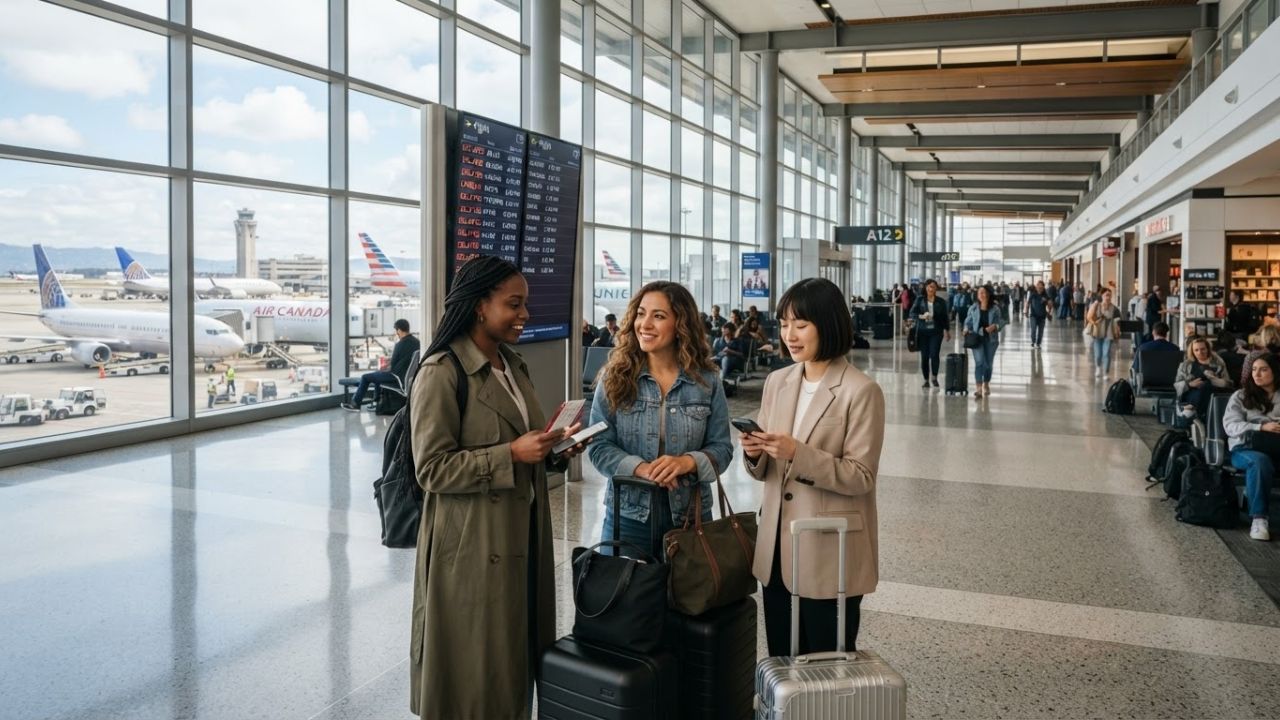
Image generated by AI
San Francisco Airport flight disruptions have stranded hundreds of travelers across domestic and international routing corridors. United, American, and Air Canada cancelled six flights combined, while over 140 delays created significant terminal backlogs.
Fleet Repositioning and Airspace Backlogs Constrain California Hub
Terminal operations monitored at San Francisco International Airport confirm that the hub experienced capacity constraints on July 4, 2026. A combination of regional airspace congestion and downstream aircraft rotation issues led to significant scheduling pressure.
Airlines adjusted departure times to absorb delayed arrivals, causing wait times to extend throughout the day.
The resulting scheduling gridlock at the major West Coast aviation hub impacted passengers on routes to Florida, Illinois, and Canada.
Mainline and Regional Carriers Absorb High Disruption Volumes
The operational impact was shared among multiple airlines rather than being concentrated with a single carrier. Air Canada, United Airlines, and American Airlines each cancelled two flights.
Network performance figures published by United Airlines indicate that the carrier recorded 111 delays, representing the highest delay count at SFO.
American Airlines logged 28 delayed departures, while Air Canada reported seven delays alongside its two cancellations.
San Francisco International Airport Disruption Statistics
The tables below display the carrier disruptions and geographic route impacts originating from San Francisco.
Flight Cancellations and Delays at SFO Airport by Carrier
| Airline Carrier Name | Cancelled Flights | Delayed Flights | Cancellation Rate | Primary Market Segment |
|---|---|---|---|---|
| United Airlines | 2 | 111 | Moderate | Mainline SFO Hub Carrier |
| American Airlines | 2 | 28 | Moderate | Mainline US Domestic Trunk |
| Air Canada | 2 | 7 | Moderate | Transborder Hub Feeder |
Geographic Reach of San Francisco Flight Disruptions
| Region Corridor | Primary Affected Hubs | Impact Classification | Route Significance |
|---|---|---|---|
| US West Coast | Los Angeles (LAX), Seattle (SEA), San Diego (SAN), Phoenix (PHX) | High delay propagation | High-yield business travel |
| US South / Florida | Miami (MIA), Orlando (MCO), Atlanta (ATL), Charlotte (CLT) | Scheduling bottlenecks | High-volume leisure routes |
| US Mid-Continent | Chicago O'Hare (ORD), Denver (DEN), Dallas (DFW) | High cancellation density | Hub Transit / Corporate |
| Canadian Transborder | Toronto (YYZ), Vancouver (YVR), Montreal (YUL) | High cancellation density | Cross-border commuting |
| Transpacific / East Asia | Tokyo (HND/NRT), Taipei (TPE), Manila (MNL), Hong Kong (HKG), Seoul (ICN) | Outbound rotation delays | Long-haul tourist corridors |
| Transatlantic / Europe | London (LHR), Frankfurt (FRA), Munich (MUC), Paris (CDG), Rome (FCO) | Outbound rotation delays | Long-haul tourist corridors |
Transborder and Transpacific Routes Face Ripple Delays
The flight disruptions affected a broad network of cities across the United States, Canada, Asia, and Europe. Primary routing bottlenecks occurred on domestic corridors to Miami, Chicago, Washington, Baltimore, and Charlotte.
Transborder connections to Toronto Pearson (YYZ), Vancouver International (YVR), and Montreal (YUL) also registered cancellations.
Furthermore, long-haul transpacific routes to Tokyo, Taipei, Osaka, Seoul, Manila, Hong Kong, Beijing, and Shanghai experienced delays due to delayed inbound aircraft rotations.
Transatlantic departures to London, Frankfurt, Munich, Dublin, Copenhagen, Barcelona, Paris, and Rome also faced minor scheduling adjustments.
Why This Matters
Our analysis of the flight data indicates that San Francisco International Airport operates as United's primary transpacific gateway. Because United runs a highly integrated long-haul network at SFO, a delay in an incoming transborder flight from Vancouver or Toronto immediately postpones the departure of an outbound Boeing 777 or Dreamliner to Tokyo or Taipei.
This vulnerability explains why United registered 111 delays despite keeping cancellations to a minimum.
Additionally, transborder links are hit hardest because SFO is subject to low-visibility runway constraints. Under weather-related slot controls, carriers prioritize protecting high-yield, long-haul international flights, leading to cancellations on regional and transborder flights operated by Air Canada.
Industry Outlook
Market trends suggest that SFO will continue to experience seasonal delays due to fog and visibility issues, requiring carriers to maintain flexible backup crews. Mainline carriers are expected to coordinate closer with transborder partners to balance slot allocations during peak demand.
Expect regional operators to increase crew reserve pools in West Coast hubs to prevent cascading crew-hour limits. The scheduling volatility is projected to normalize as summer passenger volumes stabilize.
Key Takeaways
- Scheduling Pressure: San Francisco International Airport recorded six flight cancellations and over 140 delays due to network constraints.
- Carrier Stress: United Airlines reported 111 delays, the highest absolute count at the California hub.
- Shared Groundings: Air Canada, United, and American Airlines each cancelled two flights, sharing the operational impact.
- Geographic Spread: Flight cancellations and delays hit key routes to Chicago, Toronto, and long-haul international markets.
- Slot Priority: Mainline carriers prioritized protecting long-haul passenger loads over transborder connections.
FAQ
Why are there flight delays at San Francisco Airport today?
The delays and cancellations are caused by airspace congestion and downstream aircraft repositioning issues at SFO.
Which airline has the most delayed flights at SFO?
United Airlines recorded the highest number of delays with 111 flights, although it managed to keep cancellations low.
How is transborder travel to Canada affected?
Air Canada registered two flight cancellations and seven delays, affecting routes connecting SFO to Vancouver and Toronto.
What should I do if my flight through San Francisco is cancelled?
Travelers should check their flight status using the airline's mobile app, enable real-time notifications, and contact customer service for rebooking or refund options.
Related Travel Guides
- American Airlines Flight AA2147 Makes Precautionary Return to Miami International Airport Following Departure
- Philippine Airlines Expands North American Long-Haul Flight Network Frequencies to Vancouver, Toronto, and New York for Winter 2026
- Phoenix Sky Harbor Airport Faces Flight Cancellations and Delays as SkyWest and American Airlines Scramble Regional Schedules
Disclaimer
This article is for informational and educational purposes only. It does not constitute legal, financial, or professional advice. While we strive to provide accurate and up-to-date information, travel policies, regulations, and conditions change rapidly. Always verify information with official sources before making travel decisions. Nomad Lawyer makes no representations about the accuracy, reliability, completeness, or suitability of the information provided. Readers should consult qualified professionals for advice specific to their circumstances. The views expressed in this article are those of the author and do not necessarily reflect the views of Nomad Lawyer.
Kunal K Choudhary
Co-Founder & Contributor
A passionate traveller and tech enthusiast. Kunal contributes to the vision and growth of Nomad Lawyer, bringing fresh perspectives and driving the community forward.
Learn more about our team →