
British Airways A380 Performs Emergency Go-Around at London Heathrow, Highlighting Critical Safety Protocols
Breaking airline news and aviation industry updates for 2026.

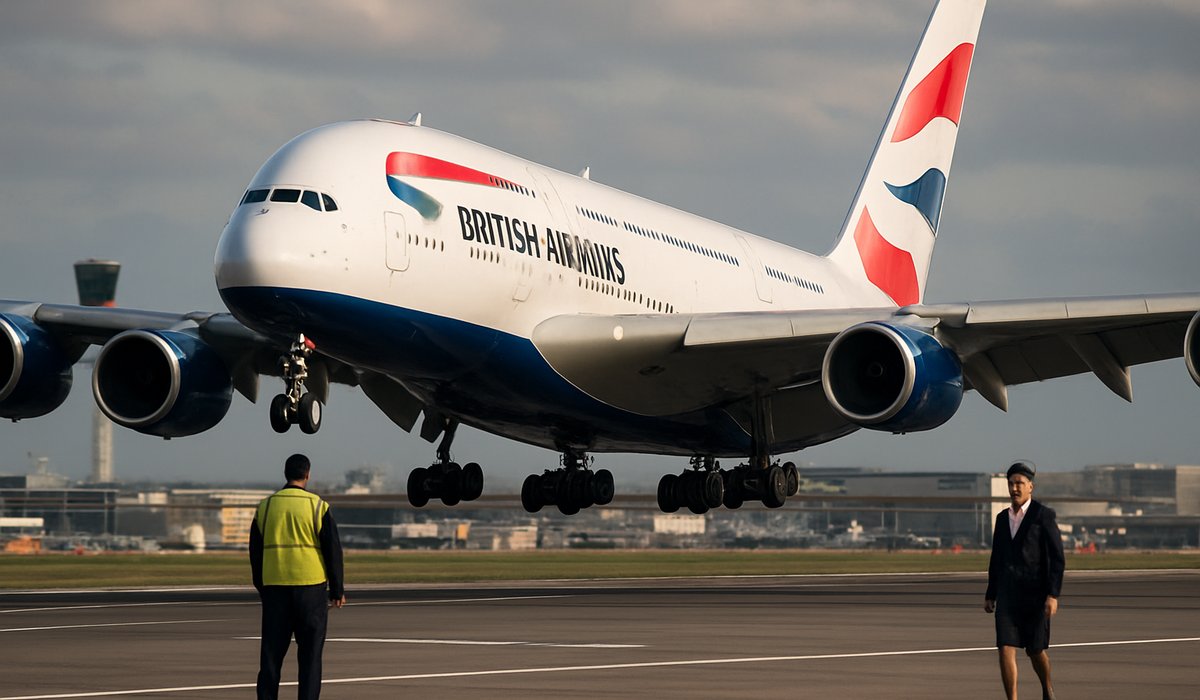
Image generated by AI
British Airways A380 Performs Emergency Go-Around at London Heathrow, Highlighting Critical Safety Protocols
A dramatic late-approach maneuver underscores the aviation industry's unwavering commitment to passenger safety over scheduling pressures
Superjumbo Executes Textbook Safety Procedure
A British Airways Airbus A380 executed a carefully controlled go-around at London Heathrow Airport this week after determining its approach trajectory posed an unacceptable risk, according to aviation safety analysts reviewing incident footage. The wide-body aircraft, carrying hundreds of passengers, briefly touched down on the runway before pilots made the decisive call to abort the landing and circle back for a second approach.
The maneuver—known as a go-around in aviation terminology—represents a fundamental safety protocol that prioritizes passenger protection over operational efficiency. Rather than forcing a potentially compromised landing, the flight crew exercised their judgment to reset and attempt another approach under more favorable conditions.
A Reminder of Safety-First Culture
The incident has reignited conversations within the aviation community about the paramount importance of pilot decision-making authority during critical flight phases. Industry safety experts emphasize that such go-arounds, while occasionally dramatic to observers, form the backbone of modern aviation's exceptional safety record.
"A go-around is not a failure—it's a success," aviation safety professionals have repeatedly stated across industry forums. The decision reflects trained pilots prioritizing passenger welfare over external pressures to maintain on-time arrivals or reduce fuel consumption.
Operational Context
The A380, among the world's largest commercial aircraft with a capacity of up to 555 passengers, demands precise approach management due to its size and weight. British Airways operates a significant fleet of these superjumbos on long-haul international routes, with Heathrow serving as a primary hub for transatlantic and European operations.
Late-afternoon approaches into busy airports like Heathrow present complex variables: crosswinds, approach corridor congestion, and variable weather conditions can all necessitate go-around procedures. Modern aircraft are specifically designed with sufficient fuel reserves to permit such decisions without compromising flight safety.
Broader Industry Implications
The incident underscores ongoing discussions within commercial aviation about balancing operational pressures—fuel costs, schedule adherence, and passenger expectations—against the non-negotiable requirement for safe flight operations. With jet fuel prices remaining volatile and airlines facing sustained profitability pressures, the willingness of flight crews to execute go-arounds demonstrates that safety protocols remain firmly established industry-wide.
British Airways confirmed the aircraft subsequently landed safely on its second approach, with all passengers and crew arriving without incident. The airline has not issued additional statements regarding the specific circumstances of the approach.
Frequently Asked Questions
What is a go-around in aviation, and how often do they occur? A go-around is a procedure where pilots abort a landing approach and climb back to altitude for another attempt. Go-arounds are standard safety responses to unsuitable landing conditions and occur regularly at major airports without incident.
Why would a pilot decide to execute a go-around instead of landing? Pilots may abort landings due to crosswinds exceeding safe limits, unstable approach angles, runway obstructions, traffic conflicts, or deteriorating weather conditions. Safety always takes precedence over schedule maintenance.
Does a go-around waste fuel and increase airline costs? Yes, go-arounds consume additional fuel and extend flight times, increasing operational costs. However, airlines maintain fuel reserves specifically to permit such safety decisions without compromising flight completion.
Is the Airbus A380 more prone to go-around procedures than smaller aircraft? The A380's size requires more precise approach management, but go-around frequency depends primarily on airport conditions and weather rather than aircraft type.
How does this incident affect passenger safety confidence? Safety experts view go-arounds as evidence that safety systems work correctly, reinforcing passenger confidence in modern aviation protocols and crew training standards.
Related Travel Guides
Flight Delay Compensation Guide 2026
Understanding Airline Route Changes
Airport Security Process Updated (2026)
External Resources
Disclaimer
This article is for informational and educational purposes only. It does not constitute legal, financial, or professional advice. While we strive to provide accurate and up-to-date information, travel policies, regulations, and conditions change rapidly. Always verify information with official sources before making travel decisions. Nomad Lawyer makes no representations about the accuracy, reliability, completeness, or suitability of the information provided. Readers should consult qualified professionals for advice specific to their circumstances. The views expressed in this article are those of the author and do not necessarily reflect the views of Nomad Lawyer.
Preeti Gunjan
Contributor & Community Manager
A passionate traveller and community builder. Preeti helps grow the Nomad Lawyer community, fostering engagement and bringing the reader experience to life.
Learn more about our team →