
Russian Airports Face Third Night of Shutdowns as Drone Threats Disrupt Moscow Hubs in 2026
Major Russian aviation hubs including Vnukovo and Domodedovo face rolling night-time closures as expanded drone operations create severe airspace instability for international carriers.
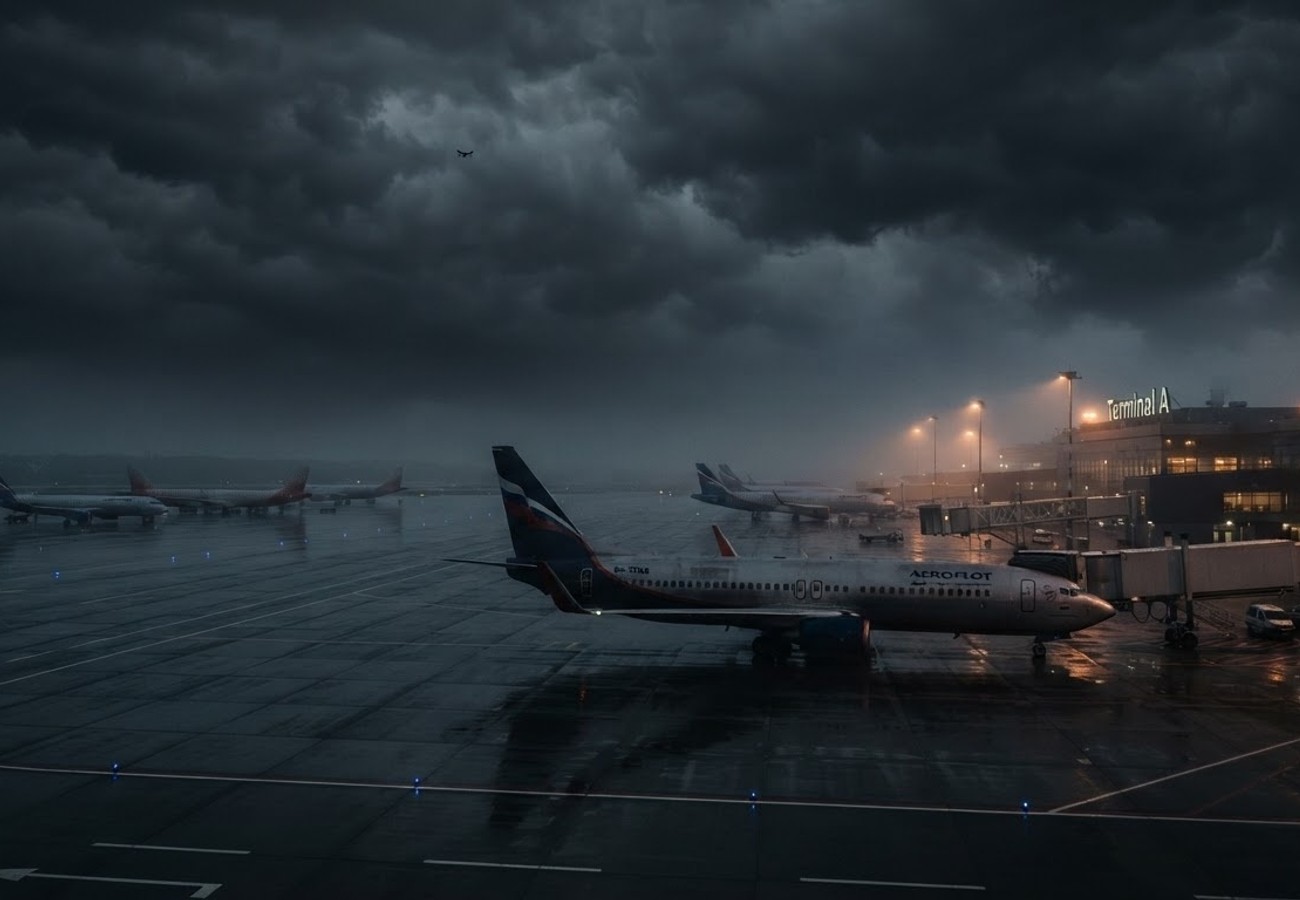
Image generated by AI
Major Russian aviation hubs have entered a third consecutive night of emergency flight restrictions, with drone activity pushing strategic airspace toward effective closure.
The disruption is no longer isolated to border regions; it has now centralized around the capital, creating a volatile environment for airlines, insurers, and passengers navigating the region.
The Shift Toward Airspace Instability
A pattern of sudden, night-time shutdowns is currently rippling through Russia's domestic and international flight networks. On September 2, 3, and 4, 2026, the federal air transport agency imposed temporary restrictions at multiple airports following overnight drone incidents. The impact has been most acute at Moscow's primary gateways: Vnukovo, Domodedovo, and Zhukovsky.
These closures are rarely scheduled. Instead, they manifest as rolling patterns of delays and diversions, often triggered the moment air-defense systems activate. The instability has expanded beyond Moscow, affecting airports in Sochi, Gelendzhik, Penza, Saratov, Yaroslavl, and Nizhny Novgorod. For the traveler, this means a high probability of last-minute cancellations and rerouted traffic that can strand passengers for hours or days.
Strategic Pressure and Aviation Safety
This trend is the result of a declared shift in Ukrainian strategy. On September 1, President Volodymyr Zelensky warned that Russian airspace is becoming "completely unsafe," suggesting an intentional effort to make the skies effectively closed to civil aviation.
The goal of these long-range drone operations is not necessarily to halt all traffic permanently, but to stretch air defenses and impose significant economic costs. Even when drones are successfully intercepted, the precautionary closure of approach paths creates a domino effect across the entire network.
For the visitor, the real impact is the erosion of predictability. Russian officials frame these shutdowns as essential safety measures, claiming thousands of drones have been intercepted over Russia and occupied Crimea. However, the fact that targets now include infrastructure hundreds of kilometers from the front line changes the risk calculation for any carrier still operating in the market.
Operational Fallout for Global Carriers
The uncertainty has already triggered a reaction from international airlines. Pegasus Airlines, for example, has reportedly reversed multiple Moscow-bound flights mid-air and canceled several services due to heightened risk and insurance concerns.
Aviation risk consultancies are now advising clients that drone and missile activity is likely to remain a near-daily occurrence in areas within several hundred kilometers of the border, as well as around Saint Petersburg and Moscow. This has led to:
- Increased Insurance Premiums: The volatility of the airspace is driving up the cost of hull and liability insurance.
- Network Reconfiguration: Carriers are shifting routes further south or west to avoid the region entirely.
- Logistical Strains: Fuel burned during diversions and the disruption of crew rotations are adding significant operational expenses.
Visitor Insider Tips
For those who must travel within or through the region, standard booking procedures are insufficient.
- The "Night-Wave" Risk: Most disruptions are concentrated during evening and overnight windows. If possible, schedule arrivals and departures for early morning to avoid the primary drone-alert windows.
- Alternative Transit: Given the instability of regional airports like Sochi and Nizhny Novgorod, consider high-speed rail (Sapsan) for domestic movement where available, as it remains less susceptible to airspace closures.
- Documentation: Keep digital and physical copies of your insurance policy specifically covering "political risk" or "war-related disruptions," as standard travel insurance may not cover drone-related airport closures.
- Local Communication: Monitor official federal air transport agency alerts rather than relying solely on airline apps, which often lag behind real-time airspace closures.
Tourism and Economic Outlook
The long-term impact of these "dark nights" is a deepening of Russia's aviation isolation. The combination of restricted access to leased aircraft, reduced overflight revenue, and now the physical threat to hubs is accelerating the fragmentation of airspace between Europe, the Middle East, and Asia.
As the environment becomes more hazardous, the trend suggests that remaining foreign carriers will likely suspend services entirely rather than manage the daily risk of mid-air diversions. This shifts the burden of connectivity onto a few state-backed carriers, further increasing costs for the end traveler.
The unpredictability of the skies is now the primary variable in regional travel planning.
Related Travel Guides
Disclaimer
This article is for informational and educational purposes only. It does not constitute legal, financial, or professional advice. While we strive to provide accurate and up-to-date information, travel policies, regulations, and conditions change rapidly. Always verify information with official sources before making travel decisions. Nomad Lawyer makes no representations about the accuracy, reliability, completeness, or suitability of the information provided. Readers should consult qualified professionals for advice specific to their circumstances. The views expressed in this article are those of the author and do not necessarily reflect the views of Nomad Lawyer.