
Breaking Airline News: Saudi Arabia Deploys Massive Riyadh Air Dreamliner Launch to Shield Global Travelers from Legacy Travel Chaos
Breaking airline news: Amidst a terrifying era of severe global hub congestion, Saudi Arabia aggressively launches Riyadh Air’s inaugural Dreamliner flight to London, violently shielding travelers from extreme travel chaos.

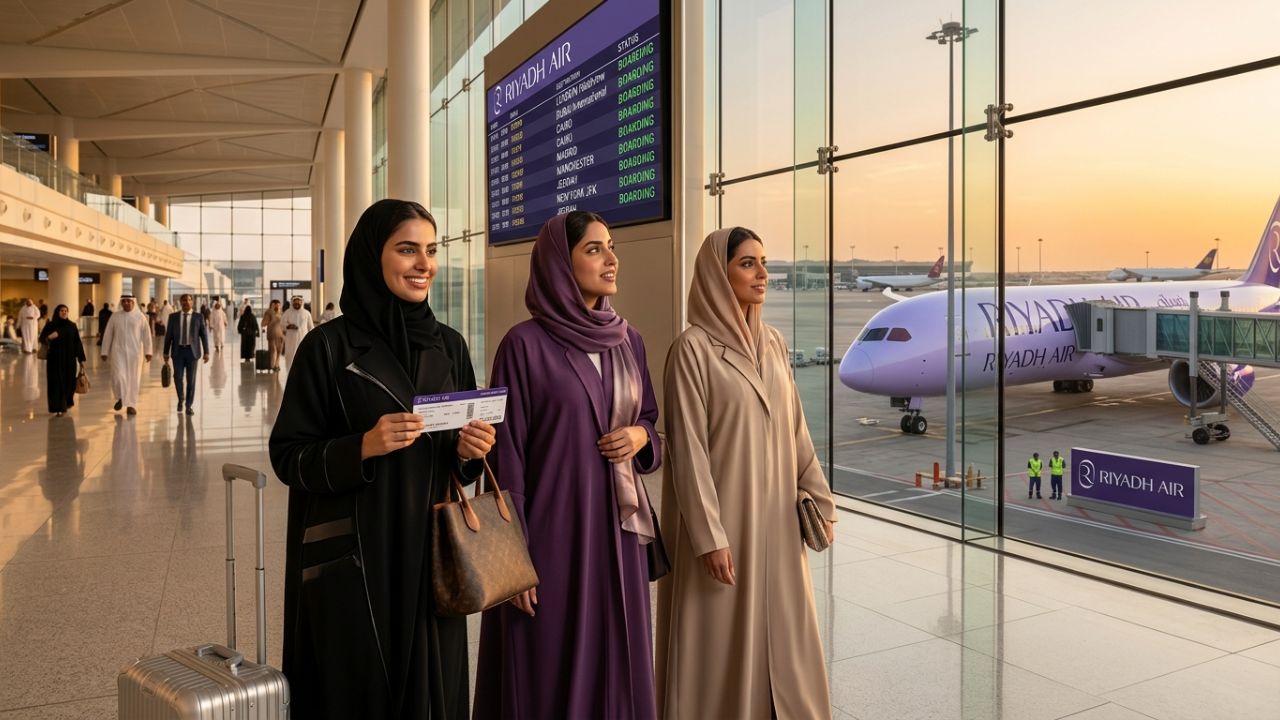
Image representing the intense strategic battle as Saudi Arabian aviation authorities desperately deploy massive new airline networks to combat severe transit friction and bypass paralyzing flight cancellations in congested legacy mega-hubs.
Breaking Airline News: Saudi Arabia Deploys Massive Riyadh Air Dreamliner Launch to Shield Global Travelers from Legacy Travel Chaos
As paralyzing terminal congestion, terrifying equipment failures, and severe operational fragility violently threaten to completely choke highly complex legacy global transit networks, Saudi Arabian aviation planners have executed a brilliant high-stakes logistical maneuver. In a desperate bid to physically and psychologically rescue international travelers from the terrifying threat of extreme travel chaos triggered by catastrophic flight cancellations on older, overloaded carriers, the Kingdom has aggressively launched its heavily fortified national carrier, Riyadh Air. Officially confirming its inaugural commercial flight from Riyadh to London Heathrow aboard a brand-new Boeing 787-9 Dreamliner, Saudi Arabia is forcefully establishing a massive new global air bridge. By entirely bypassing the severe logistical nightmares and rolling delays traditionally associated with forcing passengers through aging, saturated European and regional hubs, this massive fleet deployment allows furious corporate travelers and desperate tourists to execute seamless intercontinental jumps. This operational paradigm shift is transforming modern global logistics, proving that actively deploying a pristine, highly capitalized airline network is the absolute ultimate defense against the agonizing misery historically defining major airport unpredictability.
In a harrowing display of modern aviation vulnerability, the sheer logistical nightmare of attempting to navigate essential corridors across the world has historically forced passengers into terrifying transit scenarios. For years, securing a long-haul connection through the Middle East meant risking it all on violently overloaded legacy networks—staring at departure boards with intense anxiety as rolling delays caused by outdated aircraft and congested terminal infrastructure virtually guaranteed a catastrophic denial of boarding. However, Saudi Arabia is aggressively fighting back against this structural paralysis. Driven by the massive strategic ambitions of Vision 2030, the Kingdom is introducing a highly resilient, heavily fortified alternative. By rapidly deploying a state-of-the-art fleet and targeting over 100 global destinations by 2030, travelers now possess the absolute freedom to physically shield themselves from the devastating effects of paralyzed transport networks, ensuring their critical international itineraries are executed without the terrifying threat of infrastructure-induced cancellations.
Expanded Overview: The Massive Scale of the Transit Shield
The terrifying crisis of overwhelming passenger stress currently gripping complex intercontinental itineraries brutally exposes the severe limitations of relying on aging global carriers. Recognizing that aggressively forcing travelers onto outdated aircraft leads directly to severe psychological friction and broken itineraries, Riyadh Air has fundamentally rewritten the global capacity strategy. The sheer scale of this tactical realignment is immense. Operating primarily out of King Khalid International Airport in Riyadh, and heavily supported by King Abdulaziz International Airport in Jeddah, this launch acts as a massive pressure release valve for the entire global aviation grid. By executing meticulous flight simulations and rigorous staff training prior to launch, Riyadh Air guarantees a seamless, disruption-free extraction from the travel chaos currently plaguing established European and Gulf aviation corridors.
Section-Wise Breakdown: The Operational Realignment
Breaking the European Gridlock: The UK, France, and Spain Execution
To survive the terrifying surge in global travel demand without triggering immediate terminal meltdowns at primary hubs, Riyadh Air anchored its defense through highly precise European route launches. The flagship connection to London Heathrow violently disrupts the established UK-Middle East corridor, providing a highly reliable alternative to congested legacy routes. The airline has also aggressively launched services to Madrid, securing southern Europe. Looking forward, the carrier plans a massive expansion into Manchester, Paris, Frankfurt, Munich, Amsterdam, and Rome, completely shielding passengers from the chaotic bottlenecks that define traditional European transit.
Shattering Regional Bottlenecks: The Middle East and Levant Network
Looking beyond intercontinental jumps, the program executes a massive logistical defense strategy through regional dominance. To combat the severe congestion at established Gulf hubs, Riyadh Air is aggressively targeting Doha, Kuwait City, Manama (Bahrain), and secondary UAE airports. Furthermore, the airline views Amman (Jordan) as a critical Levant hub and Cairo (Egypt) as the absolute primary gateway to North Africa, violently integrating these massive population centers into a highly reliable, newly constructed regional matrix.
Deploying the Asian Shield: The India and APAC Corridors
This massive infrastructural shift is heavily fortified by targeting the fastest-growing aviation markets on Earth. To alleviate the terrifying travel chaos frequently experienced by migrant and business travelers, Riyadh Air is launching massive capacity into India—targeting Mumbai, Delhi, Bangalore, and Chennai. Southeast Asia represents a massive strategic front, with critical routes deployed or planned for Bangkok, Kuala Lumpur, Jakarta, and Manila. The airline’s long-term defense strategy also targets Tokyo, Seoul, and Singapore.
Securing the Fleet Defense: Boeing and Airbus Execution
To guarantee absolute operational reliability and bypass the terrifying maintenance delays paralyzing legacy carriers, Riyadh Air is executing this massive network utilizing pristine, cutting-edge aircraft. The Boeing 787-9 Dreamliner serves as the immediate backbone for long-haul routes like London and Madrid. For high-frequency regional defense, the airline will deploy the Airbus A321neo. Looking toward extreme intercontinental extractions—including New York, Toronto, and Chicago—the airline will aggressively deploy the Airbus A350-1000, enabling ultra-long-haul flights that completely bypass the need for connecting layovers.
Riyadh Air Operational Network Matrix
To fully comprehend the massive logistical and strategic fallout of this terrifyingly efficient network execution, corporate travel managers and affected tourists must review the exact operational metrics defining the Riyadh Air expansion. The following matrix provides a granular breakdown of the specific, officially verified strategic route targets driving this massive disruption mitigation effort.
| Strategic Network Execution | Verified Operational Target |
|---|---|
| Inaugural Long-Haul Route | Riyadh to London (Heathrow) via Boeing 787-9 |
| Primary & Secondary Hubs | Riyadh (King Khalid) & Jeddah (King Abdulaziz) |
| European Corridors | Madrid (Launched), Paris, Manchester, Frankfurt, Munich, Amsterdam, Rome (Planned) |
| Middle East & Levant Nodes | Cairo, Doha, Kuwait City, Manama, Amman, Oman, UAE Secondary |
| Indian Subcontinent Targets | Mumbai, Delhi, Bangalore, Chennai |
| Southeast Asia & APAC Expansion | Bangkok, Kuala Lumpur, Jakarta, Manila, Tokyo, Seoul, Singapore |
| Americas & Africa Strategy | New York, Toronto, Chicago, Casablanca, Nairobi |
| Strategic Fleet Composition | Boeing 787-9, Airbus A321neo, Airbus A350-1000 |
Passenger Impact: Surviving the Intercontinental Jump
For the millions of global tourists and corporate professionals attempting to navigate the rapidly collapsing transit corridors across the world, this massive airline launch represents a highly anticipated lifeline against severe delays. The brutal reality of enduring a terrifyingly sudden cancellation on a legacy carrier due to aging equipment or saturated hubs inflicts intense psychological stress—leaving the passenger entirely stranded mid-journey. By aggressively booking tickets on Riyadh Air's pristine Dreamliners, passengers drastically reduce their exposure to these terrifying mechanical and logistical environments, securing a highly reliable connection that completely bypasses the domino effect of global travel chaos.
Survival Guide for Transit Travelers
Travelers desperately preparing to navigate the modernized global network must immediately execute the following survival protocols:
- Leverage Pristine Equipment: Passengers must aggressively target airlines flying brand-new aircraft like the 787-9 and A350. Legacy carriers frequently suffer from terrifying maintenance groundings; Riyadh Air’s new fleet virtually eliminates this mechanical travel chaos.
- Exploit the New Hub Architecture: When traveling between Europe and Asia, corporate travelers should route through King Khalid International Airport. Unlike older, heavily saturated Middle Eastern hubs that suffer from extreme congestion during peak hours, Riyadh offers a streamlined, highly efficient extraction corridor.
- Anticipate the 2030 Expansion: As Riyadh Air aggressively scales toward its 100-destination target, passengers must continuously monitor the airline's route network. Securing early bookings on newly launched routes to India, Southeast Asia, or North America guarantees access to premium capacity before the market fully saturates.
Industry Analysis: The Economics of Tactical Disruption
From a strategic aviation perspective, the travel turmoil currently threatening global hubs highlights the terrifying vulnerability of the industry's reliance on aging legacy airlines. Industry analysts confirm that Saudi Arabia’s massive financial capitalization of Riyadh Air is a highly aggressive, tactical response designed to completely dominate the market. By deploying the most fuel-efficient aircraft on earth, the airline completely avoids the massive financial bleeding associated with operating older, inefficient planes, effectively shielding the carrier from the economic constraints that force other airlines to cancel flights and penalize passengers.
Conclusion: A Strategic Retreat to Ensure Aviation Survival
As the extremely critical global travel seasons accelerate, the massive airline launch executed by Saudi Arabia represents a massive warning to legacy competitors attempting to force passengers onto unreliable, heavily congested connection schedules. The aggressive maneuvering proves that capturing market dominance requires terrifyingly swift and highly optimized capital deployments, utilizing advanced widebody jets to connect passengers safely across continents while shielding them from the brutal reality of terminal unreliability. For the modern wandering family booking their tickets, utilizing this tactically constructed airline offers an incredibly secure, highly insulated way to execute flight discovery. By acting aggressively to secure tickets on Riyadh Air, travelers can successfully survive intense travel surges and completely avoid the paralyzing threat of legacy-induced travel chaos.
Key Takeaways
- Massive Tactical Launch: Saudi Arabia has aggressively launched Riyadh Air, executing its inaugural commercial flight from Riyadh to London Heathrow using a Boeing 787-9 Dreamliner.
- Crushing the Legacy Bottleneck: The airline bypasses older, congested global networks, targeting 100 destinations by 2030, backed by the immense financial strategy of Vision 2030.
- Strategic Global Execution: The network aggressively targets critical corridors, including Europe (Madrid, Paris), the Levant (Amman), India (Mumbai, Delhi), and Southeast Asia (Bangkok, Manila).
- Massive Fleet Strategy: To ensure absolute operational survival and eliminate mechanical travel chaos, the fleet relies entirely on cutting-edge Airbus A321neo, Airbus A350-1000, and Boeing 787-9 aircraft.
- Traveler Advisory: Global passengers seeking to avoid the severe delays plaguing traditional European and Gulf carriers should immediately transition their long-haul bookings to Riyadh Air's heavily fortified network.
Related Travel Guides
Disclaimer
This article is for informational and educational purposes only. It does not constitute legal, financial, or professional advice. While we strive to provide accurate and up-to-date information, travel policies, regulations, and conditions change rapidly. Always verify information with official sources before making travel decisions. Nomad Lawyer makes no representations about the accuracy, reliability, completeness, or suitability of the information provided. Readers should consult qualified professionals for advice specific to their circumstances. The views expressed in this article are those of the author and do not necessarily reflect the views of Nomad Lawyer.
Kunal K Choudhary
Co-Founder & Contributor
A passionate traveller and tech enthusiast. Kunal contributes to the vision and growth of Nomad Lawyer, bringing fresh perspectives and driving the community forward.
Learn more about our team →