
Republic Airways Flight RPA4442 Embraer E175 Diverts from New York LGA to Baltimore BWI in 2026
Republic Airways Flight RPA4442, an Embraer E175 traveling from Richmond to New York, was diverted to Baltimore/Washington International Airport on August 5, 2026, highlighting regional aviation operational flexibility.

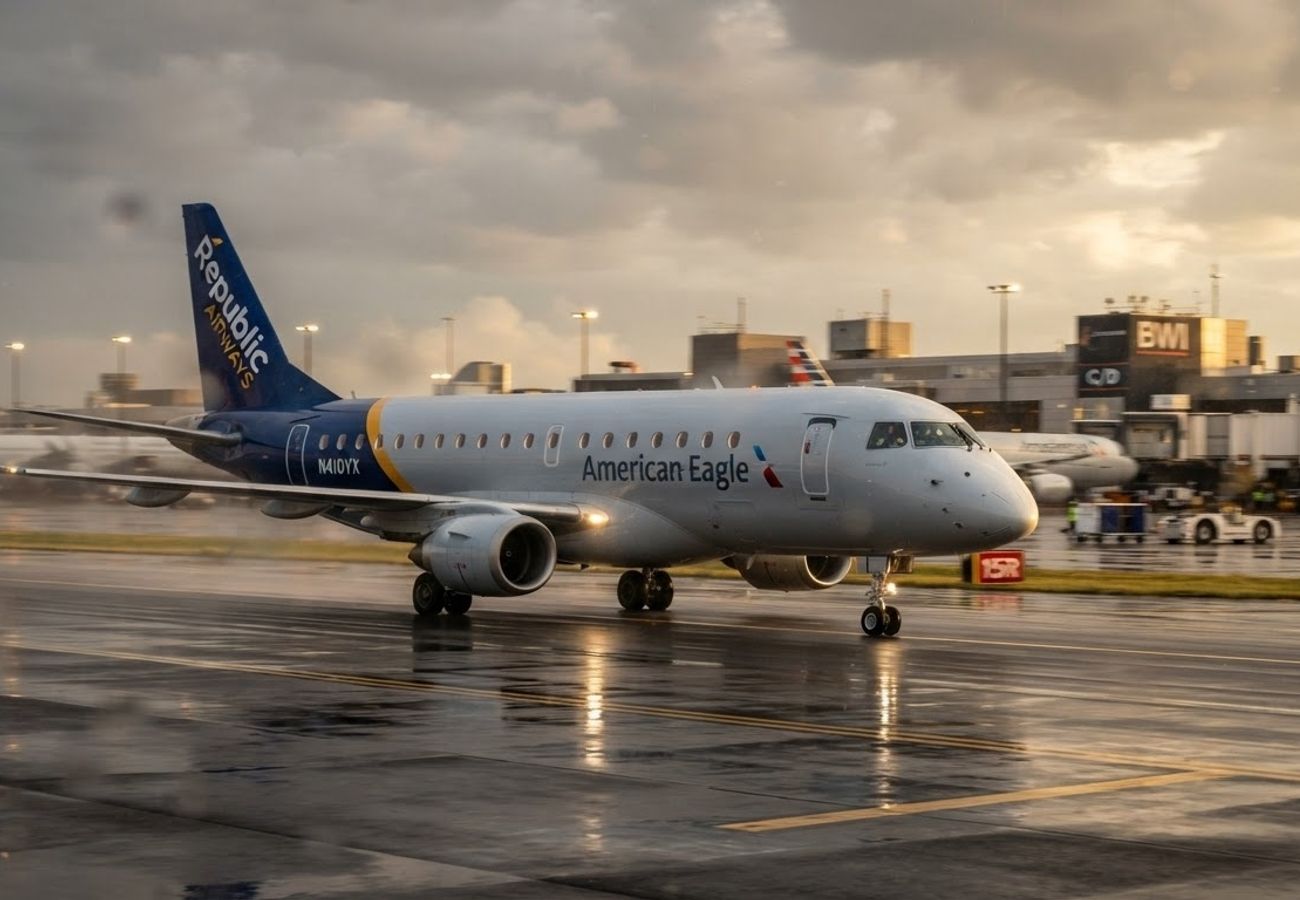
Image generated by AI
Republic Airways Flight RPA4442, an Embraer E175 traveling from Richmond to New York, was diverted to Baltimore/Washington International Airport (BWI) on August 5, 2026. The aircraft landed safely despite the unexpected route change, underscoring the critical role of alternative landing sites in the US regional aviation network.
Operational Details of Flight RPA4442 Diversion
On August 5, 2026, Republic Airways Flight RPA4442 (also identified as YX4442) experienced an operational redirection during its scheduled service from Richmond International Airport (RIC) to New York LaGuardia Airport (LGA). The flight was operated by an Embraer E175 regional jet, registration N410YX.
The aircraft departed from Gate A10 at Richmond International Airport at 1:11 PM EDT. While the original flight plan targeted a 3:00 PM EDT arrival at LaGuardia, the crew diverted the aircraft to Baltimore/Washington International Airport (BWI), where it touched down at 2:49 PM EDT. This resulted in an arrival approximately 19 minutes later than the scheduled time at the original destination.
While the specific catalyst for the diversion was not disclosed by the operator, aviation protocols typically trigger such moves due to air traffic congestion at LGA, adverse weather patterns, technical precautions, or air traffic control (ATC) restrictions.
Flight Specification and Route Data
The following table outlines the precise parameters of the diverted flight:
| Parameter | Detail |
|---|---|
| Flight Number | RPA4442 / YX4442 |
| Aircraft Model | Embraer E175 |
| Registration | N410YX |
| Departure Airport | Richmond International (RIC) |
| Departure Time | 1:11 PM EDT |
| Scheduled Destination | New York LaGuardia (LGA) |
| Actual Destination | Baltimore/Washington International (BWI) |
| Actual Arrival Time | 2:49 PM EDT |
| Departure Gate | Gate A10 |
Traveler Logistics Guide: Navigating Unexpected Diversions
From a ground-level perspective, the best way to navigate a flight diversion is to immediately establish a communication line with the airline’s ground staff before exiting the aircraft. In the case of the RPA4442 diversion to BWI, passengers were displaced from their intended New York metropolitan destination.
Managing Onward Transit When diverted to a hub like Baltimore (BWI) while heading to New York (LGA), travelers face a significant ground transit gap. To resolve this efficiently:
- Ground Transportation: Use airport-authorized ride-share services or rail links (such as Amtrak from nearby stations) to bridge the gap to New York.
- Digital Documentation: Ensure all boarding passes and IDs are accessible digitally; physical copies can be lost during the confusion of a diverted landing.
- Customs and Security: For domestic diversions, security protocols are generally streamlined, but passengers should verify if they need to re-clear security if the airline provides a replacement flight.
Optimal Connection Strategy For those booking regional flights on Embraer E175 aircraft, we recommend a minimum layover of 2.5 to 3 hours at major hubs like LGA. Regional flights are more susceptible to diversions due to the high volume of traffic in the Northeast Corridor.
Infrastructure Impact Assessment
The diversion of Flight RPA4442 illustrates the interdependence of the US regional aviation infrastructure. The Embraer E175 is a cornerstone of this network, designed specifically to link secondary markets like Richmond with primary hubs.
The ability to seamlessly pivot to Baltimore/Washington International (BWI) demonstrates the efficiency of the "alternate airport" system. Without these strategic redundancies, operational disruptions at high-density airports like LaGuardia would lead to systemic gridlock. This incident confirms that while diversions cause immediate passenger inconvenience, they are a primary safety mechanism that prevents airborne holding patterns from exceeding fuel safety margins.
Safety-first decision-making remains the gold standard for regional connectivity in the United States.
Related Travel Guides
Disclaimer
This article is for informational and educational purposes only. It does not constitute legal, financial, or professional advice. While we strive to provide accurate and up-to-date information, travel policies, regulations, and conditions change rapidly. Always verify information with official sources before making travel decisions. Nomad Lawyer makes no representations about the accuracy, reliability, completeness, or suitability of the information provided. Readers should consult qualified professionals for advice specific to their circumstances. The views expressed in this article are those of the author and do not necessarily reflect the views of Nomad Lawyer.
Preeti Gunjan
Contributor & Community Manager
A passionate traveller and community builder. Preeti helps grow the Nomad Lawyer community, fostering engagement and bringing the reader experience to life.
Learn more about our team →