
Red Flag Warnings Force Colorado and Utah Travel Adjustments as Wildfire Season Peaks
Red Flag Warnings across Colorado and Utah fire zones threaten summer travel plans. Here's what nomads and road trippers need to know about wildfire risk, air quality, and safe route planning.

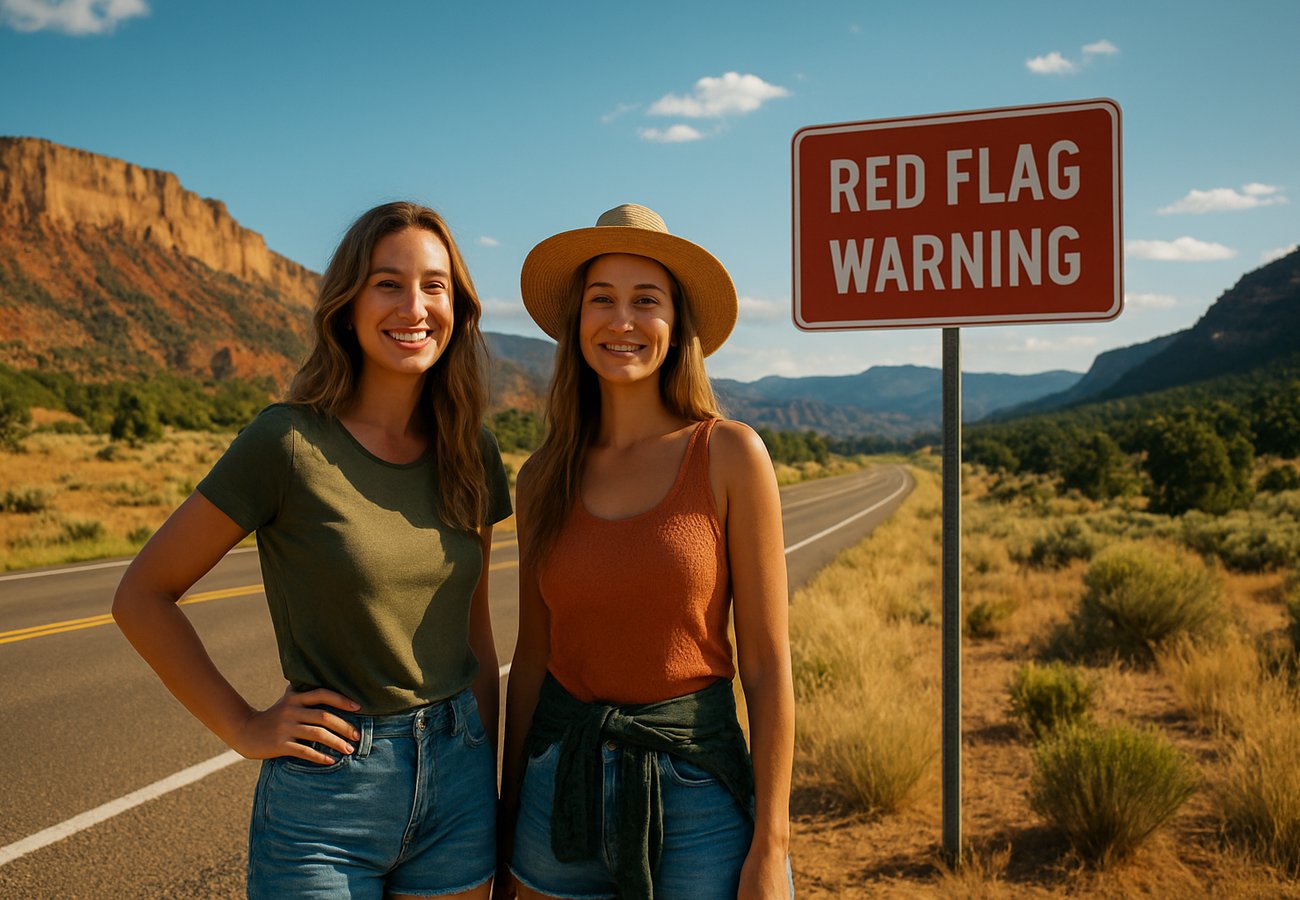
Image generated by AI
The Alert That's Shutting Down Summer Travel Plans
Red Flag Warnings have been issued across at least five fire weather zones spanning western Colorado and eastern Utah—and travelers planning scenic road trips and hiking adventures need to take notice. The National Weather Service activated these critical alerts Thursday afternoon for zones including Colorado's Little Snake and White River areas and Utah's Eastern Uinta Basin and Book Cliffs.
Here's the brutal reality: when a Red Flag Warning drops, even a single spark becomes a catastrophic threat.
Reddit: "Just had to cancel our Moab trip because of the Red Flag Warning. Fires aren't worth the risk, and honestly, the smoke is already terrible in Salt Lake City 200 miles away." — r/travel
What Exactly Is a Red Flag Warning?
A Red Flag Warning isn't a fire report—it's a predictive alert that conditions are ideal for fire ignition and rapid spread. The formula is lethal: scorching temperatures, dangerously low humidity, and gusty winds combine to create an environment where a spark becomes a wildfire in minutes, not hours.
For travelers, this means the landscape itself becomes a tinderbox. Even equipment that normally seems safe—a campfire, a barbecue, fireworks, or spark-prone machinery—transforms into an ignition hazard under Red Flag conditions.
How This Disrupts Your Itinerary
Peak summer season coincides directly with peak fire danger. Campers, hikers, and road trippers flood national forests and scenic byways just as conditions become most volatile. What should be a majestic drive through towering cliffs and high-mountain lakes becomes a calculated risk assessment.
The reality on the ground is stark:
- Campfires are prohibited or restricted in most fire zones during Red Flag events
- Scenic overlooks and parking areas may face sudden closures
- Roads can become congestion zones for evacuation traffic
- Equipment that sparks—even from mechanical failure—can trigger wildfires that spread across miles in hours
Tourism operators across Moab, Aspen, Grand Junction, and Park City are already reporting visitor cancellations. Hotels and outfitters dependent on summer bookings face declining foot traffic when fire warnings drive people away.
Air Quality: The Invisible Threat
Wildfire smoke doesn't respect property lines. Smoke plumes from active fires downwind can degrade air quality across entire regions—affecting respiratory health hundreds of miles from the actual fire zone. For travelers with asthma, heart conditions, or respiratory sensitivities, this means unsafe conditions even when you're nowhere near the flames.
Check air quality forecasts alongside fire alerts. Many Western travel corridors experience severe air quality degradation during fire season, making outdoor activities genuinely hazardous.
Tools That Keep You Safe and Mobile
Modern travel planning has evolved to handle fire season complexity. Real-time resources now available include:
- Utah Hazard Planning Dashboard — live fire weather forecast maps by county
- National Weather Service alerts — available via SMS and email subscription
- Park and forest service websites — real-time closure updates for specific routes
- Air quality monitoring platforms — hourly updates on particulate matter and visibility
Subscribe to official alerts the night before departure. Check conditions again in the morning. Apps that integrate live traffic and hazard data are worth their weight in digital gold during fire season.
The Broader Climate Context
This isn't isolated to 2026. Colorado and Utah are experiencing longer fire seasons that begin earlier in spring and stretch deep into late summer. Record-high temperatures, prolonged drought, and massive fuel loads have fundamentally altered the traditional "safe" windows for outdoor recreation.
Fire danger alerts that would have been shocking a decade ago are now routine during these months. The Western United States faces a structural shift in climate patterns that nomads and road trippers must acknowledge when planning trips.
Strategic Travel Alternatives
If you're determined to explore Colorado and Utah landscapes, timing matters:
- Spring travel (April-May) typically offers lower fire danger and better conditions
- Fall travel (September-October) reduces fire risk while maintaining excellent weather
- Route selection — prioritize destinations with lower vegetation fuel loads or proximity to water sources
- Travel insurance — products that cover evacuation or route adjustments related to wildfires are increasingly essential
When summer travel is unavoidable, respect all Red Flag restrictions. Local fire authorities aren't being cautious—they're being realistic about conditions that can spawn uncontrollable wildfires.
Road Trip Reality: What to Expect
Scenic highway travel through national forests and mountain passes remains possible during Red Flag events, but preparation is non-negotiable. Roads may experience sudden congestion from evacuation traffic. Overlooks may close temporarily. Navigation apps with live hazard updates become essential tools rather than conveniences.
Travel insurance that covers wildfire-related disruptions is worth considering. Many regional parks post real-time closures on official websites—check these before departing.
Reddit: "Downloaded the fire alert app before our Utah road trip. Saved us from driving into a Red Flag zone on day two. Would've wasted two days of the trip." — r/roadtrip
The Vigilance Requirement
Traveling safely through fire-prone regions demands continuous monitoring and flexibility. A Red Flag Warning doesn't mean a fire has ignited—it means conditions are primed for catastrophic fire behavior if ignition occurs.
Preparation, information access, and willingness to adjust plans aren't inconveniences. They're the bare minimum for responsible travel through fire season landscapes.
Stay alert, stay flexible, and remember: the mountain will be there after fire season passes.
Related Travel Guides
Flight Delays Inflict $34 Billion Yearly on Global Aviation Industry
Disclaimer
This article is for informational and educational purposes only. It does not constitute legal, financial, or professional advice. While we strive to provide accurate and up-to-date information, travel policies, regulations, and conditions change rapidly. Always verify information with official sources before making travel decisions. Nomad Lawyer makes no representations about the accuracy, reliability, completeness, or suitability of the information provided. Readers should consult qualified professionals for advice specific to their circumstances. The views expressed in this article are those of the author and do not necessarily reflect the views of Nomad Lawyer.
Preeti Gunjan
Contributor & Community Manager
A passionate traveller and community builder. Preeti helps grow the Nomad Lawyer community, fostering engagement and bringing the reader experience to life.
Learn more about our team →