
Reagan National Airport Faces 90 Operational Delays: American, United, and Delta Hit as Regional Feeder Networks Strangle D.C. Air Traffic Corridor Amid Heightened Travel Chaos
Reagan National Airport (DCA) witnessed 90 flight delays as regional feeder networks for American and United faced operational strain, impacting Northeast corridors.

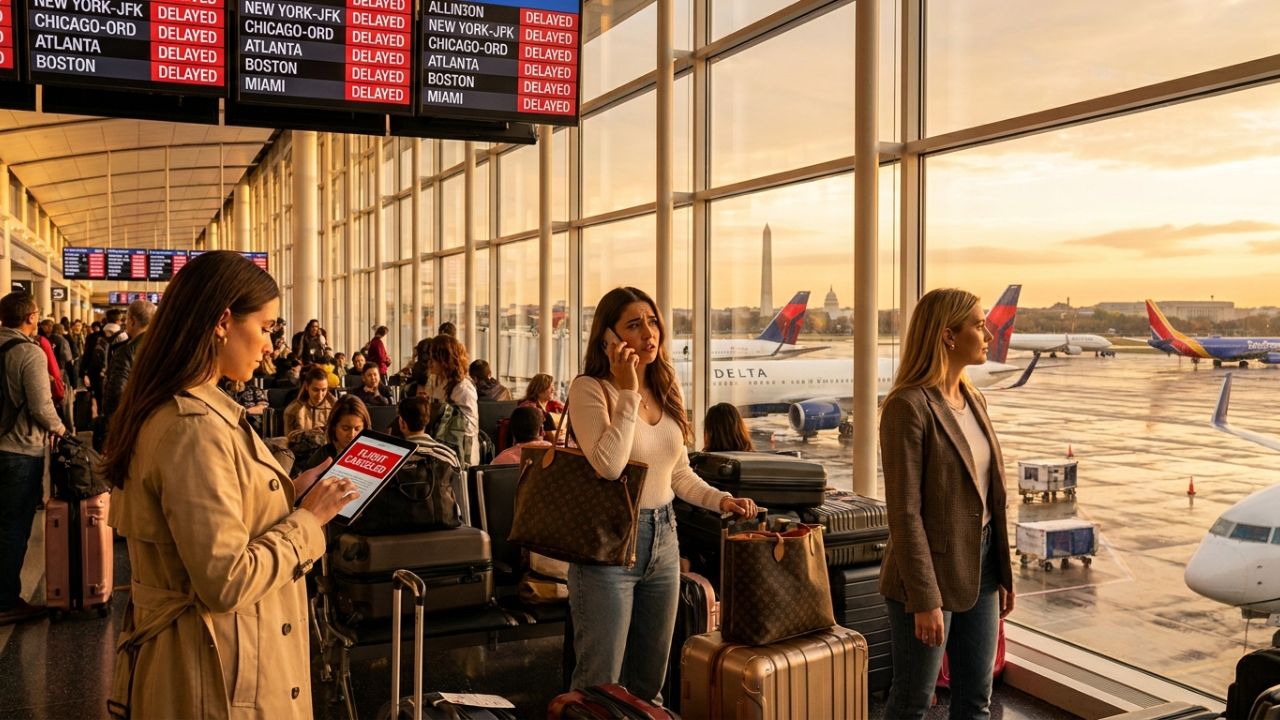
Image generated by AI
In a day defined by mounting operational friction in the National Capital Region, Reagan National Airport (DCA) witnessed a significant wave of 90 flight delays, placing a localized strain on the U.S. East Coast’s primary business corridor. While the absence of outright flight cancellations provided a slight silver lining for thousands of travelers, the sheer volume of scheduling slippage has sparked fresh concerns within the airline news sector. Major carriers, including American Airlines, Delta, United, and JetBlue, found themselves navigating a day of logistical hurdles that rippled across high-volume routes to New York, Chicago, Atlanta, and Boston. Industry analysts are pointing toward a "regional bottleneck" as feeder carriers for the major networks recorded some of the highest proportional disruption rates of the day.
Breaking: DCA Operational Strain Hits Critical Regional Feeder Networks
The disruption at DCA, one of the busiest airports in the United States, was characterized by a systemic failure in punctuality rather than the total collapse of schedules. A total of 90 delayed flights during the work week have forced passengers to contend with extended gate waits and shifting connection windows. Aviation oversight sources, including the FAA’s System Status Dashboard, report that these irregularities were primarily "routine operational delays" rather than the result of severe weather or mechanical failures.
The most acute pressure was felt within the regional feeder networks. PSA Airlines, operating for American, logged a massive 27 delays, while GoJet, flying for United, saw a staggering 27 percent delay rate. This "feeder failure" has an outsized impact on the broader network, as these regional flights are critical for moving passengers from the capital to major international gateways like Chicago O’Hare (ORD) and New York-JFK.
Expanded Overview: The DCA Pressure Cooker and Network Ripple Effects
As the primary access point for the Washington, D.C. area, Reagan National operates within an extremely tight airspace and scheduling environment. Today’s aviation updates reveal that the delays were distributed unevenly across the terminal, with American Airlines (15 delays) and Southwest Airlines (13 delays) leading the numerical count for major carriers. However, the high percentages seen at regional partners like Jazz Aviation (20%) and Endeavor Air (16%) indicate that the strain is most visible at the "last-mile" of the aviation grid.
The concentration of delays on short-haul sectors feeding major Northeast and Midwest hubs suggests that congestion elsewhere in the system—specifically at LaGuardia (LGA) and Newark (EWR)—is having a significant back-flow effect on DCA’s operations. For the frequent traveler, this has transformed what should be a 60-minute hop into a multi-hour ordeal, taxing terminal hospitality and ground handling resources.
Section-Wise Breakdown: Carrier Punctuality and Hub Impact
American Airlines and Regional Partners Under Fire
American Airlines remains the dominant force at DCA, but its reliance on PSA Airlines proved to be a liability today. With PSA logging 27 delays (11% rate), and American’s mainline operations adding another 15 delays, the "American wing" of the airport faced the most significant congestion. Envoy Air also contributed to the total with a 6% delay rate.
United and Delta: Feeder Bottlenecks
United Airlines saw a relatively stable mainline performance with only 2 delays (4%), but its regional partner GoJet faced a catastrophic 27% delay rate. Similarly, Delta Air Lines managed its mainline schedule well (4 delays, 7%), but Endeavor Air struggled with a 16% disruption rate, highlighting the ongoing vulnerability of outsourced regional operations.
Low-Cost and Point-to-Point Pressure
Southwest Airlines recorded 13 delays, representing 13% of its local operations, while JetBlue faced a high 19% delay rate with 8 flights falling behind schedule. For point-to-point travelers, these delays often mean arriving at their destination well after business hours, impacting hotel check-ins and scheduled meetings.
The Regional Players: Republic and Jazz
Republic Airways, which feeds multiple major networks, recorded 9 delays (5%), while Jazz Aviation saw a 20% delay rate on its limited schedule, further evidence that regional operational sequencing remains the primary source of travel chaos at DCA.
Flight Details and Comprehensive Operational Matrix
The following table provides the exact metrics for the carriers affected at Reagan National Airport (DCA) on May 16, 2026, as sourced from federal aviation tracking systems.
Reagan National Airport (DCA) Operational Delay Matrix: May 16, 2026
| Airline | Delayed Flights | Delay Rate (%) | Network Role |
|---|---|---|---|
| PSA Airlines (American) | 27 | 11% | Regional Feeder |
| American Airlines | 15 | 9% | Major Network |
| Southwest Airlines | 13 | 13% | Major Network |
| Republic Airways | 9 | 5% | Regional Feeder |
| JetBlue | 8 | 19% | Major Network |
| GoJet (United) | 5 | 27% | Regional Feeder |
| Delta Air Lines | 4 | 7% | Major Network |
| Jazz Aviation | 3 | 20% | Regional Partner |
| United Airlines | 2 | 4% | Major Network |
| Envoy Air (American) | 2 | 6% | Regional Feeder |
| Endeavor Air (Delta) | 2 | 16% | Regional Feeder |
Passenger Impact: Gate Fatigue and Tourism Fallout
For the thousands of passengers moving through the National Capital Region, today’s delay pattern has translated into significant "gate fatigue."
- Business Travel Erosion: As a hub for federal institutions and diplomatic missions, a delay at DCA can ripple into high-stakes conferences and time-sensitive government events.
- Economic Spillover: The Washington Metropolitan Area, which draws tens of millions of visitors annually, relies on on-time performance to sustain its hotel and local transit ecosystem. Even modest airport disruptions can lead to missed dinner reservations and cancelled car rentals.
- Stress and Congestion: While DCA’s terminals remained open and functional, the buildup of delayed passengers in the midday and afternoon hours taxed customer service lines and added to the overall traveler anxiety.
Industry Analysis: The Fragility of the Regional Feeder Model
Aviation analysts suggest that the high proportional delays at regional carriers like GoJet and PSA highlight a systemic vulnerability in the U.S. air travel system. When major hubs like DCA face volume that exceeds planned capacity, the "knock-on" effect is most visible in the smaller aircraft rotations that feed the larger network.
- Network Flow Constraints: The lack of severe weather indicates that today's travel chaos was likely tied to network flow constraints elsewhere—specifically in the congested New York and Atlanta airspace.
- Scheduling Strain: The 9 percent and 11 percent delay rates at American and PSA suggest that current scheduling levels at DCA may be nearing a "saturation point" for ground handling crews.
- The "Silver Lining" Fallacy: While officials suggest delays are less concerning than cancellations, for a business traveler connecting to a transatlantic flight in New York, a 60-minute delay at DCA can be just as damaging as a cancellation.
Conclusion: A Precarious Recovery for DCA
As Reagan National works to clear the midday backlog, passengers should expect residual delays to persist for at least the next 48 hours. While the lack of flight cancellations is a positive indicator for aircraft availability, the pressure on regional feeder networks remains a significant hurdle for D.C. connectivity. Travelers are strongly advised to monitor their airline’s mobile app and verify their flight status before departing for the airport, particularly if they are booked on high-volume routes to the Northeast or Midwest hubs.
Key Takeaways
- Total Delays: 90 flights were delayed at DCA; zero cancellations reported.
- Regional Bottleneck: PSA Airlines (27 delays) and GoJet (27% rate) faced the highest proportional strain.
- Major Carriers Hit: American, Southwest, and JetBlue recorded significant scheduling slippage.
- Key Routes Impacted: Congestion reported on corridors to Chicago (ORD), New York (JFK/LGA), and Atlanta (ATL).
- Tourism Impact: Disruptions rippled into the Washington D.C. business and museum hospitality ecosystem.
- Outlook: Residual delays expected to continue through the peak travel periods for the next 48 hours.
Related Travel Guides
Disclaimer
This article is for informational and educational purposes only. It does not constitute legal, financial, or professional advice. While we strive to provide accurate and up-to-date information, travel policies, regulations, and conditions change rapidly. Always verify information with official sources before making travel decisions. Nomad Lawyer makes no representations about the accuracy, reliability, completeness, or suitability of the information provided. Readers should consult qualified professionals for advice specific to their circumstances. The views expressed in this article are those of the author and do not necessarily reflect the views of Nomad Lawyer.
Kunal K Choudhary
Co-Founder & Contributor
A passionate traveller and tech enthusiast. Kunal contributes to the vision and growth of Nomad Lawyer, bringing fresh perspectives and driving the community forward.
Learn more about our team →