
Raider Doesn't Need Climate Control: B-21's Materials Revolution
The B-21 Raider's advanced radar-absorbent materials eliminate expensive climate-controlled hangars required by older B-2 Spirit stealth bombers, representing a major leap in aerospace engineering and operational efficiency for 2026.

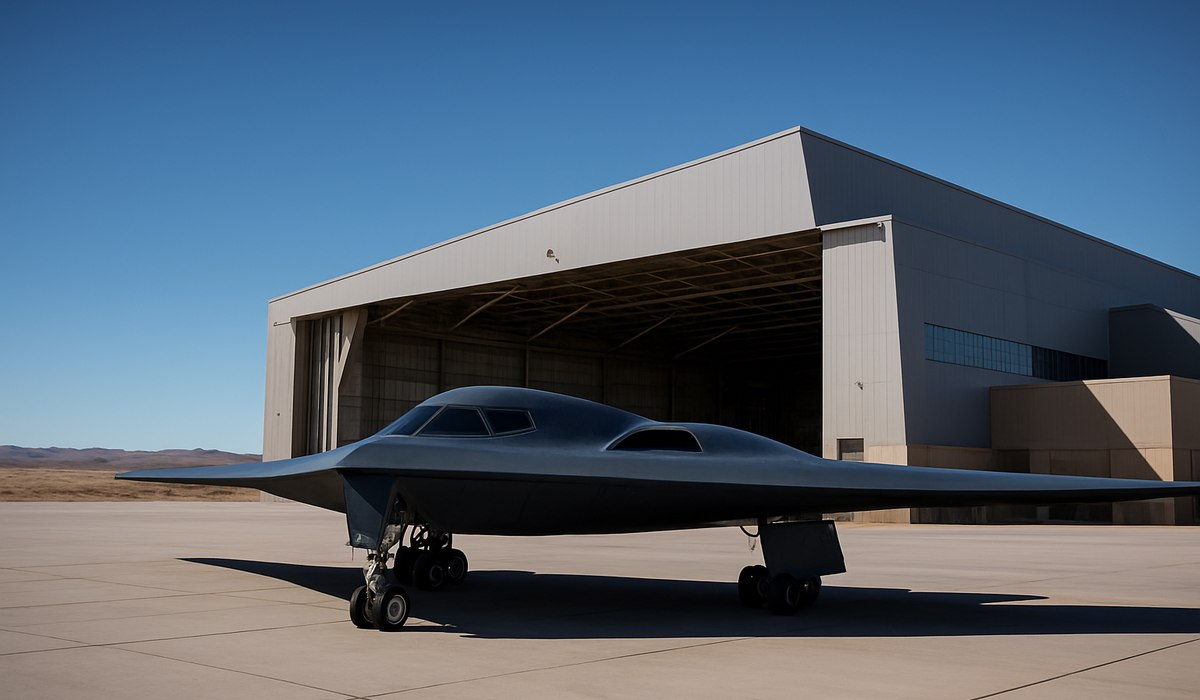
Image generated by AI
Stealth Evolution: Why the B-21 Raider Represents a Generational Leap
The B-21 Raider marks a transformative advancement over its predecessor, the B-2 Spirit stealth bomber. While some observers characterize the Raider as simply an "upgraded B-2," the reality demonstrates a generational technological evolution spanning nearly four decades of aerospace innovation. The most significant breakthrough lies in the aircraft's advanced Radar Absorbent Materials (RAM) composition, which fundamentally changes how this platform operates, maintains, and deploys across global strategic locations.
The implications extend far beyond military applications. This technological shift signals broader transformations in how modern aircraft—from commercial jets to specialized defense platforms—can reduce operational overhead while improving reliability and longevity. The elimination of expensive climate-controlled infrastructure represents a paradigm shift in aerospace logistics and maintenance protocols that began reshaping the industry in 2026.
Generational Leap: B-21 Raider vs. B-2 Spirit
The B-2 Spirit revolutionized stealth technology when it entered service decades ago. However, that same advanced technology created unique operational challenges. The aircraft's radar-absorbent coating demanded meticulous environmental control to maintain structural integrity and performance capabilities. Climate-controlled hangars represented not merely a convenience but an absolute necessity for preserving the delicate balance of materials that made the B-2 practically invisible to detection systems.
The B-21 Raider transcends these constraints entirely. Engineers at Northrop Grumman developed next-generation RAM formulations that maintain their radar-deflection properties without requiring constant temperature and humidity regulation. This fundamental improvement eliminates one of the most expensive operational costs associated with stealth aircraft maintenance. The new materials withstand wider environmental variations while delivering superior stealth performance, proving that sometimes the best upgrades come from reimagining foundational assumptions rather than simply refining existing designs.
Advanced Radar Absorbent Materials Drive Efficiency
Radar Absorbent Materials have always represented the hidden technology behind stealth aircraft. These specialized coatings and composite structures absorb electromagnetic radiation rather than reflecting it, rendering aircraft nearly invisible to detection systems. However, traditional RAM formulations proved vulnerable to environmental degradation, particularly exposure to temperature fluctuations and humidity variations that occur during transit, storage, and deployment.
The B-21's advanced RAM represents a materials science breakthrough. These formulations maintain structural stability and electromagnetic absorption properties across significantly broader environmental conditions. Aircraft operators no longer need to maintain climate-controlled hangars exclusively for the Raider fleet. This advancement reduces infrastructure costs, decreases energy consumption associated with maintaining specialized facilities, and simplifies logistical operations across multiple deployment locations. The improved durability also extends maintenance intervals, lowering per-flight operating costs while improving overall aircraft availability for operational missions.
Reduced Logistics and Maintenance Burden
Climate-controlled hangar requirements impose substantial financial burdens on aerospace operations. Maintaining precise temperature ranges between 60-75 degrees Fahrenheit and humidity levels between 35-55 percent requires continuous energy expenditure and sophisticated environmental monitoring systems. For global operations spanning diverse climates—from tropical regions to arid deserts—maintaining such infrastructure becomes logistically complex and economically prohibitive.
The B-21 Raider eliminates this operational burden through superior material science. Aircraft can now be stored and maintained in standard-specification hangars across varied geographic locations without degrading stealth capabilities. This flexibility dramatically improves operational responsiveness, as aircraft maintenance teams gain access to more deployment options globally. Maintenance personnel can work without environmental suit requirements or restricted access periods. Supply chains simplify when facilities don't require specialized climate control systems. For aerospace operations budgets already stretched thin, this represents significant cost recovery that can be redirected toward additional capabilities or modernization initiatives.
Strategic Advantages Beyond the Hangar
The implications of eliminating climate-controlled hangar requirements extend well beyond simple cost reduction. Strategic flexibility increases substantially when aircraft can operate from diverse locations without extensive infrastructure preparation. The B-21 Raider doesn't need ahead of military planners' ability to deploy rapidly to austere locations without pre-positioned infrastructure investments.
This advancement also signals broader transformation across the aerospace industry. Commercial aircraft manufacturers are likely evaluating whether similar material innovations could reduce maintenance requirements and infrastructure costs for civilian fleets. Airlines perpetually seek operational efficiencies that improve profitability while maintaining safety standards. If next-generation materials developed for defense applications eventually migrate to commercial aviation, the entire industry could benefit from reduced climate-control dependency in maintenance facilities. The B-21 Raider's material innovations thus represent a technological showcase that influences aerospace thinking well beyond its immediate military role.
Impact Timeline and Industry Significance
| Factor | B-2 Spirit Requirement | B-21 Raider Capability | Improvement |
|---|---|---|---|
| Climate-Controlled Hangars | Absolutely Required | Not Needed | Complete Elimination |
| Temperature Range Tolerance | 60-75°F Strictly | Wide Environmental Range | ~30°F+ Flexibility |
| Humidity Control | 35-55% Mandatory | Standard Conditions Acceptable | Significantly Reduced |
| Maintenance Facility Options | Specialized Infrastructure | Standard Military Hangars | 3-5× More Deployment Options |
| Annual Climate Control Costs | $2-4 Million per Facility | $0 Dedicated Climate Control | Substantial Annual Savings |
| Maintenance Access Restrictions | Continuous Environmental Suits | Standard Maintenance Protocol | Enhanced Operational Efficiency |
| Infrastructure Lead Time | 18-24 Months to Establish | Minimal Preparation Required | Faster Deployment Capability |
What This Means for Aerospace and Defense Operations
Understanding the B-21 Raider's advanced materials has practical implications for how military operations evolve globally. The elimination of climate-controlled hangar requirements fundamentally reshapes deployment logistics and infrastructure planning across defense establishments.
Operational Impact: Commands gain flexibility in aircraft positioning when facilities don't demand specialized environmental systems. Remote locations become viable deployment options without requiring months of infrastructure development beforehand.
Budget Considerations: Military budget authorities can redirect savings from eliminated climate-control infrastructure toward additional aircraft procurement, advanced sensor systems, or personnel training initiatives.
Maintenance Accessibility: Flight maintenance teams work more efficiently when not restricted by environmental protocols. Personnel cycles improve when standard workspace conditions replace climate-controlled facility requirements.
Industrial Evolution: The aerospace industry watches closely as next-generation materials prove their capabilities. Commercial aviation manufacturers evaluate whether similar innovations could improve civilian fleet maintenance economics.
Environmental Benefits: Reducing energy consumption associated with maintaining specialized climate-controlled facilities aligns with broader sustainability initiatives across defense and commercial aerospace sectors.
FAQ
Q: Does the B-21 Raider's advanced RAM eliminate all maintenance requirements?
A: No. The aircraft still requires regular maintenance according to established protocols. The advancement eliminates the specific requirement for climate-controlled storage and maintenance facilities that the B-2 Spirit demands. Standard hangars with conventional protection from precipitation and direct sunlight remain necessary.
Q: Can existing B-2 Spirit hangars be converted for B-21 Raider operations?
A: Possibly, though not necessarily. B-2 hangars were specifically designed to maintain precise climate control. B-21 operations don't require these features, so facilities could be repurposed for conventional aircraft or other military uses without losing the climate-control infrastructure.
Q: Will commercial aircraft benefit from similar advanced materials technology?
A: Potentially yes. Defense innovations frequently migrate to civilian sectors over time. However, commercial aviation has different requirements than stealth military platforms, so direct application of B-21 materials might not directly transfer to civilian fleet maintenance.
Q: What specific radar-absorbent material improvements enable this capability?
A: The exact formulations remain classified. What's publicly known is that Northrop Grumman engineers developed RAM that maintains electromagnetic absorption properties across wider temperature and humidity ranges than B-2 coat
Disclaimer
This article is for informational and educational purposes only. It does not constitute legal, financial, or professional advice. While we strive to provide accurate and up-to-date information, travel policies, regulations, and conditions change rapidly. Always verify information with official sources before making travel decisions. Nomad Lawyer makes no representations about the accuracy, reliability, completeness, or suitability of the information provided. Readers should consult qualified professionals for advice specific to their circumstances. The views expressed in this article are those of the author and do not necessarily reflect the views of Nomad Lawyer.
Preeti Gunjan
Contributor & Community Manager
A passionate traveller and community builder. Preeti helps grow the Nomad Lawyer community, fostering engagement and bringing the reader experience to life.
Learn more about our team →