
The Secondary City Reset: Navigating the 20 Long-Haul Routes Cut by Qatar Airways and How to Reach Them in 2026
Qatar Airways streamlines operations by cutting 20 secondary long-haul routes since 2016, pushing travelers toward rail-air codeshares and primary hub connections.

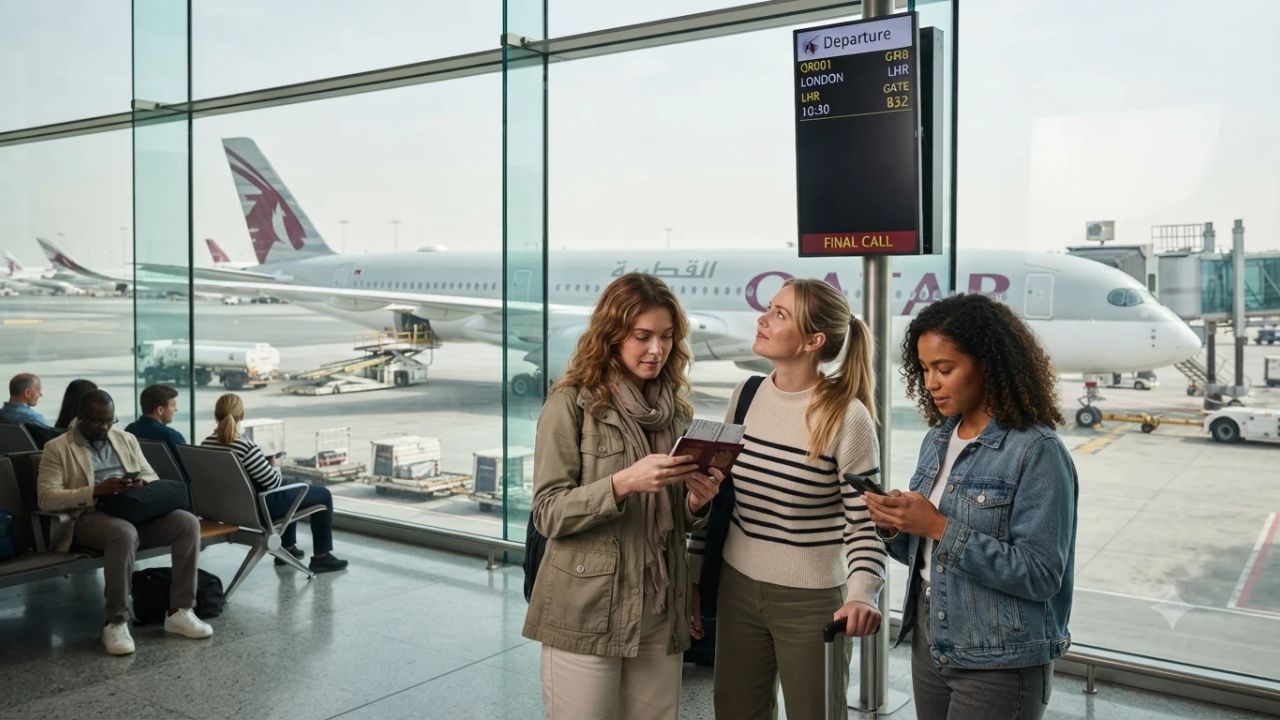
While global mega-carriers spent the pre-2020 era competing for non-stop connectivity into regional leisure hubs, comprehensive network data from Cirium Diio reveals that Qatar Airways has permanently withdrawn twenty international passenger routes across four continents since 2016. According to performance metrics published by the UK Civil Aviation Authority, thin regional routes such as Cardiff struggled with average load factors of only 59 percent, accelerating a major operational pivot toward front-cabin yield discipline, high-density trunk routes, and integrated multi-modal alliance partnerships.
Although thirteen of these cancellations were triggered during the emergency capacity reductions of 2020, subsequent exits through 2026—including Lyon, Toulouse, Hamburg, Venice, and Kano—demonstrate a lasting commercial strategy. Instead of operating expensive widebody Boeing 787 Dreamliners and Airbus A350s on point-to-point regional links, the Doha-based carrier is channeling its long-range fleet through Hamad International Airport while relying on high-speed rail interlining and oneworld codeshare flights to serve displaced secondary markets.
Comprehensive Matrix of Axed Routes and Modern Rerouting Options
| Discontinued Outstation | Country & IATA | Exit Year & Aircraft | Primary Gateway Hub | Recommended Feeder Connection |
|---|---|---|---|---|
| Cardiff | United Kingdom (CWL) | 2020 (Boeing 787-8) | London Heathrow (LHR) | Great Western Railway express train via London Paddington |
| Pisa / Tuscany | Italy (PSA) | 2020 (Airbus A320/A330) | Rome Fiumicino (FCO) / Milan | Trenitalia Frecciarossa high-speed rail to Pisa Centrale |
| Lyon | France (LYS) | 2025 (Boeing 787-8) | Paris Charles de Gaulle (CDG) | SNCF TGV Train + Air direct air-rail interline |
| Toulouse | France (TLS) | 2024 (Airbus A330-200) | Paris Charles de Gaulle (CDG) | Air France domestic shuttle or SNCF high-speed rail |
| Venice | Italy (VCE) | 2026 (Boeing 787-8) | Milan Malpensa (MXP) / Rome | Italo / Frecciarossa high-speed rail to Venezia Santa Lucia |
| Hamburg | Germany (HAM) | 2026 (Boeing 787-8) | Frankfurt (FRA) / Berlin (BER) | Deutsche Bahn ICE rail or Lufthansa feeder shuttle |
| Gothenburg | Sweden (GOT) | 2020 (Boeing 787-8) | Stockholm Arlanda (ARN) | SJ X2000 high-speed rail or SAS regional flights |
| Chiang Mai | Thailand (CNX) | 2020 (Boeing 787-8) | Bangkok Suvarnabhumi (BKK) | Bangkok Airways oneworld codeshare flight |
| Krabi | Thailand (KBV) | 2020 (Boeing 787-8) | Bangkok Suvarnabhumi (BKK) | Thai Airways / Bangkok Airways domestic connection |
| Da Nang | Vietnam (DAD) | 2020 (Boeing 787-8) | Hanoi (HAN) / Ho Chi Minh (SGN) | Vietnam Airlines / Vietjet domestic air bridge |
| Langkawi | Malaysia (LGK) | 2020 (Boeing 787-8) | Kuala Lumpur (KUL) | Malaysia Airlines oneworld domestic connection |
| Medan | Indonesia (KNO) | 2024 (Boeing 787-8) | Jakarta (CGK) / Singapore | Garuda Indonesia / Batik Air regional shuttle |
| Windhoek | Namibia (WDH) | 2023 (Boeing 787-8) | Johannesburg (JNB) | Airlink regional connecting flight |
| Gaborone | Botswana (GBE) | 2020 (Airbus A350-900) | Johannesburg (JNB) | Airlink / South African Airways short-hop regional link |
| Buenos Aires | Argentina (EZE) | 2020 (Boeing 777-200LR) | São Paulo Guarulhos (GRU) | LATAM Airlines / British Airways codeshare |
| U-Tapao / Pattaya | Thailand (UTP) | 2018 (Boeing 787-8) | Bangkok Suvarnabhumi (BKK) | Direct highway coach or private 90-minute transfer |
| Rabat | Morocco (RBA) | 2020 (Boeing 787-8) | Casablanca (CMN) | ONCF Al Boraq high-speed train |
| Yangon | Myanmar (RGN) | 2020 (Airbus A319/A330) | Bangkok (BKK) / Singapore | Singapore Airlines / Thai Airways regional service |
| St. Petersburg | Russia (LED) | 2022 (Boeing 787-8) | Moscow Sheremetyevo (SVO) | S7 Airlines or Russian Railways Sapsan high-speed train |
| Kano | Nigeria (KAN) | 2026 (Boeing 787-8) | Lagos (LOS) / Abuja (ABV) | Air Peace / Ibom Air domestic flight |
Why Secondary City Routes Disappeared
The elimination of direct long-haul flights into non-capital outstations highlights the delicate economics of modern widebody operations. Twin-aisle aircraft like the Boeing 787-8 and Airbus A350 carry heavy trip costs, requiring strong front-cabin business traveler demand and regular belly-hold cargo volume to turn a profit.
While secondary cities like Cardiff, Pisa, and Krabi generate strong seasonal leisure interest, outbound holidaymakers predominantly buy economy class fares that cannot absorb elevated aviation fuel costs and airport user fees. When engine maintenance delays and airframe supply bottlenecks limited global fleet availability, airline planners reassigned capacity to premium trunk routes connecting London, New York, Tokyo, and Sydney.
Simultaneously, international aviation has evolved beyond unilateral point-to-point flying. Through the expansion of the oneworld alliance and joint-business agreements with British Airways, American Airlines, and Malaysia Airlines, carriers can feed regional passengers into primary hubs with greater frequency, eliminating the financial risk of operating half-empty widebodies into smaller provincial airports.
Navigating the European and Asian Feeder Networks
For independent travelers, the retirement of direct long-haul flights does not diminish the appeal of these iconic cultural destinations. In fact, modern intermodal ticketing often provides a more flexible journey than a low-frequency, three-times-weekly widebody schedule.
1. High-Speed Rail Integration Across Western Europe
In France and Italy, high-speed rail networks deliver travelers directly into city centers faster than domestic flights. Through SNCF Connect and Train + Air partnerships, travelers arriving at Paris Charles de Gaulle (CDG) can board a TGV train directly from the airport terminal to downtown Lyon Part-Dieu in two hours, completely bypassing central Paris traffic. Similarly, landing in Rome or Milan allows seamless transfers onto 300 km/h Frecciarossa trains to reach Pisa, Florence, and Venice.
2. Southeast Asian Island and Mountain Corridors
In Thailand and Malaysia, domestic aviation infrastructure provides frequent, low-cost hops from capital gateways. Passengers bound for Chiang Mai’s mountain temples or Langkawi’s archipelago beaches can book unified through-tickets via Bangkok Suvarnabhumi (BKK) or Kuala Lumpur (KUL), benefiting from protected connections and luggage transfers on carriers like Bangkok Airways and Malaysia Airlines.
Visitor Insider Tips for Seamless Re-routing
Navigating displaced flight routes requires strategic itinerary booking to ensure consumer protection and minimal layover times:
- Book Single-Ticket Codeshares: Never purchase separate tickets on disjointed budget airlines to connect with long-haul international flights. Booking a single oneworld ticket ensures that if your incoming flight is delayed, the airline is legally obligated to rebook your onward domestic flight or rail connection without change fees.
- Cardiff Rail Transfer Protocol: When traveling to Wales from London Heathrow, take the Elizabeth Line directly from Heathrow Terminals 2/3 to London Paddington (30 minutes), where Great Western Railway trains depart every 30 minutes for Cardiff Central with journey times under two hours.
- Baggage Allowance Verification on Mixed-Mode Trips: If your itinerary combines an international long-haul flight with a domestic feeder aircraft, confirm the domestic baggage limits. Regional turboprops and regional jets frequently enforce stricter hand-luggage weight limits (7 kg) than widebody aircraft.
- Bangkok Transfer Buffer: When connecting from an international flight to a domestic flight at Bangkok Suvarnabhumi, allow a minimum connection time of 90 minutes to clear immigration and navigate between international and domestic concourses.
- Tuscany Rail Alternative: If traveling to Pisa, consider flying into Florence Peretola (FLR) or Bologna (BLQ) instead of Rome. Local regional trains from Florence to Pisa take just 49 minutes, offering a scenic journey through the Tuscan countryside.
Cultural and Environmental Context
The transition from point-to-point regional widebody flying to integrated rail-air networks carries significant environmental benefits. In Western Europe, replacing short domestic flights with electrified high-speed rail significantly lowers per-passenger carbon emissions along corridors like Paris–Lyon and Rome–Venice.
At the same time, regional airports and local tourism boards are adapting by marketing themselves as multi-modal gateway regions rather than stand-alone aviation terminals. By integrating regional bus networks, electric vehicle rentals, and scenic cycling routes directly with major railway stations, historic cultural centers like Pisa, Toulouse, and Gothenburg remain easily accessible to mindful global travelers who value sustainable transit.
FAQ: Navigating Secondary Destination Travel in 2026
Why did Qatar Airways cancel routes to popular tourist spots like Chiang Mai and Pisa?
These secondary routes generated high seasonal leisure traffic but lacked sufficient year-round business class demand and cargo yields to justify dedicated long-haul widebody aircraft operations.
What is the most convenient way to reach Cardiff from Doha or the Middle East?
Fly directly into London Heathrow (LHR) and take the Elizabeth Line to London Paddington, followed by a direct Great Western Railway high-speed train to Cardiff Central.
Will travelers lose their baggage when booking Train + Air packages in France?
When booking official Train + Air packages via Paris CDG, passengers collect their checked bags at the airport terminal and transfer them onto dedicated high-speed TGV rail platforms located inside the airport complex.
How can travelers protect themselves against missed domestic connections?
Always book your long-haul flight and regional connection under a single reservation code (PNR) through established airline alliances like oneworld to ensure automatic rebooking protection.
As global aviation shifts toward smarter hub consolidation, the world’s most charming regional destinations remain as welcoming as ever—connected by quiet rails, scenic coastlines, and open country roads.
Related Travel Guides
Disclaimer
This article is for informational and educational purposes only. It does not constitute legal, financial, or professional advice. While we strive to provide accurate and up-to-date information, travel policies, regulations, and conditions change rapidly. Always verify information with official sources before making travel decisions. Nomad Lawyer makes no representations about the accuracy, reliability, completeness, or suitability of the information provided. Readers should consult qualified professionals for advice specific to their circumstances. The views expressed in this article are those of the author and do not necessarily reflect the views of Nomad Lawyer.
Naina Thakur
Contributor & Travel Specialist
Travel enthusiast and legal writer covering visa regulations, responsible tourism, and cultural journeys across global destinations.
Learn more about our team →