
Breaking Airline News: Qantas Battles Travel Chaos by Aggressively Deploying Massive A350-1000ULR Project Sunrise Fleet for Nonstop London to Sydney Defense
Breaking airline news: Amidst a terrifying era of airport disruptions and flight cancellations, Qantas aggressively deploys the massive Project Sunrise A350-1000ULR fleet to combat severe global travel chaos and bypass terminal gridlock.

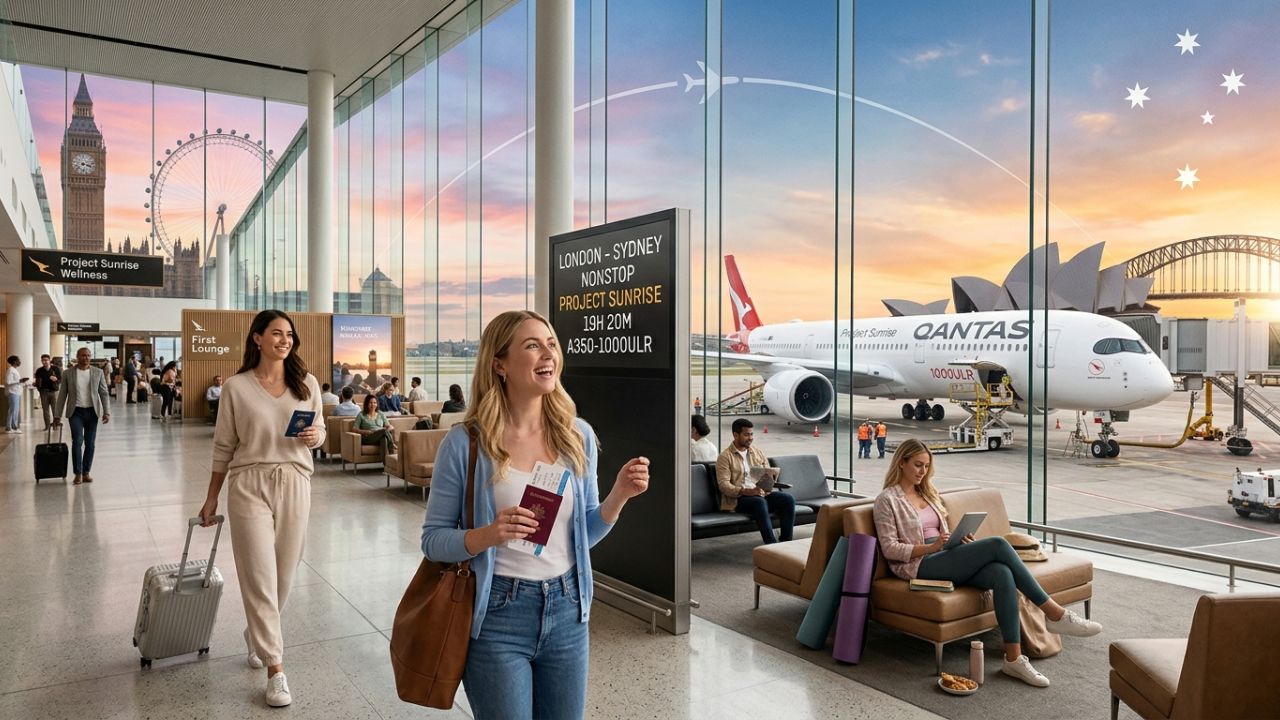
Image representing Qantas' massive operational strategy aggressively combating global travel chaos with critical, ultra-long-haul nonstop route fortifications.
Breaking Airline News: Qantas Battles Travel Chaos by Aggressively Deploying Massive A350-1000ULR Project Sunrise Fleet for Nonstop London to Sydney Defense
To aggressively protect international tourists and corporate commuters from a catastrophic wave of complicated, capacity-constrained transit nightmares and severe operational disruptions, aviation authorities across France, Australia, and the United Kingdom have violently executed a massive strategic logistical defense, aggressively advancing Qantas Project Sunrise powered by the Airbus A350-1000ULR to completely bypass terrifying travel chaos tearing through massive global connecting hubs.
In a highly terrifying and completely chaotic era for commercial aviation, legacy transit corridors are actively collapsing under a massive wave of sudden travel chaos that is severely crippling traditional connecting networks worldwide. Delivering highly urgent, breaking airline news, travel authorities have officially confirmed a massive operational defense designed to launch the world’s longest nonstop commercial passenger service between London and Sydney to protect global travelers from extreme terminal stress. Plagued by the historical threat of sudden flight cancellations, agonizing inbound congestion, and terrifying logistical vulnerabilities, modern passengers are fiercely demanding secure, delay-free point-to-point travel options. Effective immediately, the massive long-haul aviation market witnessed a strategic fortification. By aggressively executing the delivery of specialized aircraft expected in 2027, Qantas has instantly established a terrifyingly efficient network response designed to bypass massive airport disruptions. This ensures innocent travelers no longer suffer through excruciating gridlock, successfully navigating a massive crisis that mathematically guarantees severe logistical friction by aggressively eliminating traditional stopovers and redefining global connectivity through ultra-long-haul operations.
Expanded Overview: The Massive Scale of the Aviation Integration
The highly publicized execution of this massive network defense serves as an absolutely terrifying reality for corporate tourists desperate to escape international transit gridlock. For decades, incredibly dense departure corridors operated under severe logistical strain, frequently exposing innocent travelers to sudden operational adjustments, terrifyingly disjointed schedules, and agonizingly vulnerable connecting flights across Asia or the Middle East. However, this incredibly hostile operational model is being rapidly and violently countered by this massive wave of strategic point-to-point fortification ripping through Qantas' massive network.
Led heavily by the undeniable reality that routing traffic through congested mega-hubs historically guaranteed extreme logistical friction—extending total travel times beyond 24 hours—authorities aggressively struggle to process transit masses amidst peak regional surges. By violently deploying specially modified Airbus A350-1000ULR aircraft, this massive airline fortification transforms primary international networks into highly secure passenger pipelines. While airport management globally attempts to mitigate disruption damage, Qantas has forced a massive logistical reset. The terrifying reality of regional capacity collapse is completely bypassed as the initiative targets commercial operations for the second half of the year in 2027. Passengers are forcefully shielded from the terrifying reality of missed connections across major financial and tourism centers. Lost ticket confidence is actively restored, replacing incredibly chaotic pipelines with a highly dependable, unified crisis management framework that mathematically forces airlines to aggressively prioritize travel efficiency, reducing overall journey times and ensuring the global network survives this brutal operational assault.
Section-Wise Breakdown of the Terrifying Transit Defense
The Massive London to Sydney Point-to-Point Fortification
Violent operational disruptions across massive gateway hubs mathematically trap thousands of passengers in chaotic departure lounges unless aggressive logistical protection is deployed. Qantas aggressively battles the threat of flight collapse by securing its infrastructure over a distance of 10,573 miles (17,015 km). This urgent capacity boost violently protects passengers seeking consistency through an up to 22-hour nonstop flight. This aggressive maneuver forces a massive expansion of seamless alignment, completely shielding tourists from the severe friction of international airport disruptions by connecting two of the world’s most important aviation markets without the terrifying threat of layover cancellations.
The Aggressive Airbus Engineering Defense
The terrifying travel chaos isolating critical economies is aggressively countered by this monumental deployment of specialized engineering. Investigators violently discovered that operations are being massively upgraded to maximize operational range. This highly targeted expansion violently acts as a terrifying barricade against regional isolation, forcing Airbus to aggressively incorporate a Rear Center Tank, extending the aircraft’s operational range by approximately 1,000 nautical miles. By aggressively providing aerodynamic refinements and fuel-efficient engines, the aircraft ensures passengers experience seamless connectivity rather than braving the friction of complex rebookings to escape terminal gridlock.
The Massive Passenger Wellness Strategy
Switzerland's terrifying operational constraints are violently avoided as Qantas implements a massive focus on passenger wellbeing. The airline aggressively plans to introduce a dedicated Wellbeing Zone, ensuring lower passenger density and wider seat pitches to aggressively combat the physical fatigue associated with ultra-long-haul routes, completely bypassing the exhaustion of traditional layovers.
Verified Integration Data: The Aviation Defense Matrix
To completely comprehend the incredible scale of this massive, highly coordinated crisis response aggressively combating global travel chaos, the following mandatory data tables accurately reflect the exact operational parameters and engineering metrics officially documented by aviation authorities regarding Project Sunrise:
Project Sunrise Key Metrics
| Project Sunrise Key Metrics | Details |
|---|---|
| Route | London–Sydney |
| Distance | 10,573 miles |
| Distance in Kilometers | 17,015 km |
| Flight Duration | Up to 22 hours |
| Aircraft Type | Airbus A350-1000ULR |
| Expected Launch | Second Half of 2027 |
Aircraft Enhancement and Operational Benefit
| Aircraft Enhancement | Operational Benefit |
|---|---|
| Rear Center Tank | Increased fuel capacity |
| Extended Range Capability | Enables nonstop operations |
| Lower Passenger Density | Improves comfort and weight efficiency |
| Advanced Aerodynamics | Reduced fuel consumption |
| Optimized Cabin Layout | Enhanced passenger wellbeing |
Passenger Comfort Features and Purpose
| Passenger Comfort Features | Purpose |
|---|---|
| Wellbeing Zone | Stretching and movement |
| Reduced Seat Count | More personal space |
| Wider Seat Pitch | Improved comfort |
| Health-Oriented Refreshments | Better inflight wellbeing |
| Enhanced Cabin Design | Reduced travel fatigue |
(By aggressively analyzing these massive operational fortifications, travel authorities furiously attempt to protect future passengers from the terrifying threat of international transit disasters affecting operations between Europe and Australia.)
Passenger Impact: Surviving the Terrifying Terminal Friction
For the desperate commuter actively navigating this incredibly hostile travel environment, this highly publicized operational fortification completely bypasses an absolutely terrifying psychological nightmare. When fragmented connecting networks buckle under terrifying scheduling delays across global airspace, they mathematically resort to sudden capacity withdrawals, violently stranding innocent corporate and leisure tourists in Middle Eastern or Asian hubs. By aggressively executing point-to-point flights, Qantas guarantees passengers completely avoid the excruciating reality of miserable, fear-driven delays trapped in unstable traditional airports. This aggressively protects tens of thousands of passengers from the extreme physical stress of paralyzed transportation hubs, permanently demanding reliable itineraries as massive carriers effortlessly manage seamlessly connected traffic, creating safe havens in the sky.
Industry Analysis: What Triggered the Aviation Overhaul?
According to strict operational frameworks, surviving unprecedented flight cancellations demands an incredibly aggressive overhaul of traditional multi-stop routing. To prevent catastrophic mass financial losses during severe global travel chaos, airlines recognize that forcing passengers through severely congested, logistically strained airspace is absolutely impossible. The global aviation industry is actively eliminating extreme, localized routing strain across its massive international networks by competing fiercely for point-to-point nonstop capability. The terrifying reality of geopolitical airspace constraints violently destabilizes the approach for all outbound traffic. This massive procedural shift drastically forces carriers to aggressively balance complex route networks, violently attempting to survive the terrifying ground operations pressures of modern intercontinental aviation by dominating the rapid deployment of flexible polar routing, flying over northern Asia and the Arctic region to secure schedule reliability.
Conclusion: A Highly Disruptive Industrial Warning
The massive, highly publicized operational fortification tearing through the skies actively acts as an absolutely terrifying warning to rival global hubs regarding the procedural fragility of reliance on connecting traffic. By actively demonstrating that failing to safely optimize nonstop capabilities during logistical events will completely trigger massive cascading delays, causing severe travel chaos complaints, Qantas aggressively fights to secure vital intercontinental connectivity. The aviation sector is officially forced to abandon massive, disorganized layover models to secure a highly resilient, heavily scrutinized travel framework built entirely on dominating strict engineering limits. This aggressively opens access to a surviving travel economy that depends entirely on robust, delay-proof passenger flows protected by coordinated, highly efficient aircraft built to endure extreme durations.
What Guests Get: Immediate Passenger Ramifications
- Massive Network Fortification: Regional airspace violently secured unprecedented logistical support, deploying massive nonstop A350-1000ULR operations to aggressively protect scheduled international travel out of London and Sydney by 2027.
- Terrifying Range Capabilities: Thousands of passenger trips are aggressively supported by massive operational upgrades, securing a 10,573-mile route through the installation of a Rear Center Tank.
- Massive Comfort Protection: The terrifying threat of cabin fatigue is violently combated by massive carrier responses prioritizing a Wellbeing Zone for stretching and hydration away from severely delayed inbound hubs.
- Unprecedented Procedural Changes: Authorities are aggressively empowering transit travelers to demand flexible Arctic routings as severe logistical threats violently expose the vulnerability of relying on specific, congested air corridors.
What This Means for Travelers: Navigating the Travel Chaos
If you are a corporate traveler or tourist actively booking a flight to Australia during this highly volatile upcoming transition in 2027, you must incredibly urgently utilize massive vigilance. Booking flights on the Project Sunrise fleet is absolutely essential to completely bypass the extreme unpredictability ravaging the broader commercial aviation sector's connecting hubs. Should rival operational systems suffer a sudden, terrifying collapse due to massive flight cancellations at congested international transit zones, your optimized, proactively monitored nonstop itinerary will massively protect your sanity, ensuring you recover lost luggage and time completely shielded from regional travel chaos. Travelers are strongly urged to aggressively seek point-to-point routing options as logistical limits violently threaten the traditional multi-stop international travel network.
FAQ: Qantas Project Sunrise 2027
How massive was the strategic defense across international flights? The massive Qantas aviation network aggressively deployed a terrifyingly severe point-to-point strategy, ordering A350-1000ULRs to fly up to 22 hours nonstop between London and Sydney.
Which massive entities violently protected passenger travel? Despite the global chaos, France, Australia, and the UK faced massive logistical demand by partnering with Airbus to completely bypass traditional flight disruptions using a Rear Center Tank.
Why is this massive operational strategy violently combating travel chaos? The terrifying threat of missed connections aggressively stems from layover congestion, forcing airlines to execute massive aircraft upgrades through reduced passenger density to protect tourists from terminal gridlock.
Related Travel Guides
- Japan Aviation Network Shaken by 12 Flight Cancellations and 353 Delays in Tokyo Haneda, Narita, Fukuoka, and Osaka Kansai: Jetstar Japan, Japan Airlines, and KLM Hit by Travel Chaos
- Aviation Industry Overhauls Cabin Crew Training to Combat Dual Passenger Crisis Emerging in 2026
- American Airlines Denies Mother Gate Access to Say Goodbye to Son Deploying with Navy
Disclaimer
This article is for informational and educational purposes only. It does not constitute legal, financial, or professional advice. While we strive to provide accurate and up-to-date information, travel policies, regulations, and conditions change rapidly. Always verify information with official sources before making travel decisions. Nomad Lawyer makes no representations about the accuracy, reliability, completeness, or suitability of the information provided. Readers should consult qualified professionals for advice specific to their circumstances. The views expressed in this article are those of the author and do not necessarily reflect the views of Nomad Lawyer.
Kunal K Choudhary
Co-Founder & Contributor
A passionate traveller and tech enthusiast. Kunal contributes to the vision and growth of Nomad Lawyer, bringing fresh perspectives and driving the community forward.
Learn more about our team →