
Breaking Airline News: Qantas and Jetstar Meltdown Sparks Massive Travel Chaos Across Australian Airports
Breaking airline news: Amidst a terrifying era of severe operational fragility, a massive wave of Qantas and Jetstar flight cancellations has violently plunged Australian airports into extreme travel chaos.

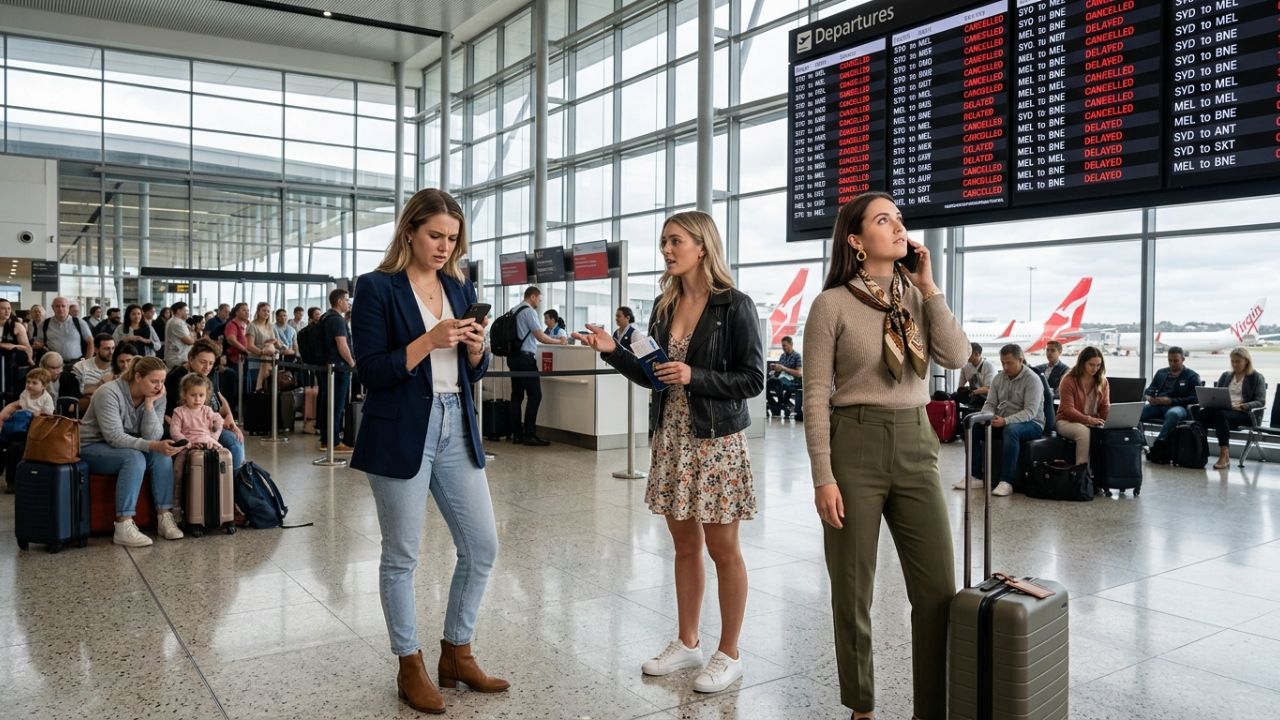
Image representing the intense strategic crisis as severe IT failures and compounding crew shortages violently shatter Qantas and Jetstar flight schedules, plunging Australian airports into extreme travel chaos.
Breaking Airline News: Qantas and Jetstar Meltdown Sparks Massive Travel Chaos Across Australian Airports
As paralyzing terminal bottlenecks, severe IT system failures, and catastrophic operational fragility violently threaten to completely shatter the global transit grid, a massive disruption has just struck the heart of the Australian aviation network. In a harrowing demonstration of how highly optimized, post-pandemic flight schedules can instantly collapse under pressure, Qantas Airways and its low-cost subsidiary Jetstar have unleashed a massive wave of flight cancellations and delays. Impacting highly critical corridors across Sydney, Melbourne, Brisbane, Perth, and Adelaide, this systemic meltdown has plunged thousands of passengers into terrifying travel confusion. With independent flight-tracking data confirming over 300 severe delays and sudden cancellations in a matter of days, desperate travelers are currently facing extreme airport disruptions, unannounced itinerary deletions, and massive out-of-pocket expenses to survive this unprecedented travel chaos.
In a brutal demonstration of how desperately vulnerable commercial aviation remains to internal constraints and external weather threats, this nationwide logistical nightmare has completely overwhelmed airline contingency capacities. Unlike standard seasonal delays, this massive operational breakdown involves confirmed bookings violently vanishing from airline apps without a single SMS or email alert, leaving travelers stranded at departure counters with zero alternatives. As frantic passengers aggressively scramble to secure rebookings amidst chaotic, highly confusing terminal environments, the sheer scale of this Qantas and Jetstar disruption has exposed the terrifying fragility of operating airlines with absolutely minimal spare aircraft and lean crew rosters.
Expanded Overview: The Anatomy of a Systemic Collapse
The terrifying crisis of overwhelming passenger stress currently testing Australian gateways brutally exposes the severe limitations of running highly compressed flight schedules. Aviation intelligence compiled from late May through early June 2026 tracks a total of 11 outright cancellations and an absolutely staggering 300 severe delays on flights operated by Qantas, Jetstar, and associated carriers.
This is not an isolated incident; it is a compounding, multi-layered operational failure. The crisis was initially triggered by adverse weather conditions, including highly disruptive strong crosswinds that violently impacted aircraft arrivals at key high-volume corridors. Concurrently, regional weather systems, such as Typhoon Jangmi, violently disrupted critical international routes to and from Japan. However, the chaos was exponentially multiplied by severe internal airline failures: escalating crew scheduling shortages, skyrocketing sick-leave rates, and crippling IT system failures that completely paralyzed turnaround times and destroyed scheduling efficiency during peak travel moments.
Section-Wise Breakdown: The Epicenters of Chaos
To fully comprehend the massive logistical fallout of this operational meltdown, corporate travel planners must review exactly how the disruption ravaged Australia's critical aviation hubs.
The Melbourne Tullamarine Gridlock While all major cities experienced severe airport disruptions, Melbourne Tullamarine absorbed the most brutal impact of the collapse. Battered by atypical weather patterns and devastating scheduling bottlenecks, Melbourne alone accounted for more than 100 of the severe flight delays. This massive concentration of delayed aircraft instantly triggered cascading, knock-on effects that rapidly infected the rest of the national network.
The Passenger Nightmare: Vanishing Bookings The reality on the ground for travelers has been absolutely terrifying. Social media accounts confirm chaotic scenes involving wildly inconsistent communication between Jetstar and Qantas staff. The most terrifying reports involve passengers checking the official Qantas app, only to discover their flights had been canceled with zero prior notification. Stranded at the airport, these passengers were forced into highly stressful, last-minute logistical scrambles, often incurring massive, unexpected out-of-pocket expenses for emergency hotel and transport arrangements while battling confused customer service agents for refunds.
Australian Aviation Disruption Matrix
To ensure travel planners can aggressively track the specific metrics defining this massive operational crisis, the following matrix details the verified strategic data surrounding the Qantas and Jetstar meltdown.
| Strategic Disruption Metric | Verified Operational Data |
|---|---|
| Primary Airlines Affected | Qantas Airways, Jetstar |
| Critical Hubs Impacted | Sydney, Melbourne (Tullamarine), Brisbane, Perth, Adelaide |
| Tracking Period | Late May to Early June 2026 |
| Confirmed Cancellations | 11 Flights |
| Severe Flight Delays | Over 300 Flights |
| Melbourne Toll | Over 100 Delays recorded |
| Qantas On-Time Performance (BITRE) | Approx. 85.8% (Modest cancellation rate) |
| Jetstar On-Time Performance (BITRE) | Approx. 75.0% (Higher cancellation rate) |
| External Catalyst (Weather) | Strong crosswinds, Typhoon Jangmi (Japan routes) |
| Internal Airline Catalysts | IT system failures, crew shortages, zero spare aircraft |
| Airline Mitigation Policy | Qantas offering fee-free booking changes, refunds, or credits |
Industry Analysis: The Core Drivers of Disruption
From a strategic aviation perspective, this massive travel chaos is the direct result of airlines aggressively prioritizing maximum aircraft utilization over operational resilience. According to Australia’s Bureau of Infrastructure and Transport Research Economics (BITRE), while Qantas maintains an 85.8% on-time departure rate, Jetstar heavily lags at around 75%, indicating a longstanding, systemic vulnerability to disruption.
Industry analysts confirm four primary drivers behind this terrifying spike in flight issues:
- Compressed Fleets: Airlines are operating with terrifyingly lean crews and virtually zero standby aircraft, making recovery from minor schedule shifts mathematically impossible.
- Weather Interruptions: Unusual wind patterns and systems like Typhoon Jangmi rapidly destroy tight operational slots.
- Aggressive Scheduling: Post-pandemic schedules leave zero slack to handle unexpected delays.
- IT Bottlenecks: Fragile technological infrastructure repeatedly fails under high passenger volume, crippling aircraft turnaround and crew coordination.
Passenger Impact: Aggressive Survival Tactics
For the thousands of travelers attempting to confidently navigate the rapidly degrading Australian transit corridors, extreme vigilance is mandatory. Qantas has been actively publishing travel advisories and offering fee-free booking changes or refunds for affected routes. However, passengers cannot rely on automated systems.
To survive this ongoing travel chaos, travelers must aggressively monitor flight status via official airline trackers, demand detailed updates directly from contact centers, and allow massive amounts of extra transit time at major airports. Because booking apps may fail to reflect real-time operational deletions, proactive travelers must secure contingency plans immediately upon arriving at the terminal.
Conclusion: A Fragile Network Awaiting Recovery
As the extremely critical Australian domestic network continues to face terrifying strain from unprecedented internal and external volatility, the Qantas and Jetstar delays serve as a massive warning. While aviation analysts suggest that future improvements in crew planning algorithms may eventually stabilize the grid, the immediate reality is highly fragile. Until airlines successfully inject massive operational redundancy back into their fleets, passengers traversing Sydney, Melbourne, and Brisbane must remain hyper-vigilant, actively preparing to confront sudden flight cancellations and extreme airport disruptions at every turn.
Key Takeaways
- Massive Disruption: Qantas and Jetstar have suffered over 300 severe delays and 11 cancellations between late May and early June 2026.
- Melbourne Paralyzed: Melbourne Tullamarine was the hardest-hit hub, suffering over 100 severe delays due to weather and scheduling bottlenecks.
- Systemic Failure: The chaos was triggered by a terrifying combination of IT system failures, severe crew shortages, and aggressive post-pandemic scheduling with zero spare aircraft.
- Passenger Chaos: Travelers reported massive confusion, with confirmed bookings vanishing from the Qantas app without any SMS or email notification.
- Mitigation Efforts: Qantas is actively offering fee-free changes, refunds, and credits for passengers affected by the delays and weather systems like Typhoon Jangmi.
Related Travel Guides
- Severe Travel Chaos Paralyzes LaGuardia Airport: Southwest, American, and Delta Trigger Mass Flight Cancellations in Breaking Aviation Update
- Bengaluru Airport Reports 44M Passengers, 23.9% International Traffic Surge in FY26
- Delta Air Lines Expands Long-Haul Network with Five New Nonstop A350 Routes
Disclaimer
This article is for informational and educational purposes only. It does not constitute legal, financial, or professional advice. While we strive to provide accurate and up-to-date information, travel policies, regulations, and conditions change rapidly. Always verify information with official sources before making travel decisions. Nomad Lawyer makes no representations about the accuracy, reliability, completeness, or suitability of the information provided. Readers should consult qualified professionals for advice specific to their circumstances. The views expressed in this article are those of the author and do not necessarily reflect the views of Nomad Lawyer.
Kunal K Choudhary
Co-Founder & Contributor
A passionate traveller and tech enthusiast. Kunal contributes to the vision and growth of Nomad Lawyer, bringing fresh perspectives and driving the community forward.
Learn more about our team →