
Qantas And The Boeing 777 A Fleet Strategy Shaped By Long Haul Travel And Aircraft Choices
Qantas And The Boeing 777 A Fleet Strategy Shaped By Long Haul Travel And Aircraft Choices

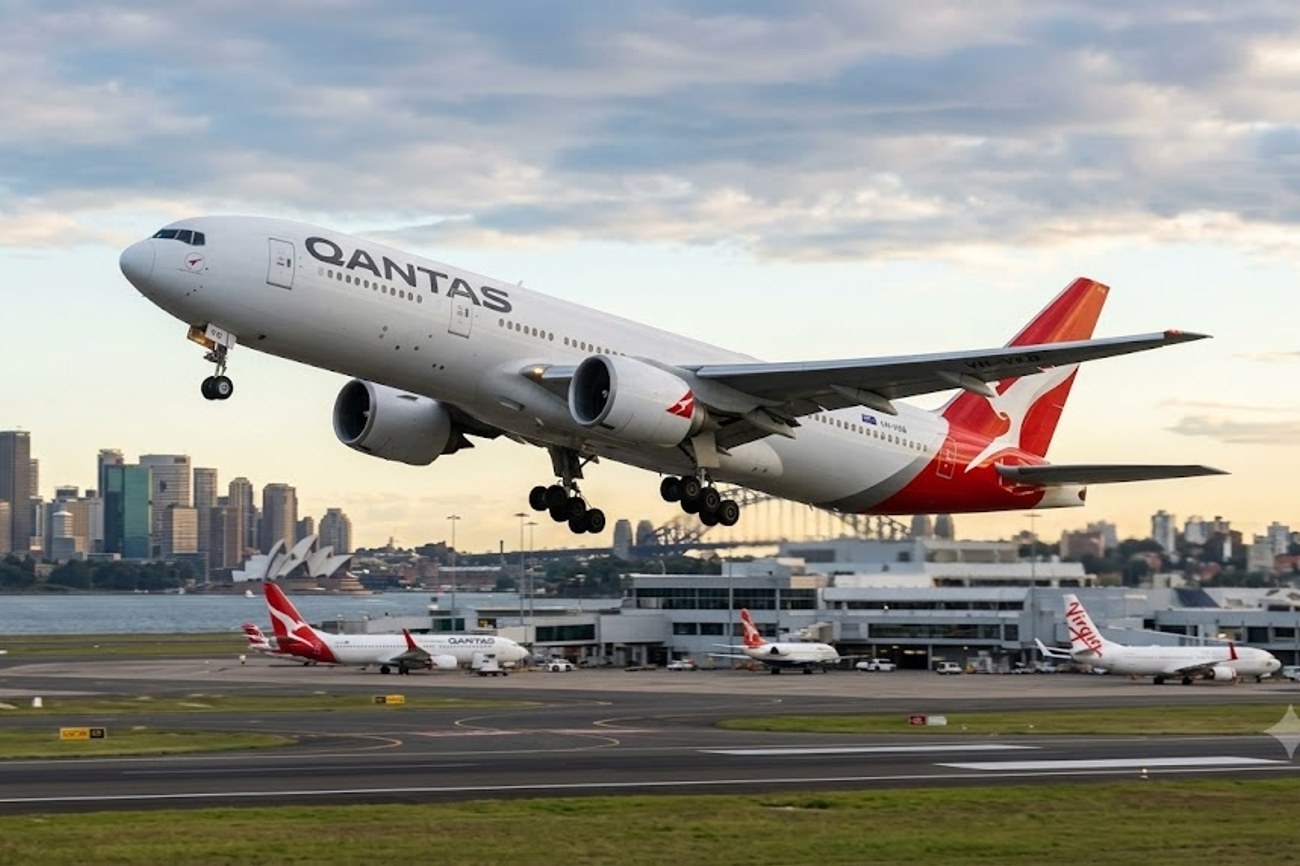
Image generated by AI
Passengers booking ultra-long-haul journeys from Sydney to New York or London are now seeing the tangible results of a decades-long procurement gamble that saw Qantas consciously avoid the Boeing 777. While other global carriers built their networks around the 777's versatility, Qantas passengers have instead experienced a fleet transition from the iconic Boeing 747 to a diversified mix of Airbus A380s, A330s, and the forthcoming A350-1000ULR.
The Boeing 777 Absence: A Strategic Procurement Divergence
The history of Qantas' fleet planning contains a notable anomaly: the airline was a key consultant during the initial development of the Boeing 777 in the 1990s but ultimately declined to purchase the aircraft. This decision created a unique operational trajectory for the Australian carrier, separating it from many of its international peers who adopted the 777 as the backbone of their long-haul operations.
During the development phase, Boeing sought input from major global carriers to refine the 777's range and capacity. Qantas provided significant data based on its unique geographical challenges, specifically the extreme distances required to connect Australia with North America, Europe, and Asia. Despite this collaboration, the airline opted for a different wide-body strategy. This illustrates a critical reality in aviation procurement: technical consultation does not equal a purchase commitment.
Instead of the 777, Qantas diversified its wide-body offerings. The airline integrated the Airbus A330 for medium-to-long-haul flexibility and the Airbus A380 to handle high-density traffic on premier international corridors. This shift marked a departure from the airline's historical reliance on Boeing models like the 737 and the 747.
The decision-making process was not based on a dislike for Boeing, but on a rigorous assessment of network economics. The airline had to balance passenger capacity, airport infrastructure limitations, and the operating costs of twin-engine versus four-engine aircraft. While the Boeing 777 succeeded globally, Qantas determined that the A330 and A380 better served its specific hub-and-spoke requirements at the time.
Fleet Composition and Route Impact
The absence of the 777 family has directly shaped the cabin experience and route availability for Qantas travelers. The airline's strategy evolved into a tiered approach to long-haul travel:
- Airbus A380: Deployed on high-demand "trunk" routes where maximum passenger capacity was required.
- Airbus A330: Utilized for a broader range of international destinations where the A380 was too large to be economical.
- Airbus A350-1000ULR: The centerpiece of "Project Sunrise," designed specifically for ultra-long-haul non-stop flights that the original 777 could not efficiently sustain.
- Boeing 777X: While a new generation of the 777 exists, certification delays and delivery timelines have forced Qantas to lean further into the Airbus A350 ecosystem for its future growth.
For the passenger, this means that the "Qantas experience" on a long-haul flight is dictated by the specific strengths of these Airbus models rather than the standardized 777 experience found on carriers like Emirates or United.
Your Rights as a Passenger
While fleet selection is a commercial decision, the result of these decisions—such as aircraft swaps or cancellations due to fleet unavailability—triggers specific legal protections. If a Qantas flight is cancelled or significantly delayed because the airline is shuffling its limited wide-body fleet, passengers have distinct rights depending on the jurisdiction.
EU261/2004 and UK CAA Regulations For passengers departing from an airport within the European Union or the UK, or arriving in these regions on an EU/UK-based carrier, the protections are stringent. If Qantas cancels a flight from London Heathrow (LHR) to Sydney (SYD) with less than 14 days' notice, passengers may be entitled to:
- Financial Compensation: Up to €600 per person for flights exceeding 3,500 km, provided the disruption was not caused by "extraordinary circumstances."
- Duty of Care: Provision of meals, refreshments, and hotel accommodation if an overnight stay is required.
- Re-routing or Refund: A choice between a full refund of the ticket or an alternative flight to the final destination at the earliest opportunity.
Australian Consumer Law (ACL) For flights departing Australia, the ACL requires airlines to provide services with due care and skill. While Australia does not have a direct equivalent to the fixed-sum compensation of EU261, passengers are entitled to a remedy (refund or replacement) if a service fails to meet a consumer guarantee.
US DOT Regulations For flights involving US airports, the US Department of Transportation mandates that passengers receive a prompt refund if a flight is cancelled and the passenger chooses not to travel on the alternative offered.
Passengers should always verify their current flight status via the Qantas Flight Status page and keep all receipts for expenses incurred during a disruption to support a future claim via platforms like AirHelp.
Rebooking Strategy and Alternatives
When fleet constraints lead to cancellations or significant schedule changes, passengers should not rely solely on the airline's automated rebooking tool. Use the following strategy to minimize travel downtime:
1. Leverage Flight Tracking Tools Use FlightRadar24 or FlightAware to see where the aircraft assigned to your route is actually located. If the aircraft is grounded in another city, you know a delay is inevitable before the airline announces it.
2. Identify Competitor City-Pairs If a Qantas long-haul flight is cancelled, look for "interline" opportunities. For example, if a Sydney-London route is disrupted, check availability on Singapore Airlines (via SIN) or Emirates (via DXB). Request that Qantas rebook you on a partner Oneworld airline (like British Airways or Qatar Airways) to maintain your loyalty points and avoid paying out of pocket.
3. Refund vs. Rebooking Trade-off If the airline offers a flight that adds 24+ hours to your journey, evaluate the cost of a full refund versus booking a one-way ticket on a competitor. Under many regulations, if the alternative flight is "unreasonable," you are entitled to a full cash refund rather than a travel voucher.
4. The "Project Sunrise" Factor As Qantas transitions to the A350-1000ULR, expect shifts in scheduling. If you are booking ultra-long-haul, prioritize these aircraft for better cabin pressure and humidity levels, which significantly reduce jet lag compared to older wide-body models.
FAQ: Qantas Fleet Strategy 2024
Why doesn't Qantas fly the Boeing 777? Qantas chose to prioritize the Airbus A330 and A380 during the 777's launch period to better suit its specific route capacities and operational costs, despite helping Boeing develop the aircraft.
Am I entitled to compensation if my Qantas flight is cancelled? Yes, if the flight departs from the EU/UK under EU261/UK261 rules. In Australia, you are entitled to a refund or replacement under Australian Consumer Law if the service is not provided.
What is the best alternative to a cancelled Qantas long-haul flight? Seek rebooking on Oneworld partners (Qatar Airways, British Airways) or major hubs like Singapore (Singapore Airlines) or Dubai (Emirates) to reach your destination fastest.
Will the Boeing 777X ever join the Qantas fleet? While the 777X exists, Qantas has leaned heavily into the Airbus A350 for its future ultra-long-haul needs due to the A350's efficiency and the 777X's certification delays.
While the 777 conquered the skies for others, Qantas bet on a diversified Airbus future to bridge the gap between Australia and the world.
Related Travel Guides
- African Travel Is Now at a Crossroads as the Continent Must Unlock Better Air Links and More Direct Journeys
- Taiwan’s EVA Air Eyes 24 New Widebody Jets To Expand Long Haul Travel And Upgrade Passenger Experience
- Air Canada Revises Vancouver Los Angeles Flights With All A220-300 Aircraft For Spring 2027
Disclaimer
This article is for informational and educational purposes only. It does not constitute legal, financial, or professional advice. While we strive to provide accurate and up-to-date information, travel policies, regulations, and conditions change rapidly. Always verify information with official sources before making travel decisions. Nomad Lawyer makes no representations about the accuracy, reliability, completeness, or suitability of the information provided. Readers should consult qualified professionals for advice specific to their circumstances. The views expressed in this article are those of the author and do not necessarily reflect the views of Nomad Lawyer.
Raushan Kumar
Founder & Lead Developer
Full-stack developer with 11+ years of experience and a passionate traveller. Raushan built Nomad Lawyer from the ground up with a vision to create the best travel and law experience on the web.
Learn more about our team →