
Puerto Vallarta Airport Rebounds as Mexico Tourism Recovery Accelerates in 2026
Puerto Vallarta Airport narrows passenger declines to 10.3% in August 2026, spurred by Terminal 2 construction, Canadian routes, and extended visitor stays.

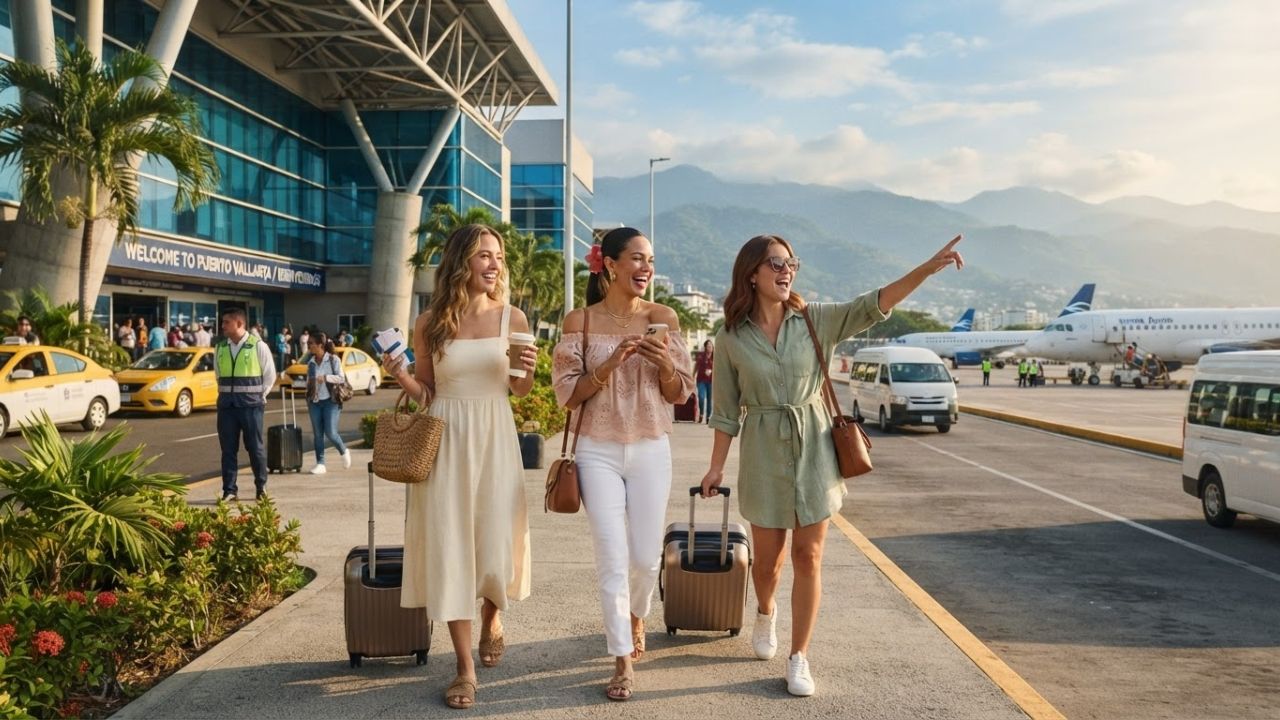
Image generated by AI
After a severe 24.4% dip in March, Puerto Vallarta International Airport narrowed passenger declines to 10.3% in August 2026, driven by expanding Canadian air links, new Terminal 2 construction, and extended visitor stays across Banderas Bay.
PUERTO VALLARTA, Mexico — Following a volatile first half of 2026 marked by carrier capacity reductions and macroeconomic shifts in North American travel budgets, Puerto Vallarta International Airport (PVR) is demonstrating a decisive operational rebound. Official monthly traffic disclosures published by airport operator Grupo Aeroportuario del Pacífico (GAP) confirm that the Pacific resort hub is steadily closing its year-over-year passenger deficit, rebounding from a severe spring slump into sustained late-summer momentum.
The airport’s trajectory illustrates a broader transition across Mexico’s premier coastal destinations. While post-pandemic "revenge travel" surges have normalized into more measured vacation patterns, Puerto Vallarta is counteracting seat losses through major terminal infrastructure upgrades, new Canadian route expansions, and an increase in average visitor length of stay that delivers stronger per-capita spending into the regional hospitality economy.
The Local Trend Revealed: Rebounding from March Lows and Overcoming Carrier Exit
The 2026 passenger metrics at Puerto Vallarta trace a dramatic curve from early-year peaks to a sharp spring downturn, followed by month-over-month stabilization:
Monthly Airport Traffic Breakdown (GAP Data)
- January 2026: Began on a positive note, handling 731,700 total passenger movements—a 2.6% increase compared to January 2025.
- February 2026: Softened slightly to 615,400 travelers, marking a 5.3% year-over-year decline.
- March 2026 (The Low Point): Experienced the year's steepest decline as passenger throughput plummeted 24.4% to 576,600 passengers. The contraction was heavily driven by international leisure travelers, where international traffic collapsed by 32.1%.
- April & May 2026: Showed early signs of moderation, with contractions narrowing to 17% in April and 14.4% in May.
- June 2026: Suffered an intermediate setback, dipping 18.7% following the operational cessation of Spirit Airlines in May.
- July & August 2026 (The Turnaround): July recorded 484,200 travelers, reducing the decline to 12.1%. By August, passenger movements reached 426,900, trimming the year-over-year deficit to 10.3%—the narrowest gap recorded since January.
The Impact of Spirit Airlines' May Shutdown
A significant headwind during the second quarter was the abrupt exit of low-cost carrier Spirit Airlines, which ceased operations in May 2026. Spirit had previously maintained daily nonstop connections from Los Angeles (LAX) alongside multiple weekly services from Dallas-Fort Worth (DFW) and Houston (IAH) utilizing Airbus A320-family aircraft. The sudden removal of thousands of low-cost seats reduced available capacity throughout June. However, legacy carriers and Canadian operators stepped in by July to backfill route demand.
Contrasting Trends Across Mexican Tourism Gateways
Puerto Vallarta’s recovery differs notably from other coastal hubs. Los Cabos, also managed by GAP, navigated a milder slowdown, recording smaller declines of 6.9% in July and 6.2% in August. Cancún observed a gradual plateau toward historical norms, while smaller Pacific destinations like Manzanillo recorded modest growth in August. Across GAP’s complete network of 12 Mexican airports, combined passenger traffic rose 3.9% in July, bolstered by business and regional growth in metropolitan centers including Guadalajara, Tijuana, La Paz, Aguascalientes, Hermosillo, and Guanajuato.
Cultural & Environmental Value: Expanding Terminal 2 and Community Ecotourism
Rather than retrenching during temporary market softening, regional authorities and GAP are executing the largest infrastructure expansion in Puerto Vallarta’s history. Construction on the airport’s brand-new Terminal 2 is advancing rapidly. Designed as Latin America’s first Zero Energy airport terminal, the eco-efficient building incorporates solar arrays, natural ventilation, and greywater recycling systems, substantially expanding international customs and boarding capacity. Concurrently, construction of a new second runway will expand hourly aircraft movement capacity, eliminating congestion over Banderas Bay.
Beyond airport perimeter walls, the shift in visitor behavior is reinforcing community-level sustainable tourism. Vacation rental statistics indicate that while occupancy rates in July and August 2026 were lower than 2025 highs, the average duration of traveler stays increased significantly compared to pre-pandemic baselines. Visitors staying ten to fourteen days rather than three-night weekends are venturing beyond all-inclusive hotel enclaves into authentic Jalisco and Nayarit communities.
Travelers are directing spending toward Indigenous Wixárika (Huichol) artisan cooperatives in the Romantic Zone, supporting sea turtle conservation sanctuaries in Nuevo Nayarit, and booking community-guided hiking excursions into the Sierra Madre Occidental foothills, where small villages like El Tuito and San Sebastián del Oeste preserve centuries of colonial and agrarian heritage.
Local Visitor Insider Tips: Coastal Panga Routes, Regional Flavors, and Seasonal Timing
For travelers visiting Puerto Vallarta during the late summer and autumn shoulder months, local expertise unlocks a richer coastal experience:
- Optimal Shoulder-Season Timing: September and October offer lower accommodation rates, uncrowded beaches, and pleasant sea temperatures in Banderas Bay. While brief late-afternoon tropical rain showers occur, mornings are typically sunny. By late November, the bay welcomes migrating humpback whales from northern Pacific feeding grounds, opening world-class ethical whale-watching opportunities.
- Cultural Etiquette & Local Interaction: When purchasing intricate beadwork or yarn paintings (nierikas) from Wixárika craftspeople along the Malecón or in Isla Cuale artisan markets, negotiate respectfully without aggressive haggling, as these pieces represent sacred cultural iconography. In restaurants, tipping between 10% and 15% in Mexican Pesos is customary.
- Regional Culinary Specialties: Sample authentic Jalisco coastal cuisine away from hotel buffets. Order pescado zarandeado—fresh local red snapper marinated in achiote, soy sauce, and chilies, slowly wood-smoked over mangrove charcoal. Along the boardwalk, purchase a refreshing cup of tuba, a traditional fermented coconut palm sap drink garnished with diced apples and roasted walnuts. In the Romantic Zone, seek out family-run street stalls serving crispy beef birria tacos served with rich consommé broth for dipping.
- Under-the-Radar Escapes: Escape resort crowds by catching a public panga (water taxi) from Los Muertos Pier or Boca de Tomatlán to Yelapa, a road-free coastal fishing hamlet accessible only by boat. Hike inland through sub-tropical jungle trails to reach the Yelapa waterfall, or explore the Vallarta Botanical Gardens situated 30 minutes south, home to over 3,000 native plant species and preserved cloud forest hiking loops.
Tourism Outlook: Route Resurgence and Premium Leisure Investment
Puerto Vallarta’s demonstrated resilience positions the destination for robust long-term expansion heading into the 2026–2027 winter high season. Major airlines are aggressively reaffirming their commitment to the Pacific haven:
- Southwest Airlines: Restored daily year-round nonstop flights connecting San Diego International Airport (SAN) directly with Puerto Vallarta.
- Porter Airlines: Expanded its Canadian network with daily Toronto (YYZ) flights and introduced a new nonstop route connecting Edmonton (YEG).
- Volaris: Broadened domestic intercity routes, funneling interior Mexican travelers directly to the coast.
With Terminal 2 nearing completion, increased airline seat inventories from key North American feeder markets, and higher-yielding traveler demographics choosing extended stays, Puerto Vallarta has effectively weathered its early-year volatility. The destination stands out as an enduring benchmark for Mexican tourism, combining traditional Jalisco warmth, modern aviation infrastructure, and diverse Pacific coastal ecology.
Related Travel Guides
Disclaimer
This article is for informational and educational purposes only. It does not constitute legal, financial, or professional advice. While we strive to provide accurate and up-to-date information, travel policies, regulations, and conditions change rapidly. Always verify information with official sources before making travel decisions. Nomad Lawyer makes no representations about the accuracy, reliability, completeness, or suitability of the information provided. Readers should consult qualified professionals for advice specific to their circumstances. The views expressed in this article are those of the author and do not necessarily reflect the views of Nomad Lawyer.
Raushan Kumar
Founder & Lead Developer
Full-stack developer with 11+ years of experience and a passionate traveller. Raushan built Nomad Lawyer from the ground up with a vision to create the best travel and law experience on the web.
Learn more about our team →