
Prague Joins Berlin, Warsaw, Budapest, and Stockholm in Emergency Push to Rein in Runaway Transit Inflation and Record-Breaking Airfare Explosions Caused by Global Fuel Supply Shocks.
Prague joins Berlin, Warsaw, Budapest, and Stockholm in emergency measures to fight transit inflation and record airfare

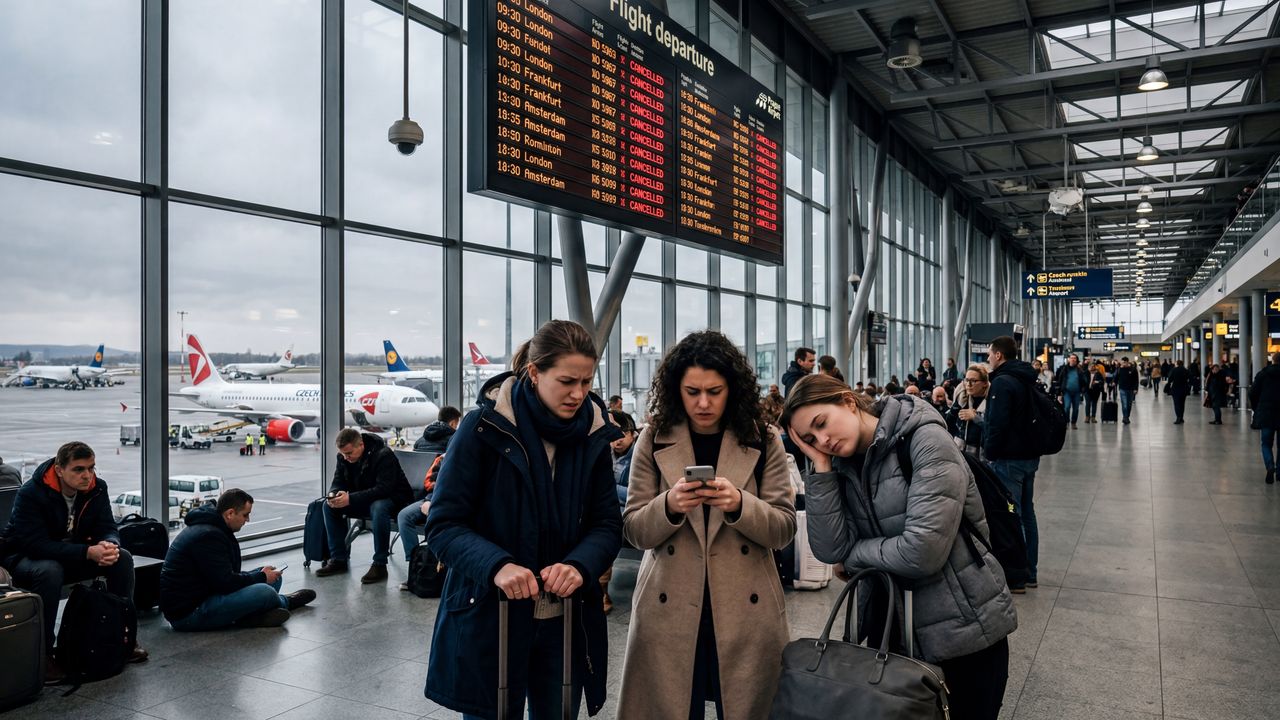
Image generated by AI
[Prague, June 23, 2026] — Prague has officially joined a coalition of European capitals, including Berlin, Warsaw, Budapest, and Stockholm, in an urgent effort to combat skyrocketing transit inflation. This coordinated emergency response follows a series of global fuel supply shocks that have triggered drastic increases in public transportation costs and unprecedented surges in airfares across the continent.
The crisis, fueled by volatile energy markets, has placed immense financial pressure on commuters, aviation carriers, and logistics operators. To prevent a total collapse in travel demand and protect urban mobility, several national governments have implemented aggressive fiscal interventions. These include Germany's temporary low-cost transit tickets, Poland's broad tax shields, Hungary's price ceilings, Sweden's energy tax cuts, and the Czech Republic's diesel excise reductions.
Global Energy Volatility and Transport Sector Disruptions
The stability of international transport infrastructure has been severely compromised by a convergence of geopolitical instability, natural catastrophes, and the lingering effects of global pandemics. These factors combined to choke crude oil production, creating a ripple effect that inflated costs across every mode of transport.
Industry data indicates that regular motor gasoline prices climbed by approximately 50% during the first half of a recent calendar year. Diesel prices experienced an even more aggressive ascent, forcing government planners to intervene to prevent the financial insolvency of freight carriers and public transit agencies.
For the average traveler, this manifested as a sharp rise in the cost of long-distance bus fares and airline tickets. In densely populated European hubs, where public transit is the backbone of the economy, the energy crisis threatened to stifle urban connectivity and derail post-pandemic economic recovery. Reports suggest that the early spring period saw an unprecedented monthly price surge, leading some administrations to consider total fuel tax holidays to maintain social stability.
Berlin Implements 9-Euro Ticket and Energy Tax Relief
Germany adopted one of the most aggressive strategies to mitigate the impact of fuel inflation. The federal government introduced a sweeping relief package that allowed any resident to purchase a monthly public transport pass for just nine euros between June and August.
This initiative provided unlimited access to regional trains, subways, trams, and buses nationwide. The primary objective was to shield citizens from energy costs while incentivizing a shift from private vehicle use to sustainable public transit. To sustain this program, the German government allocated over two billion euros to compensate transport operators for lost revenue, with an additional 1.2 billion euros addressing pandemic-related financial gaps.
Beyond the ticket program, Berlin implemented a significant energy tax reduction. The federal tax on petrol was lowered by roughly 29.55 cents per litre, while diesel taxes were reduced by approximately 14.04 cents per litre, providing immediate relief at fueling stations.
Warsaw Deploys Anti-Inflation Shield for Households
In Poland, the government launched a comprehensive policy known as the Anti-Inflation Shield to protect consumers from the volatility of the energy market. This strategy focused on drastic tax reductions to lower the daily cost of living.
The value-added tax (VAT) on motor fuels was slashed from 23% to 8%. Simultaneously, excise duties on gasoline and electricity were reduced, and taxes on several essential food items were eliminated entirely. To further support vulnerable populations, a protective allowance was established to assist with heating and energy bills.
Officials estimated that the shield would save Polish households nearly 25 billion złoty. By reducing the VAT on electricity to 5% and removing taxes on natural gas, Warsaw aimed to prevent fuel prices from climbing by several additional groszy per litre, positioning the program as one of the most extensive anti-inflationary efforts in Europe.
Budapest Enforces Fuel Price Caps to Stabilize Economy
Hungary opted for a more direct market intervention by implementing a strict retail price cap on fuel. The government fixed the maximum price for both petrol and diesel at 480 Hungarian forints per litre.
While retailers were permitted to sell fuel at lower rates, they were legally prohibited from exceeding the ceiling. This measure was initially set for a three-month period to anchor inflation expectations and provide predictability for businesses and commuters.
Despite warnings from economists that price caps could lead to supply shortages or market distortions, the Hungarian administration maintained that extraordinary global conditions required non-traditional solutions. The policy served as a political statement against the exploitation of motorists by international oil firms and helped moderate transport inflation within the country.
Stockholm Integrates Energy Tax Cuts and Cash Compensation
Sweden’s approach combined targeted fiscal relief with direct financial transfers to citizens. Authorities in Stockholm implemented a temporary energy tax reduction of 80 öre per litre for both petrol and diesel.
Recognizing the unique needs of rural populations, the government also expanded diesel tax reductions for the aquaculture, forestry, and agriculture sectors. Additionally, travel allowances for those relying on private vehicles for commuting were increased significantly.
To further offset the crisis, the Swedish government earmarked approximately 30 billion kronor to be returned to households and companies as compensation for soaring electricity costs. This calibrated strategy aimed to maintain social cohesion and keep consumption steady without resorting to the more dramatic subsidies seen in other capitals.
Prague Reduces Diesel Excise Duties and Energy Fees
The Czech Republic focused its efforts on the logistics and industrial sectors by targeting diesel fuel. Lawmakers in Prague reduced the excise duty on diesel, a move that cost the national budget just under two billion Czech crowns.
This targeted relief was designed to prevent a "domino effect" where rising diesel costs would lead to price hikes for freight and public services. Complementing the tax cut, the government issued temporary waivers for fees related to supported energy sources, lowering electricity bills for both corporate entities and private households.
While the scale of the Czech intervention was smaller than that of Germany or Poland, officials argued that the targeted approach provided essential breathing room for the economy while avoiding excessive fiscal strain.
Impact Analysis: Record Airfare Explosions and Travel Trends
While land transport received significant government subsidies, the aviation sector experienced a period of extreme volatility. Air travelers faced record-breaking fare increases, with domestic tickets surging by double-digit percentages within a single year.
Aviation industry sources attributed these spikes to the soaring cost of jet fuel and critical labor shortages. Government data reveals that average domestic airfares reached approximately $328 in the first quarter of a recent year, representing a nearly 17% increase over the previous year. Further consumer price indices indicated a 28% rise in airline fares over the subsequent twelve months.
This pricing explosion has fundamentally altered travel behavior, forcing many families to cancel summer vacations and business travelers to absorb higher operational costs. Analysts warn that without systemic intervention, air travel may become inaccessible for a large segment of the population, potentially suppressing the broader tourism economy.
| Country | Primary Intervention Measure | Specific Action/Value | Target Group |
|---|---|---|---|
| Germany | 9-Euro Ticket | €9 monthly unlimited pass | General Public/Commuters |
| Poland | Anti-Inflation Shield | Fuel VAT reduced 23% $\rightarrow$ 8% | Households/Consumers |
| Hungary | Fuel Price Cap | Max 480 Forints per litre | Motorists/Businesses |
| Sweden | Energy Tax Reduction | 80 öre per litre cut | Rural & Urban Residents |
| Czech Rep. | Diesel Excise Cut | < 2 Billion CZK budget cost | Logistics/Public Transport |
Geopolitical Drivers and the Shift Toward Energy Independence
The current crisis is not a domestic failure but a result of complex geopolitical dynamics. Supply chain bottlenecks, international sanctions, and regional conflicts have severely constrained oil and gas production just as post-pandemic demand surged.
European nations, heavily reliant on imported energy, found themselves particularly vulnerable. In response, regional leaders have held emergency summits to share fiscal tools and coordinate tax adjustments. This collective effort aimed to ensure that national interventions remained compliant with international trade rules while providing a unified front to stabilize markets.
The volatility has accelerated a strategic shift across the continent, with an increased emphasis on diversifying energy suppliers and speeding up the transition to renewable energy and electrified transport.
The varied responses from Prague, Berlin, Warsaw, Budapest, and Stockholm demonstrate that there is no single solution to transit inflation. However, the coordinated effort underscores that proactive, targeted interventions can effectively cushion the blow of global supply shocks. As volatility becomes a more permanent feature of the energy landscape, the pursuit of energy independence and investment in resilient, electrified infrastructure will be the primary focus for European policymakers moving forward.
Related Travel Guides
Disclaimer
This article is for informational and educational purposes only. It does not constitute legal, financial, or professional advice. While we strive to provide accurate and up-to-date information, travel policies, regulations, and conditions change rapidly. Always verify information with official sources before making travel decisions. Nomad Lawyer makes no representations about the accuracy, reliability, completeness, or suitability of the information provided. Readers should consult qualified professionals for advice specific to their circumstances. The views expressed in this article are those of the author and do not necessarily reflect the views of Nomad Lawyer.
Raushan Kumar
Founder & Lead Developer
Full-stack developer with 11+ years of experience and a passionate traveller. Raushan built Nomad Lawyer from the ground up with a vision to create the best travel and law experience on the web.
Learn more about our team →