
Portugal Restores Beira Baixa Railway Between Abrantes and Guarda Bringing Travel Access Back
Portugal Restores Beira Baixa Railway Between Abrantes and Guarda Bringing Travel Access Back

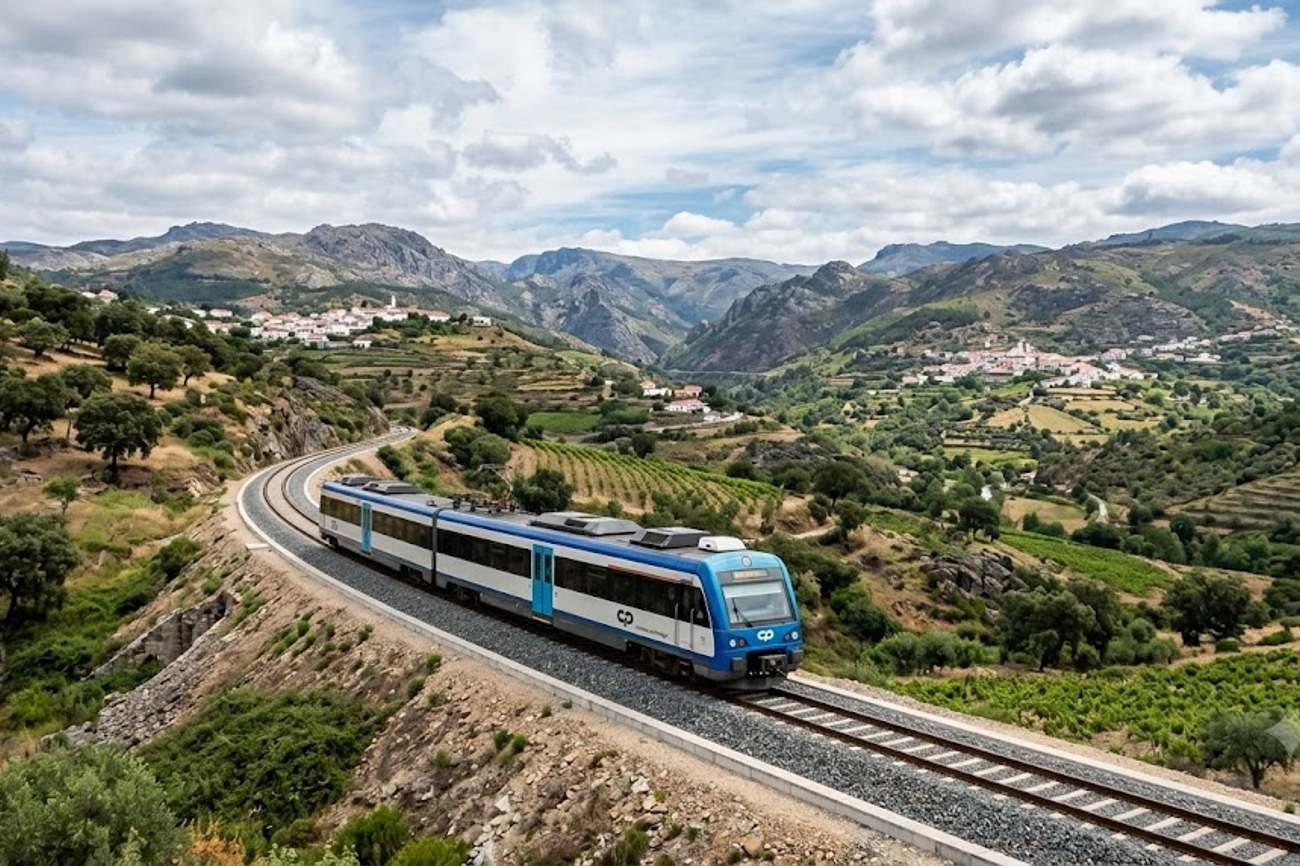
Image generated by AI
The transition from road-substitution to rail on Portugal's Beira Baixa Line represents a shift from a 0% accessibility rate for wheelchairs and bicycles to a fully integrated multimodal corridor. While the reopening of the Mouriscas-A–Ródão section on 20 September may appear as a simple infrastructure fix, the data reveals a total restoration of specialized passenger capacity that was entirely absent during the replacement-bus phase.
The Beira Baixa Recovery in Numbers
The restoration of the Beira Baixa Line is defined by the removal of systemic barriers rather than the mere addition of frequency. Between the critical nodes of Abrantes and Guarda, the transport mode has shifted from a restricted coach system back to a high-capacity rail product. The data shows that for the period ending 19 September, Intercidades passengers traveling from Lisbon Santa Apolónia were forced into road substitutions at Abrantes to reach Guarda. Simultaneously, Regional passengers faced road transfers between Mouriscas-A and Vila Velha de Ródão.
The operational impact is most visible in the "excluded passenger" metrics. During the bus substitution period, the carriage of wheelchairs, bicycles, and scooters was prohibited. Furthermore, the acceptance of group tickets—a primary driver for educational and tour-based tourism—was suspended. As of 20 September, these restrictions have been lifted, aligning the route with IATA and UNWTO standards for accessible and inclusive tourism.
The recovery is supported by a significant fleet modernization effort. By 2024, CP (Comboios de Portugal) successfully integrated wheelchair-accessible lifts into 55 Regional electric units. These specific units, which service the Beira Baixa corridor, are equipped with universal-access toilets, designated wheelchair maneuvering zones, and synchronized audio-visual information systems. The onboard lifts are rated for a maximum capacity of 350 kilograms, providing a data-backed guarantee of safety and accessibility that the temporary bus fleet could not match.
Comparative Modal Analysis: Bus vs. Rail
The shift from road to rail on this corridor is not a lateral move but a vertical upgrade in service capability. The following table delineates the operational gap that existed prior to the 20 September reopening.
| Passenger Segment | Bus Substitution (Until 19 Sept) | Restored Rail (From 20 Sept) | Operational Impact |
|---|---|---|---|
| Wheelchair Users | 0% Capacity (Prohibited) | Accessible via SIM Request | Full restoration of mobility rights |
| Cyclists | 0% Capacity (Prohibited) | Permitted (Subject to space) | Re-enables rail-and-cycle tourism |
| Scooter Users | 0% Capacity (Prohibited) | Permitted (CP conditions apply) | Removal of blanket restrictions |
| Organized Groups | Group Tickets Not Accepted | Group Tickets Valid | Re-opens corridor to school/tour groups |
| Standard Passengers | Forced Modal Transfer at Abrantes | Seamless Rail Connection | Reduced transit time and road exposure |
This data indicates that the "replacement" service was not a functional equivalent to the rail service. While the buses moved people from point A to point B, they failed to move the diversity of travelers that the Portuguese interior relies on for economic growth. According to Statista, the trend toward "slow travel" and sustainable tourism requires exactly the kind of multimodal flexibility—specifically rail-plus-cycle—that was suspended during the disruption.
What This Means for Travelers
The return to rail operations transforms the Beira Baixa corridor from a logistical hurdle into a viable itinerary component. However, the data suggests that "reopened" does not mean "instant access." Travelers must navigate specific operational requirements to ensure a seamless journey.
For those with limited mobility, the restoration of the line requires a strategic booking window. The Integrated Mobility Service (SIM) is not an on-demand feature; it requires a request at least six hours before departure. For those traveling in the late-night or early-morning windows (between 22:00 and 11:59), the data shows a stricter deadline: requests must be submitted by 20:00 the previous day. Failure to adhere to these timestamps may result in a denial of service despite the train's physical capability to accommodate wheelchairs.
Cyclists planning journeys through the interior should note the distinction between service types. Intercidades trains offer designated bicycle facilities and require a free bicycle carriage provision alongside the passenger ticket. Regional and InterRegional services operate on a "space available" basis. Given the surge in demand following the reopening, cyclists should prioritize Intercidades bookings to guarantee equipment transport.
For tour operators and group coordinators, the reopening of group ticket validity is the most significant financial shift. The ability to leverage group discounts on the Lisbon–Entroncamento–Abrantes–Castelo Branco–Covilhã–Guarda axis makes the Portuguese interior competitively priced again compared to private coach charters.
Forward Projection: The Interior Corridor Trajectory
Based on the current trajectory of CP's infrastructure investment, the Beira Baixa Line is moving toward a "Universal Access" model. The installation of lifts in 55 Regional units is a leading indicator of a wider fleet overhaul. When viewed alongside the restoration of the Mouriscas-A–Ródão section, the pattern suggests that Portugal is prioritizing the "Interiority" strategy—connecting the coast to the hinterland to decentralize tourism.
We expect to see an increase in "Rail-and-Trail" tourism packages in the coming 12-24 months. The removal of the bicycle restriction between Abrantes and Guarda removes the single largest "break" in the inland cycling network. If CP continues to scale the deployment of the 350kg-rated lift units, we can project a year-over-year increase in accessible tourism arrivals in the Castelo Branco and Guarda districts.
The long-term success of this corridor will depend on the consistency of the timetable. The transition from a disrupted state to a stable, scheduled service allows international travelers to book multi-city itineraries with confidence. The data suggests that the Beira Baixa Line is no longer a "risk" factor in itinerary planning but a functional asset.
FAQ: Beira Baixa Rail Recovery 2024
Can I take my bicycle on the Beira Baixa line now? Yes. As of 20 September, bicycles are permitted. Intercidades trains have designated facilities (require a free carriage provision), while Regional trains allow them based on available space.
Do I need to book assistance for a wheelchair? Yes. You must request the Integrated Mobility Service (SIM) at least six hours before travel, or by 20:00 the previous day for departures between 22:00 and 11:59.
Are group discounts available again? Yes. Group tickets, which were excluded during the bus replacement phase, are once again accepted for eligible Intercidades and Regional services across the corridor.
Which cities are now connected by seamless rail? The corridor now provides continuous rail service linking Lisbon, Entroncamento, Abrantes, Castelo Branco, Covilhã, and Guarda, with some services extending to Vilar Formoso.
The return of the rails to the Beira Baixa is more than a repair; it is the restoration of mobility equity for the Portuguese interior.
#PortugalRailRecovery2024 #BeiraBaixaLine #CPMobilityData #AccessibleTourismPortugal #RailCycleIntegration #GuardaAbrantesTransit
Related Travel Guides
Disclaimer
This article is for informational and educational purposes only. It does not constitute legal, financial, or professional advice. While we strive to provide accurate and up-to-date information, travel policies, regulations, and conditions change rapidly. Always verify information with official sources before making travel decisions. Nomad Lawyer makes no representations about the accuracy, reliability, completeness, or suitability of the information provided. Readers should consult qualified professionals for advice specific to their circumstances. The views expressed in this article are those of the author and do not necessarily reflect the views of Nomad Lawyer.
Naina Thakur
Contributor & Travel Specialist
Travel enthusiast and legal writer covering visa regulations, responsible tourism, and cultural journeys across global destinations.
Learn more about our team →