
The Homeport Dwell-Time Gamble: How Port Canaveral's $100M+ Bowen Aquarium Re-Engineers Space Coast Tourism

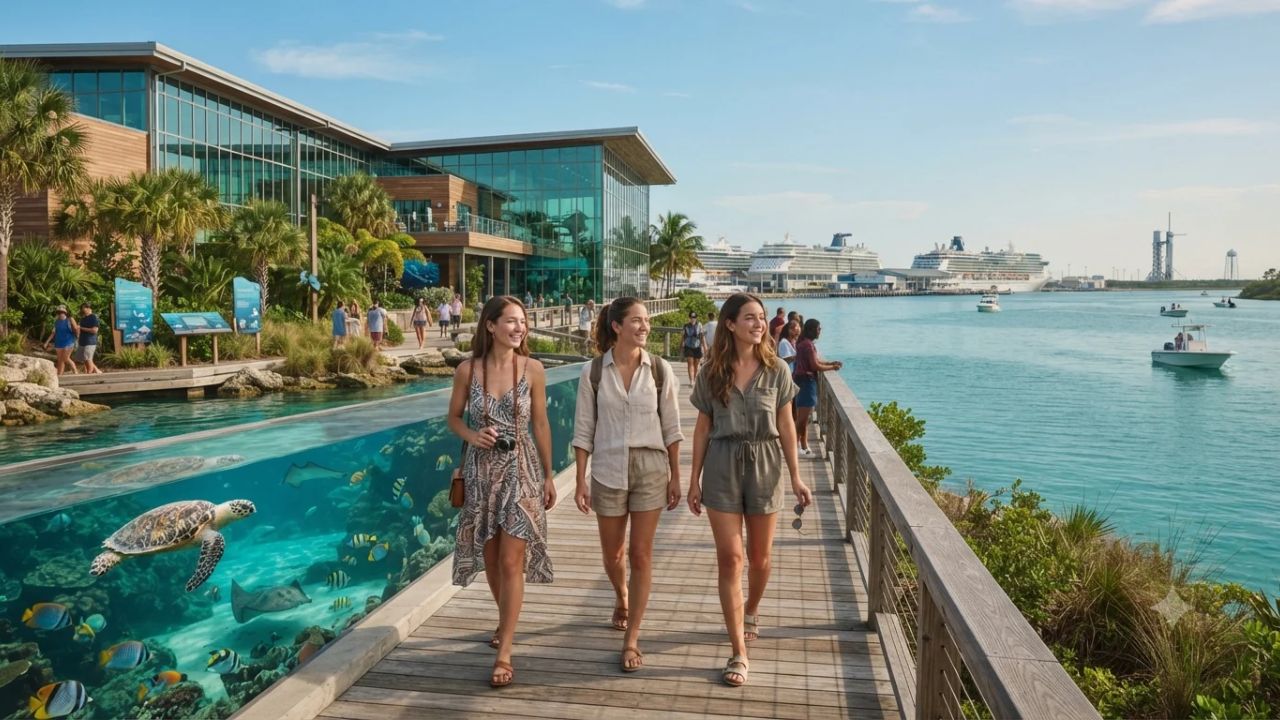
Projected to draw more than 500,000 annual visitors across a 14-acre waterfront parcel on the Banana River shoreline, the Bowen Aquarium and Conservation Center at Port Canaveral represents a calculated commercial maneuver to convert transient maritime passenger flows into high-margin landside hotel stays. As home to one of the world's most heavily trafficked cruise passenger hubs processing millions of embarking voyagers each year, the Space Coast is aggressively restructuring its tourism infrastructure to intercept travelers who traditionally bypass local lodging in favor of direct transfers to Orlando theme parks.
Spearheaded by the East Coast Zoological Foundation—the non-profit governing body of the internationally accredited Brevard Zoo—the project functions as a secondary campus dedicated to marine education, coastal conservation research, and interactive family tourism. Rather than functioning as a generic recreational attraction, the facility centers on the fragile Indian River Lagoon estuarine basin. For regional planners and commercial tour operators, the development marks a decisive shift in homeport economics, using conservation-focused attractions to extend visitor dwell times across Brevard County.
Homeport Evolution: Converting Cruise Transit into Multi-Day Stays
For decades, maritime embarkation ports have struggled with a persistent structural challenge: the "pass-through traveler." While Port Canaveral hosts multi-ship departure days handling massive mega-liners from Royal Caribbean, Carnival, Disney, and MSC, a significant percentage of incoming passengers fly into Orlando International Airport (MCO), board dedicated charter motorcoaches, and embark immediately without spending a single dollar in local retail or beachfront lodging.
The Bowen Aquarium is explicitly engineered to interrupt this transit funnel. By situating a major regional educational destination directly on port property along the Banana River, tourism authorities provide a tangible incentive for families to schedule pre-cruise arrivals or post-cruise extensions. When paired with the surging public fascination with commercial orbital spaceflight at the nearby Kennedy Space Center and Cape Canaveral Space Force Station, the Space Coast establishes a multi-day itinerary that competes directly with Central Florida's inland theme park complexes.
State promotional authorities at Visit Florida note that experiential conservation travel generates higher per-diem visitor expenditure than traditional passive beach holidays. Families booking eco-tourism packages combine daytime rocket launch viewings with lagoon kayak excursions, ocean surfing along Cocoa Beach, and guided marine biology experiences, funneling capital across small hospitality operators, waterfront restaurants, and private transport providers throughout the Cape Canaveral and Cocoa Beach municipal corridors.
Infrastructure and Ecological Blueprint: The 14-Acre Banana River Campus
The physical blueprint of the Bowen Aquarium integrates advanced marine biology research laboratories with public-facing educational habitats designed to showcase native Southeastern aquatic species:
| Development Parameter | Operational Specification | Tourism & Conservation Objective |
|---|---|---|
| Site Footprint | Approximately 14 acres | Waterfront development along Port Canaveral / Banana River shoreline |
| Managing Entity | East Coast Zoological Foundation | Second institutional campus following the established Brevard Zoo |
| Annual Visitor Target | Exceeding 500,000 patrons | Regional economic development baseline for Space Coast tourism capture |
| Core Ecosystem Focus | Indian River Lagoon estuarine basin | Freshwater-to-saltwater transitional wetland and lagoon preservation |
| Key Specimen Habitats | Sea turtles, bull sharks, stingrays, otters, alligators | Native wildlife rehabilitation and experiential conservation exhibits |
| Primary Feeder Market | Multi-day cruise embarkation passengers | Pre- and post-voyage family dwell time conversion |
The conservation mission holds particular urgency for Florida's ecological integrity. The Indian River Lagoon serves as North America's most biologically diverse estuarine system, but has faced severe water-quality degradation, loss of vital seagrass meadows, and wildlife mortality events monitored closely by the Florida Fish and Wildlife Conservation Commission. By featuring native species—including rescued sea turtles, bull sharks, North American river otters, stingrays, and American alligators—the aquarium integrates scientific water-quality remediation projects directly into public visitor galleries.
Unlike traditional commercial oceanariums that emphasize trained animal spectacles, the Bowen facility focuses on habitat restoration, wildlife rescue operations, and interactive environmental research. Visitors engage with active biologists conducting lagoon water-quality testing, seagrass planting initiatives, and manatee rehabilitation programs, providing travelers with tangible participation in environmental stewardship.
Expert Analysis: Yield Capture, Arterial Transit Corridors, and Ecological Mitigation
From a regional transport and municipal finance perspective, the integration of a 500,000-visitor attraction within an active deepwater maritime terminal introduces significant logistical complexity. Port Canaveral must balance the intense vehicular movement of 6,000-passenger cruise turnaround days with localized surface traffic accessing the aquarium campus.
The pricing pressure this creates means waterfront hotel inventory in Cape Canaveral and Cocoa Beach will experience severe demand compression across Thursday through Sunday embarkation windows. Because the Bowen Aquarium provides a compelling reason for cruise passengers to arrive 48 to 72 hours prior to ship sailings, local hoteliers are shifting away from discounted weekend packages toward high-yield multi-night minimum booking rules. As hotel room night demand accelerates, Brevard County's Tourist Development Council (TDC) collects increased bed-tax revenues, creating a self-sustaining municipal fund to finance additional public infrastructure.
For travelers booking this route, the direct consequence is that last-minute hotel reservations near the cruise terminals will become prohibitively expensive, forcing late planners to seek lodging inland along the Interstate 95 and State Road 528 (Beachline Expressway) corridors. Ground transportation costs will also escalate, requiring passengers to evaluate whether renting a private vehicle or booking fixed-rate airport shuttles between Orlando International Airport and the coast provides better value.
Additionally, marine project developers face rigorous environmental permitting. Constructing a 14-acre attraction adjacent to the Banana River requires comprehensive stormwater runoff containment and strict mitigation protocols to prevent construction silt from entering adjacent seagrass zones. By successfully navigating these environmental safeguards, Port Canaveral proves that commercial port operations can coexist with authentic ecological conservation, permanently altering the economic geography of Florida's Atlantic seaboard.
Key Takeaways
- 500,000 annual visitors projected: The 14-acre Bowen Aquarium and Conservation Center will establish a major new tourism anchor on Port Canaveral's Banana River waterfront.
- Tackling the transient cruise leak: The attraction is strategically positioned to convert millions of pass-through cruise passengers into multi-night hotel guests across Brevard County.
- Second campus for Brevard Zoo leadership: The project expands the educational and conservation footprint of the East Coast Zoological Foundation.
- Native wildlife conservation takes precedence: Exhibits highlight the Indian River Lagoon, showcasing sea turtles, bull sharks, river otters, stingrays, and alligators.
- Pre-cruise hotel lead times must expand: Anticipated multi-night traveler demand will drive peak weekend hotel rates and require booking accommodations several months in advance.
FAQ: Port Canaveral Bowen Aquarium and Space Coast Travel 2026
What is the Bowen Aquarium and Conservation Center?
The Bowen Aquarium is a planned 14-acre waterfront conservation and marine education campus at Port Canaveral, developed by the East Coast Zoological Foundation to highlight the Indian River Lagoon ecosystem.
How many visitors is the new aquarium expected to attract?
Regional economic forecasts project the attraction will welcome more than 500,000 visitors annually, drawing heavily from the millions of cruise passengers departing from Port Canaveral.
Which wildlife species will be featured at the facility?
The facility will focus on native Florida wildlife, including rehabilitated sea turtles, bull sharks, river otters, stingrays, American alligators, and diverse regional estuarine species.
How does the aquarium development affect cruise travelers?
The attraction gives cruise passengers an accessible, high-quality educational experience adjacent to the ship terminals, encouraging travelers to arrive days early or extend their stays post-voyage.
By transforming a maritime gateway into a living conservation center, Port Canaveral is anchoring the economic future of the Space Coast.
Related Travel Guides
Disclaimer
This article is for informational and educational purposes only. It does not constitute legal, financial, or professional advice. While we strive to provide accurate and up-to-date information, travel policies, regulations, and conditions change rapidly. Always verify information with official sources before making travel decisions. Nomad Lawyer makes no representations about the accuracy, reliability, completeness, or suitability of the information provided. Readers should consult qualified professionals for advice specific to their circumstances. The views expressed in this article are those of the author and do not necessarily reflect the views of Nomad Lawyer.
Raushan Kumar
Founder & Lead Developer
Full-stack developer with 11+ years of experience and a passionate traveller. Raushan built Nomad Lawyer from the ground up with a vision to create the best travel and law experience on the web.
Learn more about our team →