
Two Passenger Trains Collide in Poland, Disrupting Key Regional and Capital Routes
A significant rail collision in Greater Poland has triggered service suspensions and medical emergencies, highlighting o

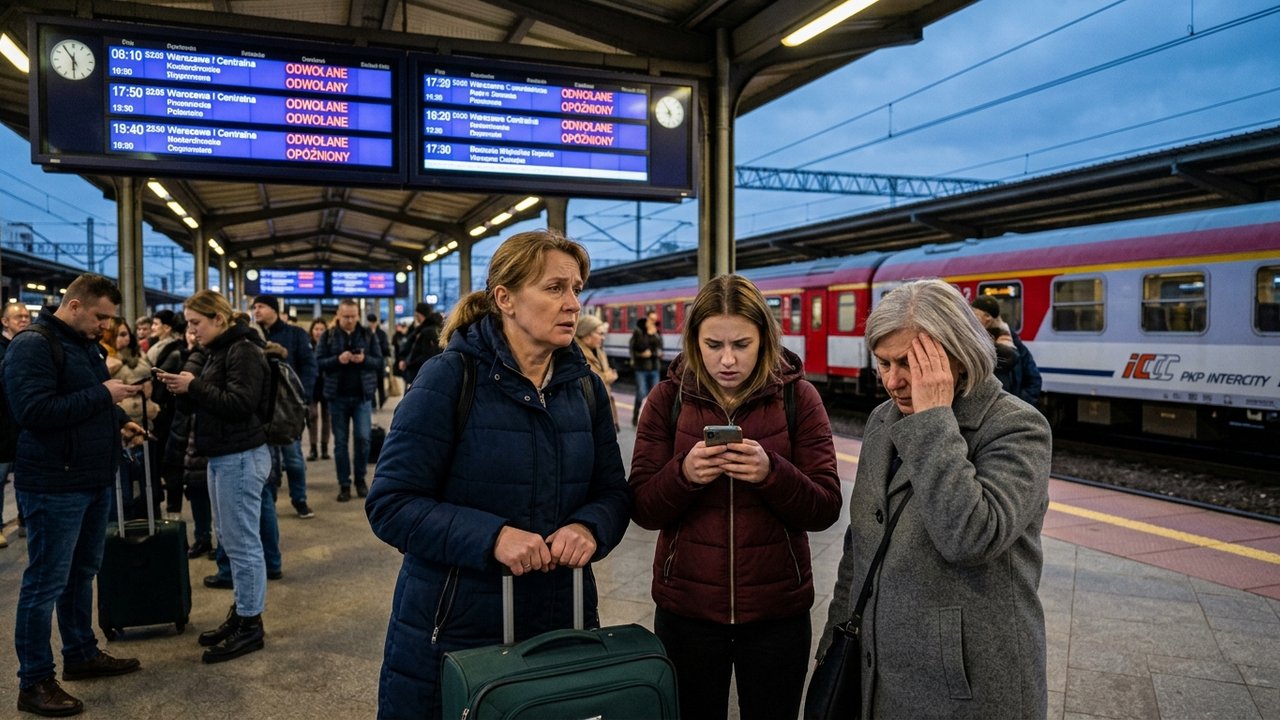
Image generated by AI
Rail Collision in Białośliwie Triggers Regional Network Shutdown
A side-collision involving two passenger trains occurred after 18:00 on June 25, 2026, in Białośliwie, located within Piła County, Greater Poland Voivodeship. The incident involved services on two critical corridors: the Kołobrzeg–Warsaw route and the Piła–Bydgoszcz regional line.
Approximately 200 passengers were on board the two trains at the time of the impact. Emergency responders provided medical assistance to 11 individuals at the scene, while three men required hospitalization in Piła and Chodzież.
The immediate operational result is the total suspension of rail traffic on the Piła–Bydgoszcz route. Emergency staging and passenger support were coordinated through the Volunteer Fire Brigade station in Białośliwie, supported by multiple State Fire Service units.
Strategic Impact on Polish Tourism and Business Travel
This disruption is particularly impactful due to the specific geography of the affected lines. The Kołobrzeg–Warsaw route is a primary artery linking the Baltic coast—a major summer tourism hub—with the capital's corporate and aviation centers.
The suspension of the Piła–Bydgoszcz line disrupts regional mobility in north-western and north-central Poland. Bydgoszcz serves as a significant cultural and business destination, meaning this localized incident has cascading effects on:
- Coastal Itineraries: Travelers returning from the Baltic coast to Warsaw.
- Corporate Travel: Business appointments and hotel check-ins in Greater Poland.
- MICE Sector: Delegate arrivals for meetings and events relying on regional rail nodes.
Rising Demand Meets Operational Pressure
The collision occurs against a backdrop of surging rail popularity in Poland. Data from the Office of Rail Transport indicates that the rail sector is no longer a secondary transport option but a primary driver of domestic and visitor mobility.
In the first quarter of 2026, Poland saw 110.2 million rail passengers, a 7.6% increase year-on-year. This growth increases the "exposure risk" for travel planners; a single point of failure on a domestic corridor now affects a significantly larger volume of passengers.
Furthermore, punctuality has trended downward. Passenger-train punctuality fell to 87.7% in Q1 2026, a drop of over 5 percentage points compared to 2025. This environment of high volume and decreasing reliability suggests that travel agencies should implement more generous time buffers for clients connecting to flights or prepaid accommodation.
Passenger Rights and Compensation Framework
Under the regulations enforced by Poland’s Office of Rail Transport, passengers facing significant delays are entitled to compensation and assistance.
Compensation Thresholds:
- 60–119 Minute Delay: Minimum compensation of 25% of the single ticket price.
- 120+ Minute Delay: Minimum compensation of 50% of the single ticket price.
Carrier Obligations: Depending on the severity of the disruption, carriers are required to provide meals, refreshments, and hotel accommodation if an overnight stay becomes necessary. They must also facilitate transport from a blocked train to an alternative departure point or the final destination.
Incident Summary and Operational Data
Collision Fact Sheet
| Field | Confirmed Detail | Travel Trade Relevance |
|---|---|---|
| Location | Białośliwie, Piła County, Greater Poland | Mapping affected itineraries |
| Timing | After 18:00, 25 June 2026 | High risk of missed connections |
| Incident Type | Side collision (Passenger trains) | Safety-related service suspension |
| Affected Routes | Kołobrzeg–Warsaw / Piła–Bydgoszcz | Links Baltic coast, regional hubs, and capital |
| Passenger Volume | ~200 people | High duty-of-care requirement |
| Traffic Status | Piła–Bydgoszcz route suspended | Core point for re-routing/rebooking |
| Medical Impact | 11 treated; 3 hospitalized | Insurance and assistance escalation |
Poland Rail Market Context (Q1 2026)
| Indicator | Figure | Strategic Meaning |
|---|---|---|
| Total Passengers | 110.2 Million | High volume increases impact of disruptions |
| YoY Growth | 7.6% | Rail is gaining dominance in mobility |
| Regional/Urban Trips | 88.5 Million | Local disruptions affect massive passenger flows |
| Passenger-KM | > 7.05 Billion | Long-distance rail remains highly significant |
| April 2026 Growth | 10.1% | Pressure increasing heading into summer peak |
Key Takeaways for Travel Operators
- Audit Itineraries: Immediately check all bookings involving north-western Poland and the coast-to-capital axis.
- Document Everything: Advise clients to retain all tickets, receipts for replacement transport, and evidence of delays for compensation claims.
- Adjust Buffers: Increase connection times for rail-to-air or rail-to-cruise transfers due to declining national punctuality trends.
- Monitor Bydgoszcz/Piła: These nodes are critical for regional tours and business travel; seek road alternatives where rail is suspended.
FAQ
Which rail routes are currently affected? The Piła–Bydgoszcz route is officially suspended. The Kołobrzeg–Warsaw route was involved in the collision and may experience residual delays or scheduling changes.
What compensation can passengers claim? Passengers with delays over 60 minutes may be eligible for 25% to 50% of their ticket price, depending on the total length of the delay at their final destination.
Was this an international incident? No. The collision was domestic, occurring within the Greater Poland Voivodeship, and involved domestic Polish rail services.
Related Travel Guides
Disclaimer
This article is for informational and educational purposes only. It does not constitute legal, financial, or professional advice. While we strive to provide accurate and up-to-date information, travel policies, regulations, and conditions change rapidly. Always verify information with official sources before making travel decisions. Nomad Lawyer makes no representations about the accuracy, reliability, completeness, or suitability of the information provided. Readers should consult qualified professionals for advice specific to their circumstances. The views expressed in this article are those of the author and do not necessarily reflect the views of Nomad Lawyer.
Raushan Kumar
Founder & Lead Developer
Full-stack developer with 11+ years of experience and a passionate traveller. Raushan built Nomad Lawyer from the ground up with a vision to create the best travel and law experience on the web.
Learn more about our team →