
Papua New Guinea Makes Digital Arrival Card Mandatory Before Boarding
PNG's immigration directive requires the PNG Digital Arrival Card before boarding, adding a key compliance gate for Kokoda Track trekkers.

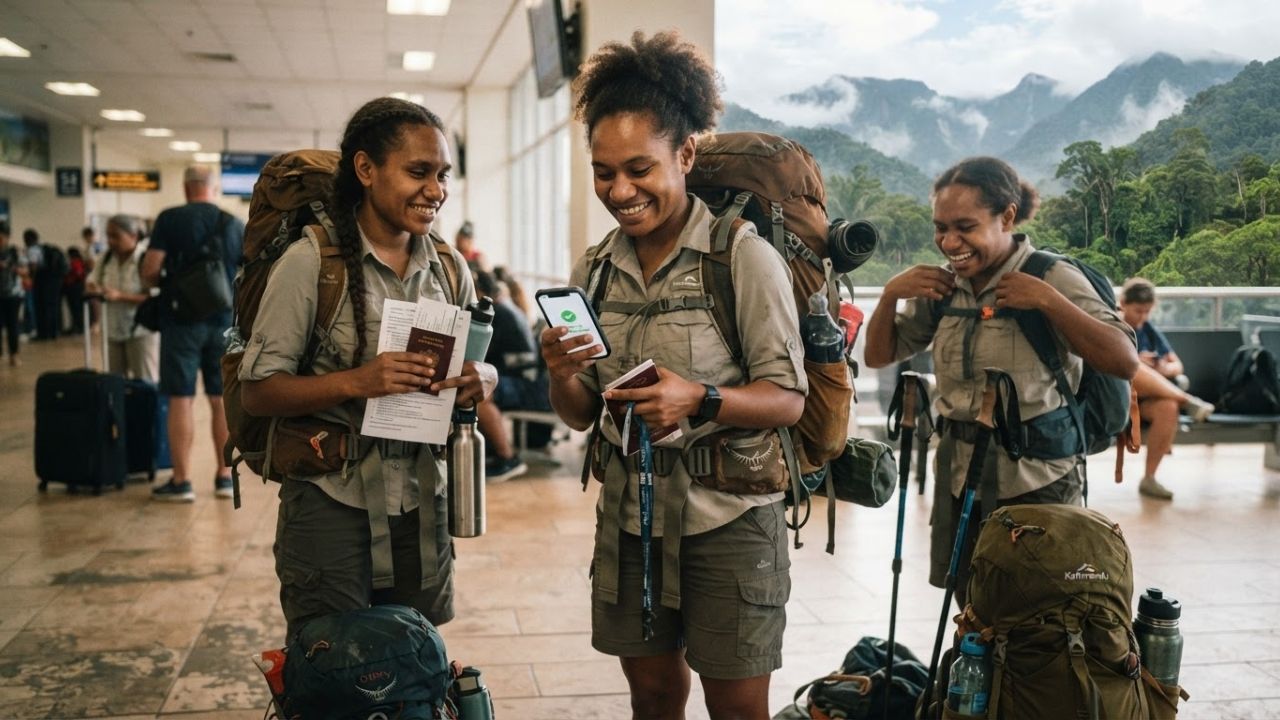
Image generated by AI
Papua New Guinea has introduced a mandatory pre-flight checkpoint on August 6, 2026, requiring all international passengers to submit the PNG Digital Arrival Card online before boarding passes are issued. For Australian adventurers heading to the historic Kokoda Track, this directive adds a critical gate that must be cleared alongside separate trekking permits and licensed operator audits.
The Boarding-Pass Mandate for PNG Digital Arrival Cards
The international adventure tourism sector in Papua New Guinea has entered a new phase of regulatory compliance. According to a directive issued by the Papua New Guinea Immigration and Citizenship Services Authority (ICA) on August 6, 2026, the Papua New Guinea Digital Arrival Card (PNGDAC) is now a mandatory requirement that must be completed before boarding passes are issued at foreign airports.
The PNGDAC system originally came into effect on October 1, 2025, replacing the traditional paper incoming passenger card. However, the August 6 directive shifted the compliance timeline. Previously, travelers could complete the card upon arrival at Jacksons International Airport (POM) in Port Moresby, utilizing self-service kiosks. Under the updated directive, international airlines, ground-handling agents, and check-in personnel are instructed to verify completion before passengers board.
This pre-departure gate is particularly relevant to Kokoda-bound travelers. The submission window opens up to 72 hours before arrival, and the digital form requires passport details, flight numbers, arrival dates, a local PNG address, and health and goods declarations. The submission is free, and family or group submissions can include up to 10 entries. Children and infants also require individual submissions. Because airlines will deny boarding passes to travelers without a completed digital card, tour operators must ensure that client documents are audited before arrival at the departure airport.
The Double Compliance Chain: Kokoda Track Trek Permits
Clearing Papua New Guinea's national border formalities is only the first step in accessing the historic Owen Stanley Range. The Kokoda Track Authority (KTA) administers a separate compliance framework that requires every trekker to obtain a Kokoda Track Trek Permit before commencing their journey.
The permit fee structure is designed to support the local economy and route infrastructure. The current schedule lists the trek permit fee for international visitors at K350, while residents and citizens of Papua New Guinea pay K175, and a short overnight option is priced at K35.
According to KTA guidelines, permit revenue is allocated directly to management and conservation. The allocation target designates 50 per cent of fees to administrative and operational costs, 25 per cent to track maintenance, and 25 per cent to direct payments to the local landowner communities. This funding structure ensures that adventure tourism directly supports the rural economies situated along the historic route.
Commercial Operations Licences and Porter Welfare
The Kokoda Track Authority also enforces licensing standards for commercial operators to ensure trekker safety and protect local staff. To obtain a Commercial Operations Licence, trekking companies must demonstrate compliance with safety and ethical guidelines:
- Operating teams must carry VHF radios or satellite phones to maintain contact with Port Moresby.
- Guides and leaders must hold current first-aid qualifications and carry medical kits.
- Groups must adhere to declared maximum sizes to prevent environmental strain.
- Porter welfare standards must be observed, including a maximum porter pack weight limit of 22.5kg.
- Operators must provide porters with adequate food, shelter, and sleeping equipment.
Travel agents and wholesalers selling Kokoda packages must verify that their suppliers hold active KTA licenses, as unpermitted expeditions can be stopped at track checkpoints.
Tourism Economic Impact and the Australian Feeder Market
The new pre-flight rules directly affect the Australia-PNG travel corridor. According to the Papua New Guinea Tourism Promotion Authority (PNGTPA) 2025 Visitor Arrival Report, Australia is the country's primary tourist source market.
In 2025, Papua New Guinea recorded approximately 41,438 Australian arrivals, representing about 40 per cent of all air arrivals and a 4 per cent increase compared with the 2024 results. The track's reopening in January 2025—following a four-month conservation closure from September to December 2024—helped drive this growth. Total international arrivals reached 130,408 in 2025, with 103,881 travelers arriving by air and 26,527 by cruise ship, representing a 2 per cent decline from the 132,725 visitors recorded in 2024. While overall arrivals dropped slightly, holiday arrivals increased by over 11 per cent, generating an estimated economic impact of PGK1 billion (equivalent to USD244.3 million) from air travel. However, Australian holiday arrivals fell from 7,204 in 2024 to 6,955 in 2025, showing a 3 per cent decline that highlights the importance of minimizing travel friction.
Port Moresby Logistics and Owen Stanley Range Access
Port Moresby serves as the central transit gateway for the Kokoda Track. Trekkers land at Jacksons International Airport before traveling by road to Owers Corner, situated approximately 50 kilometers east of the capital, to begin their multi-day hike.
The Australian Government's Smartraveller service issued an advisory on August 14, 2026, regarding infrastructure work on Port Moresby's water-supply pipelines, which was expected to reduce water pressure for 2 to 3 days. Trekkers should also monitor track updates, as local land disputes can lead to short-notice blockades. Adequate travel insurance that includes emergency medical evacuation is essential, as several trekkers require helicopter evacuation from the Owen Stanley Range each year.
Visitor Guide: Local Cuisine, Village Etiquette, and Trekking Safety
Preparing for a Kokoda expedition involves understanding local cultural customs, preparing document packs, and sampling regional foods. By planning in advance, travelers can ensure a safe and respectful journey.
Sample traditional Papua New Guinean cuisine during your stay in Port Moresby. Try Mumu, the national dish featuring pork, sweet potatoes, taro, and greens slow-cooked with coconut milk in an earth oven lined with hot stones and banana leaves. Try Kokoda, a local dish of raw fish cured in lime juice and served in fresh coconut milk, and sample organic coffee grown in the Western Highlands.
Observe strict cultural etiquette when visiting villages along the track. PNG is home to diverse indigenous groups with distinct customs. Always ask for permission before entering a village, walking into food gardens, or taking photographs of residents. Dress modestly when visiting community spaces, and learn basic Tok Pisin greetings to communicate with your porters and hosts.
Treat the track with respect. The route reaches elevations of up to 2,190 meters near Mount Bellamy and features steep clay ridges, river crossings, and heavy tropical rains. Use water purification tablets or boil all drinking water along the route. Pack a comprehensive first-aid kit with tropical ulcer treatments, and carry dry bags to protect your gear from sudden downpours.
Compile a physical compliance pack before arriving at the check-in desk. Keep printouts of your PNGDAC confirmation email, your tourist visa (which must be obtained online prior to departure, as visa-on-arrival is not available for Australians), your Kokoda Track Trek Permit, your travel insurance policy, and your operator's KTA license number.
Future Outlook: Rebuilding Sustainable Adventure Tourism
The future of adventure tourism in Papua New Guinea depends on coordinating digital border entry systems with community-led trail management. By moving border compliance to the pre-departure phase, the government aims to modernize security while protecting regional economies.
Sustainable initiatives are focused on protecting the environmental integrity of the Owen Stanley Range. By ensuring that permit revenues are distributed to local communities, the Kokoda Track Authority aims to build a cooperative model where conservation supports local livelihoods. This integrated approach protects local land rights, ensuring that the historic track remains a secure and sustainable destination for future generations of global trekkers.
Related Travel Guides
Disclaimer
This article is for informational and educational purposes only. It does not constitute legal, financial, or professional advice. While we strive to provide accurate and up-to-date information, travel policies, regulations, and conditions change rapidly. Always verify information with official sources before making travel decisions. Nomad Lawyer makes no representations about the accuracy, reliability, completeness, or suitability of the information provided. Readers should consult qualified professionals for advice specific to their circumstances. The views expressed in this article are those of the author and do not necessarily reflect the views of Nomad Lawyer.
Kunal K Choudhary
Co-Founder & Contributor
A passionate traveller and tech enthusiast. Kunal contributes to the vision and growth of Nomad Lawyer, bringing fresh perspectives and driving the community forward.
Learn more about our team →