
Piedmont Operated American Airlines Flight AA5952 Diverts to Harrisburg
Piedmont Airlines Flight AA5952, operating for American Airlines from Knoxville to Philadelphia, diverted to Harrisburg due to severe weather.

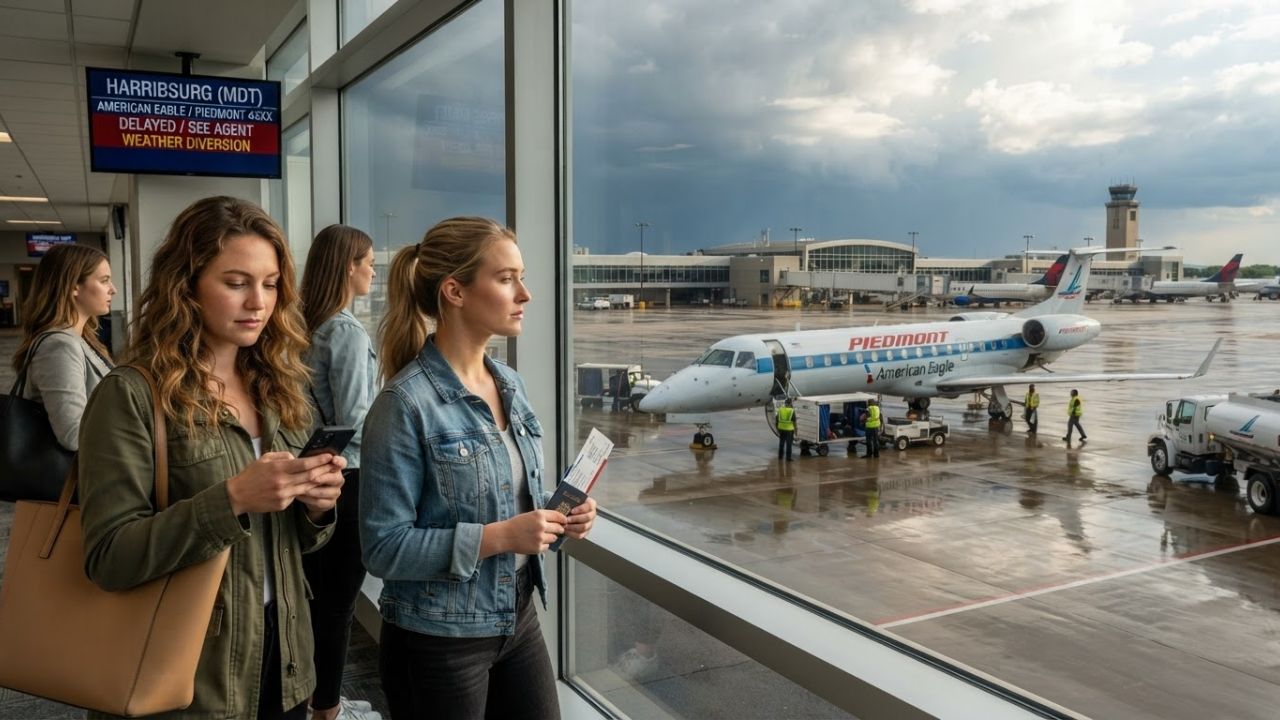
Image generated by AI
Piedmont Operated American Airlines Flight AA5952 from Knoxville to Philadelphia Diverts to Harrisburg Amid Severe East Coast Storms
Piedmont Airlines Flight AA5952, operating for American Airlines, diverted to Harrisburg International Airport following severe East Coast thunderstorms. The Embraer ERJ-145LR experienced extensive ground delays in Knoxville before departing and diverting on July 9, 2026.
The Disruption Details
Our analysis indicates that convective summer weather patterns along the East Coast frequently cause extensive regional flight disruptions. On July 9, 2026, Piedmont Airlines Flight AA5952 (operating under the American Eagle brand for American Airlines) was scheduled to depart Knoxville McGhee Tyson Airport (TYS) at 6:37 PM, bound for Philadelphia International Airport (PHL). Due to severe weather and ATC hold orders, the flight suffered rolling ground delays, departing at 1:31 AM.
As the Embraer ERJ-145LR aircraft neared its destination, severe thunderstorms blocked arrival corridors into the Philadelphia metropolitan airspace. Air traffic control initiated flow management holdings, forcing multiple regional aircraft into holding patterns. To maintain mandatory fuel reserve margins, the flight crew terminated the hold and diverted to Harrisburg International Airport (MDT), landing safely in the early morning.
Flight & Airport Impact Breakdown
The storm cells and ground holds disrupted flight paths and aircraft routing across the regional network:
- Knoxville to Philadelphia Route: High-density regional corridor heavily delayed by East Coast weather bottlenecks.
- Philadelphia Arrival Lockdowns: Severe thunderstorm lines and wind shear prompted flow control holds, reducing airport landing slots.
- Harrisburg Diversion Handling: Harrisburg International Airport (MDT) received the Embraer ERJ-145LR for refueling and processing.
- Regional Fleet Disruption: The cumulative delay impacted crew duty limits and downstream schedules for the regional jet.
Table: Flight AA5952 Operational Metadata
| Parameter | Details | Source / Verification |
|---|---|---|
| Flight Number | AA5952 / PDT5952 | Commercial schedule tracking |
| Operating Carrier | Piedmont Airlines (American Eagle) | FAA Operating Certificate |
| Aircraft Model | Embraer ERJ-145LR | FAA Aircraft Registry |
| Scheduled Departure (STD) | 6:37 PM local Knoxville time | Flight itinerary records |
| Actual Departure (ATD) | 1:31 AM local Knoxville time | Ground radar tracking logs |
| Scheduled Arrival (STA) | 8:39 PM local Philadelphia time | Original arrival slot |
| Diversion Location | Harrisburg International Airport (MDT) | Alternate landing site |
Passenger Rights & Advisory (Information Gain)
Passengers on regional flights delayed on the tarmac before takeoff are protected by US Department of Transportation (DOT) guidelines. The operating carrier must provide access to clean drinking water, snacks, and functional restrooms if a ground delay exceeds two hours. If the delay reaches three hours, the airline must offer passengers the opportunity to deplane, provided it is safe to do so.
Because the subsequent flight diversion was caused by severe weather, it is classified as an uncontrollable event. This status means the airline is not legally required to provide cash compensation or hotel vouchers. However, if the flight is ultimately cancelled, or if the passenger decides to cancel their trip due to a major delay, they are entitled to a full refund to their original payment method.
Industry Analyst View
Operating regional jet fleets like the Embraer ERJ-145LR during summer storm seasons presents significant coordination challenges. During severe weather bottlenecks, air traffic controllers often prioritize mainline widebody flights for landing slots, leaving regional jets in extended holding patterns. This operational dynamic forces regional crews to execute early diversions to protect their safety fuel minimums.
Additionally, multi-hour delays can quickly exhaust the legal duty limits of regional flight crews under FAA Part 121 guidelines. If a crew exceeds their maximum daily duty hours during a delay, the airline must replace them or cancel the flight. Utilizing regional airports like Harrisburg (MDT) to refuel and hold helps carriers manage these crew duty windows while waiting for weather corridors to clear.
Related Travel Guides
- Virgin Australia Restores Double Daily Sydney to Doha Flights Expanding Connections to Europe for Winter 2026
- Air India Retires Six Airbus A319 Jets as Tata Group Accelerates Mainline Fleet Modernization with Next-Generation Aircraft
- United Airlines Flight UA2101 from Seattle to Chicago Diverts to Indianapolis Following Tarmac Delay and Midwest Storms
Disclaimer
This article is for informational and educational purposes only. It does not constitute legal, financial, or professional advice. While we strive to provide accurate and up-to-date information, travel policies, regulations, and conditions change rapidly. Always verify information with official sources before making travel decisions. Nomad Lawyer makes no representations about the accuracy, reliability, completeness, or suitability of the information provided. Readers should consult qualified professionals for advice specific to their circumstances. The views expressed in this article are those of the author and do not necessarily reflect the views of Nomad Lawyer.
Kunal K Choudhary
Co-Founder & Contributor
A passionate traveller and tech enthusiast. Kunal contributes to the vision and growth of Nomad Lawyer, bringing fresh perspectives and driving the community forward.
Learn more about our team →