
Peru, Bolivia and Chile Unite: 15-Day Andean Circuits Pioneer Multi-Country Travel

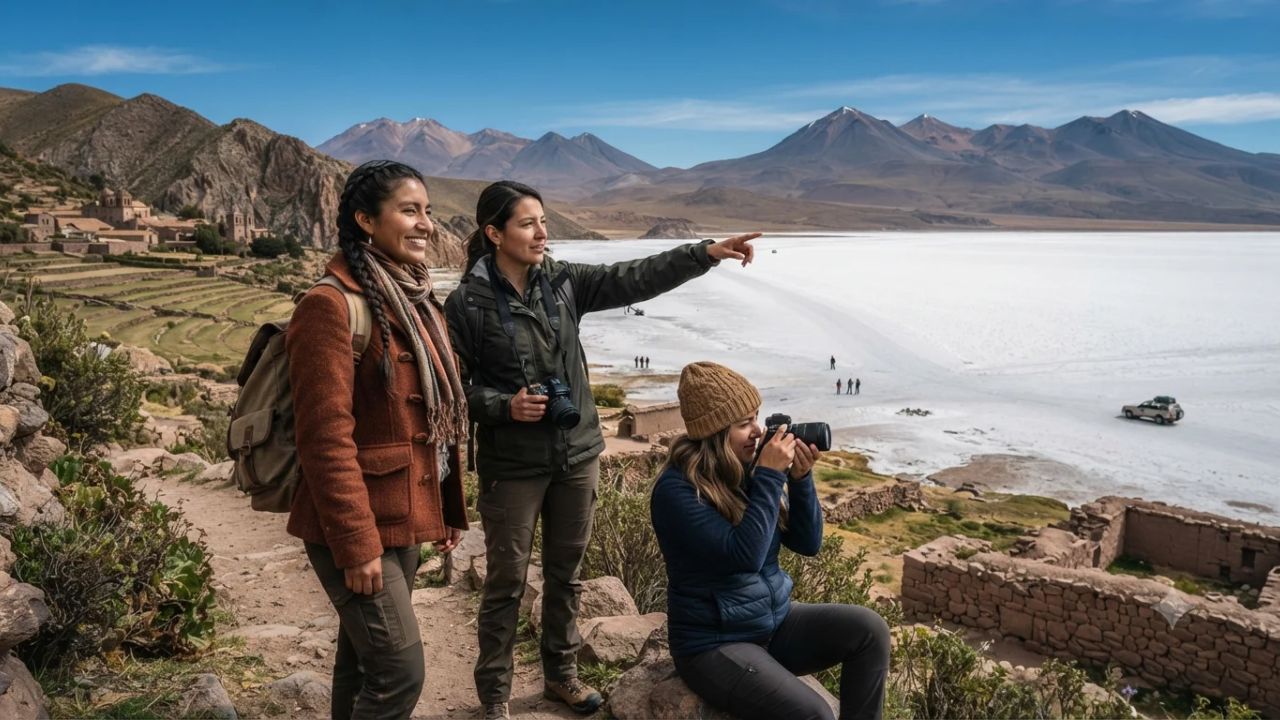
Image generated by AI
Requiring an uncompromising baseline commitment of at least 15 days in the field, a newly consolidated cross-border Andean circuit spanning Peru, Bolivia, and Chile is reshaping South American inbound tourism. Backed by more than two decades of continuous destination management experience in Peru, receptive operators like Antipode Travel are dismantling the legacy framework of isolated single-nation visits. Instead, ground specialists are constructing interconnected trans-continental corridors that escort long-haul travelers across ancient Inca citadels, high-altitude salt flats, and hyper-arid desert expanses in a single, coordinated expedition.
Trans-Andean Corridor Integration: Overcoming Geographic and Administrative Borders
For generations, long-haul tourism across western South America remained severely fragmented. International visitors booking flights through regional gateways routinely treated Peru as an archaeological enclave centered on Cusco, while Bolivia remained an off-grid detour for rugged adventurers, and northern Chile operated primarily as an eco-luxury desert retreat. Organizing travel across all three sovereign states required dealing with multiple independent ground handlers, navigating disparate border-crossing protocols, and enduring disjointed regional air connections.
That structural friction is yielding to synchronized regional collaboration. Ground operators are formalizing trans-Andean transit agreements that bridge the regulatory frameworks established by PromPerú and the Servicio Nacional de Turismo (SERNATUR). Under this integrated approach, travelers are handed off smoothly between certified local guides, four-wheel-drive overland transport teams, and registered hospitality providers as they transit from the archaeological heartlands of Peru into the untamed Altiplano of Bolivia and down into the hyper-arid valleys of northern Chile.
This cross-border integration answers a fundamental shift in international traveler psychology. As the global cost of long-haul aviation escalates, discerning travelers originating from Europe, North America, and the Asia-Pacific region are prioritizing depth over speed. Rather than burning vacation hours on multiple regional flights or taking disjointed two-day city breaks, travelers are committing to extended two-week-plus expeditions that weave together ancient indigenous cultures, dramatic geological wonders, and remote rural communities.
Route Architecture and Altitude Logistics: A 15-Day Tri-Nation Trajectory
Executing a seamless 15-day multi-country itinerary across the central Andes requires meticulous physiological and logistical engineering. The route traverses some of the most extreme variations in altitude and climate found anywhere on earth, moving from sea-level coastal gateways to mountain passes exceeding 4,500 meters.
To prevent altitude-related illnesses and physical fatigue, expert destination managers design itineraries that follow a progressive upward incline, beginning in southern Peru's Sacred Valley before exposing travelers to the extreme elevations of the Bolivian Altiplano and descending into the high deserts of Chile.
| Expedition Phase & Zone | Base Altitude | Core Geographical Assets | Transit Mechanism | Sovereign Territory |
|---|---|---|---|---|
| Inca Heritage & Sacred Valley | 2,430m – 3,400m | Machu Picchu, Ollantaytambo, Cusco Historic Core | Vistadome Rail & Private Road Coaches | Peru |
| High Altiplano & Lake Titicaca | 3,812m | Floating Uros Communities, Taquile, Copacabana | Navigational Catamarans & Border Coaches | Peru / Bolivia Border |
| Salar de Uyuni White Expanse | 3,656m | 10,582 sq km Salt Flat, Incahuasi Island | Specially Outfitted 4x4 Overland Fleets | Bolivia |
| Eduardo Avaroa Reserve | 4,200m – 4,800m | Laguna Colorada, Sol de Mañana Geysers | High-Clearance 4WD Expedition Vehicles | Bolivia |
| Atacama Arid Highlands | 2,400m | Valley of the Moon, El Tatio, Altiplanic Lagoons | Private Desert Shuttles to Calama Airport | Chile |
The true logistical triumph of this 15-day journey lies in the terrestrial link between southwestern Bolivia and northern Chile. Travelers traverse the expansive salt crust of Salar de Uyuni before navigating the volcanic terrain of the Eduardo Avaroa Andean Fauna National Reserve. At the high-mountain border post of Hito Cajón, passengers undergo formal customs and immigration clearance before transferring directly into Chilean transport vehicles, descending thousands of feet into the oasis town of San Pedro de Atacama within an hour.
Post-Pandemic Receptive Mechanics: The Evolution of B2B Distribution via Peru Travel Mart
The commercial engine behind these expansive tri-nation itineraries reflects a major modernization of South American tourism distribution. In the wake of severe pandemic disruptions, receptive agencies were forced to re-evaluate their commercial strategies. As Thierry, Director General of Antipode Travel, emphasized during industry discussions, surviving the post-pandemic recovery required breaking out of narrow geographical silos and reaching far beyond traditional European strongholds.
Historically, regional agencies relied heavily on linguistic and cultural affinities, with French, German, or British travelers dominating specific boutique operators' balance sheets. To build long-term operational resilience, agencies utilized major commercial trade forums—most notably the annual Peru Travel Mart—to connect with outbound wholesalers, premium travel networks, and tour designers worldwide.
Rather than attempting to market directly to end consumers across dozens of countries, successful destination management companies operate on a strict B2B model. By partnering with vetted international travel agencies, receptive operators provide the critical ground infrastructure—vetted vehicles, licensed multilingual guides, emergency satellite communications, and negotiated hotel allocations—that overseas agencies cannot replicate from afar. This business architecture ensures that small local operators, indigenous boat cooperatives on Lake Titicaca, and remote desert lodges receive steady commercial bookings backed by international consumer protection standards.
Expert Analysis: The High-Altitude Premium, Border Friction, and Multi-Currency Volatility
For travelers booking this multi-country Andean route, the direct consequence of this integrated operational model is an exceptionally high-touch, premium-priced travel product that commands significant logistical discipline. Coordinating three distinct sovereign jurisdictions means tour pricing must account for fluctuating national park tariffs, variable border taxes, and currency volatility between the Peruvian Sol, the Bolivian Boliviano, and the Chilean Peso.
The pricing pressure this creates means that authentic 15-day expeditions cannot compete on budget. Specialized four-wheel-drive vehicles capable of navigating the roadless expanses of Salar de Uyuni require strict maintenance regimes, and emergency oxygen supplies are mandatory across the entire Altiplano leg. Consequently, travelers must anticipate premium tour costs that reflect the real price of vehicle safety, satellite tracking, and seasoned drivers trained in remote wilderness repairs.
At the regulatory level, travelers must recognize that cross-border political stability dictates operational viability. The land crossing at Desaguadero and the remote outpost at Hito Cajón are subject to periodic administrative strikes or heightened biosecurity controls enforced by the International Air Transport Association (IATA) partner carriers and regional customs authorities. Professional ground operators manage this risk by building flexible contingency routes, reserving secondary border crossings, and maintaining round-the-clock dispatch networks that reroute guests smoothly when political or meteorological hurdles arise.
Key Takeaways
- Uncompromising Duration Standard: Industry operators have established a strict 15-day minimum duration to ensure proper altitude acclimatization and seamless overland transit between Peru, Bolivia, and Chile.
- Overland Corridor Realization: Ground specialists have linked iconic destinations—Machu Picchu, Lake Titicaca, Salar de Uyuni, and the Atacama Desert—into a continuous overland route that bypasses unnecessary regional flights.
- B2B Distribution Model: Receptive specialists leverage platforms like the Peru Travel Mart to distribute specialized itineraries through international travel agencies, providing localized safety and logistical assurance.
- Multi-Currency Management: Operating across three sovereign economies requires robust pricing models that insulate travelers against currency fluctuations and regional administrative fee changes.
- Altitude Planning Mandate: Route sequencing begins in lower valleys before escalating to extreme Altiplano elevations exceeding 4,000 meters, ensuring traveler safety through structured acclimatization.
FAQ: Andean Multi-Country Travel 2026
What is the optimal itinerary duration for combining Peru, Bolivia, and Chile?
Industry operators recommend a minimum of 15 days. This timeframe allows travelers to acclimatize to high Andean altitudes, navigate terrestrial border crossings, and thoroughly explore major landmarks including Machu Picchu, Lake Titicaca, Salar de Uyuni, and the Atacama Desert without dangerous physical fatigue.
How do travelers cross the border between Bolivia and Chile?
Most multi-country circuits utilize the high-altitude land crossing between the Eduardo Avaroa Reserve in southwestern Bolivia and Hito Cajón into San Pedro de Atacama, Chile. Travelers transfer from specialized four-wheel-drive Bolivian overland vehicles to Chilean transport vans following immigration control.
When is the best time of year to complete this multi-country route?
The dry winter season between May and October offers the most predictable weather, clear skies, and safe road conditions across the Altiplano. While night temperatures frequently dip below freezing in the desert highlands, daytime travel remains sunny and uninterrupted by seasonal rains.
What altitude preparations are necessary for this 15-day journey?
Because elevations range from 2,400 meters in northern Chile to over 4,000 meters across the Bolivian Altiplano, itineraries sequence gradual ascent starting in Cusco or Arequipa. Medical consultations, proper hydration, rest days, and altitude medication are advised before traversing Salar de Uyuni.
Across the windswept salt crusts and ancient stone citadels of the high Andes, linking three nations in a single journey proves that the future of travel belongs to those willing to embrace the overland horizon.
Related Travel Guides
El Salvador Global Tourism Expansion & Strategic Planning
Disclaimer
This article is for informational and educational purposes only. It does not constitute legal, financial, or professional advice. While we strive to provide accurate and up-to-date information, travel policies, regulations, and conditions change rapidly. Always verify information with official sources before making travel decisions. Nomad Lawyer makes no representations about the accuracy, reliability, completeness, or suitability of the information provided. Readers should consult qualified professionals for advice specific to their circumstances. The views expressed in this article are those of the author and do not necessarily reflect the views of Nomad Lawyer.
Kunal K Choudhary
Co-Founder & Contributor
A passionate traveller and tech enthusiast. Kunal contributes to the vision and growth of Nomad Lawyer, bringing fresh perspectives and driving the community forward.
Learn more about our team →