
Pennsylvania's Public Art Revolution: How 3,600+ Murals Are Redefining American Cultural Tourism Beyond Philadelphia
Pennsylvania has transformed into a global cultural tourism powerhouse through strategic public art investments, with over 3,600 murals and sculptures creating immersive experiences across Philadelphia, Lancaster, Harrisburg, and Erie.

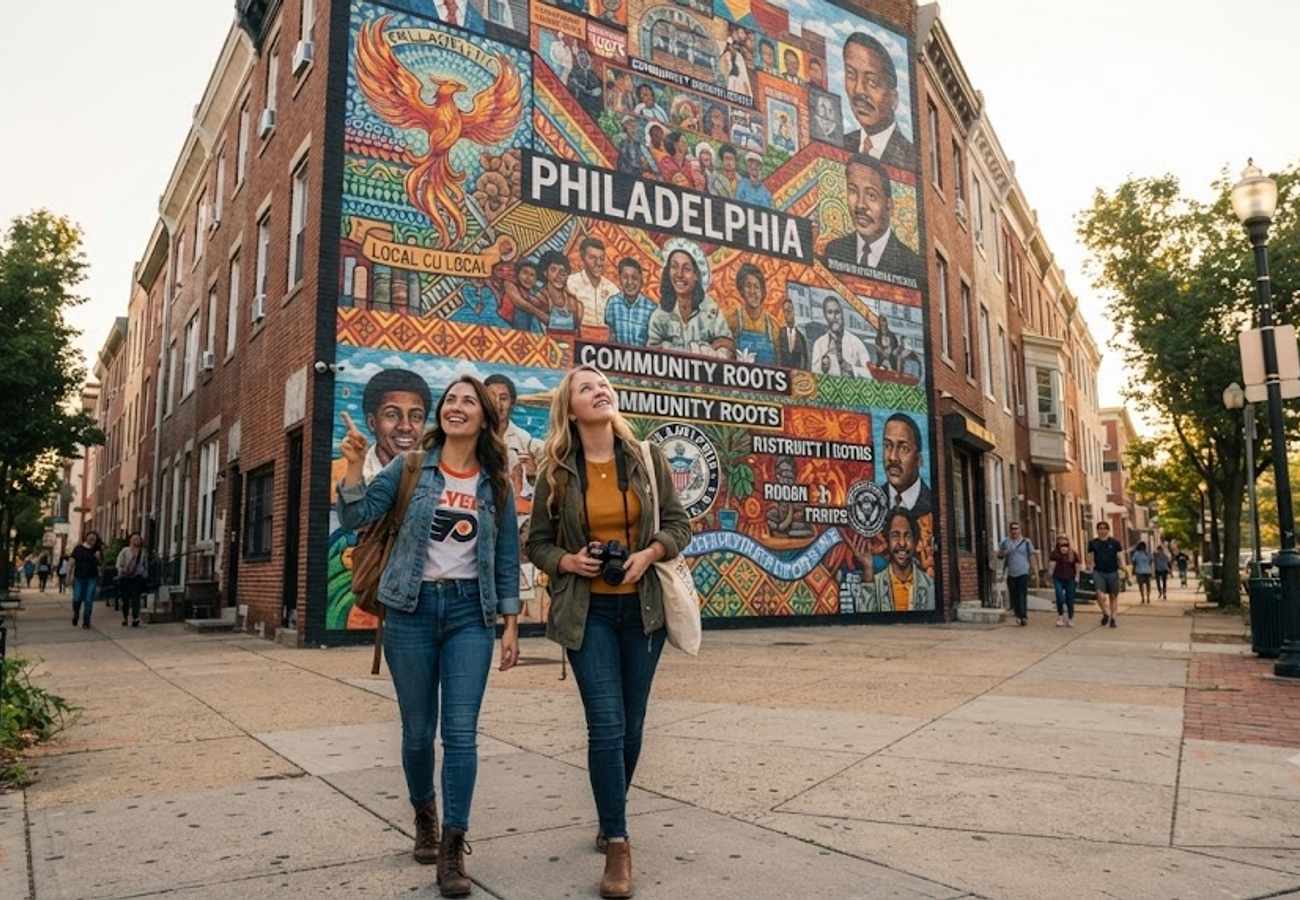
Image generated by AI
Pennsylvania Quietly Became America's Public Art Capital
Something extraordinary is happening across Pennsylvania. Walk through Philadelphia's historic neighborhoods, drive through Lancaster's downtown, or explore Erie's waterfront, and you'll notice it immediately: art isn't confined to galleries anymore. It's everywhere. On building facades. In alleyways. Across entire city blocks.
Over the past two decades, Pennsylvania has orchestrated one of the most ambitious cultural transformations in American travel history. The state didn't announce it loudly. There was no ribbon-cutting ceremony or massive marketing campaign. Instead, thousands of murals, sculptures, and public installations simply began appearing—each one telling a local story, celebrating community identity, and fundamentally reshaping how travellers experience the state.
The results are staggering. Cities that were previously overlooked by mainstream tourism are now attracting photographers, artists, families, and cultural enthusiasts from across the globe.
Reddit: "I went to Pennsylvania expecting Revolutionary War sites and left completely blown away by the street art scene. Every neighborhood had its own character and story to tell." — r/travel
Philadelphia's Mural Arts Movement: A Global Benchmark
Philadelphia didn't stumble into becoming one of the world's leading public art destinations by accident. The Mural Arts Philadelphia programme, operating for over two decades, has systematically transformed the city into an open-air gallery with 3,600+ murals covering neighborhoods from North Philadelphia to South Street.
This isn't gentrification disguised as art. Each mural emerged through community collaboration, with local residents, business owners, and neighbourhood leaders determining what stories their streets should tell. The result? Authentic cultural experiences that feel genuine rather than manufactured for tourists.
Visitors experience these works through multiple lenses: guided walking tours, trolley excursions, and self-guided neighbourhood explorations. The Magic Gardens installation on South Street—a spectacular mosaic masterpiece created by internationally renowned artist Isaiah Zagar—offers one of the most immersive artistic experiences in North America. Mirrors, recycled ceramic fragments, and handcrafted details transform ordinary urban space into something approaching transcendent.
How Smaller Cities Are Outcompeting Traditional Tourist Destinations
Here's where Pennsylvania's strategy becomes genuinely brilliant: Lancaster, Harrisburg, York, and Erie recognized that they couldn't compete with Philadelphia through conventional tourism models. So they didn't try.
Instead, they invested aggressively in public art infrastructure:
Lancaster now features over 50 murals integrated into downtown revitalization efforts. Harrisburg developed more than 40 large-scale artworks that transformed the riverfront. York's Royal Square Mural Park created a highly walkable cultural district that attracts photographers and families seeking authentic experiences.
Scranton went further, commissioning over 70 murals that celebrate regional coal mining heritage and labor history. Erie County established a network of 85+ public artworks that have fundamentally changed how visitors perceive the city. Even smaller communities like Shamokin have embraced large-scale artistic projects that honour local legacies.
These investments accomplished something remarkable: they gave travellers reasons to venture beyond the predictable tourist circuit.
Where Art Meets Nature: The Easton Model
Easton's Karl Stirner Arts Trail demonstrates how Pennsylvania is blending cultural tourism with outdoor recreation. The trail follows Bushkill Creek, integrating contemporary sculptures into peaceful natural landscapes where visitors experience art, hiking, and wellness simultaneously.
This model appeals to a growing segment of experiential travellers—people seeking meaningful encounters rather than checkbox attractions. Walking through forest landscapes punctuated by unexpected artistic installations creates a different psychological experience than viewing art in galleries. It feels like discovery rather than consumption.
The Social Media Acceleration Effect
Digital platforms have amplified Pennsylvania's public art movement exponentially. Iconic installations like Wings Across Westmoreland and Johnstown's Spider-Man mural have become highly photographed destinations generating millions of social media impressions annually.
But here's what's crucial: when visitors photograph a mural, they don't leave immediately. They explore the surrounding neighbourhood. They discover local cafés, independent restaurants, and small businesses. They stay longer. They spend more. Public art becomes an economic engine for community development, not just destination marketing.
According to tourism research on public art's economic impact, communities investing in street art experience measurable increases in visitor spending and local business revenue.
Why Pennsylvania's Approach Matters Beyond Tourism
What Pennsylvania accomplished transcends travel metrics. By making culture accessible—free murals visible from public streets, no admission fees required—the state democratized art experience.
This matters because it fundamentally challenges the assumption that cultural tourism requires wealthy visitors or upscale infrastructure. A family visiting Philadelphia can experience world-class artistic expression without purchasing tickets. A teenager from York can engage with contemporary art daily through their neighborhood murals. An international visitor can understand Pennsylvania's cultural identity through street-level storytelling.
The state essentially created an educational tool that serves both residents and tourists simultaneously.
The Competitive Advantage: Authenticity at Scale
As experiential tourism continues reshaping global travel patterns, Pennsylvania possesses something most destinations struggle to manufacture: genuine community investment in cultural expression. This isn't art imposed from above for tourist consumption. These are neighbourhoods telling their own stories through artists they've selected.
Modern travellers—particularly younger demographics—recognize authenticity immediately. They avoid destinations that feel artificially curated for Instagram. They gravitate toward places where culture emerges organically from community identity. Pennsylvania nailed this formula at scale across multiple cities.
Compared to destinations relying exclusively on heritage sites or natural attractions, Pennsylvania's diversified cultural tourism model creates significantly higher visitor retention rates and encourages repeat visits.
What's Next for Pennsylvania's Public Art Movement
The trajectory is clear: additional cities are launching public art initiatives, existing programmes are expanding, and investment continues flowing toward street-level cultural infrastructure.
Huntingdon County creatively reimagined abandoned railway trestles as artistic landmarks. Lancaster connected murals through walking routes that encourage longer downtown visits. Erie is integrating waterfront development with large-scale public sculptures.
This represents sustainable tourism development—strategies that benefit residents, support local economies, and create compelling reasons for global visitors to choose Pennsylvania over competing destinations.
The Broader Lesson
Pennsylvania proved something that conventional tourism wisdom overlooked: iconic landmarks matter, but community culture matters more. A traveller visiting Philadelphia for the Liberty Bell might stay three days. A traveller visiting for immersive street art exploration might stay a week, visiting multiple cities, exploring neighbourhoods, and discovering local businesses.
One approach treats visitors as consumers moving through predetermined routes. The other approach treats visitors as explorers investing in community discovery. The economic and cultural implications differ dramatically.
As other American states examine their tourism strategies, they're increasingly recognizing what Pennsylvania accomplished: authentic, accessible, community-driven cultural experiences outperform manufactured attractions. Every neighbourhood gains an opportunity to tell its story. Every visitor becomes a potential ambassador.
The murals will continue appearing. Communities will continue investing. Travellers will continue discovering reasons to explore beyond traditional tourist destinations.
Pennsylvania didn't build its cultural tourism empire—it released it, one mural at a time.
Related Travel Guides
Disclaimer
This article is for informational and educational purposes only. It does not constitute legal, financial, or professional advice. While we strive to provide accurate and up-to-date information, travel policies, regulations, and conditions change rapidly. Always verify information with official sources before making travel decisions. Nomad Lawyer makes no representations about the accuracy, reliability, completeness, or suitability of the information provided. Readers should consult qualified professionals for advice specific to their circumstances. The views expressed in this article are those of the author and do not necessarily reflect the views of Nomad Lawyer.
Preeti Gunjan
Contributor & Community Manager
A passionate traveller and community builder. Preeti helps grow the Nomad Lawyer community, fostering engagement and bringing the reader experience to life.
Learn more about our team →