
Paulo Monorail Line 17 Finally Opens After 10-Year Delay in 2026
São Paulo's long-awaited Line 17 Gold monorail finally opens in 2026, connecting Morumbi to Congonhas Airport with China's pioneering driverless SkyRail technology after more than a decade of construction delays.

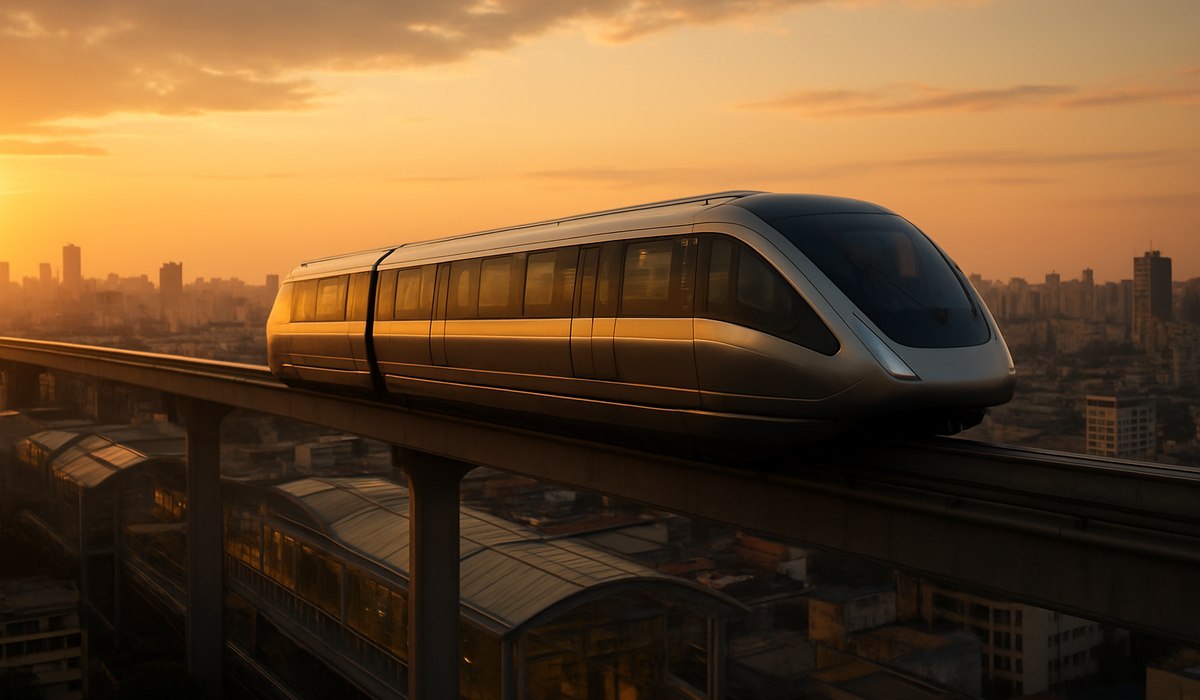
Image generated by AI
São Paulo's Long-Awaited Line 17 Gold Monorail Finally Launches
São Paulo's Line 17 Gold monorail has officially entered service, marking a historic milestone for Brazil's largest metropolitan area after more than a decade of construction delays. The inaugural 6.7-kilometer paulo monorail line connects Morumbi to Congonhas Airport, featuring five intermediate stations and serving as the first overseas deployment of China's advanced driverless SkyRail technology. Limited services began March 31, 2026, with two trains operating in assisted mode, ahead of full commercial operation expected by mid-2026.
The paulo monorail line's arrival represents a transformational moment for São Paulo's transit infrastructure. Originally scheduled to debut during Brazil's 2014 FIFA World Cup hosting duties, the project faced repeated setbacks stemming from contractor transitions, protracted legal disputes, and pandemic-related complications. Total investment ultimately reached approximately 5.8 billion Brazilian Reais ($1.1 billion USD), nearly triple the initial 2-billion-Reais estimate—a stark reminder of the financial challenges plaguing major infrastructure projects across Latin America.
A Decade Delayed: Line 17 Finally Launches in São Paulo
The journey to completion of the paulo monorail line exemplifies the infrastructure development struggles facing emerging economies. When the project's first phase was originally conceived in the early 2010s, planners envisioned the system welcoming World Cup visitors and providing seamless airport connectivity. Instead, construction complications compounded annually, testing the patience of commuters and policymakers alike.
Multiple contractor changes disrupted continuity and accountability. Legal disputes between municipal authorities, state government, and private firms consumed years of negotiation. The Covid-19 pandemic introduced unexpected labor and supply chain disruptions during critical construction phases. Despite these obstacles, the paulo monorail line persevered toward completion, ultimately demonstrating São Paulo's commitment to modernizing its congested transportation network.
Governor Tarcísio de Freitas championed final project completion, personally inaugurating the system on March 31. His administration simultaneously announced approval for a 4.6-kilometer extension featuring three additional stations at Panamby, Paraisópolis, and Maurano Américo. Future plans include another extension to São Paulo Morumbi with interchange connectivity to Metro Line 4/Yellow, positioning the paulo monorail line as a cornerstone of São Paulo's twenty-first-century transit vision.
Cutting-Edge Driverless Technology from BYD Debuts Outside China
The paulo monorail line represents a watershed moment for automated rail transit, showcasing Chinese technological leadership in mobility infrastructure. BYD, one of the world's largest electric vehicle manufacturers, supplied all rolling stock, signaling systems, and automation equipment under a 1.1-billion-Reais contract awarded in 2020. The technology deployment marks the first international application of BYD's proprietary SkyRail monorail platform outside the People's Republic.
The system operates at Grade of Automation 4 (GoA4), meaning zero human operators guide trains during revenue service. Communications-Based Train Control (CBTC) signaling enables fully autonomous acceleration, braking, and route management. Fourteen five-car trains, each accommodating 616 passengers, circulate through the network with millisecond precision, optimizing frequency and capacity without traditional driver staffing requirements.
All paulo monorail line stations feature full wheelchair accessibility, equipped with elevators and tactile guidance systems. Platform screen doors prevent unauthorized track access while enabling climate-controlled station environments. Modern telecommunications infrastructure allows real-time passenger information updates, digital ticketing integration, and emergency communication protocols. The technological sophistication positions São Paulo among world-class transit systems, rivaling developed-nation standards.
Environmental Impact and Ridership Expectations
Environmental benefits from the paulo monorail line extend far beyond traditional transit metrics. The system is projected to eliminate 25,937 tonnes of annual greenhouse gas emissions and pollutants through modal shift from private automobiles. Annual fuel consumption reductions are estimated at 11.7 million liters, translating to meaningful atmospheric improvements across São Paulo's chronically congested metropolitan zone.
Initial ridership forecasts anticipate 100,000 daily passengers once full commercial service launches in Q3 2026. This projection reflects pent-up demand from Morumbi's affluent neighborhoods and business districts, combined with growing airport passenger traffic. The Congonhas endpoint serves São Paulo's primary domestic aviation hub, handling millions of business and leisure travelers annually. Convenient rail access should substantially reduce parking infrastructure demand and roadway congestion around Brazil's busiest airport.
The paulo monorail line also catalyzes property development and economic vitality in surrounding neighborhoods. Station-area real estate typically appreciates significantly following modern transit implementation. Five intermediate stations—including Campo Belo with Metro Line 5/Purple interchange—create multiple economic nodes throughout the corridor. Jobs in station-area retail, dining, and services expand alongside residential and commercial density.
Future Expansion Plans Announced for São Paulo's Transit Network
São Paulo's transport authorities have embraced an ambitious vision extending beyond the current paulo monorail line segment. The approved 4.6-kilometer northern extension represents just the beginning of planned network growth. Three new stations at Panamby, Paraisópolis, and Maurano Américo will serve previously underserved neighborhoods, democratizing airport access across socioeconomic demographics.
The Morumbi extension, planned for subsequent phases, will terminate at São Paulo Morumbi station with Metro Line 4/Yellow interchange. This connection transforms the paulo monorail line into a true regional system, enabling cross-town journeys without private vehicle dependency. Planners envision eventual network expansion connecting Guarulhos International Airport, serving 30+ million annual passengers on the metropolitan periphery.
Visit the São Paulo Public Transport Authority website for current expansion timelines and planning documents. Infrastructure investment of this magnitude requires sustained political commitment and public-private partnership innovation. The initial paulo monorail line success builds momentum for subsequent phases, demonstrating feasibility to skeptical stakeholders and securing future funding allocations.
How to Book the Best Fare
Accessing São Paulo's newly launched paulo monorail line requires understanding the metropolitan transit fare structure. The system integrates with São Paulo's existing metro network through unified contactless payment cards, eliminating separate ticketing hassles. Single journeys cost 4.40 Brazilian Reais ($0.88 USD) at standard fare rates, with discounts available for students, seniors, and persons with disabilities.
Monthly passes offer superior value for regular commuters, available through Trainline partner networks and official transit authority channels. The VEM card, São Paulo's primary transit payment instrument, enables seamless transfers between the paulo monorail line, metro system, and bus network. Load funds digitally via smartphone applications, avoiding queues at physical ticketing locations.
Airport travelers should budget 4.40 Reais for one-way paulo monorail line journeys to Congonhas, substantially cheaper than taxi or rideshare alternatives. Journey times from Morumbi to Congonhas average 18 minutes, providing competitive speed against ground transportation congestion. Travel during off-peak hours (10 AM to 4 PM weekdays) ensures comfortable seating and reduced crowding compared to morning and evening rush periods.
Key Data: São Paulo Line 17 Gold Monorail Specifications
| Specification | Details |
|---|---|
| Route Name | Line 17 Gold |
| Opening Date | March 31, 2026 |
| Initial Length | 6.7 kilometers |
| Stations ( |
Disclaimer
This article is for informational and educational purposes only. It does not constitute legal, financial, or professional advice. While we strive to provide accurate and up-to-date information, travel policies, regulations, and conditions change rapidly. Always verify information with official sources before making travel decisions. Nomad Lawyer makes no representations about the accuracy, reliability, completeness, or suitability of the information provided. Readers should consult qualified professionals for advice specific to their circumstances. The views expressed in this article are those of the author and do not necessarily reflect the views of Nomad Lawyer.
Raushan Kumar
Founder & Lead Developer
Full-stack developer with 11+ years of experience and a passionate traveller. Raushan built Nomad Lawyer from the ground up with a vision to create the best travel and law experience on the web.
Learn more about our team →